
Humming bee breath, or bhramari, is a gentle breathing practice where you hum softly as you breathe out. The sound gives the mind a simple anchor and many people find it soothing. This guide explains how to do it step by step, with safety notes for beginners.
This is general education, not medical advice. If you have ear or sinus problems, a lung or heart condition, are pregnant or have any health concern, check with your doctor first.
What is humming bee breath?
Humming bee breath, called bhramari in Sanskrit, is a slow breathing practice where you hum softly on the out breath, like a bee. The hum creates a gentle vibration in the head and chest. Many people find the sound soothing and easy to follow. It is simple enough for beginners and takes only a few minutes. It is one of several breathing practices explained in our guide to pranayama for beginners.
Why do people like it?
People like it because the steady sound gives the mind something simple to follow, which can feel calming. Following a sound is easier than following silence for many beginners. It also lengthens the out breath naturally. This is not a treatment for any condition. The National Center for Complementary and Integrative Health lists breathing practices among relaxation approaches people use.
How do you do it step by step?
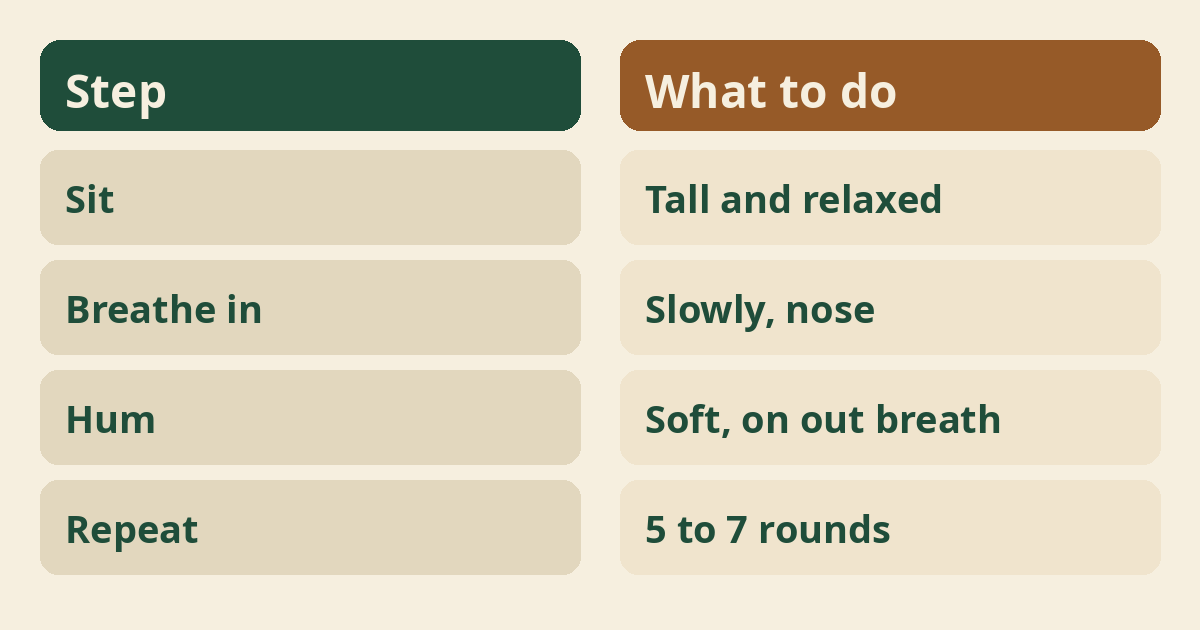
Sit comfortably, breathe in slowly through the nose, then breathe out through the nose while making a soft humming sound with the lips closed. Keep the jaw relaxed and the teeth slightly apart. Let the hum be gentle and even, not loud. Pause for a normal breath, then repeat five to seven times.
What should the sound be like?
A low, smooth and quiet hum that you can feel as a light vibration, not a strain. If your throat feels tight, make the hum softer. If the sound wobbles, that is fine. The goal is ease. Stop if you feel any discomfort.
How should you sit?
Sit tall on a chair or cushion with a long spine and relaxed shoulders. Our guide to meditation seats shows comfortable options. Rest the hands on the thighs. Close the eyes softly if that feels good.
Should you cover the ears?
Some traditions cover the ears with the thumbs, but beginners can simply keep the hands resting on the lap. Covering the ears can feel intense. Only try it if it feels comfortable. Never press hard on the face or eyes. The practice works without it.
How long should you practise?
Start with one minute and build to three to five minutes over a few weeks. Short sessions are enough. Pause for normal breathing between rounds. Stop if you feel dizzy. Our guide on how often to do yoga gives ideas for building a routine.
When is a good time?
Try it in the morning, during a work break or before bed, when you can be quiet and comfortable. Choose a place where humming will not bother others. Avoid practising right after a big meal. It can be a gentle part of an evening routine, like the one in our guide to yoga for better sleep.
Can you do it at work?
You can do a very soft version at your desk, or silently follow the breath if you need quiet. Our guide to meditation at work has quick resets. Keep your shoulders relaxed. Find a private spot if you can.
How does it feel in the body?
Most people notice a gentle vibration in the face and chest and a slower out breath. Notice the sensation without trying to change it. Some people feel calmer afterwards, others feel little. Both are normal.
How does it differ from other breathing?
Humming bee breath adds sound to the out breath, while other practices count the breath or switch nostrils. Our guides to box breathing and alternate nostril breathing explain other patterns. Try each one and keep what suits you.
Is it good for stress?
Many people find slow breathing with sound helps them feel calmer, but it is not a treatment for stress or anxiety. Our guide to yoga for stress relief and meditation for stress give more ideas. If stress feels heavy or lasts, speak to a doctor or qualified professional.
Can it help you focus?
The steady sound gives the mind a simple anchor, which some people find helpful before work or study. Try a minute before a task. Our guide to how to meditate explains attention practice. Results vary.
What mistakes do beginners make?
Humming too loudly, straining the throat, taking big breaths and practising for too long. Keep it soft and easy. Let the breath be natural. Do not push for a long hum. Take a normal breath whenever you need it.
What if you feel dizzy?
Stop, breathe normally and rest until you feel steady. Dizziness can happen if you breathe too deeply or too fast. Shorten the breath next time. If it happens often, speak to a doctor.
Who should be careful?
People with ear problems, sinus infections, a blocked nose, lung or heart conditions, high blood pressure or pregnancy should speak to a doctor first. Humming is usually mild, but personal advice matters. Stop if you feel pain or pressure in the ears or head. This guide is general education, not medical advice.
Can children try it?
Yes, in a playful way, as a bee game with a soft buzz. Our guide to yoga for kids has playful ideas. Keep it short and fun. Never force a child to hum.
How can you combine it with other practice?
Use it before meditation, after yoga or as part of a relaxing evening routine. It pairs well with belly breathing, which you can learn in our guide to belly breathing. Start with that, then add the hum.
A simple three minute routine
Spend one minute settling, one minute humming for five to seven rounds and one minute breathing normally. Sit comfortably, keep the shoulders soft and notice the vibration. Repeat daily for a week and see how it feels.
How can you build the habit?
Link it to something you already do, such as sitting down with tea or before bed. Keep it short and pleasant. Missing a day is fine. Notes on how you feel help you see slow changes.
When should you see a doctor?
See a doctor before starting if you have ear, sinus, lung or heart conditions, pregnancy or any health concern. Stop if you feel pain, dizziness or breathlessness. This guide is general education, not medical advice.
How do you set up a calm space?
Choose a quiet corner, dim the lights a little and put your phone out of reach so you can hum without worry. A small cushion or chair is enough. Keep a glass of water nearby. A calm space turns the practice into a cue for rest. Over time, sitting there may help you settle faster, even before you begin to breathe.
What can you notice while humming?
Notice the vibration in the lips, face and chest, and the length of each out breath, without judging. If thoughts drift in, return to the sound. There is no right or wrong feeling. Some days the hum will feel smooth, and other days it will feel scratchy. Both are fine and part of the practice.
How do you finish a session?
Stop humming, breathe normally for a minute with the eyes closed and notice how you feel before standing. Do not rush back to your tasks. Rub the palms together and rest them gently over the closed eyes without pressing, if that feels pleasant. Open the eyes slowly and stand up with care.
Can you pair it with a stretch?
Yes. A few gentle neck and shoulder stretches before humming can ease tension and make sitting easier. Our guide to yoga for neck and shoulders has simple options. Move slowly and keep the breath smooth. Then sit and begin your rounds of humming.
How soon might you notice a change?
Some people feel calmer after the first session, while others need a few weeks, and some feel little change at all. Keep expectations light. Practise gently and notice small shifts in how you breathe and feel. If it does not suit you, try another practice. There is no pressure to like every technique, and your own experience is the best guide.
Where to read next
For a calm, beginner-friendly start, Ranjana Sinha’s Begin Where You Are is written for people who want simple steps. Our guide to starting a home yoga practice adds a gentle routine you can follow at home.
Frequently asked questions
What is humming bee breath?
A breathing practice where you hum softly on the out breath.
How long should I practise?
One to five minutes.
Is it safe for beginners?
It is gentle, but check with a doctor if you have ear, sinus or health concerns.
Does it have to be loud?
No. A soft hum is best.
Can it cure anxiety?
No. It may help you feel calmer, but it is not a treatment.
The bottom line
A soft hum is an easy way to slow down. Keep it gentle, practise a little each day and speak to a doctor if you have concerns.

