If fast classes and long pose lists put you off yoga, yin might be the style that finally fits. Yin yoga is slow, quiet, and done mostly on the floor. You hold simple shapes for a few minutes at a time, with muscles relaxed, and let gravity do most of the work. This guide explains what yin yoga is, who it suits, and how to try a first gentle session at home without any experience.
What is yin yoga?
Yin yoga is a slow style of yoga where you hold floor-based poses for longer periods, usually two to five minutes each. Instead of working the muscles, yin asks them to soften, so the gentle stretch reaches the deeper tissues around the joints, like fascia and ligaments. Most poses are done sitting or lying down, and props like cushions, blankets, and blocks are used generously to make every shape comfortable.
The name comes from the idea of yin and yang. Active, movement-based styles like vinyasa are “yang.” Slow, still, cooling practices are “yin.” Both are useful, and many people mix them across the week.
How is yin different from other yoga styles?
- Vinyasa flows from pose to pose with the breath and builds heat. See our beginner vinyasa guide for that style.
- Hatha holds poses briefly with effort and alignment focus. Hatha for beginners is a classic starting point.
- Restorative yoga is yin’s closest cousin, but its goal is full comfort and rest with no stretch sensation at all. Yin allows a mild, tolerable stretch. Compare with restorative yoga for beginners.
- Yin sits in between: still and quiet, but with a gentle stretch you can feel.
Is yin yoga good for beginners?
Yes, and for many beginners it is the easiest style to start with. The poses are simple, the pace is slow, and there is no sequence to memorize. You get into a shape, make it comfortable with props, and stay there. If you can sit or lie on the floor, you can begin.
The main beginner challenge is not physical. It is mental. Staying still for three minutes feels long at first, and a busy mind gets loud when the body is quiet. That is normal, and it usually softens within a few sessions.
What does a yin pose actually feel like?
A good yin pose feels like a mild, dull stretch, never sharp. Teachers often say “about four out of ten.” You should be able to breathe slowly and stay relaxed. If you feel tingling, numbness, or anything sharp in a joint, come out of the pose right away. And a warning worth knowing: when you come out of a long hold, the body can feel fragile for a few seconds. Move slowly, pause, then continue.
Which poses are best for a first yin session?
These five shapes are friendly, need little flexibility, and cover the whole body:
- Butterfly – sitting with soles of the feet together, folding forward gently.
- Sphinx – lying on the belly, propped on the forearms, an easy backbend.
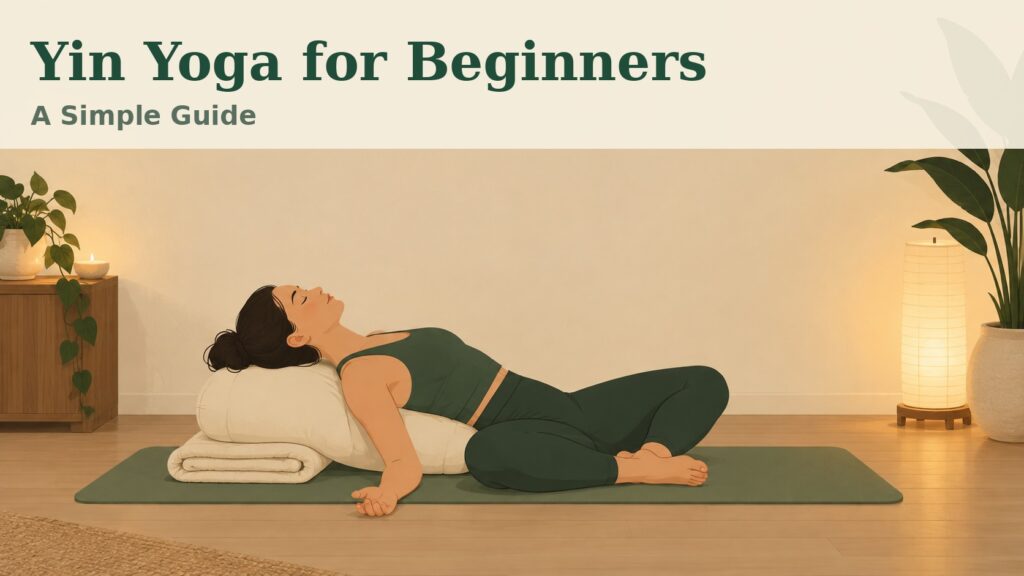
- Reclined butterfly – the same shape lying down, fully supported.
- Legs up the wall – exactly what it sounds like, and deeply restful.
- Child’s pose – the classic rest, with a cushion under the chest if you like.
Hold each for two to three minutes, breathe slowly, and rest for half a minute between poses. More ideas live in our yoga poses for beginners library.
How do you build a 20-minute home session?
- Minute 0 to 2: Sit comfortably and notice your breathing. Belly breathing is perfect here.
- Minute 2 to 5: Sphinx pose.
- Minute 5 to 8: Butterfly, folding forward over a cushion.
- Minute 8 to 11: A gentle seated twist on each side, about 90 seconds per side.
- Minute 11 to 16: Legs up the wall.
- Minute 16 to 20: Lie flat in savasana and rest.
What props make yin easier?
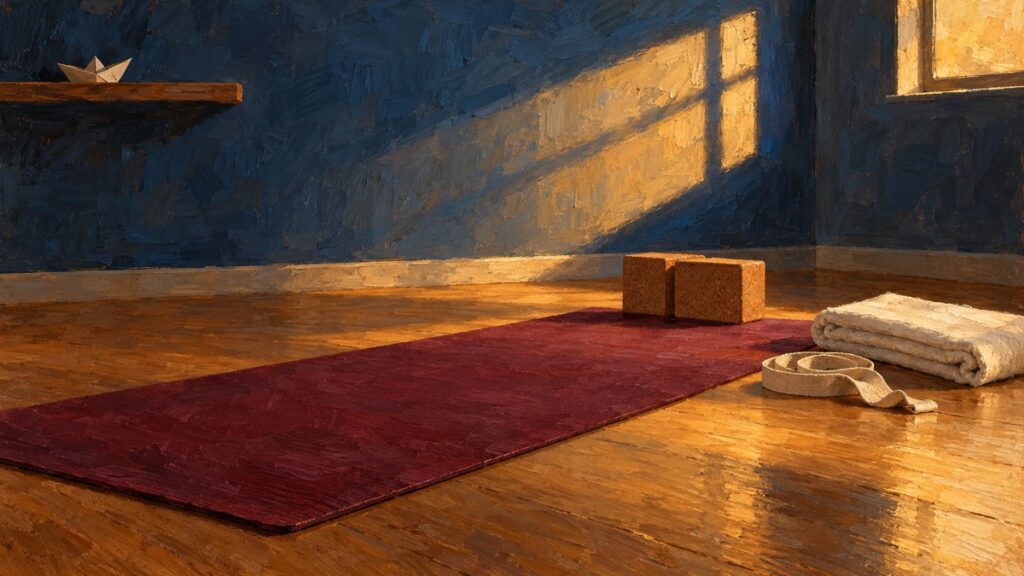
Props are not cheating in yin; they are the method. Have nearby: two cushions or bolsters and blankets, a block or a firm book, and a strap or belt. The rule is simple: support the body until the stretch feels mild enough to stay. A folded blanket under the hips in sitting poses makes a bigger difference than most beginners expect.
When is the best time to practice yin?
Evening suits yin naturally, because the practice is calming and the body is warmer than in the early morning. Many people use it as a bridge toward sleep, alongside ideas from our yoga for better sleep guide. That said, any quiet time works. Avoid forcing deep stretches first thing after waking, when the body is coldest.
Who should be careful with yin yoga?
Because yin stresses the tissues around joints gently but for longer periods, people with very mobile or hypermobile joints should keep stretches mild and shorter. Anyone with a joint condition, recent surgery, osteoporosis, or pregnancy should speak with a doctor first and tell the teacher. Yin is generally gentle, but “gentle” still means real input to the body.
How might yin yoga help over time?
People usually come to yin for stiff hips and backs and stay for the calm. Holding quiet poses gives many people a rare pause in a loud day, and slow breathing during the holds may help the body settle. Research on slow yoga and stretching suggests possible benefits for flexibility and stress, but yin is not a medical treatment, and experiences differ. The honest pitch is this: twenty quiet minutes on the floor, a few evenings a week, is a kind experiment to run on yourself.
Frequently asked questions
Is yin yoga just stretching?
Not quite. Stretching usually targets muscles with movement and effort. Yin targets the deeper tissues around joints with stillness and time, and it pairs the physical holds with slow, mindful breathing.
How long should a beginner hold a yin pose?
Start with one to two minutes and build toward three to five over a few weeks. Leaving a pose early is always allowed.
Can I do yin yoga every day?
Many people practice yin daily because it is low intensity. Listen to your joints, keep the stretch mild, and take a rest day if anything feels sore.
Do I need to be flexible for yin yoga?
No. Props adjust every pose to the body you have today. Yin meets you where you are; it does not ask you to arrive already stretched.
Why do I feel emotional during long holds?
Quiet stillness can surface feelings that busyness keeps down. It is common and usually passes with a few slow breaths. If it feels like too much, come out of the pose and rest.