
Yoga can be a helpful part of a healthy routine, but it is rarely a quick way to lose weight on its own. This guide explains what to expect, how to build gentle habits and how to combine yoga with other movement, food and rest, without hype. Want a full routine? Read our complete yoga for weight loss guide.
This is general education, not medical advice. Yoga does not treat obesity or any condition. If weight is a health concern, or you are pregnant or have a health condition or eating disorder history, speak to your doctor or dietitian first.
Can yoga help you lose weight?
Yoga can be one helpful part of a healthy routine, but it is usually not a fast way to lose weight, and results depend on the style, effort, food and many other habits. Gentle yoga burns fewer calories than running or cycling, so do not expect big changes from it alone. What yoga may offer is a kind way to move more, notice your body and build routines you can keep. The National Center for Complementary and Integrative Health describes yoga as a mind and body practice. If weight is a health concern for you, speak to a doctor or dietitian first.
Why set realistic expectations?
Weight changes slowly and depends on sleep, food, stress, medicine, age and activity, so no single practice is a magic answer. Beware of claims that yoga melts fat or gives quick results. Aim for habits that help you feel stronger and calmer. Our guide to yoga vs gym compares yoga with other kinds of exercise so you can plan a balanced week.
Does the style of yoga matter?
Faster, more active styles use more energy than gentle or restorative styles, but the best style is the one you will do regularly. A flowing class raises the heart rate more than a slow class. Our guide to sun salutation shows a simple active sequence. Beginners should start gently and build up.
How many calories does yoga use?
The amount varies widely with the class and your body, and gentle yoga uses much less than brisk exercise. Do not rely on numbers shown by apps or machines. They are rough guesses. Focus on how you feel and on regular practice. Any extra movement is a gain for health.
How can yoga support healthy habits?
Yoga can help you move more, notice hunger and fullness, manage stress and sleep better, all of which support a healthy routine. Mindful attention may help some people eat more slowly. Better sleep and calmer stress can make healthy choices easier. Our guide to yoga for better sleep and yoga for stress relief have more.
Start with gentle daily movement
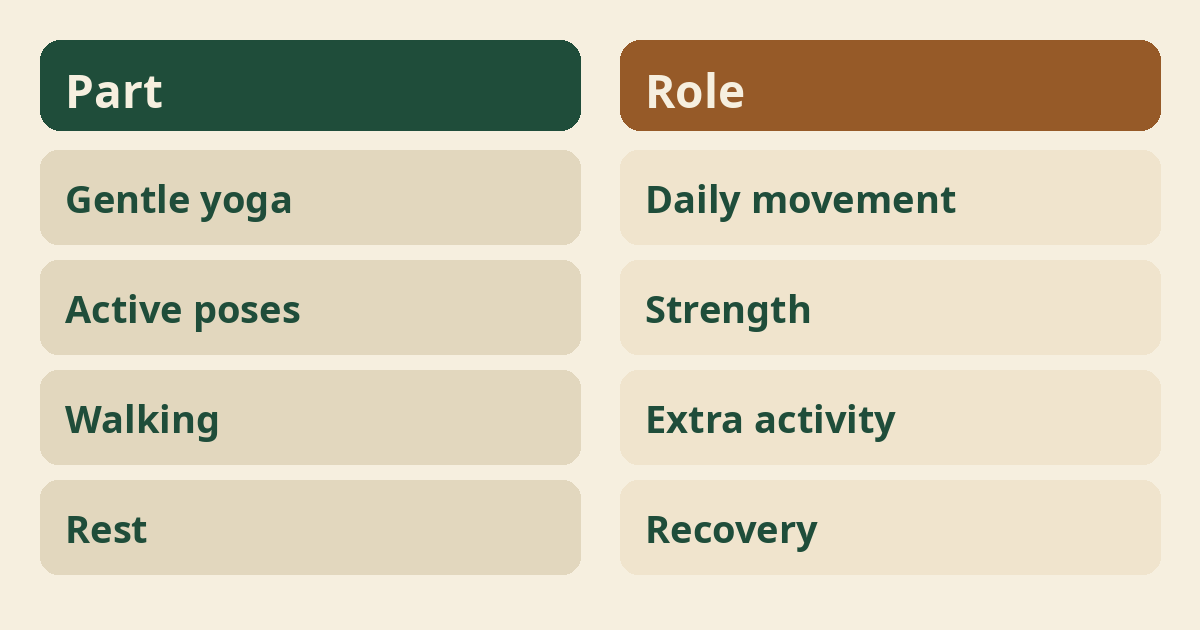
Aim for ten to twenty minutes of gentle yoga most days and build slowly. Our guide to a morning yoga routine is a simple start. A short routine you repeat is better than a long one you skip.
Add some stronger poses
Warrior, chair and plank poses build strength in the legs, core and arms. Our guide to warrior pose explains how to begin. Hold for a few breaths. Use support and stop if you feel pain.
Combine yoga with other movement
Walking, cycling, swimming or strength training can add the activity that yoga alone may not provide. Our guide to yoga for runners shows how yoga supports other exercise. Choose activities you enjoy.
Do not skip rest
Rest and sleep are part of a healthy routine, and a restorative session can be as useful as an active one. Our guide to restorative yoga explains gentle recovery practice. Tired bodies cope poorly with hard effort.
What about food?
A balanced diet matters more for weight than yoga alone, so ask a doctor or dietitian for advice that suits you. Avoid crash diets or extreme rules. Yoga is not a reason to skip meals. Do not practise right after a heavy meal.
What about mindful eating?
Eating slowly, without screens, and noticing when you feel full can help you enjoy meals and listen to your body. Our guide to how to meditate explains attention practice that can carry into meals. Be kind to yourself and avoid guilt.
Is hot yoga better for weight loss?
Hot yoga may make you sweat more, but sweating is not fat loss, and heat carries risks for some people. Speak to a doctor before trying hot classes if you have heart or blood pressure concerns, or are pregnant. Stay hydrated and leave if you feel faint.
What if you have extra weight?
Yoga can be adapted to any size, with props, wider stances and chair versions. Our guide to chair yoga and yoga props show ways to practise comfortably. Tell your teacher about any pain or limits.
Is it safe for the knees and back?
Yoga is generally gentle, but extra weight can load the knees and back, so choose supported poses and go slowly. Our guide to yoga for knees and yoga for back pain explain safe habits. Stop if you feel pain.
How should you measure progress?
Notice energy, sleep, mood, strength and how clothes feel rather than relying only on the scale. Weight can swing from day to day. Write a note each week about how you feel. These signs are easier to follow and kinder to your mind.
How often should you practise?
Three to five short sessions a week is a good aim for beginners. Our guide on how often to do yoga gives ideas. Add rest days. Build slowly.
What mistakes should you avoid?
Expecting fast results, comparing yourself with others, over exercising and ignoring pain. Be patient. Fitness grows slowly. Avoid punishing yourself for missed days.
How can you stay motivated?
Set a small goal, track your sessions and practise with a friend or class. Our guide to yoga class etiquette helps you feel comfortable in a class. Celebrate small wins.
Is yoga a replacement for medical care?
No. Yoga does not treat obesity or any medical condition. If weight affects your health, work with a doctor or dietitian. Yoga can support their advice. Never stop medicines or advice because of yoga.
What about pregnancy, children and older adults?
Speak to a doctor first, because needs and risks are different. Our guide to prenatal yoga and yoga after 50 show gentle options. Never put children on a weight loss plan without a doctor.
A simple weekly plan
Try three gentle sessions, one stronger session, a walk or other activity and a restorative session. Keep each session short. Adjust to your energy. Rest when needed.
When should you see a doctor?
See a doctor before starting if you have a health condition, injury, pregnancy, an eating disorder history or any concern about your weight. Stop if you feel pain, dizziness or breathlessness. This guide is general education, not medical advice.
How do you build a habit that lasts?
Choose a small, regular session, link it to an existing routine and reward yourself with something kind, not food. A habit sticks when it is easy. Lay out your mat the night before. Keep sessions short on busy days. If you miss a day, begin again without guilt. Long term consistency matters far more than any single hard workout.
How does stress affect weight?
Stress can change sleep, appetite and energy, which can make healthy routines harder to keep. Calming practices such as slow breathing and gentle stretching may help you feel more settled. They are not a weight treatment, but they can support the habits around it. Our guide to belly breathing is a simple place to start.
How should you talk to yourself?
Use kind, encouraging words, focus on what your body can do and avoid harsh self criticism. Shame rarely helps people keep healthy habits. Notice small wins such as a longer hold or an easier breath. Respect your body at every size, and treat movement as care, not punishment.
Where can you get support?
A doctor, dietitian, qualified teacher or supportive friends can help you set realistic goals and stay safe. Ask for advice that suits your health and background. Join a beginner class where you feel welcome. If you feel anxious about food or body image, speak to a professional, because support is available and asking is a sign of strength.
Where to read next
For a calm, beginner-friendly start, Ranjana Sinha’s Begin Where You Are is written for people who want simple steps. Our guide to starting a home yoga practice adds a gentle routine you can follow at home.
Frequently asked questions
Can yoga help me lose weight?
It can support healthy habits, but it is rarely a fast way to lose weight on its own.
Which yoga burns the most calories?
Faster, active styles use more energy than gentle ones.
Is hot yoga better for weight loss?
Sweating is not fat loss, and heat has risks for some people.
How often should I do yoga?
Three to five short sessions a week for beginners.
Should I see a doctor first?
Yes if weight is a health concern or you have any condition.
The bottom line
Be patient and kind. Build steady habits, use yoga as one part of a healthy routine and ask a professional for personal advice.

