
Yoga links movement, breath and quiet attention, while Pilates is a modern method built around core strength and controlled movement. Both are gentle, low impact and good for beginners. This guide compares them side by side so you can choose what fits you.
This is general education, not medical advice. If you have an injury, are pregnant or have a health condition, check with your doctor before starting yoga or Pilates.
What is the main difference between yoga and Pilates?
Yoga links movement, breath and quiet attention with roots in an ancient Indian tradition, while Pilates is a modern exercise method that focuses on core strength and controlled movement. Both are low impact and suit beginners. Yoga includes poses, breathing and rest, and often some reflection. Pilates is built around precise exercises, often on a mat or a special machine, that train the muscles of the trunk. Many people enjoy both. Our guide to the benefits of yoga explains what yoga offers.
Where did each one come from?
Yoga comes from India and is thousands of years old, while Pilates was created in the early twentieth century by Joseph Pilates. Yoga began as a wider spiritual practice. Our guide to the eight limbs of yoga explains that background. Pilates was designed as a system of exercise for strength and body control.
How do the goals differ?
Yoga aims for a balance of body, breath and mind, while Pilates aims mainly at core strength, posture and control. Yoga classes may end with deep rest. Pilates classes tend to stay focused on exercises from start to finish. Neither is better in every way. The right choice is the one you enjoy and will keep doing.
How do the classes feel?
A yoga class usually flows or holds poses with calm breathing, while a Pilates class has small, precise movements with a steady focus on the middle of the body. In yoga you may stretch, balance and rest. In Pilates you may do many controlled repetitions. Some people find yoga more calming and Pilates more like a workout. Our guide to hatha yoga describes a gentle yoga class.
How does breathing differ?
Yoga often uses slow, deep breathing through the nose, while Pilates often uses a deliberate breath timed with each movement. Our guide to pranayama explains yoga breathing. In both practices, breathing is meant to support movement and keep you steady, not to strain.
Which is better for flexibility?
Yoga is usually the stronger choice for flexibility because many poses are held to stretch muscles gently. Pilates also improves mobility, but its focus is more on strength. Our guide to yoga for flexibility shows how to start safely.
Which is better for core strength?
Pilates puts the core at the centre of almost every exercise, so many people find it more targeted for the trunk. Yoga builds core strength too, through poses like plank and boat. If strong abdominal and back muscles are your main goal, Pilates may feel more direct.
Which is better for balance and posture?
Both help, with yoga training balance in standing poses and Pilates training postural control through core work. Our guide to yoga for posture explains posture habits. Strong, balanced muscles help you stand and sit well.
Which is better for stress?
Yoga often has more calming elements, such as long breathing, rest and quiet attention, but some people also find Pilates relaxing. Our guide to yoga for stress relief has ideas. Neither is a treatment for stress or anxiety. Speak to a doctor if stress feels heavy.
Which is better for the back?
Both can be gentle for the back when done with care, but speak to a doctor or physiotherapist first if you have back pain. Our guide to yoga with a bad back explains safe habits. A good teacher will offer options for tender backs.
Which burns more calories?
Neither is a high calorie burner compared with running or cycling, and the amount depends on the class and your effort. If weight loss is your goal, remember that no single exercise does the job alone. Choose something you enjoy. Our guide to yoga vs gym compares yoga with other exercise.
What equipment do you need?
Yoga needs a mat and maybe a block and strap, while mat Pilates needs a mat and sometimes a small ball or band. Our yoga mat guide and yoga props guide explain basics. Pilates studios may also use machines called reformers.
Which is easier for a complete beginner?
Both are beginner friendly, and a gentle yoga class or a beginner mat Pilates class are both good places to start. Look for classes labelled beginner or gentle. Tell the teacher you are new. Our guide to yoga class etiquette explains what to expect.
Which is better for older adults?
Both can suit older adults when taught gently, and chair yoga and gentle Pilates are common options. Our guide to yoga after 50 and chair yoga show supportive ways to begin.
Can you do both?
Yes. Many people combine them, using Pilates for core strength and yoga for stretching and calm. One or two classes of each per week is plenty for a beginner. Rest between sessions. Listen to your body.
Which is better at home?
Both can be done at home with videos, but a live class helps you learn good form. Our guide to starting a home yoga practice explains how to set up. Start with short sessions.
How should you choose a teacher?
Look for a qualified teacher who explains clearly, offers options and respects your limits. Ask about their training. Try a class before you commit. Good teachers welcome beginners and questions.
What about cost?
Costs vary, so compare drop in prices, class packs and free videos before you commit. Yoga can be done cheaply at home or in community classes. Pilates studios with machines are often more expensive. Zero cost options exist for both.
What about injury risk?
Both are low risk when done gently, but anyone can strain by pushing too hard. Go slowly, use support and stop if you feel pain. Tell your teacher about injuries. Pain is a signal to stop.
How do you decide?
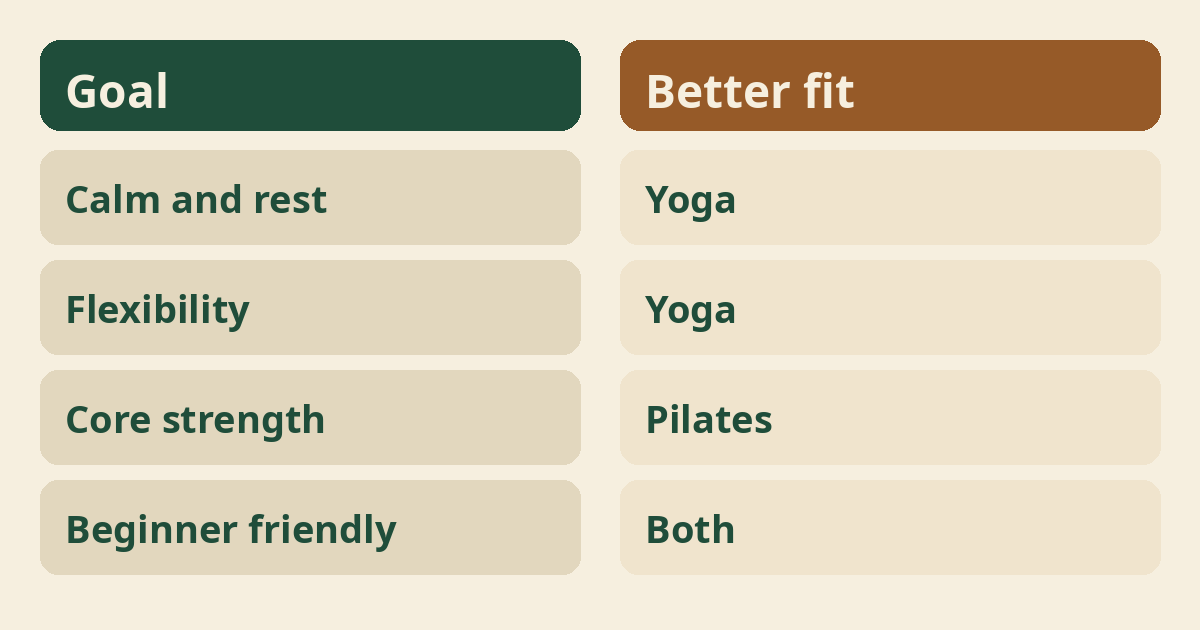
Choose the practice that matches your main goal and that you enjoy, then try a class of each. If you want calm and flexibility, start with yoga. If you want core strength and control, try Pilates. If you cannot decide, try both for a month.
Is either one a cure?
No. Neither yoga nor Pilates treats or cures a disease. Both are forms of gentle exercise that many people enjoy. The National Center for Complementary and Integrative Health notes that research on yoga is still developing. Use them as part of a healthy routine, not a replacement for medical care.
When should you see a doctor?
See a doctor before starting if you have an injury, health condition, pregnancy or any concern. Stop if you feel pain, dizziness or breathlessness. This guide is general education, not medical advice.
What should you wear?
Wear comfortable, stretchy clothes that let you move freely, and go barefoot or wear grip socks for Pilates. Avoid anything too loose that falls over your face in poses, or too tight to breathe easily. For yoga, bare feet help you grip the mat. Some Pilates studios ask for grip socks, so check before your first class.
What should you expect in a first class?
Expect a short introduction, gentle warm up, simple movements and a quiet cool down, with the teacher offering easy options. Arrive a little early and tell the teacher you are new. Watch, listen and do only what feels right. It is normal to feel a bit awkward at first. Everyone starts somewhere, and most teachers love to see new students.
How long until you notice changes?
Many people feel better in how they move within a few weeks of regular practice, though results vary. Two or three sessions a week is a good rhythm. Notice small things, such as easier breathing, steadier balance or less stiffness. Avoid comparing yourself with others. Consistency matters more than intensity.
What mistakes do beginners make?
Pushing too hard, holding the breath, skipping warm ups and comparing themselves with others are common mistakes. Go slowly, breathe steadily and use options when you need them. A smaller movement done well is better than a big one done badly. Rest when you are tired.
Where to read next
For a calm, beginner-friendly start, Ranjana Sinha’s Begin Where You Are is written for people who want simple steps. Our guide to starting a home yoga practice adds a gentle routine you can follow at home.
Frequently asked questions
Is yoga or Pilates better for beginners?
Both suit beginners. Choose the one you enjoy.
Which is better for flexibility?
Yoga is usually stronger for flexibility.
Which is better for core strength?
Pilates focuses more directly on the core.
Can I do yoga and Pilates in the same week?
Yes. Many people do both.
Is Pilates a type of yoga?
No. They are separate practices with different origins.
The bottom line
Both practices are kind to the body. Try a class of each and keep the one you enjoy.

