
Meditation may help you feel calmer under stress. Try five to ten minutes a day of slow breathing, a body scan or grounding, and use short pauses in your day. It supports coping, but it is not a treatment, and heavy or lasting stress deserves a doctor’s attention.
This is general education, not medical advice. If stress is heavy, lasts for weeks or affects your health, speak with a doctor or mental health professional.
Can meditation help with stress?
Many people find that meditation helps them feel calmer and handle stress more easily, although it is not a treatment for any condition. Research on mindfulness and stress is still growing. The National Center for Complementary and Integrative Health notes that mindfulness-based practices may help some people with stress and related problems, and that they are generally considered safe for healthy people. It works best as one part of a wider routine that includes sleep, movement and support from others.
How do you meditate for stress step by step?
Sit comfortably, slow your breathing and rest your attention on the breath or the body for five to ten minutes. You do not need any special skill.
- Find a quiet place and sit with a tall, relaxed spine.
- Close your eyes or soften your gaze.
- Take three slow breaths, letting each out-breath be a little longer.
- Notice where you feel tension, such as the jaw, shoulders or belly.
- Let your attention rest on the breath, and let tense areas soften.
- When thoughts about your worries arise, note them gently and return to the breath.
- Finish with a slow breath and a stretch.
Which technique is best for stress?
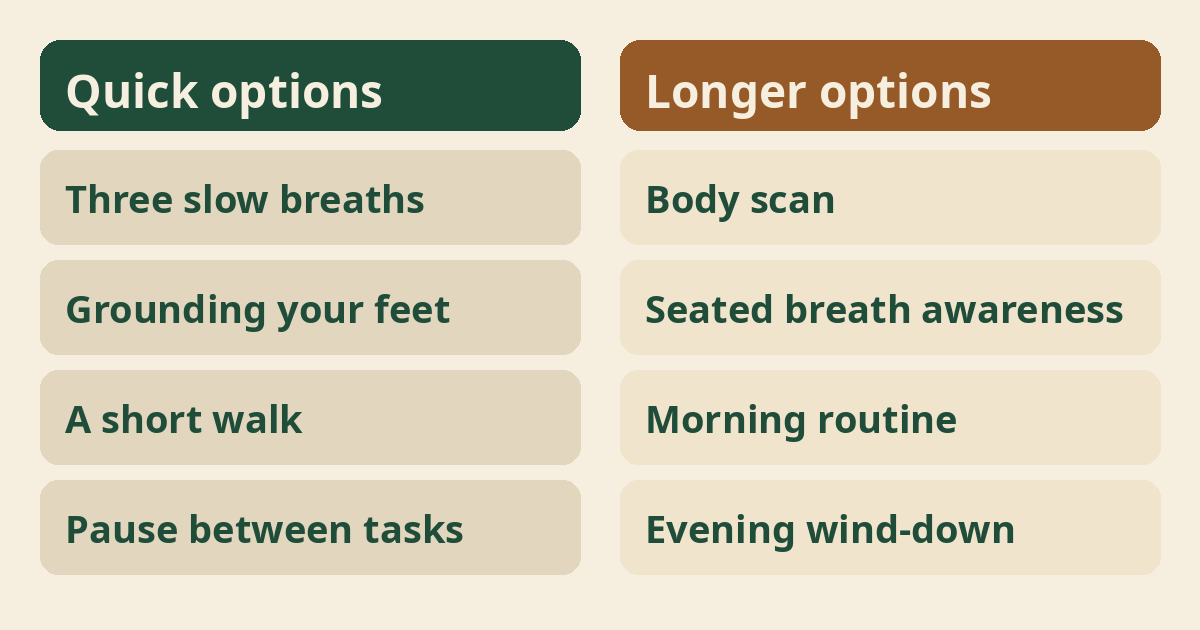
Simple breath awareness, a body scan and short pauses during the day are good starting points. There is no single best method. Some people like the structure of a body scan, others prefer plain breath awareness. Try each for a week and see what you like. Our guide to grounding meditation is a helpful quick option when stress spikes.
How long should you practise?
Five to ten minutes a day is enough to start, and even two minutes helps on a busy day. Regular practice matters more than length. If you like it, you can extend gradually. Our guide on how long you should meditate gives a simple plan, and our article on meditating for too long explains when to stop.
What breathing helps when you feel stressed?
Slow, relaxed breathing with a slightly longer out-breath is a calm and widely used approach. Breathe in through the nose for about four counts and out for about six, without strain. Stop if you feel dizzy. Avoid fast or forced breathing when you are tense. Our pranayama for beginners guide has other easy breathing practices.
What about a body scan?
A body scan is a slow check-in from your feet to your head, which can help you release tension you did not notice. Lie down or sit and move your attention slowly through each part of the body. Do not try to change anything, just notice. It usually takes five to fifteen minutes. If lying down makes you sleepy, sit instead.
Can you meditate in short pauses during the day?
Yes, a minute or two of breathing between tasks is a practical way to manage stress as it builds. You can pause before a meeting, after a tough call or while waiting for a kettle. Our guide to meditating at work has more ideas for fitting practice into a busy day.
When is the best time of day?
Morning helps you start steady, and evening helps you let go of the day, so pick the time you can keep. Some people do a short session at both ends of the day. Our guide to morning meditation and our guide to meditating before bed cover each in detail.
How does movement fit in?
Gentle movement such as walking or yoga often helps release stress and pairs well with meditation. A walk can be practised as meditation too, as in our walking meditation guide. For a gentle seated option, see our chair yoga for beginners. Regular movement supports sleep and mood as well.
What if meditation makes you more anxious?
Shorten the session, keep your eyes open, return to your feet or breath and consider guidance from a professional. Some people feel uneasy when they sit still with their thoughts. This is not a failure. Try shorter sessions, grounding or walking meditation. If anxiety continues, speak with a doctor or mental health professional. This guide is general education, not medical advice.
How does yoga view stress?
Yoga sees a steady mind as the result of ethical living, healthy habits, breath and attention. Our guide to the eight limbs of yoga explains how these parts support each other. Meditation is one part of a whole approach, not a quick fix.
How do you know if stress is building?
Common signs include a tight jaw, shallow breathing, poor sleep, short temper and trouble concentrating. Noticing early gives you more choices. A quick check-in during the day, asking where you feel tension, lets you take a few slow breaths before stress grows. If these signs are strong or constant, speak with a doctor. They can also be linked to other health issues that deserve attention.
Can a short evening routine help?
Yes, a few minutes of quiet breathing and a few gentle stretches can help you release the day. Turn off screens, dim the lights and sit for five minutes. Think of one thing that went well. Then go to bed at a regular time. Over a week or two, many people find that the routine itself signals the body to settle.
Should you meditate with others or alone?
Both are fine, and some people find a group helps them stay consistent. A local class, a friend or an online sitting can add support. Alone at home, you can keep things simple and flexible. If you try a group, choose one that is gentle and respects your limits, and tell the teacher about any health concerns.
What does a realistic first week look like?
Aim for three to five short sessions, notice what helps, and do not judge the results. For example, try a five-minute breath practice on Monday, a body scan on Wednesday, a short walk with attention on Friday and a grounding pause whenever you feel rushed. Keep a note of how you feel afterwards. By the end of the week, you will know which practice you want to repeat.
Can you combine meditation with journaling?
Yes, a few lines in a notebook after sitting can help you see what triggers your stress and what helps. Write what happened, how your body felt and what helped, in plain words. After a couple of weeks, patterns tend to show. You might notice that certain times of day are harder, or that a short walk lifts your mood. Keep it brief, so that it does not become another chore.
What else helps with stress?
Good sleep, regular movement, time outdoors, talking to people you trust and sensible limits on work all help. Meditation is one tool among many. If stress is heavy or lasts for weeks, it is wise to see a doctor or counsellor. You do not have to manage alone, and getting support is a strength.
Common myths about meditation and stress
Some ideas set unrealistic hopes. Here are a few to rethink.
- Myth: meditation removes all stress. It helps you respond, not escape.
- Myth: you need a long session. Short sessions help.
- Myth: you must have a quiet mind. A busy mind is normal.
- Myth: it replaces medical care. It does not.
How do you keep going when it feels pointless?
Lower the bar, shorten the session and tie it to a daily habit. Some days nothing seems to happen. That is normal. Keep the time short and the expectations small. Our guide on common obstacles to meditation offers more ideas for staying with it.
Where to read next
For a calm, beginner-friendly start, Ranjana Sinha’s Begin Where You Are is written for people who want simple steps. Our guide to starting a home yoga practice adds a gentle routine you can follow at home.
Frequently asked questions
Can meditation reduce stress?
Many people find it helps them feel calmer. It is not a treatment, and results vary.
How long should I meditate for stress?
Five to ten minutes a day. Two minutes counts on busy days.
What is the best meditation for stress?
Breath awareness, a body scan or grounding. Try each and keep what you like.
Can I meditate when I am already stressed?
Yes. Short breathing or grounding is a good option in the moment.
What if it makes me more anxious?
Shorten the session, keep your eyes open and consider help from a professional.
Should I see a doctor?
If stress is heavy or lasts for weeks, yes.
The bottom line
Meditation is a useful, low-cost tool for stress. Keep sessions short, try a few methods and combine them with sleep, movement and support. See a professional if stress is heavy.

