You get out of the car after a long drive and your lower back feels like a stiff board. Maybe it happens after a shift on your feet, or after hours at a laptop. This guide shows how to start yoga for lower back pain in a slow, careful way. You will find simple poses, breathing, safety checks and clear limits.
This article is general education about yoga and is not medical advice. If back pain is new, strong or comes with other symptoms, speak with a doctor or physical therapist before you stretch.
What is yoga for lower back pain?
It is a set of slow movements, supported breathing and body awareness chosen with a sore low back in mind. The poses are usually low-impact and easy to adjust. You move within a comfortable range and stop when something feels sharp. Many people use this style of practice to feel more at ease in their bodies. It is closer to mindful movement than to exercise class.
Why do so many people have a sore lower back?
Long sitting, standing, lifting and low activity are common reasons the lower back feels tight or tired. The low back carries a lot of your upper body weight all day. Hours in one position can leave the muscles around it stiff. Stress and poor sleep can also make the area feel worse for some people. A doctor can tell you what is behind your own pain.
Why do people try yoga for a stiff low back?
Many people try yoga because it asks for slow movement, steady breathing and attention, all at an easy pace. Walking into a gym with a sore back can feel risky. A home yoga session feels quieter and more private. You choose each movement and you can back off at any time. That sense of control is a big reason beginners stay with it.
Is this a treatment for back pain?
No, yoga is not a treatment for any back condition, and it does not replace care from a licensed professional. Think of it as a way to move and breathe, not a way to fix a diagnosis. Back pain has many causes, and some need medical attention. Use yoga alongside any advice your doctor gives you. If the two ever seem to clash, follow your doctor.
Talk to a doctor first
Check with a doctor or physical therapist before starting if your pain is new, severe or lasting. This matters most after an injury, a fall or an accident. It also matters if you have had back surgery or a spine diagnosis. Bring a short list of the poses you plan to try and ask which to skip. Their answer is more reliable than any article, including this one.
Warning signs that mean stop and call a doctor
Numbness, leg weakness, fever, pain after a fall or trouble with bladder or bowel control need prompt medical care. Do not try to stretch through these signs. Sharp pain that travels down a leg should also be checked. Pain that wakes you at night is worth mentioning too. Yoga can wait until you have been seen.
What do you need before you start?
You need a mat or a folded blanket, loose clothes, a flat floor and about fifteen quiet minutes. A towel works if you have no mat. A sturdy chair is useful for seated options. Keep a pillow close for your head or knees. Silence your phone so you can listen to your body.
Which props make a sore back feel safer?
Blocks, a bolster, a strap and a folded blanket let you meet the floor halfway instead of forcing a position. Props reduce strain and make poses feel steadier. A stack of books can replace a block. A rolled towel can replace a bolster. If you want ideas, see our guide to simple yoga props that make beginner poses easier.
How should you warm up?
Start with a few minutes of slow breathing and small movements before any deeper stretch. Roll your shoulders and sway your hips from side to side. Walk around the room for a minute. Cold muscles can feel tight, and a short warm up helps you notice how you really feel. Never skip it on a stiff day.
How does breathing fit in?
Slow breathing into the belly gives your ribs and back a steady rhythm to move with. Place a hand on your stomach and breathe in through your nose. Let the belly rise, then breathe out for a little longer. Many people find this settles their attention. Our page on belly breathing for beginners walks through it step by step.
How do you know the right amount of stretch?
A good stretch feels mild and steady, while pain that is sharp, hot or electric means you should ease off. Use a scale of one to ten and stay around three or four. Pause if your breath becomes short. Soreness the next day should be light, not worrying. When unsure, do less.
How long should a session last?
Ten to twenty minutes is plenty for a beginner with a sore low back. A short, regular practice usually works better than one long, tiring session. Set a timer so you are not tempted to push. You can split it into two small sessions in a day. End while you still feel good.
How often should you practice?
Many beginners do well with three or four short sessions a week, adding more only if the back feels comfortable. Rest days matter as much as practice days. Pay attention to how you feel the next morning. If you are unsure about pacing, read how often you should do yoga. Results vary from person to person.
Step 1: Lie down and settle
Begin lying on your back with knees bent and feet flat on the floor. Rest your arms by your sides. Let the back of your body feel supported by the floor. Take five slow breaths and notice where you feel tension. Do not try to change anything yet.
Step 2: Pelvic tilts
Pelvic tilts are small rocking movements that help you feel the curve of your low back. On an out-breath, gently flatten your low back toward the floor. On the in-breath, let the curve return. Keep the motion small and smooth. Do eight rounds, then rest.
Step 3: Knees to chest
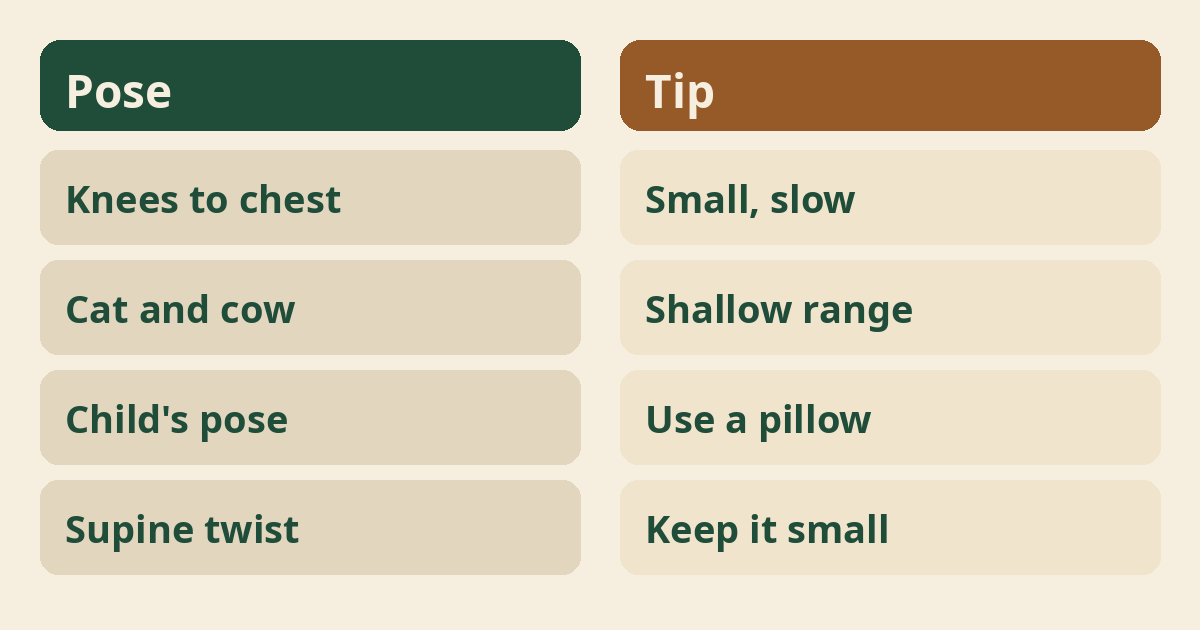
Hug one knee at a time toward your chest to ease a tight low back. Rest your hands behind the thigh, not on the kneecap. Keep the other foot on the floor or the leg long, whichever feels better. Breathe slowly for five breaths, then switch. Stop if you feel any pinching in the hip.
Step 4: Supine twist
A small lying twist lets the spine rotate while the floor supports your weight. Drop both knees to one side and keep your shoulders soft on the floor. Place a pillow between your knees if it helps. Stay for five breaths, then switch sides. Keep the twist small if you feel any strain.
Step 5: Cat and cow
Moving between a rounded and an arched back on hands and knees lets the spine move in small steps. Place your hands under your shoulders and knees under your hips. Breathe out as you round, breathe in as you lift your chest a little. Keep the movement slow and shallow. Read more in our guide to cat cow pose for beginners.
Step 6: Child’s pose
Child’s pose is a resting shape where the hips sink back toward the heels and the back lengthens. Place a pillow between your thighs and calves if sitting back is hard. Rest your forehead on a block or folded arms. Stay for five to ten slow breaths. See child’s pose for beginners for more options.
Step 7: Bridge with small lift
A low bridge asks the legs and hips to share the work with the back. Lie down with knees bent and press your feet into the floor. Lift your hips only a few inches and hold for three breaths. Lower down slowly one part of your spine at a time. Skip it if it pinches your back.
Step 8: Final rest
Ending in a quiet rest lets the body settle after movement. Lie on your back with a pillow under your knees if that feels better. Let your breathing go back to normal. Stay for two to five minutes. Roll to one side before you get up.
Can you do yoga with a bad back?
Many people with back discomfort can practice yoga with changes, but the right changes depend on your situation. Smaller movements, props and fewer poses are usually the starting point. A professional can say which poses suit you. We cover this in more detail in our post on can-you-do-yoga-with-a-bad-back. Our broader post on yoga-for-back-pain gives a wider overview of back-friendly poses. Read can you do yoga with a bad back before you begin.
What if the pain runs down your leg?
Pain that travels down one leg is a different situation and deserves a doctor’s visit before you stretch. Our sciatica pillar post, yoga-for-sciatica-for-beginners, explains why this area needs extra care. Do not guess at the cause on your own. Wait for professional advice. Then use a more careful, tailored approach.
Mountain pose for posture awareness
Standing tall with even weight on both feet can help you notice how you hold your back during the day. Place your feet hip width apart and let your arms hang. Stack your ribs over your hips without arching. Breathe slowly and feel the floor. Learn the details in mountain pose for beginners.
Puppy pose for a sore back
A half-way fold on hands and knees stretches the spine and shoulders with support from the floor. Walk your hands forward and keep your hips above your knees. Let your chest sink toward the mat. Use a pillow under your chest if needed. Our page on puppy pose for beginners shows how.
Butterfly pose for tight hips
Seated butterfly pose opens the hips, and tight hips often go hand in hand with a tired low back. Sit on a folded blanket so your hips sit higher than your knees. Bring the soles of your feet together. Stay tall and breathe. See butterfly pose for beginners.
Garland pose with support
A supported deep squat can feel good for some people, but it is not for everyone. Place a block or folded blanket under your hips. Keep your heels near the floor if possible. Skip it if you have knee pain. Our guide to garland pose for beginners has options.
Thunderbolt pose for a calm seat
Sitting on your heels gives a simple, upright seat for breathing practice. Place a folded blanket between your thighs and calves if your knees feel tight. Rest your hands on your thighs. Stay for a few breaths. Read thunderbolt pose for beginners.
Why do hips matter for the low back?
Stiff hips can leave the low back to do extra work when you bend, walk or sit. Many people notice they feel looser in the back when the hips move more freely. That is why practice often includes hip stretches. Move slowly and avoid forcing a stretch. See yoga for hips for beginners.
Do neck and shoulders play a part?
Tension in the neck and shoulders often shows up together with an achy back after desk work. A few shoulder rolls and a soft neck stretch can break up long sitting spells. Take short breaks every hour if you can. Our page yoga for neck and shoulders is a good companion. Ask a professional if the pain spreads.
Can you practice at your desk?
Yes, a few seated movements between tasks can break up long stretches of sitting. Sit tall, breathe slowly and move your spine in small circles. Stand and stretch your arms overhead. Make it a habit at set times of the day. Try yoga at your desk for beginners.
Why does balance practice matter?
Standing balance work builds steadiness in the legs and core, which many people find supports everyday movement. Hold a wall or chair at first. Keep the movement slow. Stop if you feel dizzy. See yoga for balance for beginners.
What are common beginner mistakes?
The most common mistakes are going too deep, holding the breath and skipping the warm up. Others include comparing yourself with photos online and practicing through sharp pain. Rushing leads to soreness. Slow down and use props. Small, steady practice beats an intense week followed by a break.
Which poses should you skip at first?
Deep forward folds, strong backbends and big twists are best left until a professional says they suit you. These shapes can load the low back in ways a beginner may not expect. Stay with simple floor and hands and knees movements. Add more later if your body stays comfortable. Patience is part of the practice.
Is yoga safe during pregnancy?
Pregnancy changes which poses are suitable, so ask your doctor and look for classes made for it. Some positions and twists are not recommended. A teacher trained in prenatal work can guide you. See prenatal yoga vs regular yoga to learn the differences.
What benefits might you notice?
Many people find that regular, easy yoga leaves them feeling looser, more aware of posture and more relaxed, though results vary. The National Center for Complementary and Integrative Health shares general information on yoga and back pain, see National Center for Complementary and Integrative Health. Do not expect fast changes. Keep your expectations realistic. Track how you feel in a small notebook.
How can you build up slowly?
Add one new pose or one extra minute at a time, and only when the last session left you comfortable. A good rule is to change one thing each week. If your back feels worse, go back to the last easy version. Progress is not a straight line. Rest days count.
Should you find a teacher?
A qualified teacher can watch your form and suggest changes that a video cannot. Look for someone who asks about injuries before class. Tell them about your back. Choose a slow class labeled beginner or restorative. A good teacher never pushes you through pain.
What mindset helps most?
A patient, curious attitude helps more than effort or competition. Make each session a check-in with your body. Skip a day when you are tired. Notice small changes without judging them. Calm consistency is the aim.
What should you do on a flare-up day?
On a rough day, choose rest, a short walk or a few slow breaths instead of pushing through a full session. Lie down with your knees bent and a pillow beneath them. Breathe slowly for a few minutes. Contact your doctor if the pain stays strong. There is no prize for forcing it.
Where to read next
For a calm, beginner-friendly start, Ranjana Sinha’s Begin Where You Are is written for people who want simple steps. Our guide to starting a home yoga practice adds a gentle routine you can follow at home.
Frequently asked questions
Is it okay to do yoga every day with a sore low back?
Some people do short daily sessions, but ask your doctor and listen to how your back feels the next morning.
What is the safest first pose to try?
Lying on your back with bent knees and slow breathing is a low-risk place to begin.
Should I feel a stretch in my low back?
You may feel a mild, comfortable pull, but sharp or burning pain is a sign to stop.
Do I need to be flexible to begin?
No, props and small movements let you start from wherever you are today.
When should I see a doctor instead of rolling out my mat?
See one if the pain is severe, follows an injury, spreads down a leg or comes with numbness or weakness.
The bottom line
Go slowly, stay curious and let your doctor guide you on anything beyond a simple, easy practice.