
Hours on the bike can leave your back tight, your hips locked and your shoulders creeping up toward your ears. Yoga for delivery riders is a simple way to loosen all of that in a few minutes a day, no gym or special gear needed. You do not need experience. Short, easy moves before a shift, during a slow break or after you park can help your body feel less beat up by the work. Here is how to start.
This guide is general education for healthy adults, not personal medical advice. If you have an injury, a health condition or pain that keeps coming back, talk with a doctor before you begin.
What is beginner yoga for delivery riders?
It is a short set of easy stretches and breathing built around the strain of riding all day. The moves target the exact spots riding hits hardest: the lower back, hips, neck, shoulders and wrists. Most poses are done standing or lying down, so you can practice almost anywhere.
Why do delivery riders try yoga?
Most riders start because their body feels worn down at the end of a shift. Long hours in one riding posture shorten the hip muscles and round the shoulders forward. A few minutes of stretching can undo some of that stiffness before it builds up.
How does yoga fit a rider’s day?
Yoga fits into the small gaps your work already has. You can do two stretches while waiting at a pickup point and a longer set after your last drop. Ten quiet minutes at home still count as a real session.
How do you start with almost no time?
Start with five minutes and one or two moves you actually enjoy. A habit that small is easy to keep even on your busiest days. You can always add more once it sticks.
Step 1: pick a short window
Choose one regular slot, like right after you wake up or when you park for the night. Tying yoga to a moment that already happens every day makes it much easier to remember. Keep the slot small so it survives hectic weeks.
Step 2: set up a small space
You only need a clear patch of floor about the size of a yoga mat. A quiet corner of your room works fine, and so does a sheltered spot outdoors. Keep a mat or towel rolled up nearby so setup takes seconds.
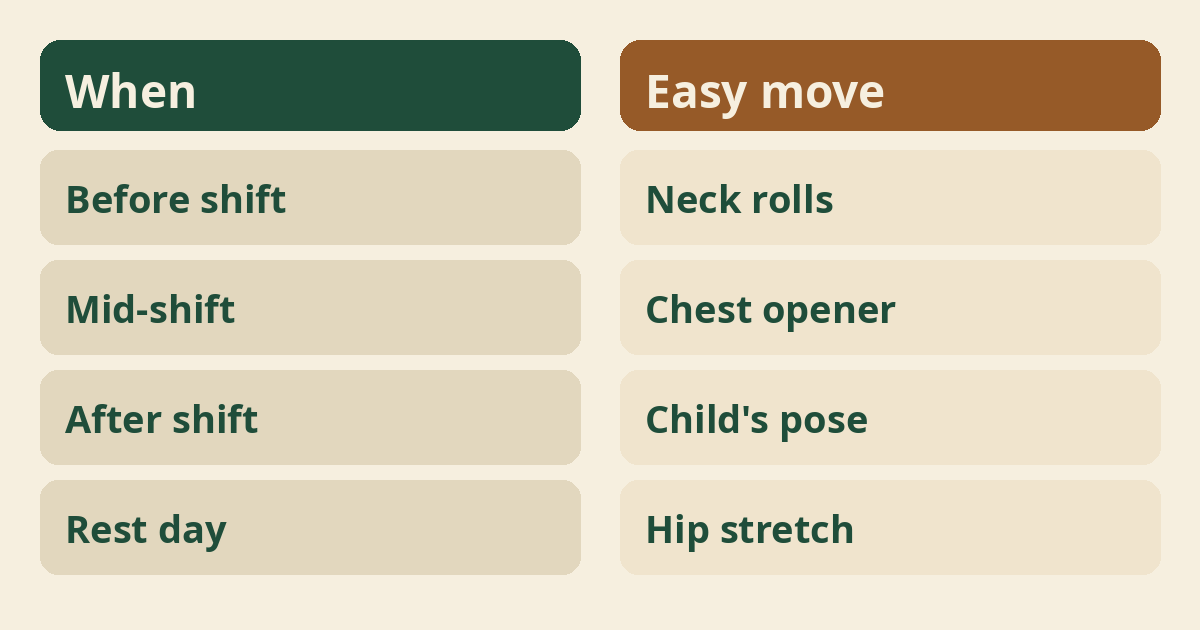
Step 3: ease your neck and shoulders
Slow neck tilts and shoulder rolls release the tension of looking at the road and phone. Drop your chin to your chest, then tilt gently to each side for a few breaths. Roll your shoulders back in big, slow circles, and see our guide to yoga for the neck and shoulders for more moves like these.
Step 4: loosen your hips
Low lunges and seated stretches open hips that have been folded all day. Step one foot forward into a low lunge and let your hips sink for a few slow breaths, then switch sides. Our guide to yoga for tight hips has more options if this area feels especially stuck.
Step 5: stretch your back
Slow spinal movements wake up a back that has held one position for hours. On your hands and knees, round your spine up and then let it sink down, moving with your breath; cat-cow pose is the classic version of this. If your back already troubles you, read doing yoga with a bad back before pushing further.
Step 6: end with breathing
Finish every session with a minute of slow breathing to settle your whole body. Lie or sit comfortably and let your belly rise as you breathe in and fall as you breathe out. Our belly breathing guide walks through it step by step.
Breathing basics on and off the bike
Slow, deep breaths calm the nervous system and loosen tight muscles at the same time. Breathe in through your nose for about four counts and out for about six. You can use this at red lights, at pickup points or lying in bed.
How long should a session be?
Five to fifteen minutes is plenty for a beginner. Short daily practice beats one long session a week because your body adapts to regular input. Add time only when the short version already feels easy.
How often should you practice?
A little bit most days works better than a lot once in a while. Aim for five or six short sessions a week, even if some are only a few minutes. Our article on how often to do yoga explains why consistency matters more than length.
Can you stretch during breaks?
Yes, short standing stretches fit perfectly into slow patches between deliveries. Try a chest opener with your hands behind your back or gentle side bends while you wait. Some of the moves in yoga at your desk adapt well to standing at your bike too.
Common mistakes to avoid
The biggest mistakes are pushing into pain and skipping warm-up. Cold muscles do not stretch well, so move slowly for the first minute or two. Sharp or shooting pain is a stop signal, not something to breathe through.
Props that make practice easier
A mat, a folded blanket and a belt or strap cover nearly everything a beginner needs. Household items work too: a towel instead of a mat and a backpack strap instead of a belt. See yoga props for beginners for simple swaps using things you already own.
Who should check with a doctor first?
Anyone with a recent injury, surgery or ongoing pain should talk to a doctor before starting. The same goes for dizziness, heart concerns or numbness in the hands or feet, which some riders notice. Getting cleared first lets you practice with confidence.
Is yoga a treatment for aches and pains?
No, yoga is not a treatment, a cure or a replacement for medical care. It is a gentle movement practice that many people enjoy as part of feeling better overall. Pain that is sharp, worsening or affecting your work deserves a proper medical look.
What benefits do riders notice?
Many riders say they feel looser, less achy and calmer, though results vary from person to person. Some notice better sleep and easier movement within a few weeks of steady practice, and research on yoga in general points in a similar direction National Center for Complementary and Integrative Health. Nothing is guaranteed, and the changes tend to come gradually.
Building up over time
Progression means adding a minute here or a new pose there, never forcing your body further. When a stretch feels easy for a week, hold it a little longer or try a slightly deeper version. Slow progress is real progress, and it lowers the chance of strain.
Working with a teacher
A teacher can check your form and adjust poses to fit a rider’s body. Even one or two classes, in person or online, can correct habits you would never spot alone. Tell the teacher about your work so they understand where your body is tight.
A mindset that keeps you going
Treat yoga like bike maintenance: small, regular care that keeps the machine running. Some days you will feel stiff and that is normal, not failure. Showing up for five minutes on a bad day counts just as much as a long session on a good one.
Can yoga help sore wrists?
Yes, gentle wrist circles and light stretches can ease the grip strain of handlebars. Make slow circles in both directions, then press your palms together and lower them until you feel a mild stretch. Keep every wrist move small and pain-free.
What about tight hamstrings?
Tight hamstrings are common in riders and respond well to patient, daily stretching. Try a standing forward fold with soft knees and let your upper body hang. Never bounce; just breathe and let gravity do the work.
Is it safe in a small room?
Yes, most of these moves need no more space than lying down with your arms out. Seated twists, forward folds and breathing exercises all work in a cramped room. Just clear anything sharp or breakable from around you first.
Morning or evening practice?
Both work, so pick the one that fits your shift pattern. A short morning set wakes the body up before the first delivery. An evening set helps you unwind and may make it easier to sleep.
Warming up first
Warm muscles stretch more easily and are less likely to complain. March in place, swing your arms and roll your shoulders for a minute before deeper stretches. On cold mornings, add a few extra slow movements before you fold or lunge.
Holding poses safely
Hold each stretch at a mild, comfortable pull, never at pain. Stay for three to five slow breaths and back off if the sensation grows sharper. A stretch should feel like a firm pull, not a pinch or burn.
Rest days and your body
Your body gets stronger between sessions, not during them. If you feel heavy or sore, swap the full routine for two minutes of breathing and one easy stretch. Rest is part of the practice, not a break from it.
Do you need a mat?
A mat helps with grip and comfort, but it is not required. A folded blanket or a carpeted floor works for kneeling and lying poses. If you buy one thing later, a simple mat is the most useful.
Yoga and sleep for night riders
Slow stretching and breathing before bed can help your body switch off after late shifts. Keep the lights low and skip anything that raises your heart rate. Child’s pose and a long forward fold are two calm ways to finish the day.
Tracking simple progress
Notice how your body feels at the end of a shift compared to before you started. You do not need an app or a chart. A quick mental note of stiffness, energy and sleep each week tells you whether the habit is helping.
Staying consistent on busy weeks
On packed weeks, shrink the session instead of skipping it. One stretch and ten slow breaths still keeps the habit alive. A tiny practice is always better than a perfect plan you never do.
Where to read next
For a calm, beginner-friendly start, Ranjana Sinha’s Begin Where You Are is written for people who want simple steps. Our guide to starting a home yoga practice adds a gentle routine you can follow at home.
Frequently asked questions
Will stretching make me too loose to ride safely?
No, short stretching sessions improve comfortable movement without reducing your control or strength on the bike.
What if I only have five minutes on a shift day?
Five minutes of one or two moves done daily is a real practice and far better than skipping entirely.
Can I do these stretches in my riding clothes?
Yes, standing and seated stretches work fine in normal clothes as long as nothing is too tight to move in.
My knees complain when I kneel. What can I do?
Fold a blanket under your knees for padding or swap kneeling poses for standing and lying versions.
Do I need to learn any pose names or Sanskrit?
Not at all; knowing what each move does for your body matters more than what it is called.
The bottom line
Start with five minutes today and let a stiff, tired body remind you why you kept going.

