
Your feet ache, your lower back is tight, and you have just spent eight hours standing on a hard shop floor. A short yoga routine at home can help your body unwind after shifts like that. You do not need special kit, a gym membership, or any experience. This guide shows retail workers how to start with ten quiet minutes, a few simple poses, and slow breathing, so your body gets looked after on work days and rest days alike.
This article is general education, not medical advice. If you have an injury, a health condition, or pain that keeps coming back, check with a doctor before you begin.
What is yoga for retail workers?
It is a short, simple yoga practice shaped around the strains of shop floor work. Long shifts mean hours of standing, walking, lifting boxes, and repeating the same movements. This kind of yoga focuses on the feet, legs, hips, back, neck, and shoulders, the areas that complain the most. Sessions are short enough to fit around rotas, and every pose here suits a complete beginner.
Why do retail workers try yoga?
Most people come to it because their body feels worn down by the end of the week. Standing all day can leave feet sore, calves tight, and the lower back stiff. Bending to low shelves and reaching to high ones adds strain on the shoulders. Many retail workers say a short evening practice helps them feel less stiff and sleep more easily, though results vary from person to person.
Is yoga after a long shift a good idea?
Yes, a slow and easy session after work is fine for most healthy adults. The key is to keep the intensity low when you are already tired. Skip strong flows and long holds on those days. Think of it as unwinding rather than exercising, and stop if anything hurts in a sharp or unusual way.
How do you start with ten minutes?
Begin with a small daily habit instead of a long weekly class. Pick a time you can keep, such as after dinner or before bed. Roll out a mat or a folded blanket, wear something you can move in, and follow a short set of poses. Ten minutes most days beats one long session you keep putting off.
Step 1: set up a small space
Clear a patch of floor about the size of a yoga mat. You do not need a home studio. A quiet corner of a bedroom or living room works well. Keep the floor clear of cables and furniture edges, and have some water nearby. Soft light in the evening can help your body shift into rest mode.
Step 2: warm up with easy movement
Start with two minutes of slow, simple movements to wake up stiff joints. Roll your shoulders, circle your ankles, and turn your head softly from side to side. Let your knees stay relaxed rather than locked. A warm body moves more comfortably, and cold muscles complain more after a day on your feet.
Step 3: choose poses for tired legs
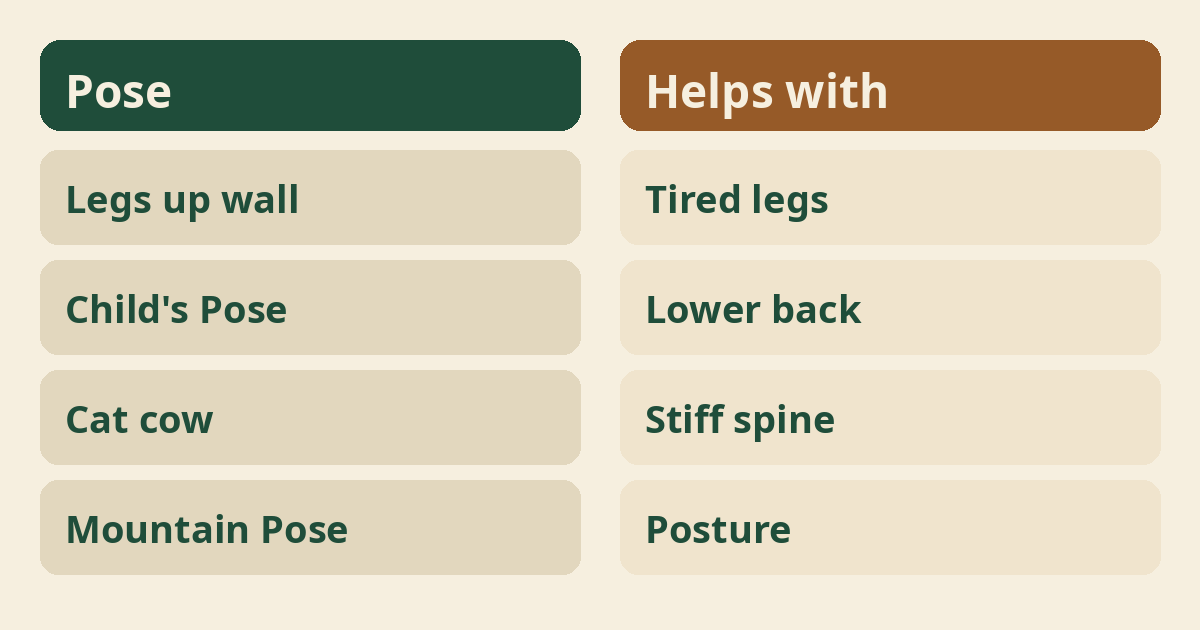
Pick two or three poses that target the legs and feet first. Legs up the wall is a favourite for people who stand all day: lie on your back and rest your calves on a chair or your legs against a wall. Child’s Pose gives the spine and hips a restful stretch. Hold each shape for several slow breaths.
Step 4: loosen the back and shoulders
Add one or two poses for the spine and upper body. A slow cat and cow flow on hands and knees moves the whole spine without strain, and cat cow is easy to learn even when you feel stiff. Follow it with a seated or standing stretch for the chest to undo hours of leaning forward at the till.
Step 5: finish with rest
End every session lying still for at least one minute. Lie on your back, let your arms and legs relax, and breathe slowly. This rest tells your nervous system that the working day is over. Many people find this quiet minute is the part they value most.
How should you breathe during yoga?
Breathe slowly through the nose and let the belly move with each breath. Slow breathing calms the body after a stressful shift. If deep breathing feels unfamiliar, belly breathing is a simple place to learn the pattern. Try making the out breath a little longer than the in breath to help the body settle.
How long should each session be?
Ten to twenty minutes is plenty for a beginner. Short sessions are easier to keep up when your rota changes each week. As the habit settles in, you can stretch some sessions to thirty minutes on quieter days. Consistency matters more than length.
How often should you practice?
Three to five short sessions a week suits most beginners. Daily practice is fine if sessions stay short and easy. Your body needs rest days too, especially when work is physically demanding. The guide on how often to do yoga explains how to find a rhythm that fits a changing shift pattern.
Morning or evening, which is better?
Either works, so choose the time you will actually keep. A short morning session can loosen a stiff body before a shift. An evening session helps you unwind and may make it easier to fall asleep. Many shift workers switch between the two depending on the rota, and that flexibility is fine.
What helps tired feet and legs?
Poses that elevate or stretch the legs bring relief to many people who stand all day. Legs up the wall, calf stretches at a wall, and slow ankle circles are all kind to heavy legs. Move into each shape slowly. If your feet are very sore, keep pressure off them and favour positions lying down.
What eases a stiff lower back?
Slow spinal movements and supported rest poses are the kindest options for a stiff back. The cat cow flow, a relaxed child’s pose, and lying with knees bent all help many people. Keep movements small at first. If back pain is severe or shoots down the leg, see a doctor before trying yoga; the article on yoga with a bad back covers this in more detail.
How do you release neck and shoulder tension?
Slow stretches and relaxed breathing help ease shoulders that have carried tension all day. Let your head tip softly to each side, roll the shoulders back, and open the chest. The routine in yoga for neck and shoulders fits well at the end of a shift. Never force the neck into deep ranges.
Can you fix slouched posture from the till?
Posture improves gradually with awareness and simple standing poses. Hours of leaning over a counter round the shoulders forward. Standing tall in mountain pose teaches you what upright feels like without strain. Practise it for a minute a day and notice how you stand at work.
What common mistakes should you avoid?
The biggest mistakes are pushing too hard, skipping rest, and comparing yourself to others. A tired body does not need a workout that leaves it more drained. Avoid bouncing into stretches, holding your breath, or copying advanced poses from videos. Slow and steady is the whole point here.
Do you need any props?
A mat is helpful, but household items cover most needs. A folded blanket cushions knees, a belt or dressing gown cord works as a strap, and a firm cushion can support seated poses. When you are ready to buy a few basics, the guide to yoga props explains what is worth having and what you can skip.
Can you do yoga on a break at work?
Yes, a few standing and seated moves fit into a ten minute break. You will not have space or privacy for floor poses, so keep it upright: shoulder rolls, a chest opener against a wall, calf raises, and a standing side stretch. The ideas in yoga at your desk adapt well to a stockroom or staff room too.
Who should be careful with yoga?
Anyone with an injury, joint problem, pregnancy, or ongoing pain should take extra care. Speak to a doctor or physiotherapist before starting if that sounds like you. Tell any teacher about your situation before a class. Skip poses that cause sharp pain, numbness, or dizziness, and come out of a pose slowly if you feel unsteady.
Is yoga a treatment for pain?
No, yoga is not a treatment, a cure, or a replacement for medical care. It is a form of movement and relaxation that many people find supportive alongside ordinary life. If you have a diagnosed condition or pain that does not ease, a doctor or physiotherapist is the right first stop. Think of yoga as a complement, not a fix.
What benefits do people notice?
Many people find regular practice leaves them feeling looser, calmer, and better rested, though results vary. Some notice less end of day stiffness, easier sleep, and a quieter mind after stressful shifts. Research organisations such as National Center for Complementary and Integrative Health study yoga for stress and back comfort, and findings so far are promising but mixed. Your own experience over a few weeks is the best guide.
Does yoga build strength and balance?
Yes, even easy poses build leg strength and steadiness over time. Standing poses ask the legs and core to hold you up, which supports the muscles you use at work. Better balance also lowers the chance of awkward slips on the shop floor. Progress is gradual, so give it weeks rather than days.
Will yoga make you more flexible?
Flexibility usually improves slowly with regular practice. Tight hamstrings and hips are common after years of standing work. Short, frequent stretches loosen them more safely than occasional intense sessions. You never need to touch your toes for yoga to be worthwhile.
How do you progress over time?
Add a little more only when the current routine feels comfortable. You might hold poses a breath or two longer, add one new pose a week, or try a slightly longer session on days off. Small steps keep the habit enjoyable. There is no deadline and no final level to reach.
Should you find a teacher?
A teacher helps, but it is not required to begin. A few beginner classes, online or in person, can show you correct alignment and build confidence. Look for teachers who welcome stiff, tired beginners rather than advanced students. Many retail workers prefer short home videos that fit unpredictable shifts.
Home practice or a studio class?
Home practice suits shift work because it bends around your rota. Studio classes offer feedback and motivation, but fixed times clash with changing shifts. A mix works well for many people: home sessions most days and an occasional class when the rota allows. Choose whatever you will keep doing.
What mindset helps with yoga?
Treat yoga as rest with movement, not another task to perform well. You are not being graded, and nobody is watching. Some days you will feel stiff and distracted, and that is normal after long shifts. Showing up for ten quiet minutes is the whole achievement.
Do you need rest days?
Yes, rest days let your body recover from both work and practice. On very tiring weeks, swap a session for a short walk or simple breathing. Listening to your body is a skill that yoga itself teaches. Skipping a day is not failure.
How do you fit yoga around shift work?
Anchor your practice to a daily event rather than a clock time. Rotas change, so tie yoga to something stable: after your evening meal, after your shower, or right before bed. On early shifts, keep the session very short. A flexible routine survives a messy schedule better than a strict one.
How do you stay consistent when tired?
Lower the bar on hard days instead of skipping entirely. Two minutes of legs up the wall still counts. Keep your mat visible so the habit has a cue. Many people find that starting small, even when exhausted, leaves them glad they did something.
What should you wear?
Anything comfortable that lets you bend and stretch is fine. Leggings, jogging bottoms, or shorts with a loose top all work. Bare feet give the best grip on a mat. You do not need special yoga clothing to get started.
When should you talk to a doctor?
See a doctor before starting if you have ongoing pain, an injury, or a health condition. Also check in if a pose ever causes sharp pain, numbness, or dizziness that does not pass. A quick conversation with a doctor or physiotherapist can tell you which movements to avoid. Most healthy adults can start slowly without worry.
Where to read next
For a calm, beginner-friendly start, Ranjana Sinha’s Begin Where You Are is written for people who want simple steps. Our guide to starting a home yoga practice adds a gentle routine you can follow at home.
Frequently asked questions
Can I do yoga straight after my shift?
Yes, a short and easy session after work suits most people, as long as you keep the intensity low and stop if anything hurts.
What if I only have five minutes?
Five minutes of legs up the wall or slow breathing still counts and keeps the habit alive.
Do I have to be flexible to begin?
No, flexibility is a result of practice, not a requirement for it.
Is it normal to feel stiff in the first week?
Mild stiffness in new muscles is common at first, but sharp pain is a sign to stop and rest.
Will yoga help me sleep after late shifts?
Many people find a slow evening routine helps them unwind and fall asleep more easily, though results vary.
The bottom line
Start with ten quiet minutes tonight and let a small, steady habit take care of the body that takes care of your shifts.

