
It is late, the house is quiet, and your body is tired but your mind keeps replaying the day. Many people reach for their phone and end up more awake. A short, slow yoga routine before bed gives your hands and breath something calmer to do. It costs nothing and takes minutes. This guide shows beginners how to build an easy evening practice, step by step, with realistic expectations and no special skills needed.
This article shares general education about yoga and is not medical advice. If you have a medical condition, take medicine, or struggle with sleep often, please speak with your doctor before you begin.
What is yoga for sleep?
Yoga for sleep is a short evening practice of slow poses, easy stretches and calm breathing done before bed. It is not a workout and it is not meant to tire you out. The goal is to help your body and mind slow down so bedtime feels less rushed. Most routines last ten to twenty minutes and use only the floor and a blanket. Anyone can try a version of it, whatever their age or shape.
Why do people try yoga before bed?
Many people try it because they want a calm, repeatable way to end the day without a screen. A fixed routine tells your body that the day is over. Slow movement gives tight shoulders and hips a chance to loosen. Focusing on breath gives busy thoughts one simple thing to follow. Many people find this small ritual more pleasant than lying in bed waiting for sleep.
Can a beginner really do this?
Yes, a complete beginner can do an evening sleep routine because the poses are low and slow. You will mostly sit, lie down or rest on your knees. There is no balancing, no jumping and no need to touch your toes. If a pose feels like too much, you simply rest in an easier shape. Nobody is grading you, and nothing about this practice needs to look perfect.
How does slow movement help you wind down?
Slow movement and steady breathing may help your body shift toward a more relaxed state. When you move gently and breathe out for longer than you breathe in, many people notice their shoulders drop and their jaw soften. That feeling of ease can make it simpler to settle into bed. Results vary from person to person and from night to night. Think of it as setting the stage for rest rather than forcing sleep.
What do you need to get started?
You need a quiet corner, a mat or soft rug, a blanket and about fifteen minutes. Wear loose clothes that you would be happy to sleep in. Dim the main light and put your phone out of reach, or on silent. A pillow and a folded blanket are helpful for support. If you want ideas for simple supports, read about everyday yoga props for beginners before your first evening.
When is the best time to practice?
The best time is usually thirty to sixty minutes before you want to be asleep. This leaves room to brush your teeth and get into bed without rushing. Try to keep the time fairly steady, because routine does a lot of the work. Avoid practising straight after a heavy meal, since many poses feel better on a lighter stomach. If your evenings are unpredictable, even five minutes in bed is still worth doing.
How should you set up your room?
A calm room is dim, a little warm and free of clutter near your mat. Turn off bright overhead lights and use a lamp if you need one. Keep the room at a temperature that lets you lie still without shivering. Put a blanket within reach so you can cover up during the last rest. Small touches like these tell your body that the evening is slowing down.
Step 1: How do you begin with a few slow breaths?
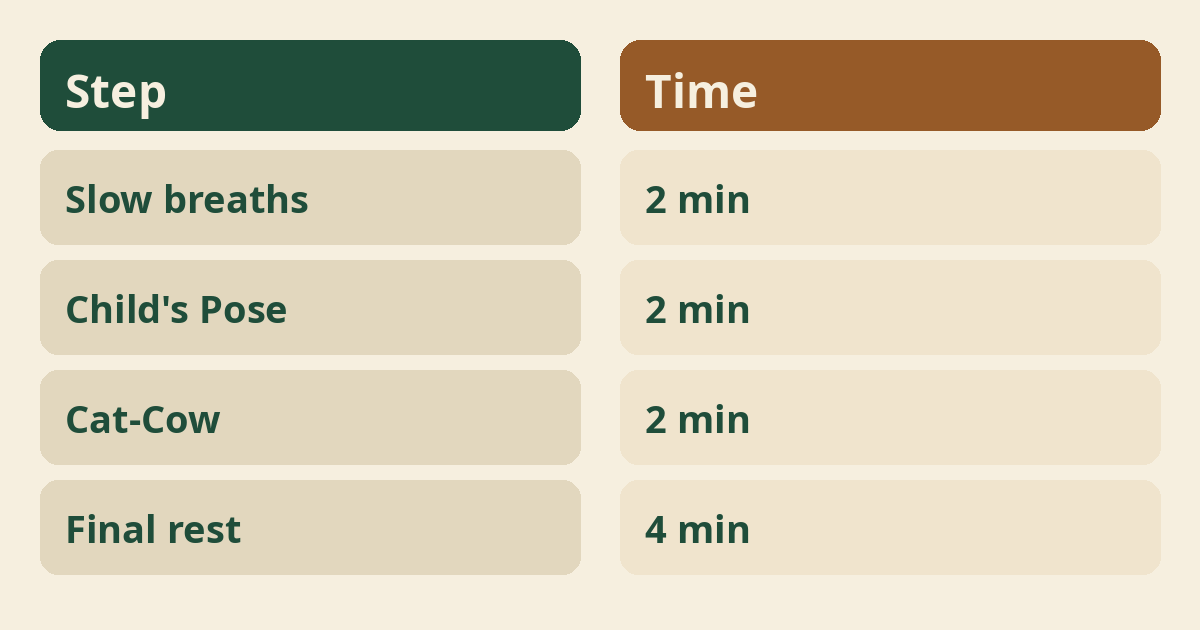
Begin by lying or sitting comfortably and taking five slow breaths through your nose. Let your belly rise as you breathe in and fall as you breathe out. Do not force the breath or try to make it deep. Simply notice the air moving in and out. If you would like a clear guide, belly breathing for beginners explains the idea in plain steps.
Step 2: How do you ease into Child’s Pose?
Kneel, sit back toward your heels, fold forward and rest your forehead on the mat or a pillow. Let your arms lie by your sides or stretch out in front. Stay for eight to ten slow breaths and feel your back widen as you inhale. If your knees complain, place a folded blanket between your calves and thighs. A full walkthrough is in Child’s Pose for beginners.
Step 3: How do you move through Cat-Cow?
Come onto hands and knees and let your spine round and arch in time with your breath. Breathe in as your chest softens forward and your tailbone lifts. Breathe out as you round your back and drop your head. Move slowly for about eight rounds, as if you were stretching after a long nap. You can learn the details in Cat-Cow pose for beginners.
Step 4: How do you do a seated side stretch?
Sit cross-legged, reach one arm overhead and lean slowly to the opposite side. Keep both sitting bones grounded so the stretch stays easy. Breathe for four slow breaths, then switch sides. Many people sit on a cushion to lift the hips above the knees. This small stretch can feel very kind after a day at a desk or on your feet.
Step 5: How do you ease tight hips with Butterfly?
Sit with the soles of your feet together, let your knees fall open and fold forward only as far as feels pleasant. Rest your hands on your ankles or let them lie in your lap. Stay for ten slow breaths without pushing your knees down. If your hips are tight, sit on a cushion. Our guide to Butterfly pose for beginners shows easy ways to adjust it.
Step 6: How do you finish with a final rest?
Finish by lying on your back with a blanket over you and your arms resting at your sides. Let your feet fall open and let the floor hold your weight. Stay for three to five minutes and let your breath follow its own pace. If you feel sleepy, that is fine. You can slip into bed afterward, or simply stay where you are if you are already drifting off.
Which breathing style works best at night?
Slow belly breathing with a longer exhale is the simplest and most popular choice for evening practice. Try breathing in for a count of four and out for a count of six. Keep the numbers comfortable and never strain. If counting makes you more alert, drop the numbers and just lengthen the out-breath a little. Pick whichever version feels easiest, because comfort matters more than technique here.
What if breathing exercises make you feel uneasy?
If breathing practice feels uncomfortable, return to normal breathing and simply watch it. Some people feel lightheaded or restless when they focus on their breath. That is a sign to ease off, not to push harder. You can count steps of the exhale or press your palms on your belly to feel grounded. If discomfort keeps returning, stop and ask a qualified teacher or your doctor.
How long should a bedtime session last?
Ten to twenty minutes is a good length for most beginners. Five minutes is a fine start if your evenings are busy. Longer sessions can leave you more awake if you rush or push. Let the last rest be the longest part of the routine. If you finish and still feel wired, add a few more minutes of slow breathing instead of more poses.
How often should you practice?
Most beginners do well with three or four evenings each week, then add more if it feels good. Regular practice tends to matter more than long practice. A short routine you repeat is easier to keep than an hour you dread. If you want a wider view of frequency, see how often you should do yoga. Skip a night without guilt and begin again the next evening.
Which props make bedtime yoga easier?
A folded blanket, a firm pillow and a cushion cover most needs. Use the cushion under your hips when you sit, the pillow under your head or knees when you lie down, and the blanket for warmth. A rolled towel works if you do not own a bolster. Props let your body relax without holding itself up. They are tools for comfort, not signs of weakness.
Can yoga help if you wake up in the night?
A few slow breaths and a small stretch in bed may help some people settle again after waking. Stay under your covers and lie on your back with your knees bent. Rest your hands on your belly and breathe slowly. Avoid checking the time or your phone. Results vary, and if night waking is frequent, a doctor is the right person to ask about it.
What are the best poses for a sleep routine?
Poses that fold forward, rest on the floor or open the hips slowly tend to suit evenings best. Child’s Pose, Cat-Cow, Butterfly and a final rest are a reliable base. A seated forward fold and a gentle twist on your back can be added later. Avoid strong, heating poses late in the evening, because they can feel too lively. Keep every pose low and every transition slow.
Can neck and shoulder stretches help you wind down?
Yes, easy neck and shoulder stretches can ease the tension many people carry into bed. Roll your shoulders back, drop your ear toward one shoulder and breathe for a few slow rounds. Go only as far as feels comfortable. For a longer sequence, try yoga for neck and shoulders. Many people feel looser and calmer after just a few minutes.
Can desk workers use this routine?
Yes, people who sit all day often enjoy a bedtime routine that opens the chest, hips and back. Sitting long hours can leave the body stiff and the mind buzzing. A short evening session gives you a chance to unwind from that posture. If you want daytime breaks too, yoga at your desk shows small moves you can do between tasks. Together, day and night moves make a simple rhythm.
How can hips and legs be eased before bed?
Slow hip openers can leave your lower body feeling softer and less tight. Try a low lunge, a reclined figure-four stretch or a supported squat. Stay for five to eight breaths per side. If your hips feel tight, shorten the stretch and use a cushion. The article on yoga for hips has more options to explore at your own pace.
Is a squat good for an evening routine?
A supported squat can feel grounding at night if your knees and ankles are comfortable. Sit low with your heels on a folded blanket and your hands pressed together. Stay for a few breaths and lean back on a cushion if you like. Stop if your knees feel pinched. You can read more about this shape in Garland pose for beginners.
What about stress at the end of the day?
A calm routine can give your mind a place to put the day down. Many people notice that slow breathing and soft movement help them feel less hurried. This is a personal experience, and it is not a promise. If stress feels heavy or lasts for weeks, please talk with a doctor or a qualified professional. Yoga can be one small part of how you care for yourself. For ideas, see yoga for stress relief.
What are the possible benefits?
Many people find that an evening routine helps them feel calmer and more ready for bed, though results vary. Some also notice looser muscles, a steadier breath and a more peaceful end to the day. Yoga is a common practice and is discussed by public information sources such as National Center for Complementary and Integrative Health, which offers neutral background information. Benefits are not guaranteed and are different for everyone. See any improvement as a bonus rather than a target.
Is yoga a treatment for sleep problems?
No, yoga is not a treatment for sleep problems or any medical condition. It is a relaxing habit that some people add to their evenings. If you have trouble sleeping most nights, feel very tired in the day or snore loudly, please see your doctor. Yoga should never replace medical advice or care that you have been given. Use it only as a supportive routine.
Who should be careful or see a doctor first?
Anyone with a medical condition, an injury or a pregnancy should check with a doctor before starting. This includes people with back, knee or neck problems, blood pressure concerns, dizziness or recent surgery. Tell your teacher or doctor about any medicine you take. Read about yoga with a bad back and prenatal versus regular yoga for extra context. Stop at once if you feel pain, dizziness or anything unusual.
What are the most common beginner mistakes?
The most common mistakes are rushing, pushing too deep and practicing in bright light. Many beginners also skip the final rest because it feels like nothing. Others check their phone between poses and lose the calm. Pick a few poses, move slowly and keep the lights low. Doing less, more slowly, usually works better than doing more.
Which poses are better to avoid at night?
Fast flows, strong core work and deep backbends are usually too lively for a bedtime routine. They raise your heart rate and can leave you feeling alert. Save them for the daytime if you enjoy them. For evenings, pick slow poses and keep your breathing steady. A simple morning option is Mountain pose for beginners, which pairs well with a calmer night routine.
How can you stay consistent?
Attach your practice to something you already do, such as brushing your teeth. Lay out your mat before dinner so it is ready. Start with just three poses and add more later. Keep a small note on the calendar to see your streak without pressure. If you miss a night, just begin again the next evening.
How does this fit with Yoga Nidra?
Yoga Nidra is a guided lying-down relaxation that works well beside the poses in this guide. Many people play a recording while lying in the final rest. If you are curious, our beginner posts on yoga nidra for beginners and yoga nidra for better sleep explain how it works in simple words. You can use either on its own or after your stretches. Both are easy, quiet and low-impact.
Should you practice in the morning too?
A short morning session can complement your evening routine, but it is optional. Morning yoga tends to feel livelier, with standing poses and more energy. Evening yoga feels slower and quieter. If you want ideas, our post on morning yoga for beginners covers an easy start to the day. Having both is a bonus, not a rule.
How do you progress over time?
Progress by adding a minute or a pose every week, not by making it harder. After a few weeks you might extend your final rest or add a gentle twist. Keep the feel of the routine the same. Let comfort and calm guide you, rather than depth or difficulty. If you want to build more bend later, see yoga for flexibility and yoga for balance for daytime goals.
When might a teacher help?
A qualified teacher can help if you have an injury, feel unsure or want personal guidance. Look for someone who offers slow, beginner or restorative classes. Tell them about any conditions before you start. A teacher can show you safe ways to adjust a pose and answer your questions. Many beginners feel more confident after even one class.
What mindset helps most?
A kind, patient mindset helps most because trying hard to fall asleep tends to backfire. See the routine as time for yourself rather than a task. Let go of the goal of sleeping quickly. If your mind wanders, just return to your breath without scolding yourself. Over time, the habit itself can feel comforting.
What if you do not feel any change right away?
It is normal to notice little at first, since habits build slowly. Give yourself a few weeks of regular, easy practice before you judge it. Keep notes on how you feel before bed, without grading yourself. If nothing seems to help or sleep keeps feeling hard, speak with your doctor. Not every tool works for everyone, and that is okay.
What are simple ways to keep your evening calm?
A few small habits around your routine can make the practice feel more soothing. Dim the lights, put screens away and keep the room cool and quiet. Drink a warm, caffeine-free drink if you like. Avoid heavy meals late in the evening. These habits fit nicely beside your yoga and cost nothing to try.
Where to read next
For a calm, beginner-friendly start, Ranjana Sinha’s Begin Where You Are is written for people who want simple steps. Our guide to starting a home yoga practice adds a gentle routine you can follow at home.
Frequently asked questions
Is it okay to do yoga in bed?
Yes, simple stretches and breathing in bed are fine as long as your mattress feels comfortable and stable.
Do I need a mat for an evening routine?
A mat helps with grip, but a rug or folded blanket on a flat floor works well too.
Will I fall asleep during the final rest?
Some people do, and that is perfectly fine if you are lying somewhere safe and warm.
What if my mind will not stop racing?
Keep your attention on the out-breath and gently return to it each time your thoughts wander.
Is it safe to practice every night?
Many beginners practice often with easy poses, but check with your doctor if you have any condition.
The bottom line
Start tonight with five slow breaths and one easy pose, and let the routine grow at its own pace.

