
It is late, the screen is finally off, and your mind is still running through tomorrow’s list. A short bedtime yoga routine gives that busy evening a clear ending. You move slowly, breathe on purpose, and tell your body the day is done. This guide shows a simple order of poses, how long to hold them, and how to keep it easy.
This article shares general education about yoga and is not medical advice. If you have a health condition, an injury, or ongoing trouble sleeping, check with your doctor before you begin.
What is a bedtime yoga routine?
It is a short set of slow, low-impact poses and breaths done shortly before you go to sleep. Most routines last five to twenty minutes. You stay close to the floor or your bed, and you move without rushing. The goal is to wind down, not to work out.
Why do people try bedtime yoga?
People try it to give the evening a calm, repeatable ending. A fixed routine tells your body that the day is closing. Many people like that it replaces scrolling with something kind to the body. It also takes very little space or gear.
Is bedtime yoga different from daytime yoga?
Yes, because the pace and the purpose are different. Daytime classes often build heat and effort. A bedtime session stays slow and quiet, with fewer standing poses and longer breaths. Think of it as the soft cooldown at the end of your day.
How do I start a bedtime yoga routine tonight?
Pick three easy poses and do them in the room where you sleep. Dim the lights and put your phone out of reach. Wear something loose. You can start with just five minutes and add more later if you want.
Where should I practice bedtime yoga?
A quiet spot next to your bed works best. A rug, a towel, or the bed itself is enough for many of these poses. Keep the room cool and dim. Having the space ready makes it easier to show up on tired nights.
What time should I do it?
Aim for about thirty to sixty minutes before you plan to sleep. That gap lets the slow breathing settle in before the lights go out. If your evenings are tight, even a few minutes right before bed still counts as a fine start.
Step 1: How do I begin with easy breathing?
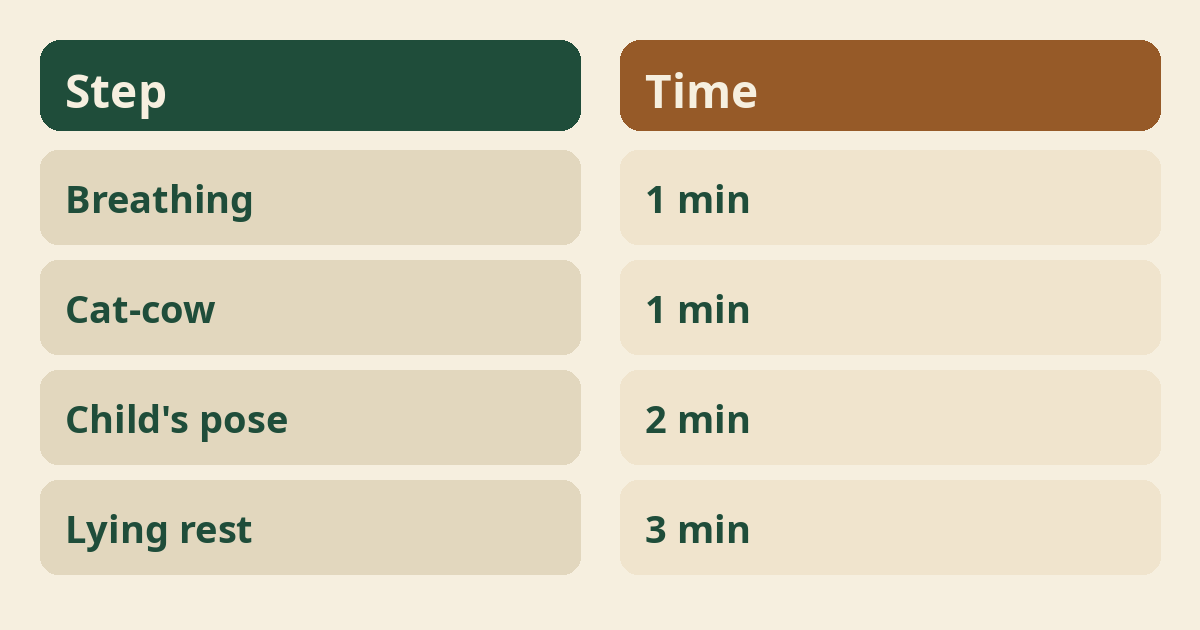
Start lying or sitting and take ten slow breaths. Place one hand on your belly and let it rise as you inhale. Let it fall as you exhale. If you want a guided practice, try belly breathing for beginners before the poses.
Step 2: How do I do a seated neck and shoulder release?
Sit tall and let your ear drift toward one shoulder. Stay for three slow breaths, then switch sides. Roll your shoulders back a few times. Many people carry the day in their neck, so a short pass here can feel good. See yoga for neck and shoulders for more ideas.
Step 3: How do I do cat-cow in bed or on the floor?
Come to hands and knees and move slowly between rounding and arching your back. Match each movement to one breath. Ten rounds is plenty. If your wrists feel sore, rest on your forearms instead. A full walkthrough is in cat-cow pose for beginners.
Step 4: How do I use child’s pose before sleep?
Sit back on your heels, fold forward, and rest your forehead down. Stay for five to ten slow breaths. Let your arms lie wherever they are comfortable. A pillow under your chest or forehead can make it more restful. Learn the details in child’s pose for beginners.
Step 5: How do I do a low-key hip opener?
Bring the soles of your feet together and let your knees drop out to the sides. Sit or lie back with pillows under your knees if needed. Stay for a minute or two and breathe slowly. Try butterfly pose for beginners if you want a clear step-by-step.
Step 6: How do I finish with legs up or a simple lying pose?
End on your back with your legs resting on the bed or up a wall. Close your eyes and let your arms rest by your sides. Stay for two to five minutes. Let the breath be natural and let the floor hold you.
How should I breathe during bedtime yoga?
Breathe through your nose and make each exhale a little longer than the inhale. Try counting to four on the inhale and to six on the exhale. Keep it easy and never strain. If counting feels busy, just notice the breath moving in and out.
How long should a bedtime session last?
Five to fifteen minutes is a good range for most beginners. Short and regular beats long and rare. If you are tired, a three-pose session is enough. You can stretch it out on weekends or when you have more time.
How often can I do it?
Many people enjoy it most nights, but a few nights a week is a fine start. Start with the pace you can keep without pressure. If you want ideas on setting a rhythm, read how often should you do yoga.
What are the most common bedtime yoga mistakes?
The biggest mistakes are pushing too hard, rushing, and using a bright screen. Stretching to your limit can leave you more awake. Hurrying through poses defeats the purpose. Keep the lights low and the pace slow so your body can follow along.
Should I stretch deeply before bed?
Keep stretches mild and stop well before any pinching or pain. Deep, strong stretching can be stimulating for some people. Aim for a feeling of soft release, around three out of ten on an effort scale. Come out of any pose that feels sharp.
Do I need props for bedtime yoga?
No, but a pillow, a folded blanket, and a towel make things easier. Pillows support your knees and head. A blanket keeps you warm in the final rest. For more ideas, see yoga props for beginners.
What should I wear?
Wear loose, soft clothes that you would be happy to sleep in. Skip anything tight around the waist or chest. Warm socks can help during the final rest, since body temperature often drops when you lie still.
Can I do bedtime yoga if I am stiff?
Yes, because the poses can be made as small as you need. Use pillows, bend your knees, and move through a short range. Stiffness is common, especially after a long day of sitting. For a longer view, read yoga for flexibility for beginners.
What if I sit at a desk all day?
A few evening stretches can help you shake off the desk posture. Pair your bedtime routine with small breaks earlier in the day. Our guide to yoga at your desk for beginners covers simple moves for work hours.
Can bedtime yoga help me relax?
Many people find it helps them feel more relaxed in the evening, though results vary. Slow breathing and quiet movement give your attention somewhere calm to rest. It will not feel the same every night. The NCCIH shares general, research-based information on yoga and its safety: National Center for Complementary and Integrative Health.
Will it help me sleep better?
Some people report that a calm evening routine fits well with better rest, but nobody can promise a result. Sleep depends on many things, such as light, noise, schedule, and health. Yoga is one small habit among them. For a wider look, see our cornerstone guide on yoga-for-sleep.
Is bedtime yoga a treatment for any condition?
No, it is not a treatment for any medical or sleep condition. It is a relaxing habit, not a replacement for care from a professional. If sleep trouble lasts, or if it affects your days, talk with your doctor first.
Who should be careful with bedtime yoga?
Check with your doctor first if you are pregnant, injured, recovering from surgery, or have a health condition. Dizziness, pain, numbness, or shortness of breath are signs to stop. Pregnant readers can start with prenatal yoga vs regular yoga. If your back is a concern, read can you do yoga with a bad back.
What if I fall asleep during the routine?
That is fine, and it simply means your body was ready to rest. Cover yourself with a blanket and let it be. On the next night, move your routine a little earlier if you would like to finish the whole sequence.
How can I keep my mind from racing?
Give your mind one simple job, like counting breaths or noticing where your body touches the floor. Thoughts will still show up. That is normal. Each time you notice, return to the count without judging yourself. Small returns are the practice.
How do I build the habit?
Link your routine to something you already do every night. Try doing it right after brushing your teeth. Keep a mat or towel in view. Check off each night on a calendar. Missing a night is no problem, so just start again the next evening.
How can I make it a little harder over time?
Add one pose or one minute rather than making poses deeper. Progress at bedtime means more calm, not more effort. After a few weeks you might add yoga for hips or a slow balance pose. See yoga for balance for beginners when you are ready.
What other poses work well in the evening?
Thunderbolt, puppy, garland, and mountain pose are easy options to rotate in. Mix them in for variety. Try thunderbolt pose for beginners, puppy pose for beginners, garland pose for beginners, or mountain pose for beginners for a calm standing start.
Can stress during the day make bedtime yoga harder?
It can, and on those nights a shorter routine is often enough. Even two or three slow breaths help you pause. For daytime tools, see yoga for stress relief for beginners. Be kind to yourself on rough days.
Do I need a teacher?
No, but a teacher can help you feel safe and confident. A certified instructor can check your shape and suggest changes. Look for a calm, beginner-friendly class or an evening video led by a qualified teacher. Tell them about any injuries before you start.
What mindset works best?
See the routine as a quiet gift to yourself, not a task to perfect. There is no right or wrong way to do it. A short, imperfect session still counts. Notice how you feel, then let it go and sleep.
What should I do after the routine ends?
Keep the lights low and head to bed without checking your phone. Sip water if you are thirsty and set up for the morning. The calm only carries over if you protect it. Slide into bed while your body still feels soft and slow.
Where to read next
For a calm, beginner-friendly start, Ranjana Sinha’s Begin Where You Are is written for people who want simple steps. Our guide to starting a home yoga practice adds a gentle routine you can follow at home.
Frequently asked questions
Can I do bedtime yoga in bed?
Yes, many poses work well on the mattress, though a firmer surface suits some poses better.
Is it okay to skip a night?
Yes, one missed night changes nothing, so pick it up again whenever you like.
What if my knees feel sore in the poses?
Add a pillow or blanket for support, and skip any pose that hurts.
Should I eat before a late session?
A heavy meal can make folding poses uncomfortable, so leave an hour or so if you can.
Do I have to close my eyes?
No, you can keep a soft gaze on one spot if closing your eyes feels strange.
The bottom line
Start with one pose and five breaths tonight, and let your routine grow at its own easy pace.

