
If your head starts pounding after a long, tense day, a quiet, gentle routine may help you feel more comfortable while you rest. Many people who live with migraines use slow movement, rest poses, and calm breathing to unwind the stress of a hard day. This guide walks you through a safe beginner routine for migraine days, one small step at a time. You do not need experience, special gear, or long sessions. You only need a quiet corner and a few minutes most days.
This article is general education, not medical advice, and it cannot diagnose or treat any condition. If you get migraines or have any health concern, talk with your doctor before you begin a new movement routine.
What is yoga for migraine days?
It is a calm yoga routine for the days when your head feels fragile, built around rest and relaxation. The practice uses slow poses, easy breathing, and quiet rest. The goal is simply to help your body relax. It is a wellness habit, not a medical fix.
Why do people with migraines try yoga?
People try it because stress and tight muscles are among the most common migraine triggers. Long work days, poor sleep, and neck strain can all feed an attack. A short daily practice gives the body a regular chance to release that pressure. Many people simply want a natural habit to support their medical care.
What does research suggest?
Research has looked at yoga as a relaxation add-on to standard migraine care, and results vary. Some people in these programs said they felt better overall with a regular gentle practice. Results differ from person to person, so keep expectations realistic.
Can yoga stop migraines?
No practice can promise that. Migraines have many triggers, and stress is only one of them. Yoga simply gives the body a quiet place to unwind. Think of it as one comforting habit inside a bigger care plan led by your doctor.
Is yoga a treatment for migraines?
No, yoga is not a treatment, a cure, or a replacement for medical care. It is a supportive wellness practice that may ease stress and tension. Your doctor’s plan stays in charge of your migraine care. Use yoga alongside that plan, not instead of it.
Why should I talk to my doctor first?
Your doctor can confirm that gentle movement is safe for your specific situation. Migraines sometimes come with other health factors that change what is safe. A quick conversation sets clear ground rules for you. Bring up any symptoms that worry you before you start.
Who should be extra careful?
Anyone with neck injuries, uncontrolled blood pressure, glaucoma, or recent surgery should get medical guidance first. Pregnant readers should ask their doctor which poses to skip. If head positions ever bring on an attack, tell your doctor before continuing. When in doubt, ask first and practice second.
What do I need to start?
You need comfortable clothes, a quiet spot, and ten free minutes. A yoga mat helps but a carpeted floor works too. Dim lights and a calm room suit sensitive heads best. Keep water nearby and silence your phone.
Which props make practice easier?
A bolster, pillows, a folded blanket, and an eye pillow make rest poses far more comfortable. Props let your body relax fully instead of holding itself up. An eye pillow blocks light, which many people with migraines appreciate. Our guide to yoga props for beginners, yoga props for beginners, walks through simple picks for a home setup.
How do I start, step one?
Step one is to sit or lie down somewhere quiet and let your body settle. Close your eyes or soften your gaze. Let your shoulders drop away from your ears. Give yourself one full minute of doing nothing before any movement.
How do I start, step two?
Step two is three minutes of slow belly breathing to calm your nervous system. Rest one hand on your belly and feel it rise and fall. Breathe in through your nose and out slowly. If breathing exercises are new to you, belly breathing for beginners shows the basic pattern in plain steps.
What is step three?
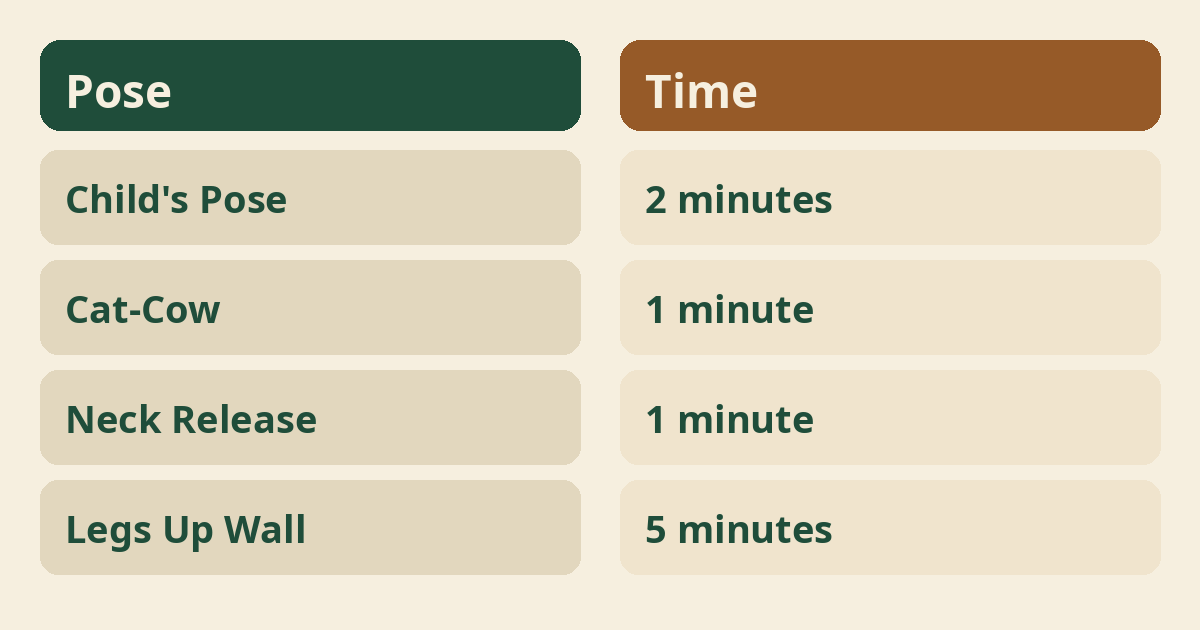
Step three is a slow round of cat-cow to loosen the spine and shoulders. Move with your breath, arching as you inhale and rounding as you exhale. Keep the motion small and smooth. The full how-to lives in cat-cow pose for beginners if you want pictures and detail.
What is step four?
Step four is a gentle seated neck release to ease the muscles that often trigger head pain. Tip your right ear toward your right shoulder and breathe for five slow breaths. Switch sides without pulling or forcing. Never roll the head in big fast circles if you have neck issues.
What is step five?
Step five is child’s pose, a long rest that lets the back and neck fully release. Kneel, fold forward, and rest your forehead on the mat or a pillow. Stay for two minutes and breathe slowly. You can learn the setup in child’s pose for beginners if the shape feels unfamiliar.
What is step six?
Step six is legs-up-the-wall or simple lying rest to finish the practice. Lie on your back and rest your legs up a wall, or just lie flat with a pillow under your knees. Stay for five quiet minutes. This final rest is where the nervous system settles most.
Why does breathing matter so much?
Slow breathing tells your nervous system to shift out of stress mode, and stress is a major migraine trigger. Long, easy exhales lower your heart rate and relax tight muscles. Even three minutes a day builds the habit. Calm breathing is the thread that ties this whole routine together.
What time of day works best?
The best time is the time you can repeat most days, morning or evening. Morning practice can set a calm tone before work stress builds. Evening practice helps release the tension of the day. Pick one slot and protect it.
How long should each session be?
Ten to twenty minutes is plenty for a beginner session. Short daily practice beats one long weekend session. Consistency matters more than length for stress relief. Add time only when the habit feels easy.
How often should I practice?
Most days of the week is a good target, even if some sessions are only five minutes. Regular practice is what may shift stress levels over time. Missing a day is fine, just return the next day. For a deeper look at building rhythm, see how often you should do yoga.
What does a simple week look like?
A simple week repeats the same six-step routine five or six times. Same poses, same order, same quiet corner. Repetition is a feature, not a flaw, because your body learns to relax faster. Add variety only after the routine feels automatic.
Which poses should I skip?
Skip headstands, shoulder stands, fast flows, and deep backbends, especially if you are prone to attacks. Poses that put the head low or strain the neck can backfire for some people. Hot yoga rooms are also a poor fit for many. Stick with slow, floor-based, rest-heavy practice.
What are the most common mistakes?
The most common mistakes are pushing into pain, holding the breath, and practicing only after a migraine starts. Yoga is a quiet habit for ordinary days, not an emergency fix during an attack. Pain and strain feed the tension you are trying to release. Keep every movement easy enough to breathe through.
How do I know I am pushing too hard?
Signs include breath holding, jaw clenching, dizziness, or a headache that starts during practice. Any of these means back off right away. Rest in a comfortable position until you feel settled. Next session, make everything smaller and slower.
What benefits do people report?
Many people report feeling calmer and sleeping better with regular gentle practice, though results vary. Some also notice less neck and shoulder tension at the end of the day. The National Center for Complementary and Integrative Health notes that yoga is generally safe for healthy people when practiced appropriately. Benefits build slowly, so judge the practice over weeks, not days.
Can yoga work alongside my medical care?
Yes, yoga fits alongside medical care as a supportive habit, never as a substitute. Keep taking prescribed medicines and keep your doctor’s appointments. Tell your doctor you practice yoga so your care stays coordinated. The two work best together.
Should I track my migraines?
Yes, a simple log of sleep, stress, food, and attacks helps you see whether practice is helping. Note each practice session in the same log. After a month or two, patterns often become visible. Bring the log to doctor visits for a clearer picture.
How does desk posture tie in?
Hours of screen time tighten the neck and shoulders, and that tension is a common migraine trigger. Short movement breaks during the workday interrupt the buildup. Our routine in yoga at your desk for beginners gives you five-minute options you can do in a chair. Pair desk breaks with your home routine for the best effect.
Does sleep connect to all of this?
Yes, poor sleep is a well-known migraine trigger, and evening yoga may help you wind down. A short rest-focused session before bed can ease the transition to sleep. Keep a regular bedtime on top of the practice. Sleep, stress, and routine all work together.
How do I progress over time?
Progress means longer rest, smoother breathing, and easier poses, not harder shapes. After a few weeks, you can add a second rest pose or a few more minutes of breathing. Keep the calm character of the practice as you grow. Fancy poses are not the point here.
Should I work with a teacher?
A teacher can help you find safe modifications, especially if you have neck or back concerns. Look for classes labeled restorative, yin, or beginner-friendly. Tell the teacher about your migraines before class starts. One or two sessions can set your home practice on a solid footing.
What mindset helps most?
A patient mindset helps most, because stress relief builds through small repeated practice. Some weeks you will feel a difference and some you will not. That is normal and not a sign of failure. Show up, keep it easy, and let time do the work.
What should I do if a migraine starts during practice?
Stop practicing, move to a dark quiet room, and follow the care plan your doctor gave you. Do not try to push through an attack with more yoga. Rest is the right move once pain begins. Gentle breathing is fine if it feels comfortable.
When should I stop and get medical help?
Stop and seek care for a sudden severe headache, new symptoms, or attacks that change pattern or get worse. Vision changes, weakness, confusion, or the worst headache of your life need urgent attention. Trust your instincts about your own body. Doctors would rather hear from you early.
How do I make the habit stick?
Anchor the practice to something you already do, like after brushing your teeth or before dinner. Keep your mat visible so the cue is always there. Ten quiet minutes most days is a goal almost anyone can keep. Small and steady wins.
Where can I learn more?
This article is part of a larger set of guides, and our pillar piece on yoga for migraine for beginners at yoga-for-migraine-for-beginners covers the wider picture and links to more routines. Start there if you want the full map of beginner-friendly migraine resources on this site. Then come back and build your daily routine one step at a time.
Where to read next
For a calm, beginner-friendly start, Ranjana Sinha’s Begin Where You Are is written for people who want simple steps. Our guide to starting a home yoga practice adds a gentle routine you can follow at home.
Frequently asked questions
Will yoga stop my migraines completely?
No practice can promise that. Yoga is a comfort habit that sits alongside your doctor’s care, not a way to stop attacks.
What if an attack begins while I am on the mat?
Stop right away, rest somewhere dark and quiet, and follow your doctor’s care plan.
Morning or evening, does the timing matter?
The best time is whichever slot you can repeat most days, because steady routine matters more than the clock.
Do I need to buy special gear first?
A mat, a pillow or two, and a quiet corner are enough for nearly every beginner.
Should I keep taking my prescribed migraine medicine?
Yes, yoga supports your medical care and never replaces prescribed treatment.
The bottom line
Start with ten quiet minutes today, keep the practice easy, and give your body a few steady weeks to show you what calm can do.

