
If your thyroid is slow and the scale keeps creeping up no matter what you try, this guide gives you a calm, beginner-safe way to start yoga at home. You will learn simple poses, easy breathing, and a weekly rhythm that fits real life. Yoga is not a fix for your thyroid, and it does not replace medicine. Many people find it helps them move more, stress less, and feel more in charge of their health.
This article is general education, not medical advice. If you have a thyroid condition or any other health concern, talk with your doctor before starting a new exercise routine.
What is yoga for thyroid and weight?
It is a slow, low-impact way of moving that pairs simple poses with calm breathing for people managing thyroid and weight concerns. The practice borrows from classic beginner yoga and keeps every move easy on the body. There are no jumps, no fast flows, and no strain. The goal is steady, kind movement you can repeat for months.
Why do people with thyroid concerns try yoga?
People often try it because a slow thyroid can bring tiredness, weight gain, and low mood, and they want a gentle way to stay active. Hard workouts can feel out of reach when energy is low. Yoga meets you where you are on the day. It also gives a quiet space to breathe and reset, which many people find helpful.
Does yoga for thyroid and weight loss go together?
Yoga can be one part of a weight plan, but it works best alongside food choices, sleep, and medical care. On its own, a slow yoga session burns fewer calories than a run or a gym class. Its bigger gift is helping you stay consistent, sleep better, and stress less, and those things can support weight goals over time. Results vary from person to person.
Is yoga a treatment for thyroid problems?
No, yoga is not a treatment, and it cannot cure, fix, or reverse a thyroid condition. Thyroid conditions like hypothyroidism and Hashimoto’s need medical care, often with daily medicine. Think of yoga as a support habit that sits next to your treatment plan, not instead of it. Your doctor stays in charge of your care.
Who should talk to a doctor first?
Anyone with a diagnosed thyroid condition, neck surgery, heart concerns, or pregnancy should check with a doctor before starting. This is extra important if your thyroid levels are still being adjusted or your medicine dose recently changed. Ask what movements are fine for you right now. Bring questions about inversions or poses that press on the neck.
How do you start as a complete beginner?
Start with ten to fifteen minutes of easy floor poses and slow breathing, two or three days a week. Pick a quiet corner, wear soft clothes, and keep water nearby. You do not need special skills or a perfect body to begin. Short and regular beats long and rare every time.
What should your first week look like?
A simple first week is three short sessions with a rest day between each one. Day one can be five easy poses and five minutes of breathing. Repeat the same session two more times so it starts to feel familiar. Comfort matters more than variety at the start.
How long should each session be?
Fifteen to thirty minutes is plenty for a beginner session. A short session you actually do helps you more than a long one you keep skipping. As the habit settles in, you can stretch toward forty minutes. Stop if you feel dizzy, shaky, or unwell.
How often should you roll out the mat?
Three to five days a week suits most beginners. Rest days let your body adapt, especially when energy runs low. If you want a fuller breakdown of weekly rhythms, our guide on how often to do yoga walks through the options. Listen to your body and adjust.
Step one: set up a calm space
Your practice space only needs a mat, a quiet floor, and a few feet of room in each direction. Soft light and a comfortable room temperature help you relax. Keep your phone on silent or in another room. A small, tidy space makes showing up feel easier.
Step two: warm up slowly
Begin every session with two or three minutes of easy movements to wake up stiff joints. Roll your shoulders, turn your head side to side, and sway gently while standing. Slow circles for the wrists and ankles help too. Warm muscles move more safely than cold ones.
Step three: move through simple poses
Choose four to six beginner poses and hold each one for a few calm breaths. Good first picks are mountain pose, cat and cow, child’s pose, and butterfly pose. Move between them slowly and never rush. If a pose hurts, skip it and rest.
Step four: add easy breathing
Close your movement with three to five minutes of slow, quiet breathing. Sit or lie down in a comfortable shape. Breathe in through your nose and let your belly soften as you breathe out. This is the part many people end up loving most.
Step five: rest at the end
Finish every session lying on your back for two to five minutes of full rest. Let your arms and legs relax and your breath return to normal. This resting pose gives your body time to soak in the practice. Many teachers call it the most important pose of all.
Which poses are kindest to beginners?
Floor-based poses like child’s pose and cat-cow are the kindest starting points for most people. Child’s pose rests your back and hips while you breathe. Cat-cow moves your spine in a soft, easy wave. Both teach you how yoga should feel: calm, not strained.
How does breathing fit in?
Slow breathing is the quiet engine of yoga, and it matters as much as the poses. Deep belly breaths can help your body shift out of stress mode. If you are new to this, our belly breathing guide for beginners shows the basics step by step. Even five calm breaths count as practice.
Does stress play a role in thyroid and weight?
Ongoing stress can affect sleep, appetite, and hormones, so calming practices may support your wider health. Stress and the thyroid are closely watched by researchers, and many people report feeling steadier when they manage stress well. A short relaxation habit can be one piece of that. Our article on yoga for stress relief has more simple ideas.
What benefits do people often notice?
Many people find that regular gentle yoga helps them feel calmer, sleep better, and move with less stiffness, though results vary. Some notice small shifts in energy and mood within a few weeks. Weight change, when it happens, is usually slow and tied to the whole picture of food, movement, and care. The National Center for Complementary and Integrative Health page on yoga gives a balanced view of what research suggests.
Can yoga replace thyroid medicine?
No, never stop or change thyroid medicine because of yoga or any other lifestyle habit. Medicine for a slow thyroid replaces a hormone your body needs. No pose, breath, or diet can do that job. If you hope to adjust your dose one day, that is a conversation for your doctor and your lab results.
What mistakes do beginners often make?
The most common mistakes are doing too much too soon, skipping rest, and pushing into pain. A tired body needs a slower pace, not a harder push. Another mistake is comparing yourself to people online who have practiced for years. Your only benchmark is how you felt last week.
What props make practice easier?
A yoga mat, a firm cushion, and a strap or belt cover almost everything a beginner needs. Props are not cheating; they make poses fit your body. A cushion under the hips can make sitting comfortable, and a strap helps you reach without strain. Our guide to yoga props for beginners explains what to buy first.
Do you need to be flexible first?
No, flexibility is a result of practice, not a requirement for starting. Many people begin yoga stiff, and a slow thyroid can add heaviness and aches on top. Poses can always be made smaller or supported with props. Over time, flexibility-focused practice can help you feel looser.
What if fatigue hits mid-session?
Pause, rest in child’s pose or on your back, and breathe until you feel steady again. Low-energy days are normal with thyroid concerns, so plan for them instead of fighting them. Cut the session short without guilt. A five-minute practice still counts as a win.
How do you progress over time?
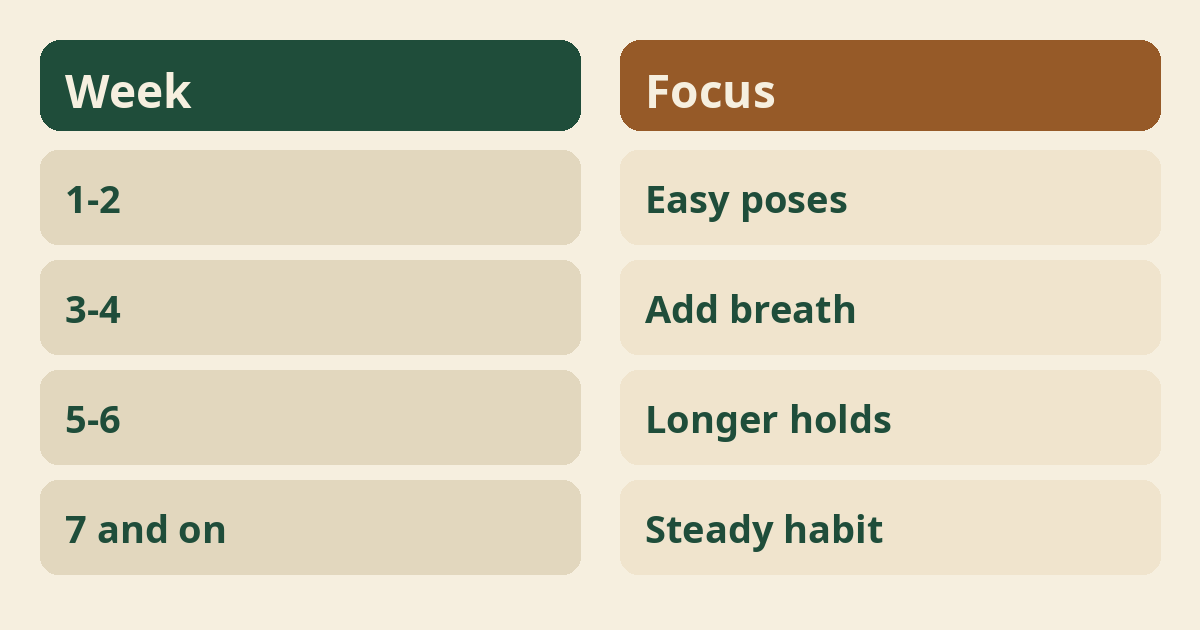
Progress means a little more ease, a little more time, or a little more steadiness, never pain or force. After a few weeks, hold poses a breath or two longer, or add one new pose. Small steps keep the habit safe and pleasant. Slow progress is still progress.
How do you find a good teacher?
Look for a teacher with beginner experience who welcomes health questions and offers easier versions of poses. Tell them about your thyroid condition before class starts. A good teacher will suggest changes and never push you into strain. Online beginner classes can also work if you choose calm, slow sessions.
What mindset helps you stick with it?
Treat yoga as a small daily gift to yourself, not a test you can pass or fail. Some days you will do the full session and some days you will do three poses. Both count. Kindness toward yourself keeps the habit alive far better than pressure does.
Can you practice at your desk?
Yes, simple seated stretches and breathing can fit into a workday without a mat. Shoulder rolls, seated twists, and slow breaths ease the stiffness of long sitting. Our guide to yoga at your desk has moves you can do in normal clothes. Two minutes between meetings is real practice.
What about neck and shoulder tension?
Easy stretches can ease tight neck and shoulder muscles, but avoid deep pressure on the front of the neck. Many beginners carry stress in this area, and slow movement often brings relief. Our article on yoga for neck and shoulders shares safe options. Skip poses that squeeze the throat, and ask your doctor if unsure.
When is the best time of day to practice?
The best time is the time you can repeat, whether that is morning, lunch, or evening. Morning practice can set a calm tone for the day. Evening practice can help you unwind before sleep. Try both for a week and keep the one that sticks.
What does a simple weekly plan look like?
A solid week is three mat sessions, one desk-stretch day, and daily slow breathing. For example, practice on Monday, Wednesday, and Saturday for twenty minutes each. Add a few seated stretches on Friday at work. Breathe slowly for five minutes before bed every night.
How do you track progress without a scale?
Track energy, sleep, mood, and how your clothes fit instead of watching the scale every day. Weight can shift slowly with thyroid concerns, and daily weigh-ins often discourage people. A small notebook with one line per day works well. Patterns over a month tell the true story.
Is it safe to practice every day?
Easy daily practice is fine for most people as long as sessions stay calm and you rest when needed. Mix fuller sessions with very light days of stretching or breathing only. Skip practice when you feel unwell or feverish. Ask your doctor if you have any doubt about daily movement.
Can yoga support healthy habits overall?
Yes, a regular practice often makes other healthy choices feel easier. People who move calmly and breathe well tend to sleep better and snack less on autopilot. These small shifts add up over months. Yoga works as the friendly base under the rest of your routine.
How does this fit into the bigger thyroid picture?
This guide is one small piece of a larger thyroid-friendly lifestyle. This article is a support piece in a larger series, and our pillar guide Yoga for Thyroid Health for Beginners (yoga-for-thyroid-health-for-beginners) covers the whole topic step by step. Food, sleep, medicine, movement, and stress care all work together. Yoga is the thread that can tie them into a routine you enjoy.
Where to read next
For a calm, beginner-friendly start, Ranjana Sinha’s Begin Where You Are is written for people who want simple steps. Our guide to starting a home yoga practice adds a gentle routine you can follow at home.
Frequently asked questions
Will yoga lower my thyroid medicine dose?
No pose or breathing exercise replaces medicine, and any dose change is a decision for your doctor and your lab results.
I feel too tired to exercise, so where do I begin?
Begin with five minutes of floor stretches and slow breathing, and grow from there as your energy allows.
Which poses should I skip with a thyroid condition?
Skip poses that press hard on the front of the neck until your doctor says they are fine for you.
How soon might I feel a difference?
Many people notice better sleep and less stiffness within a few weeks, while changes in weight take longer and depend on your whole routine.
Do I need special gear to start?
A mat and a cushion are enough to begin, and household items like a belt or folded blanket work fine as props.
The bottom line
Start small, stay kind to yourself, and let a calm routine grow alongside your medical care.

