
If your period keeps showing up late, skipping months, or leaving you guessing, a simple yoga routine can be one calm way to support your body while you work out the cause. Yoga for irregular periods is not a cure, but slow movement, easy breathing, and real rest may help lower the stress that often tangles a cycle. This guide shows you exactly how to begin, step by step, with no experience needed.
This article is general education only and is not medical advice or a diagnosis. If your cycles are irregular, painful, or changing in new ways, talk with a doctor before relying on any exercise plan.
What is yoga for irregular periods?
It is a calm, beginner-friendly way of practicing yoga with poses and breathing that many people use to support overall hormone and stress balance. The idea is simple: ongoing stress and tension can affect the signals that guide your cycle, and slow movement plus deep rest may help your body settle. Yoga for irregular periods is not a fix or a cure. It is a supportive habit you can do at home while you and your doctor look at the bigger picture.
Why do cycles become irregular?
Many everyday things can shift a cycle, including stress, poor sleep, travel, big weight changes, and conditions like PCOS. Polycystic ovary syndrome, often shortened to PCOS, is one of the most common reasons for missed or unpredictable periods. Thyroid problems and perimenopause can also play a role. Because so many causes overlap, guessing rarely works, which is why a proper check matters.
Why do people try yoga for this?
People often turn to yoga because it is low cost, low impact, and gives them something active to do while they wait for answers. A regular practice can also ease the worry that builds up when your body feels unpredictable. Many people say the biggest win is simply feeling calmer and more at home in their body. That calm can make it easier to keep other healthy habits going too.
Can yoga balance hormones directly?
No one can promise that, and honest guides avoid claims like it. Hormones are managed by a complex system that yoga cannot switch on command. What yoga may do is lower stress and improve sleep, and both of those are linked to steadier cycles for some people. Think of it as support, not a switch.
When should you see a doctor first?
See a doctor before starting if you have missed periods for three months or more, have very heavy bleeding, or have severe pain. Sudden changes in a cycle that was always regular also deserve a check. A doctor can rule out causes that need real treatment, like PCOS or thyroid issues. Yoga can wait a week; a proper diagnosis should not.
How do you start at home?
Start small: pick a quiet corner, roll out a mat or folded blanket, and practice for ten to fifteen minutes. Wear loose, comfortable clothes and keep water nearby. Choose a time of day you can repeat, because a short daily habit beats a long session you only do once. If standing basics are new to you, our guide to mountain pose is a friendly first read.
Step one: set up your space
Clear a spot on the floor where you can lie down fully with your arms out. Dim the lights or silence your phone if that helps you relax. A wall nearby is useful for balance and for legs-up resting positions. Keep the room warm enough that your muscles do not tense up.
Step two: begin with easy breathing
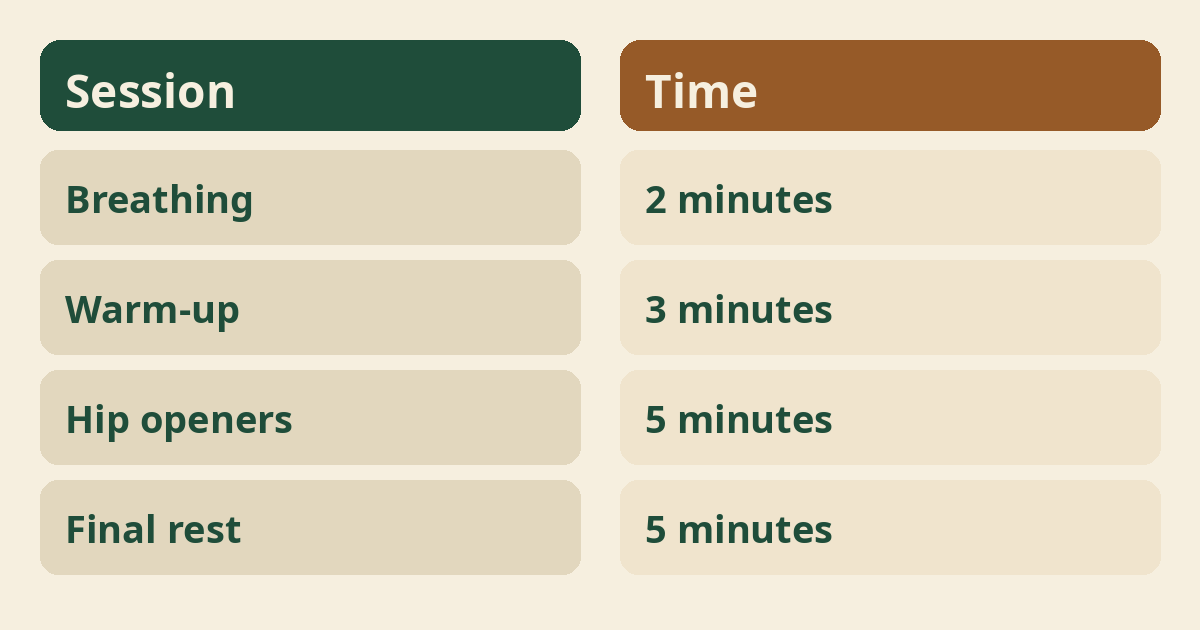
Sit comfortably and take ten slow breaths, letting your belly rise and fall on its own. This tells your nervous system it can downshift. If you want a fuller walkthrough, our guide to belly breathing for beginners breaks it into small pieces. Even two minutes of this can change how the rest of the session feels.
Step three: warm up your spine
Move slowly between arching and rounding your back on hands and knees for eight to ten rounds. This classic warm-up wakes the spine and the muscles around the pelvis. You can follow the full instructions in our article on cat cow pose for beginners. Keep the movement tied to your breath, in as you arch and out as you round.
Step four: open your hips
Spend two to three minutes in a seated hip opener like butterfly pose, letting your knees fall outward on their own. Tight hips often hold tension, and many people find hip openers feel especially relieving in the days before a period. Our guide to butterfly pose for beginners shows a safe setup with cushions. Never force your knees down; gravity does the work.
Step five: rest in a restorative pose
Finish your movement with five quiet minutes in a restful shape like child’s pose. This is where your body soaks in the calm you just built. If you are unsure about form, our article on childs pose for beginners covers the details. Rest matters as much as movement in this kind of practice.
Step six: close with stillness
Lie on your back for a few minutes and simply notice your breath without changing it. Some people place a folded blanket under their knees for comfort. Let your attention move through your body from feet to head, softening anywhere that feels held. This final rest is short, but it is the part many people grow to love most.
Breathing for cycle support
Slow, deep breathing is the heart of this practice because it directly calms the stress response. When stress hormones stay high for long stretches, the body may deprioritize the reproductive system. Breathing practice cannot erase stress, but it gives your body regular breaks from it. Aim for smooth, quiet breaths rather than big forced ones.
How long should each session be?
Ten to twenty minutes is plenty for a beginner. Longer is not better when you are building a habit, and short sessions are easier to repeat on busy days. If twenty minutes feels easy after a few weeks, you can stretch toward thirty. Stop any session that leaves you drained rather than refreshed.
How often should you practice?
Most beginners do well with three to five short sessions a week. Consistency matters far more than intensity for this kind of goal. Our guide on how often to do yoga explains how to build up without burning out. A small daily practice is a fine long-term target.
Can you practice during your period?
Yes, most people can keep practicing during their period by choosing softer, slower poses. Skip strong twists, hard core work, and inversions if they do not feel right that week. Restorative shapes and breathing often feel good on bleeding days. Always let your own comfort lead; there is no rule you must push through.
What are common mistakes to avoid?
The biggest mistake is treating yoga like a workout you have to win. Pushing into deep stretches, holding your breath, or copying advanced poses from videos can leave you sore and discouraged. Another common slip is quitting after two weeks because nothing changed; cycle-related shifts, when they happen, are slow. Be patient and keep the practice easy.
Which props make it easier?
A couple of cushions, a folded blanket, and a sturdy chair cover almost everything a beginner needs. Props bring the floor closer to you and let muscles relax instead of strain. Our article on yoga props for beginners walks through cheap household swaps for blocks and straps. Comfort is not cheating; it is the whole point.
Who should be careful or skip it?
Anyone who is pregnant, recovering from surgery, or managing a diagnosed condition should check with a doctor first. The same goes for unexplained bleeding, severe pelvic pain, or dizziness during practice. If a pose causes sharp pain, stop and rest. Mild stretch sensations are normal; pain is a message, not a challenge.
What about yoga and PCOS?
PCOS is a leading cause of irregular periods, and many people with it include yoga in their wider care plan. Stress management and light, regular movement are often suggested alongside medical care for PCOS. If PCOS is part of your picture, our pillar guide on yoga for PCOS for beginners (yoga-for-pcos-for-beginners) goes much deeper into that topic. Always keep your doctor in the loop about what you try.
How does stress tie into your cycle?
Ongoing stress can delay ovulation, which is one reason periods sometimes go missing during hard seasons of life. The brain and the ovaries talk to each other constantly, and stress hormones can interrupt that conversation. Practices that lower stress may help restore a steadier rhythm over time. Our article on yoga for stress relief pairs well with this one.
What benefits do people report?
Many people find that regular practice leaves them calmer, sleeping better, and feeling less tense around the pelvis and lower back. Some also notice their cycles feel more predictable over months, though results vary widely and nothing is guaranteed. Research on yoga and reproductive health is still growing, and the National Center for Complementary and Integrative Health has plain-language summaries of what is known so far. Treat every benefit as a possibility, not a promise.
Is yoga a treatment for irregular periods?
No, yoga is not a treatment, and it cannot replace medical care for cycle problems. Irregular periods can signal conditions that need real diagnosis and sometimes medicine or other care. Yoga sits beside that care as a supportive habit for stress, sleep, and general wellbeing. If something feels wrong, a doctor visit always comes first.
What does progress usually look like?
Progress in this practice is quiet: easier breathing, softer hips, and a calmer mind on hard days. Any effect on your cycle, if it comes, usually takes months of steady practice, not days. Judge the habit by how you feel after each session, not by your calendar. Keeping notes in a journal or app can help you spot slow changes you would otherwise miss.
Should you work with a teacher?
A good teacher can speed things up, especially if you are unsure about form or have a health condition. Look for someone experienced with beginners and, ideally, with restorative yoga or women’s health. Even a few classes can give you the confidence to continue alone at home. Online classes work too, as long as you can pause and go slowly.
What mindset helps most?
Approach this practice with curiosity rather than expectation. Your body is not a problem to solve; it is something to listen to. Some weeks will feel easy and some will not, and both are normal. The people who benefit most are usually the ones who stop keeping score.
Should you track your cycle too?
Yes, simple tracking makes the whole picture clearer for you and your doctor. Note period start dates, flow, mood, sleep, and your practice days in one place. Over a few months, patterns often appear that a doctor can actually use. Tracking also keeps you honest about how often you really practice.
Is this okay for complete beginners?
Yes, everything in this guide assumes no yoga experience at all. The poses suggested here are among the easiest in yoga, and props make them kinder still. You do not need special clothes, equipment, or fitness to begin. Start with the breathing steps alone if movement feels like too much on day one.
What if a pose hurts?
Stop, come out of the pose slowly, and rest. Sharp or pinching pain is never part of a beginner practice. Try a softer version with more props, or swap the pose for simple breathing. If pain keeps showing up outside of practice too, mention it to your doctor.
Which yoga style fits this goal?
Slow styles like hatha, yin, and restorative yoga suit this goal best. Fast, heated, or power-style classes are fine exercise but are not the point here. You are practicing the downshift, not the effort. A short home session in a slow style beats an intense class you dread.
Does time of day matter?
Not much; the best time is the one you will actually keep. Some people like evenings because slow yoga helps them unwind for sleep, and good sleep itself may support hormone balance. Others prefer mornings before the day gets busy. Experiment for a week or two and keep whichever sticks.
Can food and sleep matter as much?
Yes, sleep and steady meals often influence cycles as much as movement does. Skipping meals, very hard dieting, or chronically short sleep can all disrupt a cycle. Yoga works best as one piece of a kinder daily routine. Think of your practice as the anchor that holds the other pieces in place.
What about desk-bound days?
Long sitting hours can leave hips and the lower back tight, which makes your short home session even more valuable. If you spend all day at a computer, our guide to yoga at your desk offers quick resets you can do in a chair. Two minutes of movement every hour adds up. Your evening practice will feel easier too.
What is the bottom line?
Yoga for irregular periods is a calm, low-risk habit that may support your body while you and your doctor handle the cause. Keep sessions short, keep them easy, and keep showing up. Pair the practice with good sleep and regular meals. And let a doctor, not the internet, answer the big questions about your cycle.
Where to read next
For a calm, beginner-friendly start, Ranjana Sinha’s Begin Where You Are is written for people who want simple steps. Our guide to starting a home yoga practice adds a gentle routine you can follow at home.
Frequently asked questions
Will a few weeks of yoga make my period regular?
There is no guarantee; any change tends to be slow, and ongoing irregularity deserves a doctor’s eye.
I have never exercised, so where do I begin?
Begin with five minutes of slow breathing and one or two easy poses from this guide, then build from there.
Is it safe to do yoga on heavy flow days?
Most people can, using soft restorative poses and skipping anything that feels wrong, but ask your doctor if your flow is unusually heavy.
Do I need to buy anything before starting?
No, a mat or blanket and a couple of cushions from home are enough.
Should I stop yoga if my doctor prescribes treatment?
Not usually; yoga can often continue alongside medical care, but confirm with your doctor to be sure.
The bottom line
Be patient with your body, keep the practice small and kind, and let steady habit do its quiet work.

