
By the fourth hour on your feet, your lower back feels tight and your shoulders have crept up toward your ears. Hours at a gate, a desk or a night patrol leave the body stuck in one shape. Yoga offers short, slow moves that fit into a shift. This guide shows beginners where to start, how to breathe and how to stay safe.
This article shares general education about movement and is not medical advice. If you have pain, an injury or a health condition, check with your doctor before you begin.
What is yoga for security guards?
It is a short set of slow stretches and breaths picked to suit people who stand or sit for long shifts. You do not need a mat or special clothes. Most moves can be done in uniform, in a small space, in a few minutes.
Why do guards feel so stiff?
Long hours in one position ask the same muscles to hold on while others switch off. Standing still can feel harder than walking. Sitting at a monitor for a whole night adds to it. Over time the back, hips and neck often feel tight.
Why do guards try yoga?
Many guards try yoga to feel looser and calmer between long stretches of watching and waiting. It costs nothing, needs no gym and can be done at the post. Some people also like having a small ritual that is theirs alone.
Do I need to be flexible?
No, flexibility is something yoga may build slowly, not something you need on day one. Stop each move well before it feels sharp. A small stretch done calmly is worth more than a deep one done in a hurry.
How do I start on shift?
Start with one move and one minute, at a quiet moment when the post is safe to leave your attention for a short time. Pick a calm window, such as a handover gap or a slow patch. Never do yoga if it takes your eyes off a duty that needs you.
What should I check before I begin?
Check that your post, your duties and your surroundings allow a short pause without risk. Follow your site rules and your supervisor’s guidance. If a move is not allowed in view of the public, save it for a break room or home.
Step 1: How do I plant my feet?
Stand with feet hip-width apart, weight even on both feet, knees soft. This is the base for every standing move. The idea is the same as a simple mountain stance for tall, steady standing, and it can be done at a gate in seconds.
Step 2: How do I lift and drop my shoulders?
Breathe in as you lift your shoulders, then let them fall on the out breath. Repeat five or six times. Guards who carry a belt or a radio often hold tension here without noticing.
Step 3: How do I stretch my neck?
Tilt one ear toward one shoulder and hold for a few slow breaths, then switch. Keep the other shoulder low and relaxed. If you want more ideas for the upper body, see easy neck and shoulder moves for long hours.
Step 4: How do I ease my lower back?
Place your hands on your hips and lean back a little, then come up slowly. Keep the move small and stop if it pinches. The aim is a short change of shape after hours of standing still.
Step 5: How do I stretch my calves and feet?
Step one foot back, press the heel toward the floor and lean forward a little. Hold for a few breaths each side. Heavy boots and hard floors can leave the legs tired, and this brings a bit of life back.
Step 6: How do I twist while seated?
Sit tall, turn your chest to one side and rest a hand on the chair or knee. Turn only as far as is comfortable and keep your head level. Seated guards can fit this in at a desk between rounds, much like simple desk yoga moves.
How should I breathe?
Breathe in and out through your nose, a little slower than usual. Keep the breath smooth and never strain. If you feel dizzy, go back to normal breathing and rest.
What is belly breathing?
Belly breathing means letting the stomach rise on the in breath and fall on the out breath. Put a hand on your stomach to feel it. A beginner guide to belly breathing explains it step by step, and it suits quiet night hours well.
Can breathing help me stay calm?
Slow breathing is something many people find calming when a shift feels tense. Try counting four in and six out for a minute. Results vary, and it is no replacement for support if stress feels heavy.
How long should a session be?
Two to five minutes is enough to begin. Short and regular is easier to keep than long and rare. You can build up to ten minutes at home on days off.
How often should I do it?
Aim for a little each shift and a longer session on rest days. Three or four short sessions a week is a fair start. If you are unsure how to plan it, this guide on yoga frequency can help.
What suits a long standing post?
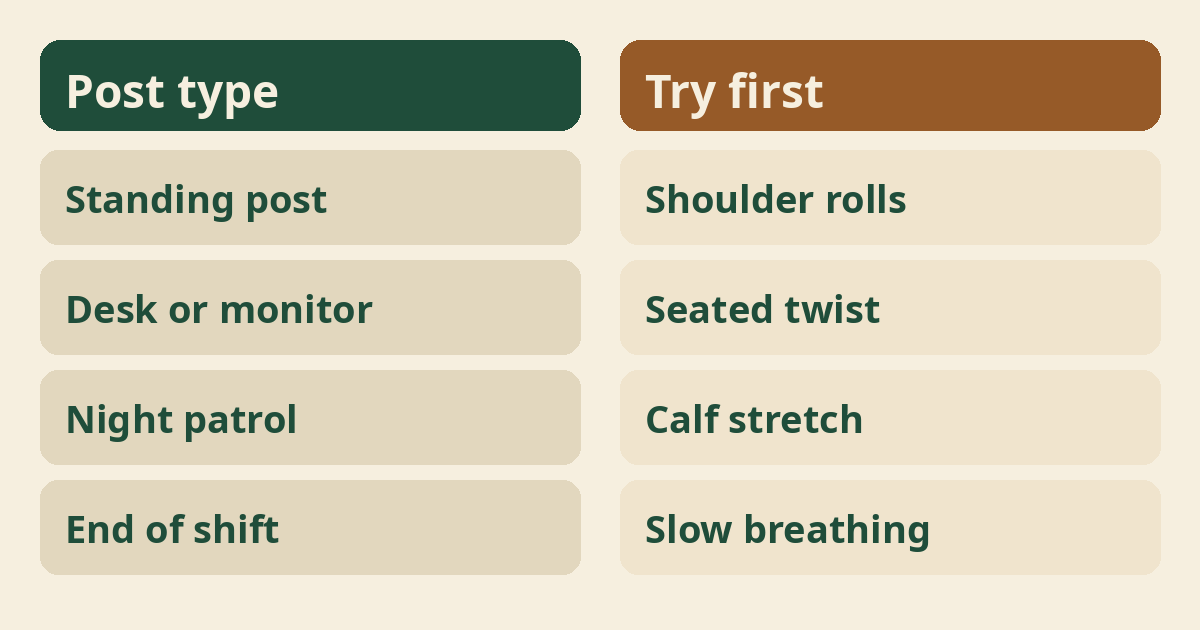
Moves that shift your weight, open the chest and stretch the calves suit standing posts best. Weight shifts side to side, shoulder rolls and calf stretches all fit in a small space. Keep your eyes up and aware.
What suits an overnight post?
Slow seated moves and breathing suit the late hours, when the body is cool and tired. Keep the pace easy. Avoid hard stretches when you are sleepy, since a quick or deep move can strain a cold muscle.
What about a night walk or patrol?
A short stretch before and after a patrol helps you start and end it feeling easier. Stand tall, roll the shoulders and stretch the calves. Do the same at the end to let the legs unwind.
Can I do yoga at the end of a shift?
Yes, a few minutes at the end of a shift can help the body feel like it is switching off. Try a kind forward fold or a short rest on the floor at home. A resting child’s pose is a favourite for winding down after a long night.
What are the common mistakes?
The most common mistakes are going too deep, going too fast and holding the breath. Many new people think a stretch must feel strong to work. It does not. Keep it mild, keep breathing and stay patient.
Do I need props?
No, a chair, a wall or a folded jacket is plenty to start. A wall can support your hand in standing stretches. If you later want gear for home, a short guide to beginner props lists simple options.
Who should be careful?
Anyone with pain, injury, high blood pressure, heart conditions, dizziness or recent surgery should speak to a doctor first. If you are not sure, ask. A doctor or physiotherapist can say which moves are fine for you and which to skip.
Is this a treatment?
No, yoga is not a treatment for any illness or injury. It is a way of moving and breathing that some people enjoy. If you have ongoing back pain, see a health professional, and read this overview on yoga and a sore back as general background only.
What might I notice over time?
Many people find they feel a little looser, calmer and more aware of their posture. Results vary from person to person and take weeks, not days. The National Center for Complementary and Integrative Health offers general, balanced information on yoga and health.
Will it help my balance?
Some people find slow standing practice makes them feel steadier on their feet. Guards often stand on uneven ground or stairs. A short routine like beginner balance work can add to your awareness, if done safely.
How do I move forward?
Add one new move every week or two, once the current ones feel easy. Keep a small note of what you do. Slow progress is still progress, and nobody is watching or grading you.
What if my hips feel tight?
Tight hips are common after long hours of standing or sitting, and easy hip moves may bring some relief. Try a slow lunge or a seated figure four. For more ideas, this hip guide for beginners has low-impact choices.
What about a stressful shift?
A minute of slow breathing can give you a pause when a shift gets tense. It will not remove the stress, but some people say it helps them respond more calmly. Beginner stress-relief yoga has more such ideas.
Do I need a teacher?
A teacher is not required, but one class can help you learn safe form. Look for a beginner class or a kind, patient instructor. Tell them about your shift hours and any aches so they can suggest suitable moves.
What mindset helps most?
Treat it as a small daily habit, not a test. Some days you will skip it, and that is fine. Come back the next shift. Calm, steady effort over weeks is what counts.
How do I keep going?
Link yoga to something you already do, such as a handover, a tea break or locking up. A cue makes the habit easier to hold. Start small, stay kind to yourself and let it grow at its own speed.
Where to read next
For a calm, beginner-friendly start, Ranjana Sinha’s Begin Where You Are is written for people who want simple steps. Our guide to starting a home yoga practice adds a gentle routine you can follow at home.
Frequently asked questions
Can I do yoga in my uniform?
Yes, most standing and seated moves work in uniform if you keep them small and comfortable.
Is it okay to stretch while I am on duty?
Only if your site rules allow it and your attention to the post is not at risk, so check with your supervisor first.
What if a stretch hurts?
Come out of it slowly and skip it, and see a health professional if the pain stays.
Will a few minutes really make a difference?
Some people find short, regular sessions leave them feeling looser, though results vary.
Is night shift yoga different from day shift yoga?
The moves are similar, but at night you keep the pace slower and avoid deep stretches while tired.
The bottom line
Pick one move from this guide, try it on your next shift, and let the habit grow from there.

