
Coming home at sunrise with a wired mind and a heavy body is a strange kind of tired. Night work scrambles sleep, mood and appetite, and days off never quite catch up. A short, calm yoga practice can help you downshift after a shift and wake up less stiff. This guide shows night shift workers how to start small, breathe slower and build a routine that survives a changing roster.
This guide is general education, not medical advice. If you have a health condition, an injury or ongoing sleep trouble, talk with your doctor before starting.
What is yoga for night shift workers?
It is a short, slow practice built around the odd hours of shift work. The poses are easy on tired bodies and the breathing is calming. The goal is to help you unwind after work and loosen up on waking, not to push your fitness.
Why do night workers turn to yoga?
Night work strains sleep, mood and the body, and yoga is a low-cost way to ease that load. It asks for little: a bit of floor, a few minutes and no equipment. Many workers like that it fits between a shift and sleep without needing a gym.
Can yoga fit a rotating schedule?
Yes, because you anchor it to waking and sleeping instead of the clock. A short session after each shift and another on waking works on any roster. The habit follows your body, not the timetable.
How do you start?
Start with five quiet minutes after your next shift. Pick a corner of a room, dim the lights and move slowly. Short and repeatable beats long and rare when your hours keep changing.
Step 1: pick your anchor time
Choose one moment that exists in every version of your week, such as right after you get home. This anchor carries the habit through day shifts, nights and days off. Write it down so the plan survives a tired brain.
Step 2: start with five minutes
Five minutes is enough for the first two weeks. Do two or three slow poses and a minute of calm breathing. Stopping early keeps the practice feeling easy, which is what brings you back tomorrow.
Step 3: choose slow poses before sleep
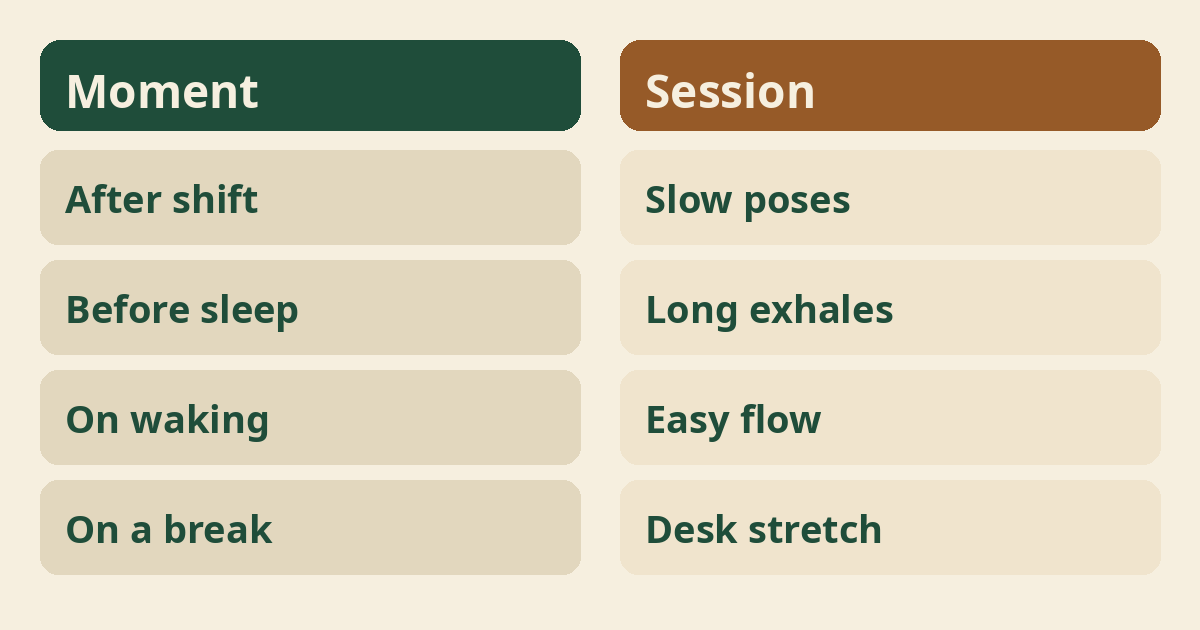
Before bed, pick floor poses that let your body sink and soften. Long holds and slow movement tell your nervous system the work is done. Keep the room dim so bright light does not wake you up again.
Step 4: add a short wake-up flow
On waking, spend a few minutes on easy standing and kneeling moves. This clears the heavy feeling that daytime sleep often leaves behind. Open the curtains first so daylight helps your body clock.
Step 5: keep a simple log
Tick off each session on a calendar or in a note on your phone. A visible streak matters more than session length at the start. When overtime breaks the streak, restart the same day without catching up.
Which poses help you unwind after a shift?
Kneeling and resting poses work best when you are tired but wired. Child’s pose lets your back and hips release while your forehead rests down, which many people find deeply settling after a long night. You can learn the shape in our guide to child’s pose for beginners.
What about a stiff neck and shoulders?
Slow rolls and easy stretches ease the tension that builds during long, repetitive tasks. Driving, screens and standing work all load the same muscles. Our page on yoga for neck and shoulders shows simple moves you can do while still in your work clothes.
How should you breathe to slow down?
Breathe low into your belly and make the out-breath longer than the in-breath. A longer exhale is a calm signal your body understands quickly. If the technique is new to you, belly breathing for beginners walks through it step by step.
How long should a session be?
Five to twenty minutes is plenty for a tired worker. Short sessions done often beat one long weekend class for building a rhythm. Add time only when the short version feels automatic.
How often should you practice?
A little after most shifts is a realistic target. Daily short practice suits night work because it smooths the switch between work mode and rest mode. Our guide on how often to do yoga explains how to build frequency without burning out.
Should you do yoga before or after a shift?
After a shift suits most people, and before a shift is optional. After-work practice marks the line between work and rest. A few easy moves before work can loosen a stiff body, but skip anything strong before a long night.
Can yoga help you sleep during the day?
Many people find a calm wind-down helps them fall asleep faster in daylight hours. Yoga works best alongside blackout curtains, a cool room and a steady pre-sleep routine. Results vary from person to person.
What are common mistakes night workers make?
The biggest mistake is doing strong, heating practice right before sleep. Fast flows and hard poses raise alertness when you need the opposite. Another common slip is skipping practice on rough days, which is exactly when a short session helps most.
What props make practice easier?
A pillow, a folded blanket and a wall are enough to start. Props let tired muscles rest instead of straining inside a pose. If you want simple kit ideas, see yoga props for beginners.
Do you need a quiet, dark room?
A calm space helps, but it does not need to be perfect. Earplugs, an eye mask and a corner of the bedroom work fine. Practice while the house is still quiet if others are awake later.
Who should check with a doctor first?
Anyone with a health condition, an injury, dizziness or ongoing sleep trouble should speak with a doctor first. The same goes if you are pregnant or recovering from surgery. A quick chat keeps your practice safe for your situation.
Is yoga a treatment for shift work problems?
No, yoga is not a treatment, a cure or a replacement for medical care. It is a supportive habit that sits alongside the advice of your doctor. If poor sleep or low mood persists, professional help is the right next step.
What benefits do people report?
Many people say they unwind faster after work, feel less stiff and settle into sleep more easily. Some notice a steadier mood across a run of night shifts, though results vary widely. For an overview of what research says about yoga, see the summary from the National Center for Complementary and Integrative Health.
Can it help with stress from the job?
Slow movement and longer exhales are a practical way to release work stress before you reach your bed. Going straight from a tense shift to sleep rarely works well. Our article on yoga for stress relief has more calming ideas for heavy weeks.
How do you progress over time?
Add a minute or a pose only when the current routine feels easy. Progress for a night worker means consistency across rosters, not harder shapes. A steady ten minutes beats an ambitious plan you drop.
Do you need a teacher?
A teacher is helpful but not required for a short home routine. A beginner class now and then can check your form and give you new ideas. Many shift workers rely on quiet home practice because class times rarely match their hours.
What mindset helps the habit stick?
Treat practice as part of clocking out, like changing your clothes or eating. Small and done beats perfect and postponed. Some sessions will feel flat, and they still count.
What if overtime wipes out your plan?
Shrink the session instead of skipping it. Two minutes of breathing and one resting pose keeps the anchor alive. A broken streak is normal in shift work, so restart at the next anchor without guilt.
Can you do yoga at work on a break?
Yes, a few seated and standing moves fit into a break room. Shoulder rolls, a soft forward fold and slow breathing need no mat. Our guide to yoga at your desk suits desk-based night shifts, and the moves adapt well to any break space.
Is it safe to practice on very little sleep?
Yes, if you keep the practice slow and stay near the floor. Tired bodies react more slowly and balance less well. Skip strong standing flows on exhausted days and choose restful poses instead.
Should you eat before practice?
A heavy meal right before yoga usually feels uncomfortable. Leave an hour or two after a big meal, or practice before eating. A light snack is fine if you are hungry after a shift.
What time of day suits your body clock?
The best time is the one tied to your sleep, whatever the clock says. After-shift practice tells the body work is over, and wake-up practice tells it the day has started. Those two signals matter more than morning or evening.
Can complete beginners start this way?
Yes, this routine assumes no experience at all. Every pose here has an easier version, and resting poses count as practice. Start smaller than you think you need to.
How do you keep the habit going for months?
Attach practice to your anchor moment and protect the five-minute version. Review your log weekly and adjust around roster changes. The routine should bend with your job, never fight it.
What does a first week look like?
Five calm minutes after each shift and a short stretch on waking. Keep every session easy enough that you could repeat it tomorrow. By the end of the week the pattern, not the poses, is the real win.
Why does small and steady beat long and rare?
A nervous system learns from repetition, not from occasional effort. Frequent short sessions give your body a reliable signal across changing shifts. That signal is what makes winding down easier over time.
Where to read next
For a calm, beginner-friendly start, Ranjana Sinha’s Begin Where You Are is written for people who want simple steps. Our guide to starting a home yoga practice adds a gentle routine you can follow at home.
Frequently asked questions
Will doing yoga after a night shift keep me awake?
Slow floor poses and long exhales usually settle the body, so most people find it easier to sleep afterward.
Is ten minutes really enough to make a difference?
Yes, a short daily practice builds the wind-down habit that matters more than session length.
My roster changes every week, so how do I stay consistent?
Anchor practice to waking and finishing work rather than clock times, and the habit travels with your schedule.
What should I do if I feel dizzy or unwell during a pose?
Stop, rest and speak with a doctor before practicing again.
Can yoga replace sleeping pills or other care?
No, yoga is a supportive habit and not a substitute for medical advice or prescribed care.
The bottom line
Start with five quiet minutes after your next shift, and let the rhythm grow from there.

