
After a long shift in a patrol car, your back aches, your shoulders stay tight and your mind keeps replaying the day. A short yoga routine can help your body unwind and give your head a quieter place to land. This guide shows police officers how to start with simple moves, calm breathing and ten spare minutes. You do not need experience, equipment or much space, just a patch of floor and the will to begin.
This article is general education, not medical advice. If you have an injury, a health condition or pain that will not settle, talk with your doctor before you begin.
What is yoga for police officers?
It is a short set of simple stretches and breathing built around the aches and stress of police work. The moves target the lower back, hips, neck and shoulders, which carry most of the strain from duty belts and long hours sitting. The breathing side teaches your body to slow down after tense calls. You practice on a mat or a carpet, in uniform or out of it.
Why do officers turn to yoga?
Most officers try yoga because the job wears down the body and keeps the mind on high alert. Hours in a patrol seat tighten the hips and back. Heavy gear pulls at the shoulders. Stress from calls lingers long after the shift ends. Yoga offers a way to release that load in private, at home, without equipment or a gym membership.
Is yoga only for flexible people?
No, yoga is for stiff bodies most of all, and many officers start with very tight muscles. Touching your toes is not the goal. The goal is to move a little easier and feel a little calmer each week. Every pose can be adjusted to meet you where you are today, and that starting point is enough.
Can yoga fit a shift schedule?
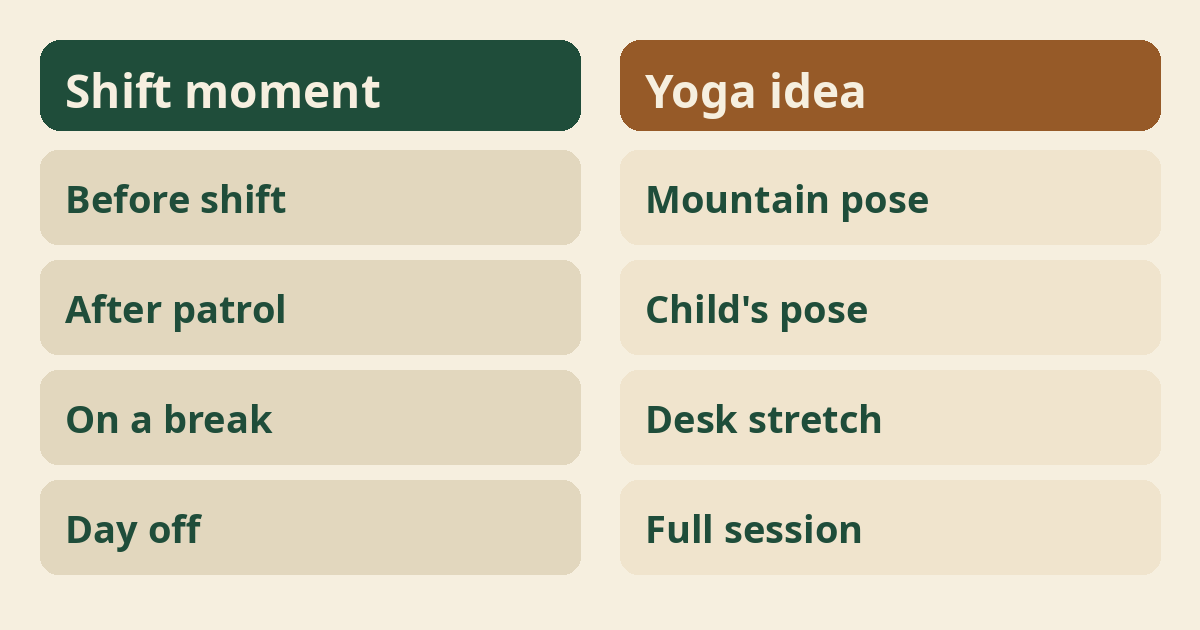
Yes, short sessions of ten to fifteen minutes fit around rotating shifts better than long classes. You can practice before a shift to wake up your body or after a shift to come down. On night shifts, a few slow moves in the early morning can help you settle before sleep. Small and steady beats long and rare.
How do I start with ten minutes?
Pick three or four easy poses, breathe slowly and keep the whole session short. A simple starter routine is a warm up for your spine, one standing pose, one floor pose and a minute of rest. Set a timer so you never feel rushed. Ten focused minutes after each shift is a strong beginning.
Step 1: set up a quiet spot
Find a small, quiet patch of floor where you will not be disturbed for a few minutes. A mat helps, but a carpet or folded blanket works too. Turn your phone to silent if you can. Let family or roommates know you need a short window. A calm space makes it far easier for your body to switch out of work mode.
Step 2: warm up your spine
Begin on your hands and knees and move your spine slowly through a few rounds of rounding and arching. This move, often called cat and cow, wakes up a stiff back after hours of sitting. Move with your breath and keep the pace slow. The guide on cat and cow for beginners shows the full steps if you want pictures and detail.
Step 3: stand tall and reset
Stand with your feet under your hips, let your arms hang and simply notice your posture for a few breaths. Officers carry tension high in the chest and shoulders without noticing. Standing still with tall posture resets that habit. The walkthrough on mountain pose explains how to line up your feet, knees and head so the stance feels steady.
Step 4: fold and release your back
From standing, bend your knees slightly and fold forward, letting your head and arms hang heavy. Stay for five slow breaths and let your lower back release a little more with each exhale. Bend your knees as much as you need. This fold eases the tightness that builds up from sitting in a vehicle and standing on hard floors.
Step 5: open your hips
Move to the floor and sit with the soles of your feet together, letting your knees fall outward. Tight hips are common for officers because of long hours seated with a duty belt. Sit tall and breathe, never pushing your knees down by force. Even two minutes here can make your hips feel looser when you stand back up.
Step 6: end with a resting pose
Finish by lying on your back or kneeling into a low resting pose for two or three quiet minutes. This is where the practice settles in. Many officers like the folded-forward rest explained in child’s pose for beginners because it stretches the lower back and feels safe and private. Let your breathing slow on its own.
How should I breathe during yoga?
Breathe slowly through your nose and let your belly rise on each inhale and soften on each exhale. Belly breathing tells your nervous system that you are safe, which lowers the alert state officers carry all day. The steps in belly breathing for beginners are a good place to learn this skill on its own.
Can breathing help in stressful moments?
Slow breathing is a tool you can use in the car, at the station or before a hard conversation. Try breathing in for a count of four and out for a count of six, for one or two minutes. Many officers find this steadies their heart rate and clears their head. It is quiet, invisible and always with you.
How long should a session be?
Ten to twenty minutes is plenty for a beginner, and shorter is fine on busy days. A short session you actually do beats a long one you keep skipping. As the habit settles in, you can stretch some sessions to half an hour. Consistency matters far more than length at the start.
How often should I practice?
Three to five short sessions a week is a realistic rhythm for most officers. Daily practice is great if your shifts allow it, but rest days are fine too. The article on how often to do yoga explains how to build a weekly rhythm that survives a rotating roster.
What mistakes should I avoid?
The biggest mistakes are pushing into pain, holding your breath and comparing yourself to others. Mild stretch is fine, sharp pain is a stop sign. Keep breathing even when a pose feels hard. And remember that the officer next to you has a different body and a different history. Your only benchmark is how you felt last month.
What props do I need?
A mat, a cushion and a belt or old tie are all the gear a beginner needs. A cushion under your knees makes floor poses kinder. A belt or strap helps you reach your feet in seated stretches. The overview on yoga props for beginners shows how household items stand in for store-bought gear.
Can I do yoga with a bad back?
Many people with cranky backs do yoga, but the right moves and a doctor’s okay come first. Skip deep twists and loaded poses until you know what your back tolerates. Gentle spine warm ups and supported rest poses are usually the safest start. Read doing yoga with a bad back for a fuller picture of what to adjust.
Who should be careful before starting?
Anyone with a recent injury, surgery, high blood pressure or ongoing pain should check with a doctor first. The same goes for old duty injuries that flare now and then. Bring the poses you plan to try to your appointment and ask what to avoid. Most people get the green light with a few simple limits.
Is yoga a treatment?
No, yoga is not a treatment for injuries, trauma or any medical or mental health condition. It is a general wellness practice that many people use alongside proper care. If stress from the job feels heavy, a counselor or a peer support program is the right call. Yoga can sit beside that support, never replace it.
What benefits do people report?
Many officers say they feel looser in the back and hips, calmer after shifts and able to sleep more easily, though results vary from person to person. Research summarized by National Center for Complementary and Integrative Health suggests yoga may help with stress, low back discomfort and sleep quality for some people. These are possibilities, not promises. The fairest test is a month of steady practice and an honest look at how you feel.
How does yoga help with stress?
Slow movement and slow breathing together give your body a signal to step down from high alert. Police work trains the body to stay ready, and that readiness does not switch off at the end of a shift. A short practice acts like a bridge between work mode and home mode. The guide on yoga for stress relief covers this in more depth.
Can yoga loosen my neck and shoulders?
Yes, simple neck rolls and shoulder movements are often the fastest relief a beginner feels. Radios, body armor and computer work all load the neck and shoulders day after day. Slow circles and easy stretches release some of that build-up. The routine in yoga for neck and shoulders is designed exactly for this.
What about stiff hips and a tight lower back?
Floor poses that open the hips and lengthen the spine target the two spots officers feel most. Sitting with a duty belt for eight or ten hours shortens the hip muscles and stiffens the lower back. Regular hip openers and gentle folds can ease that pattern over weeks of practice. The page on yoga for tight hips walks through the safest starting moves.
How will I see progress?
Progress shows up as moving a little easier, sleeping a little better and feeling less wound up after shifts. Do not measure progress by how deep a pose looks. Notice whether you can sit through a meal without a stiff back, or whether you settle faster after a hard call. Those quiet changes are the real results of practice.
Do I need a teacher?
A teacher helps, but you can start safely at home with slow, simple poses. If you want live guidance, look for a beginner or restorative class and tell the teacher about any injuries. Some officers prefer online beginner videos so they can practice at odd hours. Either route works as long as the pace stays easy.
What mindset should I bring?
Treat yoga like equipment maintenance for your body, not a performance or a competition. Officers are used to pushing through discomfort, and that habit can backfire on the mat. Move with curiosity instead of force. Some days your body will feel open, other days stiff from a rough shift, and both are normal.
Should I practice before or after a shift?
Both work, and many officers use a few moves before a shift and a longer wind-down after. Before a shift, two or three standing moves wake up your posture and breathing. After a shift, floor poses and rest help you leave work at work. Try both for a week and see which side of the shift helps you more.
Can I do yoga at the station?
Yes, seated stretches and quiet breathing fit into short breaks without a mat or a change of clothes. Neck rolls, shoulder circles and slow breathing can be done in a chair in a few minutes. The ideas in yoga at your desk adapt well to a station environment and can take the edge off a long day.
Can yoga help me sleep after nights?
A short, slow practice can help your body shift toward rest even at odd hours. Keep the lights low, skip energizing moves and favor floor poses and long exhales. Many officers find a ten-minute routine before bed makes it easier to fall asleep after a night shift. Good blackout curtains help too.
What should I wear?
Any comfortable clothing that lets you bend and stretch is fine, no special kit needed. A t-shirt and track pants or shorts work well. Practicing barefoot gives you better grip and balance on the mat. The less you fuss over gear, the easier the habit becomes.
Is a morning or evening routine better?
The best time is the time you can repeat on most days, whatever your roster looks like. Morning practice loosens a stiff body before work. Evening practice helps you wind down. With rotating shifts, anchor your practice to waking or to finishing work rather than to the clock.
How do I stay consistent?
Tie your practice to a daily habit you already have, like showering or making coffee. Keep the barrier low: mat rolled out, ten minutes, same three poses on busy days. Missing a day is normal and never a reason to quit. The officers who benefit most are the ones who keep coming back, not the ones with perfect streaks.
Should my partner or family join in?
Practicing together can make the habit stick and gives family time that is calm and screen-free. Simple poses and partner breathing work well for beginners of any age. Kids often enjoy the animal-named poses. Just keep it light and optional, because pressure kills the habit faster than anything.
Is hot yoga a good place to start?
Hot yoga is demanding and is better saved until the basics feel easy and your body knows the moves. Beginners do better with slow, cool, low-impact sessions where they can learn form without strain. If you try a heated class later, drink water, take breaks and tell the teacher you are new. There is no rush to get there.
What if I feel sore afterward?
Mild next-day soreness is normal when a stiff body starts moving again. Ease off if soreness turns into pain that lasts or sharp twinges during a pose. A shorter session with easier poses is the right fix. Soreness fades as your body adapts over the first few weeks.
Where to read next
For a calm, beginner-friendly start, Ranjana Sinha’s Begin Where You Are is written for people who want simple steps. Our guide to starting a home yoga practice adds a gentle routine you can follow at home.
Frequently asked questions
I have never exercised much. Is yoga still okay for me?
Yes, beginner yoga is built for people starting from zero, and every pose can be scaled down.
Will yoga make me less sharp on duty?
No, most people find that calm breathing and better sleep leave them feeling clearer, not duller.
How soon might I notice a difference?
Many people feel looser after the first few sessions, while bigger changes in stress and sleep tend to build over a few weeks.
Do I need to be fit before my first session?
No, you start exactly as you are and the practice meets you there.
What is the single best pose after a long shift?
A slow forward fold or child’s pose for a few minutes is a favorite for releasing a tired back.
The bottom line
Start with ten quiet minutes tonight, keep it simple, and let steady practice do the rest.

