
Seated yoga on a flight means slow stretches and steady breathing done right in your airplane seat. You do not need a mat, much space or any experience. Small moves can help you feel less stiff and more settled during a long trip. This guide shows simple, quiet poses for your neck, shoulders, back, hips and feet, plus easy breathing. Go gently, stay within your comfort, and keep the seatbelt rules in mind.
This article is general education and not medical advice. Please check with your doctor before trying any movement if you have a health condition, are pregnant, or have had a recent injury or surgery.
What is yoga for flights?
It is a short set of gentle seated moves and breaths you can do in an airplane seat. No mat or special clothes are needed. The moves are small, slow and quiet, so they fit a tight space and do not bother the person beside you.
Why do people do yoga on a flight?
Many people do it because sitting still for hours can leave the body stiff and the mind restless. A few minutes of easy movement gives you something calm to focus on. Many people find it makes a long journey feel more comfortable. Results vary.
How do I start as a complete beginner?
Start with one or two moves and a few slow breaths. Sit tall, feet on the floor, hands on your thighs. Notice how your body feels before you move. Add more later if it feels good.
When is the best time to practise on a flight?
A good time is when the seatbelt sign is off and the aisle is not busy. Many people pick a quiet moment after a meal service or between movies. Always follow crew instructions and stay seated when told to.
What should I wear and carry?
Loose, comfortable clothes make seated moves easier. Layers help because cabins change in temperature. A small scarf or folded jacket can support your lower back. Keep your bag under the seat so your feet can move freely.
How do I set up my seat posture?
Sit with your hips back in the seat and feet flat on the floor. Let your knees bend to a comfortable angle. Lengthen your spine as if a string lifts the top of your head. This is a simple version of mountain pose while seated.
Step 1: How do I begin with belly breathing?
Place one hand on your belly and breathe slowly through your nose. Feel your belly rise as you inhale and soften as you exhale. Try five to ten slow breaths. For more detail, see belly breathing for beginners.
Step 2: How do I do neck rolls safely?
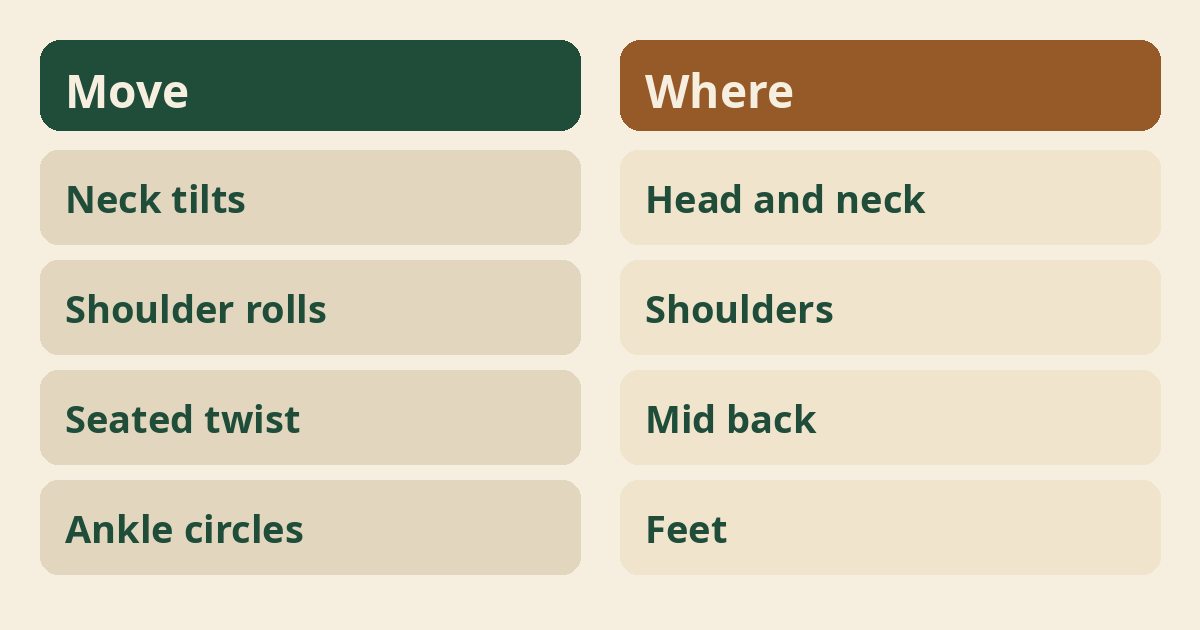
Drop your chin gently toward your chest and tilt your ear toward each shoulder. Move slowly and stop if anything feels sharp or dizzy. Skip big circles. Small, easy tilts are enough. A longer sequence is in yoga for neck and shoulders.
Step 3: How do I release my shoulders?
Lift your shoulders toward your ears as you inhale, then let them drop as you exhale. Repeat five times. Then roll them back a few times. Many people carry tension in their shoulders, especially when holding a bag or a phone.
Step 4: How do I do a seated cat-cow?
Place your hands on your knees, arch your back as you inhale, and round it as you exhale. Keep the move small because the seat limits space. Follow your breath. This is a gentle seated take on cat-cow pose.
Step 5: How do I do a seated twist?
Sit tall, turn your chest gently toward one side, and hold the seat back or armrest lightly. Turn from the middle of your back, not by pulling hard. Breathe for three slow breaths, then switch sides. Do not twist if it feels uncomfortable.
Step 6: How do I stretch my hips in my seat?
Rest one ankle on the opposite knee and sit tall, if there is room. Keep the movement light and stop if your knee feels strained. Switch sides after a few breaths. See yoga for hips for more ideas.
How can I move my feet and ankles?
Lift your heels, then your toes, and make small ankle circles. These moves are easy, quiet and fit any seat. Do them every so often during the flight. Walking in the aisle when allowed is also a nice change.
What about my hands and wrists?
Open and close your fists, then circle your wrists slowly. Hands can get tired from holding devices. Gentle finger spreading and wrist circles give them a short break. Keep your arms relaxed.
Can I do a forward fold in my seat?
You can fold forward a little if there is space, with your hands resting on your thighs. Do not force it and do not bend into the seat in front. If space is tight, just lower your chin and round your upper back slightly. See child’s pose for the idea on the ground.
How should I breathe during the moves?
Breathe in through your nose as you lengthen and out as you soften or twist. Keep the breath slow and smooth. If you feel lightheaded, return to normal breathing and rest. The breath is the heart of the practice.
Can breathing help me feel calm?
Slow breathing is a simple way many people find calming. Try breathing in for four counts and out for six. Keep it easy and never strain. Results vary, and it is not a substitute for care from a professional. For more ideas, see yoga for stress relief.
How long should I practise at a time?
Three to five minutes is plenty to start. You can do a short set once or twice during a long flight. Short and gentle is better than long and forced. Stop if you feel any pain.
How often should I practise on a flight?
A short set every hour or two is a comfortable rhythm for a long trip. Listen to your body and the cabin. Turbulence or a busy aisle is a reason to wait. To build a regular habit at home, read how often should you do yoga.
What are common mistakes?
The most common mistake is moving too far, too fast. Others include holding the breath, twisting hard, and ignoring discomfort. Keep the moves small. Pain is a signal to stop, not to push.
Do I need any props?
You do not need props, but a small cushion or rolled scarf can help. Place it behind your lower back for support. A travel pillow can rest under your arm. See yoga props for beginners for ideas.
Should I do yoga during take off and landing?
No, stay seated with your seatbelt fastened and follow crew instructions at those times. You can still breathe slowly and relax your shoulders and jaw. Save the stretches for when it is safe and allowed.
How do I practise politely in a shared space?
Keep your moves small and aware of the people around you. Do not reach into the aisle or lean on your neighbour. A quiet, calm approach is respectful and works well in tight rows.
Who should be careful?
People with health concerns should speak with their doctor before travel movement. This includes anyone with heart or circulation concerns, recent surgery, pregnancy, balance problems or back pain. Your doctor can advise what suits you. See yoga with a bad back and prenatal yoga vs regular yoga.
Is this a treatment for any condition?
No, seated yoga is not a treatment for any medical condition. It is a gentle way to move and breathe. If you have symptoms or worries, such as swelling, pain or breathlessness, speak with a doctor or the cabin crew.
What are the possible benefits?
Many people find that gentle movement leaves them feeling looser and calmer. Some say they feel more comfortable and less restless on long trips. Results vary from person to person. For balanced, general information, see the National Center for Complementary and Integrative Health page on yoga.
Can yoga help with jet lag?
Some travellers find that slow breathing and light movement help them settle, but results vary. It is not a fix for jet lag. Sleep, water and daylight habits matter too. Yoga is one gentle tool among many.
How can I practise mindfully?
Pay attention to how each move feels instead of how it looks. Notice your breath, your seat and your feet. Let thoughts pass without judgement. A flight can become a calm pause in a busy trip.
What is a good mindset for travel yoga?
Aim for comfort, not perfection. You are not performing. You are just taking care of yourself in a small space. Be kind to your body and patient with the journey.
How can I add a little balance and flexibility?
Light, steady practice at home makes seated moves feel easier in the air. A few minutes a day builds comfort over time. See yoga for flexibility and yoga for balance.
What can I do before the flight?
A short warm up at home or at the gate gets your body ready. Walk a little, stretch your arms and legs, and breathe slowly. Ideas like butterfly pose and garland pose are easy to try on the ground.
What can I do after landing?
Stand tall, shake out your legs, and take a few slow breaths. A short walk helps you shift from sitting. Puppy pose or thunderbolt pose can be a gentle way to finish when you are somewhere with space.
Can I use this at my desk too?
Yes, most of these moves work in any chair. The same seated ideas suit long work days. See yoga at your desk for more.
How do I progress over time?
Add a move or a minute only when the current routine feels easy. Build slowly across several trips. Try a slightly longer breath or an extra side. Never rush progress.
Should I learn from a teacher?
A teacher can help you learn safe form before you travel. A local class or a trusted online lesson helps you feel confident. Ask the teacher about any health concerns and share them first.
Where to read next
For a calm, beginner-friendly start, Ranjana Sinha’s Begin Where You Are is written for people who want simple steps. Our guide to starting a home yoga practice adds a gentle routine you can follow at home.
Frequently asked questions
Can I really do yoga in an economy seat? |
Yes, small seated moves and breathing fit in nearly any seat.
Is it okay to close my eyes? |
Yes, if you feel safe and aware, but keep your seatbelt on and listen for announcements.
What if I feel dizzy? |
Stop, breathe normally, sip water, and tell the cabin crew if it continues.
Do I need to be flexible? |
No, these moves are small and work for stiff bodies too.
How many moves should I do? |
Two or three moves with slow breaths are enough to begin.
The bottom line
A few calm breaths and gentle moves can turn a long flight into a kinder journey.

