
Yoga for gardeners is a gentle way to take a movement break before or after garden work, without forcing tired joints into deep stretches. A short practice can include supported standing, small shoulder movements, and quiet breathing. You do not need to kneel on the ground, touch your toes, or balance on one leg. Start with the easiest option and keep every movement comfortable. If gardening leaves you with pain rather than ordinary tiredness, speak with a doctor before trying to stretch it away.
This article offers general education and is not medical advice. Check with your doctor before starting if you have pain, an injury, a medical condition, recent surgery, or concerns about which movements are safe for you.
What is yoga for gardeners?
Yoga for gardeners adapts simple yoga movements to the demands of garden work. The aim is a comfortable change of position, not a workout added to an already tiring day. You might stand beside a chair, move your shoulders gently, or sit quietly while noticing your breath and how you feel.
Why do gardeners try yoga?
Many gardeners try yoga because they want a calm pause between physical tasks. Weeding, carrying pots, and reaching can keep you in similar positions for long periods. Yoga offers another way to move, but it does not cancel out an awkward lifting method, an unsuitable tool, or hours of work without breaks.
How do you start?
Start indoors with a stable chair and only a few easy movements. Choose a place where you can focus without stepping over hoses or garden tools. Read the steps before moving, then try each movement slowly. Leave out anything that feels unclear rather than trying to copy a deep shape from a picture.
Step one: find your standing base
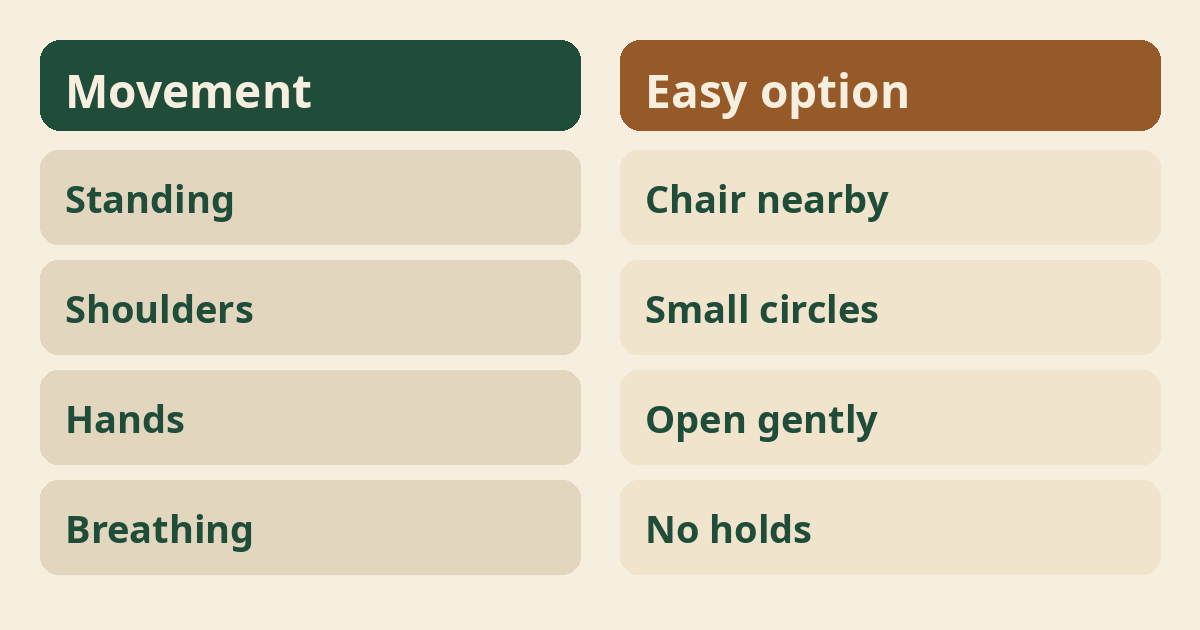
Stand with your feet comfortably apart and keep a chair within reach. Let your arms rest by your sides and avoid locking your knees. Look straight ahead rather than down at your feet throughout the practice. The guide mountain pose for beginners can help you explore a simple standing position without treating stillness as a test.
Step two: move your shoulders
Make a few small shoulder circles without pulling your shoulders sharply upward. Move at a pace that lets you breathe normally and keep your jaw relaxed. Try a smaller circle if the first version feels awkward. For another gentle starting point, see yoga for neck and shoulders, but skip movements that bring on symptoms.
Step three: open your hands
Slowly open and close your hands while keeping your wrists in a comfortable position. Rest your forearms on your thighs if your arms feel tired after gripping tools. Spread your fingers only as far as feels easy, then relax them again. Do not force your wrist backward with your other hand or push through tingling.
Step four: try a supported hinge
Place your hands on a sturdy support and make a small bend from your hips. Keep your knees soft and move your hips back only a little. Your back does not need to become parallel with the ground. Return slowly to standing and stop if bending feels painful, dizzying, or harder than expected that day.
Step five: move your ankles
Sit on the chair and gently move one ankle at a time. Keep one foot resting securely while you lift the other just enough to move it. Try a few small circles or point and relax the foot without straining. This is an optional seated movement, not a reason to work through swelling or pain.
Step six: finish with a pause
Finish by sitting comfortably and letting your breath settle without a special count. Notice whether you feel comfortable enough to return to the garden or would rather stop for now. Resting longer is a valid choice. A routine is useful only when it fits your energy, not when it becomes another job to complete.
How should you breathe?
Breathe normally and avoid holding your breath during movement. You do not need a strong breathing technique to make this routine worthwhile. If a slower breath feels comfortable, let it happen without forcing a deep inhale. Explore belly breathing for beginners separately when you have a quiet moment rather than adding several new skills at once.
How long should you practise?
A few comfortable minutes are enough for your first session. Try one movement, pause, and decide whether you want another. A short practice after light gardening may feel different from the same practice after carrying heavy pots. Reduce the time when you are tired instead of using a timer to push yourself onward.
How often should you practise?
Choose a frequency that leaves you comfortable during the practice and afterward. A brief session on some gardening days may be a better start than a long daily routine. Notice your response before adding more. The guide how often should you do yoga offers a way to think about consistency without turning it into pressure.
Should you practise before gardening?
Before gardening, use easy movements rather than deep stretches or demanding poses. A little standing movement gives you time to notice whether anything feels unusual before work begins. Keep the practice separate from decisions about heavy lifting. Feeling more ready does not mean a bag of compost or a large pot is safe for you to carry.
Should you practise after gardening?
After gardening, choose rest first if you feel worn out. Sit down, clean your hands, and give yourself time before deciding whether to move again. If you feel comfortable, try a small shoulder movement or easy breathing. You do not need to stretch every area that feels tired or complete a full yoga sequence.
What benefits might you notice?
Many people find gentle yoga helps them pause, notice tension, and enjoy quiet movement, but results vary. It may feel like a useful part of a broader activity routine, not a promise of better gardening performance. Keep expectations modest and look for general yoga information from National Center for Complementary and Integrative Health. Personal comfort matters more than collecting a list of possible benefits.
Is this a treatment?
Yoga for gardeners is not a treatment for pain, injury, or a medical condition. It cannot identify why a joint hurts or replace an assessment. If discomfort keeps returning during gardening, ask a doctor about it before choosing poses for that body part. Do not assume that a familiar ache is harmless because it happens often.
Who should be careful?
Ask your doctor first if you have ongoing symptoms, recent surgery, or a condition that affects movement. This includes concerns about bone strength, balance, joints, your heart, or dizziness. Pregnancy may also change which movements suit you. Get advice for your situation rather than relying on the fact that a routine is described as gentle or beginner-friendly.
When should you stop?
Stop if a movement causes pain, tingling, numbness, dizziness, or unusual breathlessness. Sit safely if you feel unsteady and do not immediately repeat the movement to test it. New or persistent symptoms need medical advice. Severe or sudden symptoms, such as chest pain or marked difficulty breathing, call for urgent medical help rather than another pose.
Which props are useful?
A sturdy chair and a clear floor are enough for the basic routine. Use a chair that will not roll, fold, or slide when you touch it. A wall can offer another support for standing. See yoga props for beginners for simple options, but avoid buying equipment before you know what your practice actually needs.
Can you practise outside?
Practise outside only when the surface and surroundings are safe for slow movement. Choose firm, level ground and keep tools, wet leaves, and trailing plants away from your feet. Avoid using a loose fence or lightweight garden chair as support. If the setting makes you watch your footing constantly, move indoors for the practice instead.
Do you need to kneel?
You do not need to kneel for yoga to count as a useful movement break. Kneeling may be uncomfortable after garden work or unsuitable for some people. Keep the routine standing or seated rather than adding floor poses out of habit. A folded towel changes the surface, but it is not permission to put pressure on a painful knee.
Can you try cat-cow?
A small seated version of cat-cow may suit people who prefer not to get onto the floor. Sit on a stable chair and make a gentle change between a slightly rounded and upright back. Avoid dropping your head or making a large arch. Read cat-cow pose for beginners for the basic idea and keep your version modest.
What if your back already hurts?
Speak with a doctor before using yoga to address existing back pain. Do not choose a deep forward fold simply because your back feels tight after digging. Different symptoms can need different advice, and a general routine cannot make that decision. The guide can you do yoga with a bad back is background reading, not individual clearance.
Should you include deep squats?
Deep squats are optional and are not needed in this beginner routine. Gardening already involves positions that may load your knees and hips. A yoga squat is not automatically a useful addition after that work. Use a chair-based movement instead if squatting feels awkward, and seek advice if you have joint pain or difficulty standing back up.
What are common mistakes?
Common mistakes include forcing a stretch, holding the breath, and using unstable support. Another mistake is treating every ache as a sign that you need more yoga. Begin with a small range and let comfort guide you. If you cannot breathe easily while holding a position, shorten it or choose a simpler version rather than trying harder.
How do you progress?
Progress by making the routine familiar before making any movement larger. Repeat a comfortable short practice until you understand the setup and can move without rushing. Then add one small change, such as another easy repetition. Avoid increasing duration, balance difficulty, and stretch depth together because you will have less sense of which change suits you.
Should you practise balance poses?
Supported standing is a sensible starting point before any optional balance pose. Keep both feet down and notice how your weight shifts slightly without leaning far. Do not stand on one leg on uneven garden ground. The guide yoga for balance for beginners can introduce options, but falls or ongoing unsteadiness deserve professional advice first.
How can a teacher help?
A teacher can help you find clearer setups and simpler versions of movements. Look for someone comfortable teaching beginners and using chairs or other support. Explain the kind of gardening you do and any medical guidance you have received. A yoga teacher should respect those limits, not diagnose your symptoms or promise to fix an injury.
What mindset works best?
Treat yoga as a change of pace, not a reward you must earn after finishing the garden. You can stop before a bed is fully weeded and still take a quiet break. Some days, sitting and breathing is enough. Your practice does not need to look impressive or match another gardener’s routine to fit your life.
Can chair yoga be the whole routine?
Chair yoga can be your entire practice rather than a temporary step toward floor poses. Use seated shoulder movements, relaxed hand movements, and quiet breathing if those feel suitable. Keep both feet supported whenever possible. The ideas in yoga at your desk for beginners can offer seated options for a break away from the garden.
Does yoga change how you lift?
Yoga does not replace a sensible plan for carrying heavy or awkward garden items. Use suitable equipment, reduce the load, or ask for help when needed. Do not test your flexibility by lifting a heavy pot from a deep bend. A pleasant yoga session should not make you ignore the demands of the next gardening task.
How do you make the habit stick?
Keep the routine easy to begin and flexible enough for busy days. Put a stable chair in your usual practice space and choose a small set of familiar movements. You might pause after putting tools away rather than tying practice to a fixed hour. Missing a session is not a reason to do extra the next day.
How do you judge a useful session?
Judge a session by comfort, clarity, and whether it fits your day. You do not need a deeper stretch, a longer hold, or a feeling of soreness afterward. Notice how you feel later as well as during the movements. If the routine leaves you less comfortable, reduce it and seek advice when symptoms continue.
Where to read next
For a calm, beginner-friendly start, Ranjana Sinha’s Begin Where You Are is written for people who want simple steps. Our guide to starting a home yoga practice adds a gentle routine you can follow at home.
Frequently asked questions
Can I do yoga in gardening clothes?
Yes, if your clothes let you move comfortably and you remove muddy footwear before practising on an indoor floor.
Do I need a yoga mat?
No, this standing and seated routine can be done without a mat on a stable, nonslip surface.
Can I practise after digging?
Only if you feel comfortable and ready for gentle movement; resting instead is also a reasonable choice.
Should I stretch a painful wrist?
No, stop the movement and ask a doctor about new, persistent, or recurring wrist pain.
Is flexibility the main goal?
No, the aim is a comfortable movement break, and you never need to reach a particular stretch depth.
The bottom line
Let yoga be a small, comfortable pause around gardening, with rest and medical advice taking priority whenever your body needs them.

