Yoga for new parents is a flexible way to explore gentle movement and quiet pauses while adjusting to life with a baby. It does not need a long routine, a silent room, or a return to your old fitness level. Start with your own readiness, especially after pregnancy or birth, and ask your healthcare professional what is suitable before beginning. A few comfortable movements may fit your day better than a full class, and resting instead is always a valid choice.
This article offers general education and is not medical advice or a recovery plan. Check with your doctor before starting after birth, surgery, or an injury, or if you have a health condition, symptoms, or questions about what is safe for you.
What is yoga for new parents?
Yoga for new parents adapts a personal practice to changing needs, limited time, and interrupted days. It can mean a supported seated pause, a few comfortable movements, or a short class when appropriate. It is not a fixed sequence, and it should never become another task you feel guilty about missing.
Why do parents try yoga?
Many parents try yoga because they want a small space for their own attention and comfort. Feeding, carrying, planning, and waking through the night can leave little room to notice how you feel. A practice can offer that pause without asking you to perform, achieve a pose, or meet someone else’s timetable.
Who counts as a new parent?
This approach can suit different caregivers, but their physical needs are not the same. A parent who gave birth may need specific recovery advice that another caregiver does not. Adoptive parents, partners, and other caregivers can also adapt their practice to their own health, experience, fatigue, and daily responsibilities.
When can I begin after birth?
Ask your maternity care team when and how you can begin rather than using a calendar alone. Your birth experience, symptoms, wound recovery, and other health factors matter. A routine check does not mean every yoga movement is suitable, so describe the activity you want to try and ask about any limits.
Who should be especially careful?
Get individual advice first after surgery, a complicated birth, significant pain, or ongoing symptoms. Bleeding changes, pelvic pressure, dizziness, and difficulties with bladder or bowel control deserve professional attention rather than pose experiments. A clinician or appropriately qualified pelvic health professional can assess your situation and guide your next steps.
Is this a treatment?
No, yoga for new parents is not a treatment for birth injuries, pelvic floor problems, depression, or other conditions. Do not use a general routine to work around symptoms that need assessment. If a professional includes movement in your care, follow that individual plan rather than substituting instructions from a general article.
What benefits are realistic?
Many people find gentle yoga offers a useful pause and a chance to explore comfortable movement, but results vary. You may enjoy the structure or the feeling of paying attention to yourself for a few minutes. Benefits are not guaranteed, and general yoga information does not establish that a particular postpartum sequence is suitable. National Center for Complementary and Integrative Health
How do I start?
Start by choosing one modest goal that matches your current energy and any professional advice. Your goal might be to sit comfortably and notice your breathing, rather than complete a routine. Pick a time when your baby is safely settled or another caregiver is available, and make stopping easy from the beginning.
Step one: make a safe space
Clear enough space to move without stepping over baby equipment, loose rugs, or toys. Keep your phone within reach if you need help, but away from your feet. If your baby is nearby, use an appropriate safe space for them rather than placing them on your mat or under your movements.
Step two: choose support
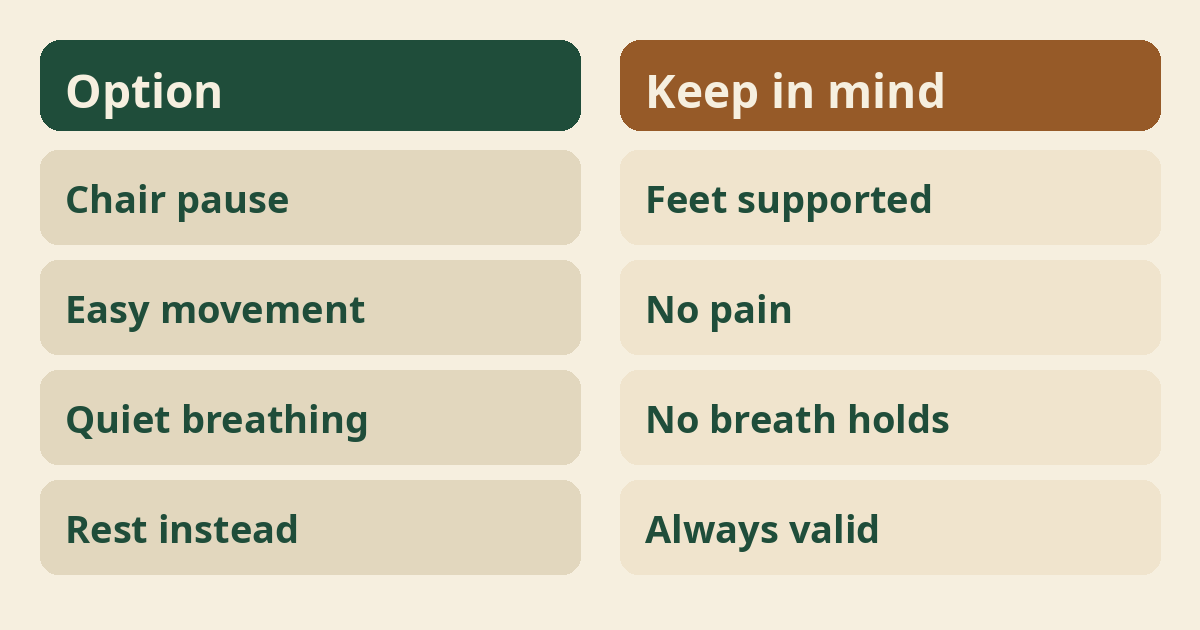
Choose a stable chair or other suitable support before trying movements that challenge balance. Make sure the chair cannot roll or slide, and avoid using a crib or changing table as exercise equipment. More support is not a lesser practice; it can simply make a short session easier to manage.
Step three: take a comfortable seat
Sit in a position that feels easy, with support for your feet if needed. You do not need to sit cross-legged or upright without back support. If sitting increases pain or pressure, change position or stop rather than trying to improve your posture by force. Let comfort guide this first check.
Step four: notice ordinary breathing
Let your breath stay natural instead of trying to make it unusually deep or slow. Notice a few breaths without holding them, counting them, or pulling your abdomen inward. If paying attention to breathing feels unpleasant, look around the room instead; a beginner breathing guide is optional reading, not a target.
Step five: explore easy movement
If movement is appropriate for you, try a small shoulder roll or an easy hand opening. Keep the range comfortable and leave out anything that pulls on a sore area. Pause between movements to check how you feel, and remember that gentle movement still needs to fit your recovery advice.
Step six: finish before fatigue
End while the practice still feels manageable instead of using up the energy you need for caregiving. Return to a comfortable position and notice whether anything feels worse. A short session that you can leave easily is more useful than a longer one that leaves you shaky, sore, or frustrated.
How long should a session last?
A session can be only a minute or two if that is what your day allows. There is no minimum duration you must reach for the practice to count. If you want longer sessions, build around comfort and your clinician’s advice rather than extending the time because you feel behind.
How often should I practice?
Choose a frequency you can adjust freely rather than committing to a daily streak. Some days may allow a brief pause; other days may offer none. Use guidance on yoga frequency as a starting point for thinking about routine, not as a rule that overrides recovery, symptoms, or sleep needs.
Can I practice after a difficult night?
After a difficult night, resting may be more useful than doing yoga. If you feel unsteady, faint, unusually weak, or unable to focus, do not attempt a movement session. You can skip practice without replacing it later, and you do not owe anyone a productive use of every quiet moment.
What about feeding posture?
Use a comfortable, supported setup for feeding rather than holding a yoga posture while caring for your baby. Bring support to your own body where possible, and change position when practical. Explore neck and shoulder movement ideas separately if appropriate, leaving out any movement that causes pain or affects safe feeding.
Can I stretch while holding my baby?
Keep your yoga practice separate from carrying or balancing your baby. Do not use your baby as a weight, a balance challenge, or a prop. If you want a parent-and-baby class, ask how the teacher handles infant safety and your recovery needs before joining, and avoid movements you cannot leave safely.
Which props are useful?
Simple support is often more useful than a large collection of yoga equipment. A stable chair, a non-slip mat, and a folded blanket may be enough for suitable activities. Check beginner yoga prop options for ideas, but remember that a prop cannot make an unsuitable movement appropriate for your body.
Must I get down on the floor?
No, floor practice is optional, especially if getting down or standing up is difficult. A chair-based pause can be a complete practice on its own. The ideas in seated yoga for beginners may offer a familiar format, but choose movements individually rather than following a sequence regardless of symptoms.
Is standing yoga necessary?
Standing poses are optional and should wait if you feel tired, unsteady, or uncomfortable. If standing is appropriate, stay near stable support and keep the activity simple. Mountain pose basics can introduce quiet standing, but there is no need to practise balance challenges during a demanding stage of parenting.
Should I stretch deeply?
Avoid making depth or flexibility the goal of your practice. A stretch that looks mild can still be unsuitable for your situation, particularly during recovery. Choose an easy range and stop if you feel pulling, pain, pressure, or instability instead of assuming that a stronger sensation means better progress.
What about abdominal exercises?
Ask for individual advice before adding abdominal work after pregnancy or birth. Do not assume that a gentle-looking yoga class leaves your abdomen or pelvic floor unloaded. If you notice pain, pressure, or a concerning change in your abdominal shape during movement, stop and discuss it with a qualified professional.
Should I do pelvic floor exercises?
Do not add repeated pelvic floor squeezes just because you are a new parent. Different symptoms can call for different guidance, and a general yoga article cannot assess what you need. Ask a qualified pelvic health professional about your concerns instead of copying a strengthening routine or trying to hold those muscles throughout practice.
What are common mistakes?
Common mistakes include rushing back, comparing bodies, and treating discomfort as something to push through. Another parent’s routine does not tell you what is suitable for you. Avoid adding several new movements at once, and do not use a social media demonstration as proof that a pose is appropriate after birth.
When should I stop?
Stop if practice brings pain, dizziness, breathlessness, bleeding changes, pelvic pressure, or a sense that something is wrong. Contact your healthcare professional for guidance rather than testing the movement repeatedly. Seek urgent medical help for severe or sudden symptoms, including chest pain, trouble breathing, fainting, or heavy bleeding; do not wait for yoga to settle them.
Can yoga help my mood?
Some parents enjoy yoga as a supportive pause, but it is not a substitute for mental health care. Ongoing sadness, distress, anxiety, or difficulty coping deserves a conversation with a healthcare professional. If you have thoughts of harming yourself or your baby, seek urgent help immediately and ask a trusted person to stay with you.
What if breathing makes me anxious?
Stop a breathing exercise if it increases anxiety or makes you feel trapped in your body. You can keep your eyes open, notice ordinary objects around you, or leave the practice altogether. A guide to gentle yoga for stress relief offers general options, not a requirement to relax on command.
How do I choose a teacher?
Choose a teacher with relevant postnatal training who welcomes questions and respects clinical limits. Ask whether the class includes options for different birth experiences and stages of recovery. A good fit lets you stop without pressure and does not promise to fix symptoms, change your body quickly, or replace medical assessment.
How should I progress?
Progress by changing one small part of your practice only when the current version feels comfortable and appropriate. That might mean a little more time rather than a harder pose. Notice how you feel afterward as well as during practice, and return to an easier version or seek advice if symptoms appear.
What mindset is helpful?
Treat yoga as an option for caring for yourself, not a test of how well you are parenting. Your body does not need to return to an earlier shape to deserve patience. A missed session is not a failure, and a quiet minute in a supported chair can be enough for today.
How can a partner help?
A partner or trusted caregiver can help by protecting a short, flexible break without making exercise another obligation. Agree on who is caring for the baby so you can give the pause your attention. The same break can become rest, food, a shower, or time alone if that is what you need more.
What if the session keeps getting interrupted?
An interrupted session still counts, and you do not need to start it again. Stop safely, attend to your baby, and leave the practice unfinished if necessary. Over time you may find a few movements you enjoy, but the aim is a flexible resource for your life rather than a routine your life must fit.
Where to read next
For a calm, beginner-friendly start, Ranjana Sinha’s Begin Where You Are is written for people who want simple steps. Our guide to starting a home yoga practice adds a gentle routine you can follow at home.
Frequently asked questions
Do I need previous yoga experience?
No, but beginners should choose simple options and get any needed medical guidance before starting.
Is prenatal yoga the same as postnatal yoga?
No, a prenatal class is not automatically suitable after birth, so ask about your current needs before joining.
Can my partner follow the same routine?
You can share a quiet break, but each person should choose movements according to their own health and readiness.
Should I practise when my baby sleeps?
Only if you want to, because sleeping, eating, resting, or doing nothing may be the more useful choice.
Do I need a full sequence?
No, a single comfortable pause or suitable movement can be your whole practice.
The bottom line
Let yoga fit around your recovery and your family, with professional advice when needed and no pressure to do more than feels right.