
A seated forward fold with a strap is a gentle way to fold over your legs while a belt does the reaching for you. You sit on the floor, loop the strap around your feet, and hold both ends. The strap lets you keep a long spine without forcing your hands to your toes. This guide walks you through it in plain steps.
This article is general education and not medical advice. If you have a back, hip, hamstring, or other health condition, check with your doctor before you try this pose.
What is a seated forward fold with a strap?
It is a floor pose where you sit with legs straight and fold forward while holding a strap looped around your feet. In Sanskrit the plain version is called Paschimottanasana. The strap is a simple prop that brings the floor closer to you. Beginners often find it far easier than reaching with bare hands.
Why do people use a strap in this pose?
People use a strap because it helps them fold from the hips instead of rounding the back. Tight hamstrings often stop the hands short of the feet. The belt gives your hands something to hold, so the chest can stay open and the neck relaxed.
Do I need to be flexible to try it?
No, you do not need to be flexible at all. The strap exists so that every body can do this shape at its own level. Stiff legs are a normal starting point. Many people find their range grows slowly with calm, regular practice, though results vary.
What kind of strap should I use?
A yoga strap, a long belt, or a dry towel rolled lengthwise all work well. Look for something about six to eight feet long that does not stretch. A strap with a metal D-ring or a cinch buckle is easy to adjust. See more on yoga props for beginners.
What else helps besides the strap?
A folded blanket under your hips and a mat under your legs make the pose far more comfortable. Sitting on a blanket tilts your pelvis forward, which makes it easier to keep a long spine. A soft bolster can rest on your thighs later, if you want more support for your head.
How do I get ready before I start?
Spend a few minutes warming up so your legs and back feel loose before you fold. A short walk, a few gentle cat and cow rounds, or a slow child’s pose is plenty. You can try cat cow pose first to wake up the spine.
How do I start the pose?
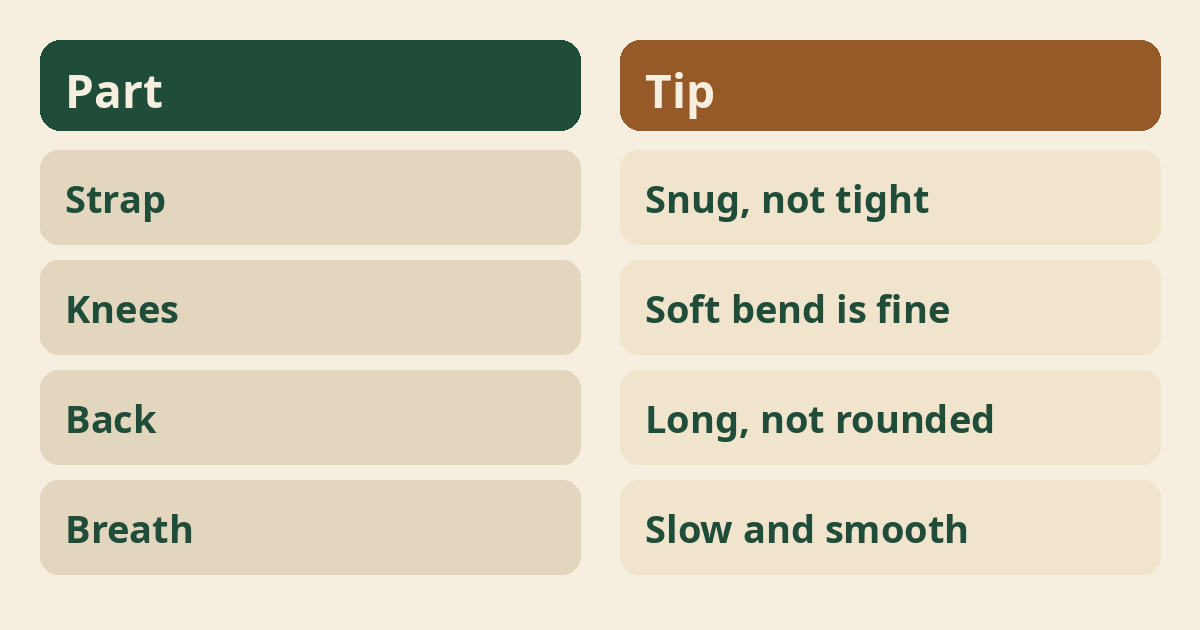
Sit on the floor with both legs reaching straight in front of you and your feet flexed. Sit tall on top of your sitting bones. If your back slumps, lift your hips on a folded blanket. Keep your knees soft, not locked, so the backs of your legs stay comfortable.
Step 1: How do I set up my seat?
Sit up tall with your legs together, toes pointing to the ceiling, and your hands resting beside you. Press the floor lightly with your palms and lengthen your spine. Imagine the crown of your head rising toward the ceiling. This tall start sets the shape for the whole pose.
Step 2: How do I place the strap?
Loop the strap around the balls of both feet and hold one end in each hand. Make the loop snug but not tight. Let your hands rest on your thighs at first. Hold the strap with your palms facing in, and keep your elbows close to your sides.
Step 3: How do I lengthen before folding?
Inhale and lift your chest tall while you gently draw the strap toward you. This small pull helps you find a long spine. Keep your shoulders away from your ears. If your back rounds right away, bend your knees a little and sit higher.
Step 4: How do I fold forward?
Exhale and hinge forward from your hips, keeping your chest leading and your back long. Walk your hands a little way down the strap as you go. Stop when you feel a mild stretch in the backs of your legs. Never pull hard to get deeper.
Step 5: How do I settle in the fold?
Hold still where it feels steady and let your head and neck relax. Your elbows can bend out to the sides. Soften your jaw, face, and shoulders. If you feel sharp pain, tingling, or pinching, ease out of the pose right away.
Step 6: How do I come out safely?
Inhale, lift your chest, and roll up slowly with a long spine. Release the strap and let your legs rest. Sit for a few quiet breaths and notice how your body feels. Rolling up slowly keeps the lower back comfortable.
How should I breathe in this pose?
Breathe slowly through your nose and let each exhale help you fold a little. Inhale to lengthen the spine. Exhale to soften forward. Smooth breathing keeps the body calm. For a simple practice, try belly breathing while you hold the shape.
What if I hold my breath without noticing?
If you catch yourself holding your breath, you have gone too far, so back off a little. Breath is a good guide. When the breath is steady, the stretch is likely at a safe level. When it gets short or tight, ease the fold and start again.
How long should I stay in the pose?
Many beginners start with about 30 seconds and slowly build to a minute or two. There is no prize for staying longer. Listen to your body and come out if you feel any strain. Quality of breath and comfort matter more than the clock.
How often can I practice it?
Most beginners do well with a few short rounds, a few times a week. Gentle and regular tends to feel better than rare and intense. Our guide on how often should you do yoga can help you plan a steady rhythm.
When is a good time of day to try it?
Any time works, as long as your body is warm and your stomach is not full. Some people like it in the evening to slow down. Others prefer it after a walk or other gentle movement. Pick a time you can keep up each week.
What are common mistakes with the strap?
The most common mistakes are rounding the back, pulling too hard, and locking the knees. Another is holding the strap too short, which hunches the shoulders. If you see these habits, bend the knees, sit higher, and let your hands slide farther down the strap.
Why is a round back a problem?
A very round back means you are folding from the spine instead of the hips. The aim is to hinge at the hips with a long spine. A slight natural curve is fine. If your back rounds a lot, sit on a blanket or bend your knees more.
Should my knees be straight?
Your knees can be slightly bent, and that is perfectly fine. Straight but not locked is a good goal. Bent knees take pressure off the backs of the legs and let you keep a long spine. Place a rolled blanket under the knees if it helps.
What if my feet slip out of the strap?
Move the strap toward the arches of your feet and flex your toes toward you. A slippery sock can make the loop slide. Try bare feet, or use a strap with a cinch buckle. Keep a gentle press through your heels so the loop stays put.
What props can make the pose easier?
A folded blanket, a bolster, and a strap give you plenty of options. Sit on the blanket to lift your hips. Rest your forehead on a bolster for comfort. Read more in our prop guide to build a simple setup at home.
Who should be careful with this pose?
People with back, hip, hamstring, or sciatic concerns should be careful and speak with a doctor first. The same goes for anyone who is pregnant, has had a recent injury or surgery, or has a disc concern. A qualified teacher can suggest safer options. See also yoga with a bad back.
Is this pose safe during pregnancy?
Pregnancy changes how the body folds, so ask your doctor and a trained teacher before you try it. A wide-legged seat gives the belly more room. Our guide on prenatal yoga vs regular yoga explains how practice can change.
Is this a treatment for anything?
No, this pose is not a treatment, and it should not replace care from a doctor. Yoga is a movement and breathing practice. It can be a pleasant part of a daily routine. If you have pain or a health concern, a doctor is the right person to guide you.
What might people notice from this pose?
Many people find the pose calming and a pleasant way to stretch the backs of the legs and the lower back, though results vary. Some also notice a quieter mind after a few slow breaths. These are personal experiences, not promises. For general background, see the National Center for Complementary and Integrative Health page on yoga.
Can it help with tight hamstrings?
Many people find that regular gentle practice makes their legs feel looser over time, though results vary. Patience matters here. Do not push to the edge of pain. Pair this pose with other gentle moves, such as yoga for flexibility, for a well-rounded routine.
How does this pose fit with hip work?
It pairs well with other floor poses that open the hips. After the fold, you might try a seated hip pose to balance your practice. A good next read is yoga for hips, which offers calm and simple choices.
How do I make it more comfortable?
Sit higher, bend your knees, and use a longer strap. Small changes make a big difference. If your lower back complains, lift your hips on more blankets. If your legs feel tense, slide a rolled towel under your knees and breathe slowly.
How can I progress over time?
Progress slowly by walking your hands closer to your feet and keeping the spine long. After a few weeks, you may try holding your feet with your hands, with no strap. Keep the strap close in case you need it. There is no rush to get to the next stage.
What mindset helps in this pose?
A kind, patient mindset helps more than effort. Yoga is not a contest. Let go of how far others can fold. Take each day as new. Some days your body will feel open, and some days it will not. Both are fine.
Do I need a teacher?
A teacher is not required, but a qualified one can spot habits you cannot see yourself. If you can, join a beginner class or book a short session. A teacher can adjust your setup and offer safer options for your body. Share any health concerns before class starts.
How can I wind down after the pose?
Sit quietly for a few breaths or lie on your back for a short rest. Let the body settle after the stretch. You may enjoy a gentle pose like child’s pose to close your session, with the breath slow and easy.
Where to read next
For a calm, beginner-friendly start, Ranjana Sinha’s Begin Where You Are is written for people who want simple steps. Our guide to starting a home yoga practice adds a gentle routine you can follow at home.
Frequently asked questions
Can I do this pose without a strap? |
Yes, you can use a towel or a belt, or simply rest your hands on your legs.
Should I feel pain in the backs of my legs? |
No, you should feel only a mild stretch, and you should ease out if you feel sharp pain.
Is a seated forward fold the same as touching my toes? |
No, the goal is a long spine and a calm fold, not touching your toes.
How long until I feel a difference? |
It varies from person to person, so be patient and keep your practice gentle and regular.
Can I practice every day? |
Many beginners do gentle practice often, but it is wise to rest if your body feels sore.
The bottom line
Take your time, keep the strap close, and let each fold feel calm and kind to your body.

