
Yoga for feet is a gentle way to explore toe movement, ankle motion, and steady contact with the floor during a wider yoga practice. You can begin seated, move within an easy range, and add supported standing only when it feels comfortable. The aim is awareness and comfortable movement, not forcing a stretch or fixing foot pain. If your feet hurt, feel numb, or have a known condition, ask your doctor about suitable activity before trying the movements below.
This article offers general education, not medical advice or an individual exercise plan. Check with your doctor before starting if you have foot pain, an injury, reduced sensation, balance problems, or any condition that may affect safe movement.
What is yoga for feet?
Yoga for feet brings attention to how your toes, ankles, and soles participate in simple yoga movements. It is not a separate medical method or a promise of pain relief. Think of it as a small part of a whole-body practice, with choices that can stay seated or include standing support.
Why do people practice it?
People often practice foot-focused yoga to notice their feet rather than rush past them. Shoes, sitting, and busy routines can leave little time for deliberate movement. A quiet practice lets you explore what feels easy today without deciding that tightness or awkward toe movement means something is wrong.
What benefits are realistic?
Many people find gentle foot-focused movement helps them feel more aware of their stance, but results vary. Some enjoy the pause and the chance to move slowly. Broader yoga guidance at National Center for Complementary and Integrative Health offers context, not proof that this particular routine will change a foot condition or produce a specific result.
Is this a treatment?
Yoga for feet is not a treatment for foot pain or a diagnosed condition. Do not use this routine instead of an assessment, prescribed exercises, or advice about footwear. A clinician can help you understand symptoms, while an ordinary yoga class should stay within the activity guidance you have received.
Who should check with a doctor first?
Ask your doctor first if foot health or standing safety is uncertain. This includes a recent injury or operation, diabetes with foot concerns, reduced sensation, ongoing swelling, or pain when bearing weight. A pregnant beginner with new swelling or other symptoms should seek medical advice rather than assume movement is appropriate.
When should you stop?
Stop if a movement causes pain, tingling, numbness, dizziness, or a feeling that your foot may give way. New or worsening symptoms need medical advice rather than a harder stretch. Seek urgent care for a serious injury, sudden inability to bear weight, or a foot that suddenly becomes cold or changes color.
How do you start?
Start with a stable chair and a few minutes of gentle, seated exploration. Choose a quiet area with enough room to move your feet without bumping furniture. Put any support within reach before standing. If you are unsure about your symptoms, resolve that question with your doctor before setting up a routine.
Which props help?
A firm chair and a clear, nonslip floor are enough for a basic practice. Avoid chairs with wheels or supports that slide under your hand. A folded towel can make resting more comfortable, but it should not wobble beneath you. See simple yoga props for other ways to adapt a practice.
Must you practice barefoot?
Bare feet are an option, not a requirement. Follow any medical advice about protective footwear, especially if your sensation is reduced or you have a foot wound. For standing movements, choose a surface and footwear combination that does not slip. Ordinary socks on a smooth floor may make support less reliable.
Step one: Settle your feet
Place both feet comfortably on the floor while sitting upright in your chair. Let your knees and ankles find an easy position rather than forcing the feet parallel. Notice where the soles meet the ground. Take a few quiet breaths and check that the starting position itself does not cause discomfort.
Step two: Explore your toes
Try lifting and lowering your toes gently while keeping your heels resting. Move both feet together if that is simpler, or explore one side at a time. You do not need to lift each toe separately. Keep the effort light and pause if the movement leads to cramping or uncomfortable gripping.
Step three: Move your ankles
Slowly lift the front of one foot, then lower it without pushing into a stretch. Keep your heel supported and your knee comfortable. Next, try a small heel lift with the toes resting, if it feels easy. Alternate the two movements for a few repetitions, avoiding a fast or bouncing rhythm.
Step four: Try small circles
Make a small, slow ankle circle only within a comfortable range. Lift the foot just enough to move freely, or skip this step if holding it up feels tiring. Circle in each direction without pulling on your toes. The movement can be much smaller than a teacher’s demonstration and still be worthwhile.
Step five: Add supported standing
Stand beside a firm chair only if standing is comfortable and appropriate for you. Keep a hand on the support and both feet grounded, with your knees easy. Notice your stance without trying to create a perfect arch. Mountain Pose basics offers a wider introduction to this quiet standing position.
Step six: Shift and return
Make a tiny weight shift between your feet while keeping both soles on the floor. Hold your support and move slowly enough to stop at any point. Stay within a range that feels steady, then return to the middle. There is no need to lift a foot or turn this into a balance test.
How should you breathe?
Breathe naturally rather than timing every foot movement to a strict count. If you catch yourself holding your breath, reduce the effort or pause. You can explore comfortable belly breathing while seated, without taking unusually deep breaths. The goal is an easy rhythm, not a breathing challenge alongside a movement challenge.
How long should a session last?
A short session is a sensible starting point, and stopping early is fine. You might explore a few movements over about five minutes rather than complete every step. Choose the duration by comfort and attention, not by a target you must reach. A longer practice is not automatically a better foot practice.
How often should you practice?
Practice only as often as your comfort and any clinical guidance allow. Start with occasional short sessions and notice how your feet feel afterward as well as during movement. Leave room to rest if the practice feels tiring. Choosing a yoga routine can help you think about consistency without rigid rules.
What should a beginner routine include?
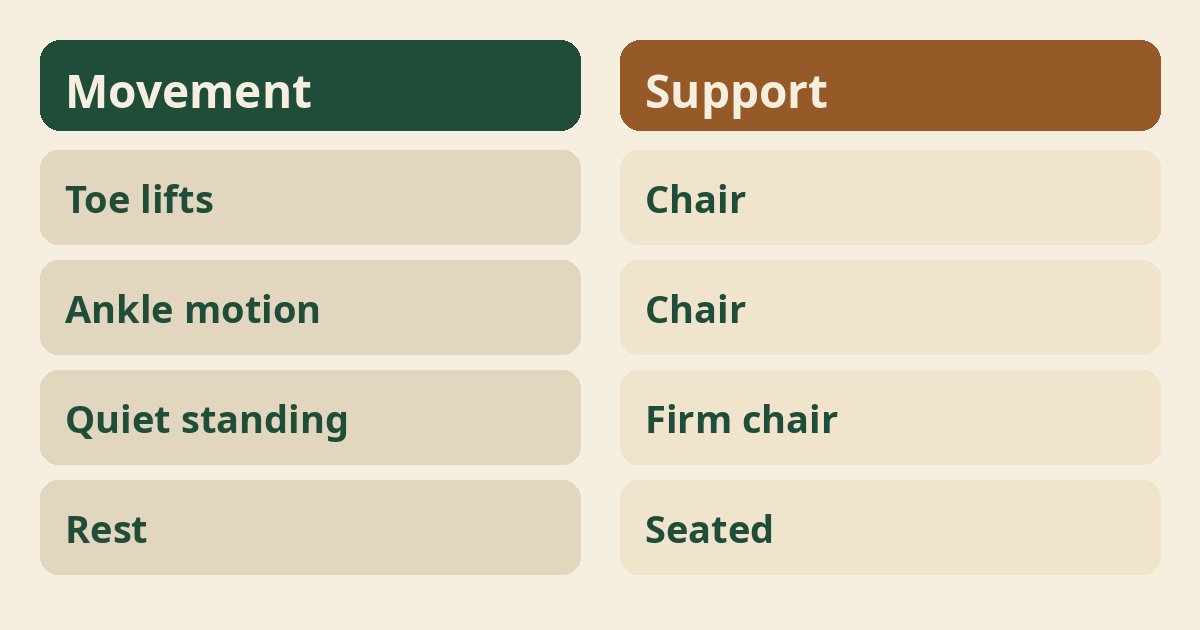
A beginner routine can include seated toe movement, ankle movement, and a quiet finish. Supported standing is optional, not a required final level. Try one or two gentle rounds of the movements that feel easy. End by letting your feet rest and checking whether any new discomfort appeared, rather than immediately repeating the sequence.
Which mistakes are common?
The main mistakes are forcing range, gripping the floor, and continuing through discomfort. Trying to copy an impressive stretch can turn a gentle practice into a strain. Do not curl your toes hard to create an arch. Reduce the movement when your jaw tightens, your breath stops, or your attention shifts toward enduring it.
Should you stretch the soles deeply?
Deep sole stretches are not necessary for this beginner practice. Kneeling with the toes tucked under can feel intense and is easy to overdo. Leave that variation out if it is unfamiliar or uncomfortable. A small seated movement is a valid choice, not a lesser practice you need to escape.
What if your toes barely move?
Small or uneven toe movement does not need to become a performance problem. Try moving all the toes together instead of isolating one at a time. Avoid pulling them into position with your hands to meet a visual goal. If limited movement is new or comes with pain or numbness, ask your doctor about it.
What if the feet cramp?
Stop the movement and let the foot return to an easy resting position if it cramps. Do not push harder to finish a repetition or forcefully stretch through the sensation. Repeated, unexplained, or painful cramping deserves medical advice. For an ordinary practice, reducing toe effort may be more useful than adding another exercise.
Can you practice at a desk?
A few seated foot movements can fit into a desk break when the setup is stable. Move your chair away from cables and avoid rolling seats if they shift beneath you. Keep the practice separate from tasks that need your attention. Desk yoga ideas can help you build a short, simple pause.
Does foot yoga improve balance?
Foot awareness can be part of balance practice, but it does not guarantee better balance. Stay with both feet down and a hand on support when beginning. If falls or dizziness are a concern, ask a clinician about suitable activity. Explore supported balance practice only within the guidance that fits your situation.
Can it help flat feet?
A foot shape alone does not tell you whether this routine is suitable or useful. Do not promise yourself a new arch or try to force one while standing. If flat feet are painful or affect walking, ask a qualified clinician for individual advice. Yoga can remain an optional movement practice rather than a correction project.
Can you try it with heel pain?
Ask a clinician about heel pain before choosing foot exercises from a general article. Different problems can produce similar discomfort, so the location of pain does not provide a diagnosis. Skip standing and stretching variations until you know what activity is suitable. Do not keep testing a painful movement to see whether it eventually feels better.
What about bunions or arthritis?
Get individual guidance before using foot-focused yoga with painful bunions or arthritis. A general routine cannot account for your joint movement, footwear needs, or current symptoms. Avoid pushing toes into a straighter position or loading a sore joint. Follow your clinician’s limits even when a yoga variation looks gentle in a demonstration.
How can you progress safely?
Progress by becoming more comfortable and attentive before adding more challenge. You might move a little more smoothly or use a slightly wider pain-free range while seated. Change one element at a time, and keep standing support available. You do not need longer holds, toe balances, or harder poses to make the practice meaningful.
When is a teacher useful?
A yoga teacher can help adapt general movements once any medical questions have been addressed. Tell the teacher about your limits and the advice you have received. Look for someone who welcomes seated options and does not promise to fix foot problems. A teacher should not diagnose symptoms or pressure you to work through pain.
How does it fit into other yoga?
Foot awareness can accompany simple yoga without taking over the whole session. Notice your contact with the ground during an easy standing pose or settle your feet before a seated practice. Use gentle flexibility practice as a broader starting point. Avoid adding intense foot positions simply to make the session feel complete.
What mindset helps?
Curiosity is more useful than judging whether your feet move correctly. Compare today’s movements with your own comfortable starting point, not someone else’s feet. It is fine to skip a step, use a chair, or finish early. The practice should leave space for choice rather than turn each toe into a problem to solve.
Should both feet move alike?
The two feet do not have to move in exactly the same way. Keep each side within its own comfortable range instead of forcing symmetry. A familiar difference can simply be something you notice. A sudden change, especially with weakness, pain, or altered sensation, calls for medical advice rather than a yoga adjustment.
How do you finish?
Finish seated, with your feet resting and your breathing easy. Notice comfort without claiming that every new sensation is a sign of improvement. Stand slowly if you have been sitting for a while, using support as needed. If the routine brought on symptoms, leave those movements out and get advice before trying them again.
Where to read next
For a calm, beginner-friendly start, Ranjana Sinha’s Begin Where You Are is written for people who want simple steps. Our guide to starting a home yoga practice adds a gentle routine you can follow at home.
Frequently asked questions
Can beginners practice yoga for feet?
Beginners can explore gentle seated movements when comfortable, with medical guidance first if symptoms or conditions affect foot safety.
Do I need special equipment?
A stable chair and a clear, nonslip practice area are enough for the basic options described here.
Should yoga for feet hurt?
No, stop when a movement hurts rather than using pain as a measure of progress.
Can this replace prescribed foot exercises?
No, follow your clinician’s plan and ask before adding movements from a general yoga article.
Is standing required?
No, a seated practice can be the entire session, and supported standing is only an optional choice.
The bottom line
Begin with comfortable movement, keep support nearby, and let medical guidance lead whenever foot symptoms make the next step uncertain.

