Toe stretches are small, gentle movements that explore how comfortably your toes can bend, spread, and rest. You can begin seated in a steady chair without standing on your toes or pulling them hard. The aim is an easy, controlled movement, not a deep stretch or a change in how your feet look. This guide explains a short practice, ways to adjust it, and reasons to ask your doctor before starting, especially when foot pain or a health condition is involved.
This guide is for general education and is not medical advice. Check with your doctor before starting if you have pain, an injury, reduced sensation, circulation concerns, a recent operation, or another condition affecting your feet.
What are toe stretches?
Toe stretches gently move the toes within a comfortable range. Some use your own toe muscles, while others use light support from a hand. They are different from pressing your whole body weight into bent toes, which can place much more load on the foot.
Why do people do them?
People often explore toe stretches to notice stiffness and give their feet a gentle movement break. Shoes and long periods of sitting may leave you wanting to move your toes, but that feeling does not tell you its cause. Keep this practice separate from any advice you have received for a foot problem.
What benefits are reasonable to expect?
Many people find gentle toe movement pleasant and useful for noticing how their feet feel, but results vary. It is not a promise of better balance, lasting flexibility, or less pain. For wider context on yoga and its limits, see National Center for Complementary and Integrative Health rather than assuming a small foot routine has every benefit associated with yoga.
Is this a treatment?
Toe stretching is not a treatment or a substitute for a medical assessment. Persistent soreness, changes in toe shape, or difficulty walking need advice suited to the cause. Do not use a stretch to test whether an injury is serious, and do not let a comfortable session delay getting a new symptom checked.
Who should be careful?
Ask your doctor first if you have diabetes, reduced feeling, circulation problems, arthritis, a foot injury, or recent foot surgery. A clinician may advise particular movements or tell you to avoid stretching for now. If you already have a foot care plan, follow that plan rather than adding this routine on your own.
When should you skip the practice?
Skip toe stretching when your foot has unexplained pain, new swelling, broken skin, or signs of an injury. A red, hot, swollen foot or a wound needs medical advice, especially with diabetes or reduced sensation. Sudden severe pain, a cold or discolored foot, or inability to bear weight calls for prompt medical assessment.
How do you start?
Begin seated with both feet supported and enough room to see your toes. Use a chair that does not roll or wobble, and choose a time when you are not rushing. Take off tight footwear if that is safe and comfortable, then spend a moment noticing your feet before moving them.
What should a stretch feel like?
A suitable movement feels mild and easy to leave, without pain or a strong pulling sensation. You do not need to feel a stretch at all for a movement break to be worthwhile. Sharpness, burning, tingling, numbness, or a pinching feeling means stop rather than searching for a more intense version.
Step one: settle the feet
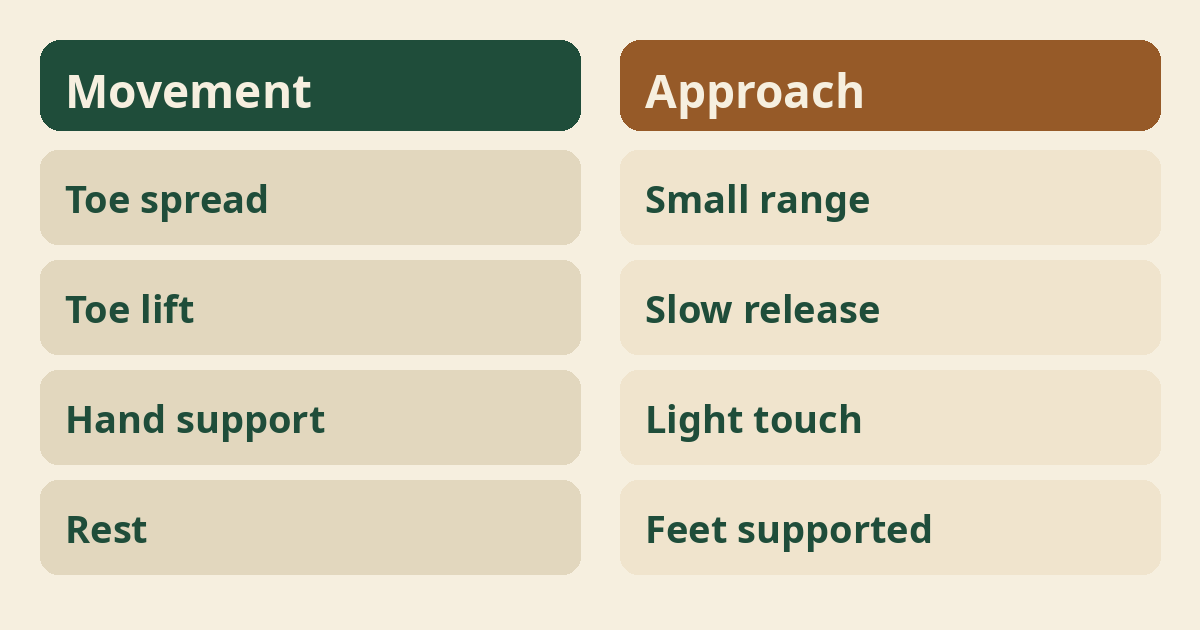
Rest your feet on the floor or a firm support without pushing them flat. Let your knees point comfortably forward, and sit far enough back that the chair supports you. If reaching a foot makes you strain, keep both feet down and use only movements you can make without your hands.
Step two: spread and release
Gently spread your toes as far as they move easily, then let them soften. Try a few slow repetitions without lifting your heels or gripping the floor. Some toes may barely separate, and that is fine; do not force fingers between them or compare your spread with someone else’s foot.
Step three: lift and lower
Lift your toes slightly while the balls of your feet remain supported, then lower them slowly. Keep the movement small enough that your ankles and knees stay comfortable. If all your toes lift together, allow that pattern instead of trying to isolate each toe or pressing other toes down with force.
Step four: offer light hand support
If you can reach comfortably, support one foot and guide a toe through a tiny, easy bend. Hold near the base without squeezing, and keep the toe in its natural line. Skip this step if your doctor has advised against manual stretching, the joint feels sensitive, or you cannot reach without straining your back.
Step five: relax after each movement
Return the toes to a resting position between attempts rather than holding them continuously. Pause long enough to notice whether the foot feels unchanged, easier, or less comfortable. If discomfort appears, finish the session; repeated testing can make it harder to judge what your foot is telling you.
How should you breathe?
Breathe normally while your toes move, without matching a strict count. A relaxed exhale can be a reminder to use less effort, but it should not become a reason to push farther. If you want a separate breathing practice, explore belly breathing for beginners while your feet simply rest.
How long should a session last?
Start with about one or two minutes, including pauses, rather than a long stretching session. A few comfortable movements are enough to learn how your feet respond. If you use a brief hold, release after a few easy breaths, and stop sooner if anything feels unpleasant or your toes start to cramp.
How often can you practice?
Begin occasionally and decide whether to repeat the routine based on comfort during and afterward. There is no need to meet a daily target or catch up on missed sessions. For a broader approach to a manageable yoga schedule, see how often to do yoga rather than turning toe stretches into another demanding task.
What props help?
A steady chair and a firm foot support are usually enough. A folded towel may make resting more comfortable, but it should not slide or leave your foot unstable. Our yoga props guide offers general ideas for support; you do not need specialist equipment to begin this seated practice.
Should you use toe separators?
Toe separators are optional and are not needed for these movements. They can create pressure, so do not assume a stronger stretch means a better result. Ask your clinician before trying them if you have a foot condition, and do not use them to push a painful or misshapen toe into a different position.
What are common mistakes?
The most common mistakes are pulling too hard, holding your breath, and continuing through discomfort. Another is turning a gentle seated movement into a deep kneeling stretch before you know how your toes respond. Choose the easier version whenever you feel you must brace, grip, or rush to finish a repetition.
Should both feet move the same way?
Your feet do not need matching movement ranges or identical toe spacing. Work with each foot separately if that makes it easier to notice comfort, without forcing the stiffer side to catch up. A new or marked difference, particularly with pain, weakness, or swelling, is a reason to seek advice rather than stretch harder.
What if your toes cramp?
Stop the movement and let your foot rest if a cramp starts. Do not pull sharply on the cramped toes or immediately repeat the position to see whether it happens again. If cramps recur, are severe, or come with other symptoms, ask your doctor about them instead of assuming more stretching is the answer.
What if your toes click?
A clicking sound is not a goal and should never be forced. Keep movements small and stop if clicking comes with pain, catching, swelling, or a feeling that a joint gets stuck. If a sound worries you or has changed recently, have it assessed rather than using repeated toe bends to investigate it.
Can you practice at a desk?
A seated toe movement break can fit beside your desk when your feet have clear, stable support. Pause typing so you can notice the movement instead of working through it without attention. For other gentle seated options, see yoga at your desk, and avoid trying to stretch inside tight shoes.
Can toe stretches accompany standing yoga?
Toe movements can be a separate seated preparation before a standing practice, if both are comfortable for you. They do not prove that your feet are ready for balancing poses. In mountain pose, aim for a comfortable stance rather than lifting, spreading, and gripping your toes throughout the whole pose.
Will they improve balance?
Toe stretches alone cannot promise better balance. Balance involves more than toe movement, and unexplained unsteadiness deserves medical advice. If standing practice is appropriate for you, use support and explore yoga for balance separately rather than treating a deeper toe stretch as a shortcut to steadier standing.
Do you need to kneel on tucked toes?
You do not need a kneeling toe stretch to complete this routine. Body weight can make a tucked-toe position much stronger than a seated movement. Beginners can leave it out entirely, especially with sensitive toes, knees, or ankles, and should not copy a deep version simply because it looks simple in a photo.
Can you stretch before walking?
You can try a brief, comfortable seated movement before a walk, but stretching is not a requirement. It does not guarantee that walking will feel easier or that your feet will avoid injury. If walking already hurts, ask for advice about the pain rather than stretching first to push through your usual distance.
What about footwear afterward?
Choose footwear that feels comfortable and does not squeeze your toes after the session. A stretch cannot make an ill-fitting shoe suitable, and you do not need to walk barefoot to preserve the session’s effects. If choosing shoes is difficult because of a foot condition, ask a qualified professional for guidance specific to your feet.
How do you progress?
Progress by making the movement calmer and easier to control, not by pulling harder. You might add one comfortable repetition or spend a little longer noticing the resting phase. Change only one thing at a time, and return to less movement if you notice soreness later that day or the next morning.
When can a teacher help?
A qualified yoga teacher can help you find a comfortable seated setup and reduce unnecessary effort. Tell them about your limits and any guidance from your clinician before trying a new movement. A teacher should not diagnose toe pain, promise to change joint shape, or override medical advice about an injury or ongoing condition.
What mindset works best?
Treat this practice as a quiet check-in rather than a test of flexible feet. Small movements can be enough, and skipping a session is not a failure. The broader ideas in yoga for flexibility may help you stay patient without making range of motion the measure of a good practice.
Can you stretch with bunions?
Ask your doctor or foot specialist before stretching toes affected by a bunion or another joint change. Do not pull the big toe straight or press on a sore area to copy a normal-looking alignment. Any movement plan should fit your own foot, and this general routine cannot tell you which direction or range is suitable.
What if you cannot move individual toes?
You do not need separate control of each toe to use this routine. Start with a small movement of all the toes together, or simply rest and observe them. Do not pin down neighboring toes to force isolation; if difficulty moving a toe is new, especially after injury, get medical advice before practicing further.
How do you finish?
End by letting both feet rest and checking that they feel comfortable before standing. Put footwear back on if needed, then rise slowly using your usual support. Notice how your feet feel later as well as immediately afterward, and stop future sessions if symptoms appear rather than assuming soreness means the routine worked.
Where to read next
For a calm, beginner-friendly start, Ranjana Sinha’s Begin Where You Are is written for people who want simple steps. Our guide to starting a home yoga practice adds a gentle routine you can follow at home.
Frequently asked questions
Can beginners do toe stretches daily?
Some may prefer a brief daily movement break, but start gently and repeat only when comfortable during and afterward.
Should toe stretches hurt?
No, stop if you feel pain, burning, tingling, numbness, or a pinching sensation.
Do toe stretches change foot shape?
This routine does not promise to change foot shape or straighten toes.
Can I do the routine without touching my feet?
Yes, keep both feet supported and use only the easy spread, lift, and release movements.
What should I do if discomfort continues?
Stop the routine and ask your doctor or a qualified foot specialist for advice about the symptoms.
The bottom line
Keep toe stretches small, optional, and comfortable, with medical advice first whenever pain or a foot condition changes what is safe for you.