Yoga for tight hips at your desk means taking a gentle movement break, not forcing your hips into a deep stretch. Start with both feet supported, a steady chair, and small movements that feel comfortable. You can practise without sitting on the floor or changing into exercise clothes. This guide explains a short beginner routine, ways to adjust it, and signs to stop. If tightness includes pain or follows an injury, ask your doctor before trying the movements below.
This guide is general education, not medical advice or an individual exercise plan. Check with your doctor before starting if you have pain, an injury, recent surgery, pregnancy-related concerns, or a condition that affects movement or balance.
What is desk yoga for hips?
Desk yoga uses supported movements to explore comfortable hip motion during a work break. It can include seated weight shifts, easy knee movements, and standing with a chair nearby. You do not need to reach a particular shape, cross your legs, or feel a strong stretch for the break to count.
Why do people try it?
People often try desk yoga because staying in one position can feel uncomfortable. A short pause offers a chance to change how you sit and notice how your body feels. It is one option alongside walking and other movement breaks, rather than a reason to remain at your desk all day.
What does tightness mean?
Tightness is a feeling, not a diagnosis you can make from a yoga routine. Some people describe stiffness after sitting, while others mean soreness, pulling, or limited movement. These experiences are not interchangeable, so describe the feeling clearly if you speak with a doctor, and do not assume every symptom needs stretching.
What might you notice?
Many people find gentle yoga useful for body awareness and a calmer break, but results vary. You might notice which positions feel easier and when you need to move away from the screen. These observations do not prove a change in a medical condition; broader yoga information belongs alongside realistic expectations National Center for Complementary and Integrative Health.
How should you start?
Begin with a small, comfortable movement rather than a deep hip stretch. Put work aside so your attention is on the chair and your feet. Read the whole routine before starting, and choose only movements you can do without pain; yoga at your desk offers a wider introduction to this kind of break.
What chair is suitable?
Use a firm chair that stays still and supports your weight. A rolling chair, swivel seat, or soft edge can move when you lean or stand. If you cannot find a steady chair, choose a simple walking break instead of improvising support with office furniture that might slide.
How do you set up?
Clear the floor and place your feet where they can rest comfortably. Leave enough room to move your knees without hitting a drawer or desk leg. Keep your phone out of reach during practice, and check that loose cables, bags, and a slippery floor will not get in the way.
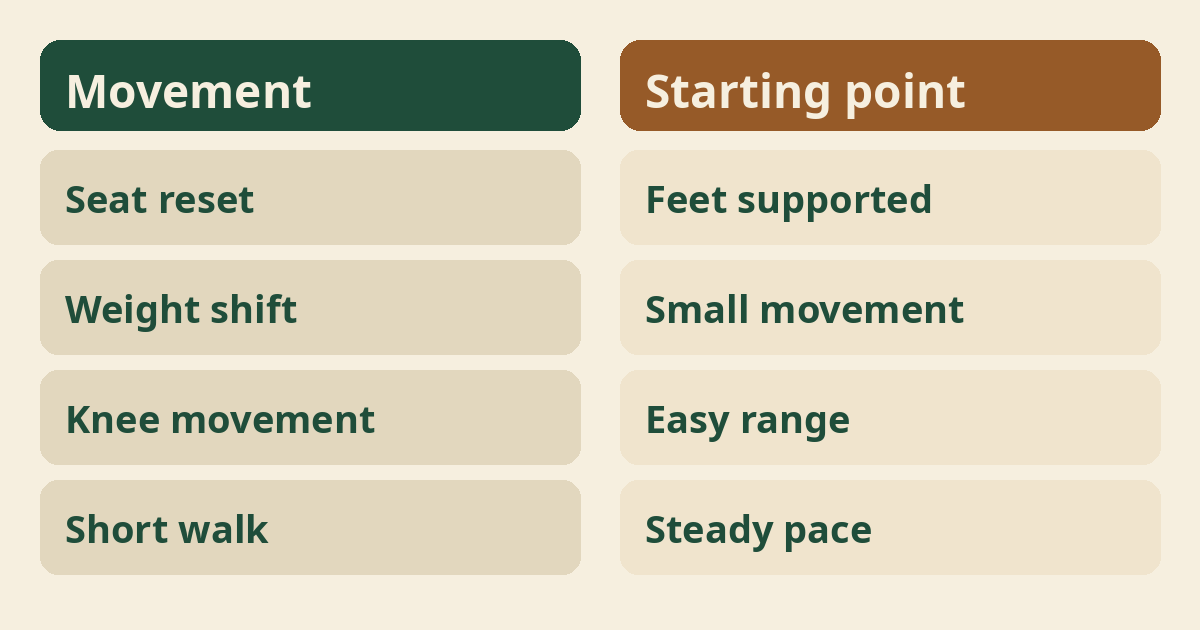
Step one: settle your seat
Sit with your feet supported and your torso comfortably upright. Choose a position where you are not perched at the edge or pressing your knees against the desk. Let your shoulders soften, keep your hands on your thighs, and take a moment to notice your starting level of comfort.
Step two: shift gently
Make a small side-to-side weight shift while keeping both feet supported. Move only enough to notice the pressure changing under your seat, without leaning far or lifting a hip high. Return to the middle between shifts, and skip this movement if it brings pain, dizziness, or a feeling of being unsteady.
Step three: move one knee
Ease one knee a little outward and return it without pushing with your hands. Keep the foot supported and allow only a small movement within a comfortable range. Repeat on the other side, noticing rather than correcting differences; your knees do not need to travel equally far for this movement to be worthwhile.
Step four: try an optional figure four
A seated figure four is optional and should never require pulling your leg into place. If it feels easy, rest one ankle on the opposite thigh, away from the kneecap, and stay upright without pressing the raised knee. Skip it if lifting the leg is difficult or creates pressure in the hip, knee, or ankle.
Step five: stand with support
Stand slowly beside your steady chair if standing feels safe and comfortable. Keep a hand near the chair and let your feet settle into an easy stance before moving again. If you become lightheaded or unsure of your balance, sit safely and leave the standing part out rather than trying to finish the sequence.
How should you finish?
Finish with a short, easy walk if your space and health allow it. Walk at a pace that lets you feel steady, then return to your work without rushing. If walking is not suitable, remain seated and let your breathing settle; finishing gently is more useful than squeezing in one last demanding stretch.
How do you breathe?
Keep breathing naturally instead of holding your breath to stay in a position. An easy exhale can be a cue to soften effort, but it is not permission to push farther. If breath focus feels distracting, simply breathe normally; beginner belly breathing explains another gentle way to explore breathing without strain.
How long should a break last?
A few comfortable minutes can be a sensible starting point for a desk break. You might spend a brief moment settling, move each side slowly, and then stand or walk. There is no required hold time: leave a position sooner if it feels tiring, awkward, or less comfortable as you stay there.
How often can you practise?
Choose brief breaks that fit your comfort rather than repeating stretches whenever tightness appears. You can alternate desk yoga with walking or a change of position during your workday. If discomfort keeps returning, ask a doctor rather than increasing stretch time; how often to do yoga discusses building a manageable practice.
What should a stretch feel like?
Any stretch sensation should stay mild, without pain or pressure inside a joint. You may notice a gentle pull in one position and nothing much in another. Neither feeling measures success, and numbness, tingling, catching, or a sharp sensation is a reason to stop rather than a signal to hold longer.
When should you stop?
Stop the movement if you feel pain, numbness, tingling, dizziness, or unexpected weakness. Return to a supported position instead of testing the symptom again. Seek medical advice for symptoms that persist or worry you, and get prompt medical help for severe pain, inability to bear weight, or symptoms after a significant injury.
Who should be careful?
Ask your doctor first if you have an injury, recent surgery, joint problems, or unexplained symptoms. Pregnancy, balance difficulties, and other health conditions may also call for advice about suitable movements. General desk instructions cannot account for your history, so follow your own care team’s guidance rather than borrowing another person’s exercise plan.
Is this a treatment?
No, this desk routine is not a treatment for hip pain or a diagnosed condition. It cannot tell you why your hips feel tight or replace medical assessment or physiotherapy. If you already have a prescribed exercise plan, ask the professional who gave it to you whether any of these movements belong alongside it.
What mistakes are common?
The main mistake is turning a gentle break into a test of how far you can stretch. Avoid bouncing, pushing a knee down, pulling an ankle into position, or leaning until your back strains. You should also avoid comparing sides as though the less mobile side owes you extra effort before you can return to work.
Which props might help?
Simple support can make a seated position easier when it is stable and well placed. A suitable footrest may help if your feet do not reach the floor, while a firm chair offers standing support. Avoid makeshift stacks that slide; yoga props for beginners explains choosing support without using it to force a pose.
What if figure four is uncomfortable?
Leave figure four out if it puts pressure on your knee or feels awkward to enter. Keep both feet on the floor and use small weight shifts or an easy walk instead. A pose does not become safe just because it is common, and pushing the knee downward is not a useful adjustment.
Can you stay seated throughout?
Yes, you can keep the break seated if standing is not suitable for you. Use comfortable posture changes and small movements you can control without gripping the desk. If seated movement is also difficult, focus on a supported rest and ask for individual advice rather than trying to copy a standing routine from your chair.
What if one side feels different?
Let each side use its own comfortable range instead of trying to make both sides match. Start small on each side, and do not add pressure or longer holds to the side that feels tighter. A new or marked difference, especially with pain or weakness, deserves medical advice rather than a stronger stretch.
What about your back?
Keep your back comfortable and avoid folding forward simply to deepen a hip position. Sitting upright may be enough, and you can leave a movement out if it pulls on your back. If you have back symptoms, speak with your doctor first; yoga with a bad back is background reading, not clearance to practise.
Do you need a deep squat?
A deep squat is not necessary for a beginner desk routine. Lowering yourself between office furniture adds demands that a short seated break does not need. If you later explore floor-based hip poses, learn them separately in a suitable space; yoga for hips introduces a broader practice without making depth the goal.
How can you progress?
Progress by making the routine easier to follow before making any movement larger. You might become more steady, need fewer reminders to relax, or find a useful place for breaks in your day. Longer holds and deeper positions are optional, and a comfortable small routine can remain your routine without becoming more demanding.
When could a teacher help?
A qualified yoga teacher can help you choose supported options and understand the movements. Explain your experience, your work setup, and any guidance from your doctor before the lesson. A teacher should respect your decision to skip a pose and stay within their role rather than diagnosing the cause of your symptoms.
What mindset helps?
Treat the break as a check-in, not another task you must perform perfectly. Some days you may prefer to walk, and other days a small seated movement may feel enough. Let comfort guide the choice, without labelling a shorter break as failure or deciding that a stronger sensation means better practice.
Can you practise in work clothes?
Comfortable work clothes are fine if they allow easy movement without pulling or slipping. Leave out any position that strains a seam, restricts your knees, or makes you feel exposed in a shared office. Stable footwear and clear floor space matter more than looking like someone in a yoga photograph.
Should you move while typing?
Pause typing before practising so you can notice both your body and your surroundings. Trying to stretch while reading a difficult message can make you miss discomfort or lose track of your seat position. Save the movement for a clear break, then return to the keyboard after both feet are settled again.
What if tightness keeps returning?
Recurring tightness is a reason to review your habits and seek advice when needed, not stretch harder. Consider whether your chair setup, long periods without moving, or other activities deserve attention. A routine cannot explain persistent symptoms, so discuss ongoing discomfort with a doctor and ask about appropriate help with your work setup.
How does this fit a wider practice?
Desk yoga can be one small part of a varied movement routine that suits your health. It does not need to cover every hip movement or replace activities you enjoy away from work. If you want to learn more, yoga for flexibility offers a separate starting point; keep desk breaks simple rather than combining every pose at once.
Where to read next
For a calm, beginner-friendly start, Ranjana Sinha’s Begin Where You Are is written for people who want simple steps. Our guide to starting a home yoga practice adds a gentle routine you can follow at home.
Frequently asked questions
Can beginners try desk hip yoga?
Beginners can start with small supported movements after checking any health concerns with their doctor.
Do I need to cross my legs?
No, you can keep both feet supported and skip figure four entirely.
Should I stretch through pain?
No, stop painful movements and seek medical advice for symptoms that persist or concern you.
Can I do this without a yoga mat?
Yes, this seated and supported standing routine does not require a mat.
Will this fix tight hips?
It cannot promise to fix tightness, and persistent symptoms need individual assessment rather than a general routine.
The bottom line
Choose a steady chair, move within comfort, and let a short desk break be enough without forcing your hips to change.