
A short, gentle yoga break can help you feel more awake when you are tired or sluggish. Slow stretches, standing poses and steady breathing wake up the body without wearing you out. This guide shares a five minute routine for beginners, plus safety notes.
This is general education, not medical advice. Yoga does not treat tiredness or any condition. If you feel tired for weeks, have a health condition or are pregnant, speak to your doctor first.
Can yoga help when you feel low on energy?
A short, gentle yoga break can leave many people feeling more awake and refreshed, though it does not replace sleep, food or medical care. Tiredness has many causes, including poor sleep, long hours of sitting and stress. Movement and slow breathing can lift how you feel for a while. This guide shares quick, beginner friendly ways to wake the body up without wearing yourself out. If you are tired all the time, speak to a doctor.
Why do you feel sluggish in the afternoon?
Long sitting, a heavy lunch, dry air and a busy mind can all make the afternoon feel slow. The body likes to move. After hours in a chair, the muscles stiffen and the breath gets shallow. A short pause for stretching and breathing is often enough to feel brighter. Our guide to yoga at your desk shows easy options.
Start with a drink of water and a deep breath
Stand up, drink some water and take three slow breaths before moving. Dry mouths and mild thirst can add to tiredness. A few breaths help you arrive in the body. Our guide to belly breathing explains an easy pattern.
Standing side stretch
Raise one arm overhead, lean gently to the opposite side and breathe for three slow breaths each way. This opens the sides of the body that tighten with sitting. Keep both feet grounded. Move within a comfortable range.
Gentle backbend
Place the hands on the lower back, lift the chest slightly and look forward for two or three breaths. Keep the bend small and gentle, and lift from the chest rather than the waist. Skip it if it hurts the back. Our guide to yoga for back pain explains safer habits.
Standing forward fold
Bend the knees, fold forward and let the head hang for five slow breaths before rolling up slowly. This releases the back and neck. Keep the knees soft. Come up slowly so you do not feel dizzy. Use a chair if the floor is far away.
Cat and cow
On hands and knees, round and lift the spine gently with the breath for eight rounds. This is a lovely way to wake the spine. Keep the movement smooth. Our guide to morning yoga uses it in a longer routine.
Warrior pose
Step one foot back, bend the front knee and hold for three breaths on each side. Our guide to warrior pose explains how to do it safely. Standing poses wake the legs and raise the heart rate gently.
Sun salutation
Link a few slow movements with your breath to warm up the whole body. Our guide to sun salutation shows a simple sequence. Go slowly. Do two or three rounds to start.
Shoulder rolls and neck stretch
Roll the shoulders back and forward, then tilt the head gently to each side. Our guide to yoga for neck and shoulders has more. Move slowly and stop if you feel sharp pain.
Seated twist
Sit tall, turn gently to one side with a hand on the opposite knee and breathe for three breaths each way. A twist can feel refreshing after long sitting. Lengthen the spine first. Never force the turn.
Brisk walk and stretch
A short walk outside, with a few stretches, often does more than another cup of tea. Fresh air and daylight help you feel awake. Our guide to walking meditation shows a mindful way to walk.
Energising breath pattern
Breathe in for four counts and out for four counts, keeping the breath smooth for one minute. Our guide to box breathing explains a steady pattern. Avoid fast or forceful breathing unless taught by a qualified teacher, because it can cause dizziness.
What about a short mind reset?
Close the eyes for a minute and notice sounds and sensations without trying to change them. Our guide to meditation at work shows quick resets. A calm mind often feels more energetic than a busy one.
What should you avoid?
Avoid hot rooms, vigorous breathing, long holds and heavy practice when you are very tired or have just eaten. Gentle is better. Too much effort can leave you drained. Stop if you feel dizzy, faint or unwell.
How long should a break be?
Three to ten minutes is enough, and you can fit it between tasks. Set a reminder to move every hour or two. Even a minute of stretching helps. Our guide on how often to do yoga gives ideas for a weekly routine.
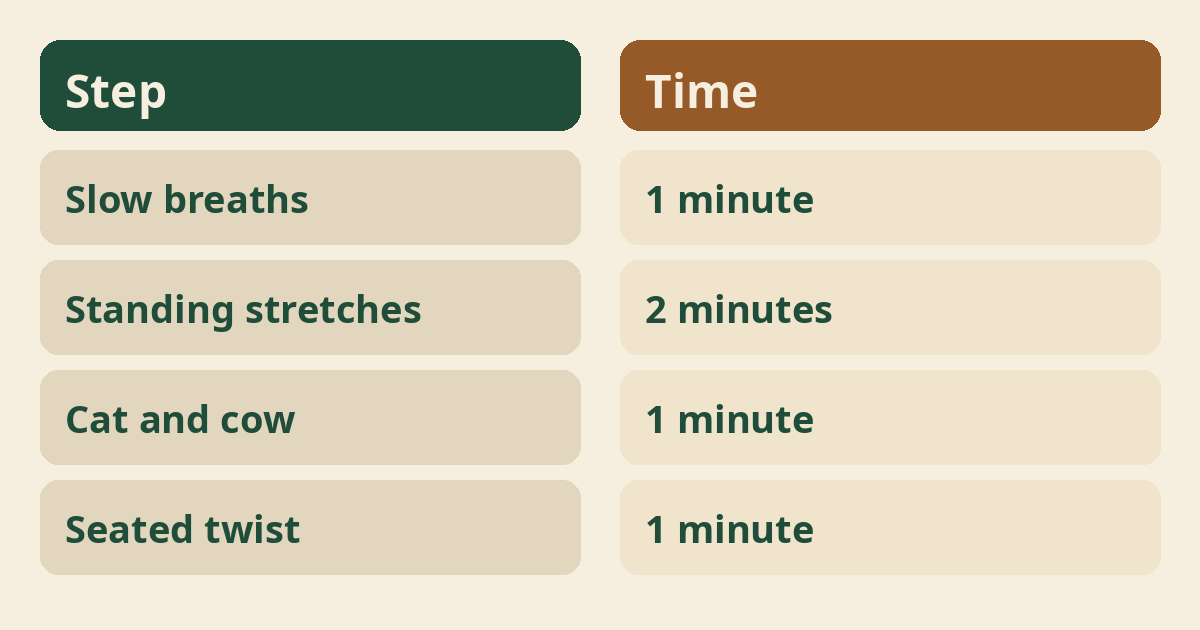
A simple five minute energy break
Spend one minute on breath, two on standing stretches, one on cat and cow and one on a twist. Repeat daily or when you feel flat. Keep the movements slow. Notice how you feel afterwards.
Does yoga help with long term energy?
Regular gentle practice may help you feel more energetic over time through better sleep, steadier mood and a less stiff body, though results vary. Our guide to the benefits of yoga explains what practice may offer. The National Center for Complementary and Integrative Health notes that research on yoga is still developing.
What else boosts energy?
Regular sleep, balanced meals, water, daylight and a little daily movement all matter. Our guide to yoga for better sleep shows an evening routine. Reduce screens late in the day. Small habits add up.
When is tiredness a warning sign?
Tiredness that lasts for weeks, comes with other symptoms or does not improve with rest needs a doctor. Signs include unusual weakness, breathlessness, low mood, weight changes or fainting. Do not rely on yoga for these. Speak to a doctor.
Is it safe for everyone?
It is safe for most healthy people when gentle, but check with a doctor if you have a health condition, injury or pregnancy. Our guide to yoga after 50 shows gentle options. Stop if you feel pain or dizziness.
What mistakes do beginners make?
Pushing too hard, rushing, holding the breath and using movement to ignore real tiredness. Go slowly. Listen to the body. Rest when you need rest.
When should you see a doctor?
See a doctor before starting if you have a health condition, injury, pregnancy or ongoing tiredness. Stop if you feel chest pain, dizziness or breathlessness. This guide is general education, not medical advice.
How can you build movement into your day?
Stand up for a minute every hour, take stairs when you can and stretch while waiting for the kettle or a call. Small, frequent movements often help more than one long session. Link them to things you already do. Keep a mat or a clear patch of floor ready. Over time these tiny habits keep the body from stiffening and make long days feel lighter.
Does food or water matter?
A steady, balanced meal and enough water help energy stay even through the day. Skipping meals or relying on sugar and caffeine can lead to crashes. Keep a bottle of water on your desk. Do not practise yoga straight after a big meal. Wait until you feel comfortable.
What about sunlight and fresh air?
A few minutes outdoors in daylight can lift how awake you feel. Try your stretches near an open window or step outside. Light helps the body keep a steady daily rhythm. It also gives your eyes a rest from screens. Our guide to reducing screen time has more ideas.
How do you stay consistent?
Pick one regular time, keep it short and treat it as a small gift to yourself rather than a chore. Pair it with a daily cue such as the mid afternoon slump. Tick off each day on a calendar. If you miss a day, simply begin again. A kind attitude keeps habits alive much longer than strict rules.
Where to read next
For a calm, beginner-friendly start, Ranjana Sinha’s Begin Where You Are is written for people who want simple steps. Our guide to starting a home yoga practice adds a gentle routine you can follow at home.
Frequently asked questions
Can yoga boost energy?
A gentle break can leave many people feeling more awake, but it does not replace sleep or medical care.
What is the best yoga for tiredness?
Gentle standing stretches, cat and cow and slow breathing.
How long should an energy break be?
Three to ten minutes.
Should I do fast breathing for energy?
Not unless taught by a qualified teacher. Gentle breathing is safer.
When should I see a doctor about tiredness?
If it lasts for weeks or comes with other symptoms.
The bottom line
A few mindful minutes can lift an ordinary day. Move gently, breathe steadily and speak to a doctor if tiredness lasts.

