
Yoga for rowers is a simple way to stretch the muscles rowing tightens and wake up the ones it ignores, and beginners can start with a few basic poses after training. Rowing works your legs, back, and arms hard in one repeated motion, which often leaves hips, shoulders, and the lower back feeling stiff. This guide covers easy poses, breathing, how long and how often to practice, and common mistakes, so you can build a short routine that fits around your rowing.
This article is general education, not medical advice, and it is not a treatment for any condition. If you have a health condition, an injury, or pain that does not go away, check with a doctor before starting yoga.
What is yoga for rowers?
Yoga for rowers is a short set of beginner poses chosen to ease the tight spots that rowing creates. Rowing repeats the same strong pulling motion hundreds of times. Yoga adds slow stretching and gentle strength in the opposite directions. Many rowers use it to feel looser and move better.
Why do rowers try yoga?
Many rowers try yoga because their hips, hamstrings, shoulders, and lower back feel tight after training. The rowing stroke folds the body forward again and again. Over time some muscles shorten while others switch off. A short yoga practice can help balance that out.
Is yoga good for rowing performance?
Yoga may support rowing by improving flexibility, body awareness, and steady breathing, though results vary from person to person. Many rowers say they feel smoother on the erg after adding yoga. It is not a magic fix. Think of it as simple maintenance for a hardworking body.
Who is this guide for?
This guide is for rowers who are new to yoga and want a simple starting point. You do not need to be flexible. You do not need any experience. Every pose here is beginner friendly and can be made easier with props.
How do I start yoga as a rower?
Start with ten minutes of easy poses after a rowing session or on a rest day. Pick four or five poses from this guide. Move slowly and never push into pain. Short and regular beats long and rare for beginners.
Step 1: Set up your space
Find a quiet flat spot with enough room for a mat and your arms stretched out. A non-slip mat helps, and a carpet works too. Keep a folded blanket and a belt or strap nearby. Wear clothes you can bend in.
Step 2: Warm up the spine
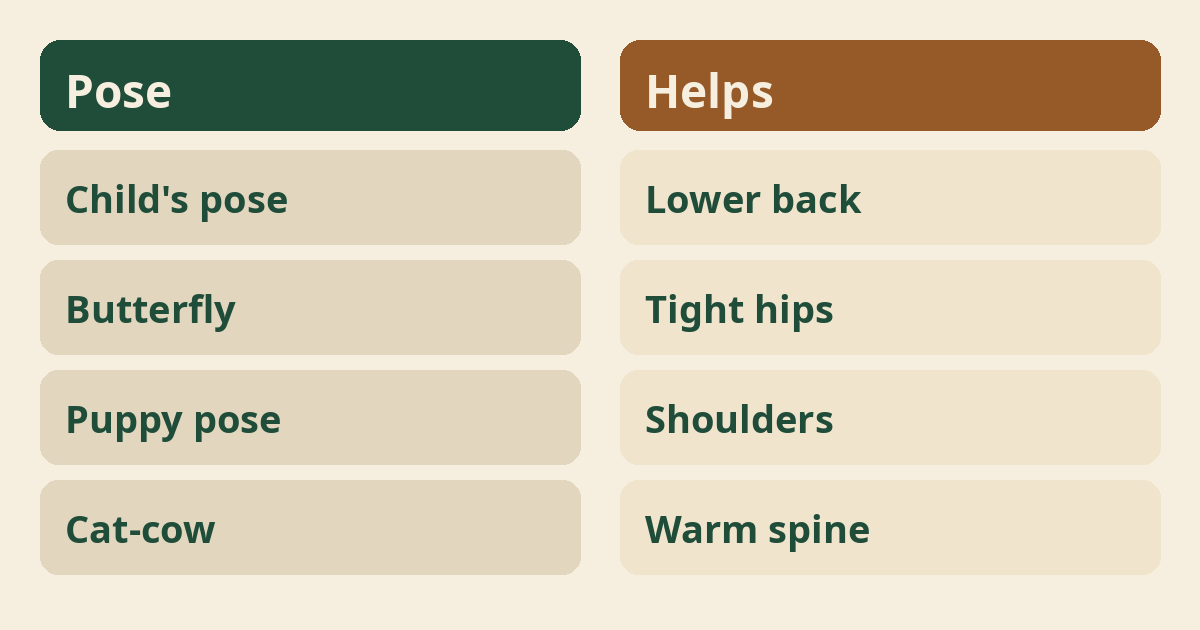
Begin with slow cat-cow movements to wake up your back before deeper stretches. On hands and knees, arch as you breathe in and round as you breathe out. Move for eight to ten breaths. The cat-cow pose for beginners page shows the full movement.
Step 3: Stretch the hips
After warming up, move into a gentle hip opener like butterfly pose. Sit tall, bring the soles of your feet together, and let your knees fall out. Stay for a minute or two. Rowers often hold a lot of tightness in the hips from the catch position.
Step 4: Open the shoulders
Next, open the chest and shoulders with a slow puppy pose stretch. From hands and knees, walk your hands forward and melt your chest toward the floor. This counters the rounded shoulders many rowers develop. Breathe into the stretch instead of forcing it.
Step 5: Release the back
Finish the active part with child’s pose to release your lower back. Knees wide, big toes touching, arms long in front. Let your forehead rest down. The child’s pose for beginners guide covers easy variations if your hips feel tight.
Step 6: Cool down and rest
End every session with a few quiet minutes lying on your back. Let your arms and legs relax fully. Slow your breathing down. This short rest helps your body absorb the practice and is easy to skip, so protect it.
How should I breathe during yoga?
Breathe slowly through your nose and let each exhale be a little longer than the inhale. Steady breathing tells your nervous system it is safe to relax into a stretch. If you want a foundation, belly breathing for beginners is a good place to start. It also carries over well to rhythm on the rowing machine.
How long should a session be?
Ten to twenty minutes is enough for most beginner rowers. Consistency matters more than length. A short session after rowing or before bed is realistic. You can always add time later as the habit settles in.
How often should rowers do yoga?
Two to four short sessions a week works well for most rowers. Some like a few minutes after every row. Others prefer two longer sessions on rest days. Our guide on how often you should do yoga explains how to find your rhythm.
Can I do yoga right after rowing?
Yes, gentle yoga right after rowing is a good time because your muscles are already warm. Keep the intensity low and the pace slow. Skip strong balances or deep bends when you are very tired. Save harder stretches for rest days.
Can yoga help with tight hamstrings?
Gentle forward folds and low lunges may help ease tight hamstrings over time. Hamstrings work hard during the drive of the stroke. Bend your knees in forward folds so your back stays long. Slow progress is normal here.
Can yoga help rowers’ hips?
Yes, hip openers are one of the most useful parts of yoga for rowers. The catch position asks a lot of the hips. Poses like butterfly and low lunge gently open them. See yoga for hips for beginners for a fuller routine.
Can yoga help a rower’s shoulders?
Slow shoulder and chest openers may ease the rounded posture rowing can build. Rows pull the shoulders forward and in. Puppy pose and gentle arm stretches open them back up. The page on yoga for neck and shoulders has more options.
What about balance and stability?
Simple standing poses can build the balance and body control that support good rowing form. Mountain pose teaches you to feel your feet and stand tall. Try yoga for balance for beginners when you want more. Stability off the water often shows up on it.
What are common beginner mistakes?
The biggest mistake is forcing stretches to match a picture instead of listening to your body. Other common ones are holding your breath, skipping the warm-up, and going too long on day one. Mild stretch is fine, sharp pain is not. Back off whenever something pinches.
What props do rowers need?
A mat, a strap, and a folded blanket cover almost everything a beginner rower needs. Blocks bring the floor closer in forward folds. A strap helps tight hamstrings without rounding the back. Our yoga props for beginners guide explains each one simply.
Do I need to be flexible first?
No, you do not need to be flexible to start yoga, and saying so is like needing to be clean before a shower. Yoga is how many people build flexibility, not the entry test. Start where you are. If flexibility is your main goal, yoga for flexibility for beginners pairs well with this routine.
Can I do yoga on rest days?
Yes, rest days are a great time for a slightly longer and slower yoga session. Keep it gentle so it stays recovery, not another workout. Slow stretches and long holds suit tired legs. Twenty easy minutes is plenty.
Can yoga help with rowing mindset?
Many rowers find the slow focus of yoga helps them stay calm and patient during long sessions. Holding a pose with steady breath is mental practice too. That same steadiness helps in the middle of a hard piece. Results vary, but many athletes value this side most.
Is yoga a treatment for rowing injuries?
No, yoga is not a treatment, and it should not replace care from a doctor or physiotherapist. It can sit alongside professional care as gentle movement. If you are injured, get proper guidance first. Then add yoga only when your care team says it is fine.
Who should be careful?
Anyone with back pain, a recent injury, or a health condition should talk to a doctor before starting. Rowers often have cranky lower backs, so be extra careful with deep forward bends. Read can you do yoga with a bad back for careful modifications. When in doubt, get checked.
What benefits can rowers expect?
Many people find yoga leaves them feeling looser, calmer, and more aware of their body, though results vary. Some notice easier movement in the boat within a few weeks. Others mainly enjoy the calm after training. Groups like National Center for Complementary and Integrative Health share balanced information on yoga’s possible benefits, and none of it is a guarantee.
How do I progress over time?
Progress by holding poses a little longer and adding one new pose at a time. There is no finish line to chase. When a pose feels easy, deepen it slightly or try a harder version. Small steady steps beat big jumps.
Do I need a teacher?
A teacher is helpful but not required, and many beginners start safely at home with simple poses. A few classes early on can fix habits you cannot see yourself. Online videos made for beginners also work well. Choose what you will actually stick with.
What if I only have five minutes?
Five minutes of two or three poses still counts as practice. Try cat-cow, child’s pose, and one hip opener. Even this short reset can ease post-row stiffness. Small habits done often add up.
Can yoga help with stress from training?
Slow yoga with long exhales is widely used to unwind after hard training blocks. Racing and training bring real pressure. A quiet evening practice can mark the end of the day. Yoga for stress relief for beginners goes deeper on this.
Is morning or evening better?
The best time is whichever time you will actually do it. Mornings loosen a stiff body before a row. Evenings help you wind down after one. Try both for a week and keep what feels right.
How is this different from stretching?
Yoga adds breath, balance, and calm focus to what plain stretching offers. Stretching a muscle is one piece of it. Yoga links movement to breathing and attention. Many rowers find that combination easier to stick with.
What if a pose hurts?
Stop right away and come out of any pose that causes sharp or shooting pain. A dull stretch feeling is normal. Pain in a joint is not. Ease back, use props, or skip that pose entirely for now.
Where to read next
For a calm, beginner-friendly start, Ranjana Sinha’s Begin Where You Are is written for people who want simple steps. Our guide to starting a home yoga practice adds a gentle routine you can follow at home.
Frequently asked questions
Is yoga good for rowers?
Many rowers find it eases tight hips, shoulders, and backs, though results vary.
How often should a rower do yoga?
Two to four short sessions a week is a solid starting point for most beginners.
Can beginners do yoga without being flexible?
Yes, yoga builds flexibility over time and no starting level is required.
Should I do yoga before or after rowing?
Gentle yoga after rowing or on rest days works best for most people.
Can yoga fix a rowing injury?
No, yoga is not a treatment, so see a doctor or physiotherapist for injuries.
The bottom line
Start small, breathe slowly, and let a few simple poses after each row quietly become the habit your body thanks you for.

