
Yoga for musicians is a set of gentle stretches, breathing habits and posture checks that many players use to feel more relaxed at their instrument. You do not need to be flexible or own special gear. A few minutes before or after practice is enough to begin. This guide walks you through the basics in plain steps, so you can try them at home, in a rehearsal room or backstage.
This article is general education only and is not medical advice. If you have pain, an injury or any health condition, check with your doctor before you start.
What is yoga for musicians?
It is regular yoga, chosen and sequenced around the way musicians sit, stand and hold their instruments. The poses are simple and slow. The goal is to give your body a short break from repeated positions and to bring a bit more awareness to how you play.
Why do musicians try yoga?
Many musicians try yoga because long practice hours often leave the body feeling stiff and tired. Holding a guitar, bow or sticks for hours means the same muscles work again and again. A short yoga break gives other parts of the body some attention.
Do you need to be flexible?
No, you do not need any flexibility to begin, because yoga is meant to meet you where you are. Most beginners cannot touch their toes, and that is normal. Go only as far as feels comfortable and let range grow slowly over time.
How do you start?
Start with five minutes a day in a quiet spot near where you practice. Pick two or three easy poses and hold each for a few calm breaths. Short and steady beats long and rare, especially in the first weeks.
Step 1: Settle into a comfortable seat
The first step is to sit tall on a chair or cushion with your feet flat and your hands resting on your thighs. Let your shoulders drop away from your ears. Take three slow breaths and notice how you are sitting right now.
Step 2: Roll your shoulders
The second step is to lift both shoulders up, roll them back and down, and repeat slowly about five times. Keep your jaw and hands loose as you move. Then roll them forward for five more rounds and see what feels different.
Step 3: Stretch your neck gently
The third step is to tip one ear toward the same shoulder and pause for a few breaths on each side. Never pull with your hand or force the stretch. For more ideas, read about yoga for neck and shoulders in a gentle routine.
Step 4: Move your spine with cat and cow
The fourth step is to move your spine slowly between rounding and arching, in time with your breath. You can do this on hands and knees or while seated. The full steps are in this guide to cat cow pose for beginners.
Step 5: Rest in child’s pose
The fifth step is to sit back toward your heels and fold forward to rest your forehead down. Stay as long as it feels pleasant and breathe slowly. If your knees complain, place a folded blanket behind them, or see child’s pose for beginners.
Step 6: Finish with mountain pose
The last step is to stand tall with feet hip width apart, arms relaxed and weight even on both feet. This is a simple way to check your posture before you pick up your instrument. Learn more in mountain pose for beginners.
How does breathing fit in?
Slow breathing is a core part of yoga and many musicians use it to feel calmer before playing. Breathe in through the nose, let your belly expand, and breathe out a little longer. Singers and wind players may already know a lot of this from their own training.
What is belly breathing?
Belly breathing is a slow style of breath where your belly rises as you breathe in and falls as you breathe out. Place one hand on your stomach to feel the movement. You can learn the steps in belly breathing for beginners.
Can breathing help with nerves before a show?
Many musicians find that a few slow breaths help them feel steadier before they play. Try breathing in for four counts and out for six, a few times, backstage or at home. Results vary, and it is a calming habit rather than a guarantee.
How long should a session last?
A good beginner session lasts between five and fifteen minutes. You can always do more later. Stop if something hurts, and remember that a short session you actually do is better than a long one you skip.
How often should you practice yoga?
Two to four short sessions a week is a realistic start for most busy musicians. Some people like a tiny daily routine instead. Our guide on how often should you do yoga explains how to choose a rhythm that fits your life.
When is the best time to do it?
The best time is whenever you will actually do it, such as before practice, between sets or at the end of the day. Before playing, keep it light and gentle. After playing, you can hold poses a little longer and let your body slow down.
Can you do yoga at rehearsal or backstage?
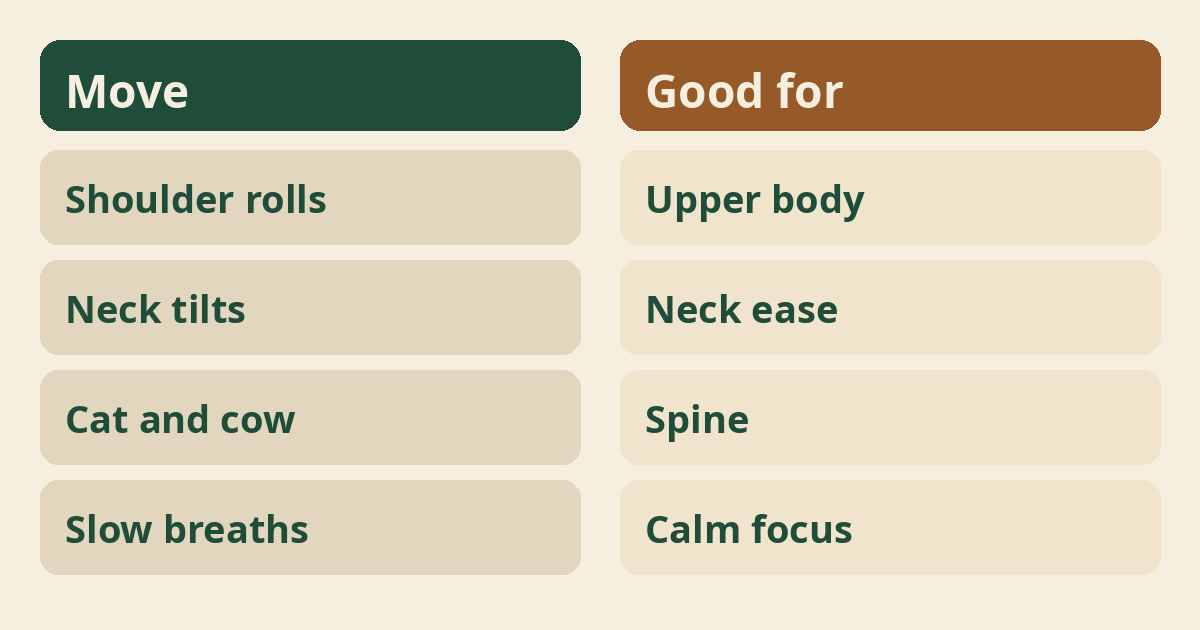
Yes, a few seated moves work well in a rehearsal room, a van or backstage. Neck tilts, shoulder rolls and slow breaths need no mat and very little space. Short breaks like these fit easily between songs or lessons.
What about desk or studio work?
Producers, composers and teachers who sit for long hours can use simple chair moves to break up the day. Stand up, stretch your arms overhead and roll your wrists. You may like the ideas in yoga at your desk for beginners.
What do your hands and wrists need?
Hands and wrists often like gentle, slow movement, such as opening and closing the fingers and making soft circles. Keep every move easy and pain free. If you feel tingling, numbness or sharp pain, stop and speak with your doctor or a qualified professional.
How can yoga help your hips and lower body?
Many players who sit for long stretches find that gentle hip openers feel good afterward. Slow, supported poses can ease the feeling of tightness from sitting. A helpful starting point is yoga for hips for beginners.
What about a tired lower back?
Gentle movement and good seating habits may help your back feel more comfortable during long sessions. Keep poses small and slow, and avoid deep twists or folds at first. Read can you do yoga with a bad back before you begin if you have discomfort.
How can you work on balance?
Standing on one foot near a wall is an easy way to practice balance, which is useful for drummers and standing performers. Hold the wall lightly and keep your gaze on one spot. A few more ideas are in yoga for balance for beginners.
Does yoga help with flexibility?
Many people find that regular, gentle stretching slowly improves how flexible they feel. Progress is gradual and results vary from person to person. You can find more in yoga for flexibility for beginners.
What are the common mistakes?
The most common mistake is pushing too hard in a stretch because you want fast results. Others include holding your breath, skipping rest and comparing yourself to other people. Slow down, breathe and stay inside your comfortable range.
Should you stretch cold muscles?
It is usually kinder to warm up with a minute of easy movement before you hold any stretch. Walk around, roll your shoulders or do a few cat and cow rounds. Then move into longer holds once your body feels a little warmer.
Which props help?
A folded blanket, a cushion and a sturdy chair are all the props most beginners need. A strap or a belt can help in seated stretches. See yoga props for beginners for simple, low cost options.
What should you wear?
Wear clothes you can move in, with nothing tight around the waist, shoulders or wrists. You can practice in socks or bare feet. If you are in a rehearsal room, comfortable everyday clothes are fine.
Can yoga help with stress?
Many people find that slow movement and breathing help them feel calmer and less tense. This can matter for musicians who feel pressure before auditions or shows. Read more in yoga for stress relief for beginners.
What are the possible benefits?
Many people find that yoga brings more ease, better body awareness and a calmer mind, though results vary. It is not a promise of any outcome, and it works best as a steady habit. You can read general, balanced information from National Center for Complementary and Integrative Health about yoga and health.
Who should be careful?
Anyone with pain, an injury, a medical condition or pregnancy should speak with a doctor before starting yoga. This includes wrist, neck or back problems, which are common among players. Your doctor can tell you which moves are suitable for you.
Is yoga a treatment for playing injuries?
No, yoga is not a treatment for any injury or medical condition. It is a gentle practice for general wellbeing. If you have pain from playing, see a doctor or a qualified health professional rather than relying on stretches.
How should you progress?
Add one new pose or one extra minute at a time, and only when the current routine feels easy. A slow build keeps the practice enjoyable. After a few weeks you might add a gentle pose such as butterfly pose for beginners for the hips.
Should you find a teacher?
A good teacher can help you spot habits you cannot see yourself, so a class or video series is worth trying. Look for a calm, beginner friendly style. Tell the teacher you are a musician and mention any sore spots so they can suggest suitable options.
What mindset works best?
A patient, curious mindset works best, because yoga is about noticing and not about performing. You already know that slow practice builds skill. Treat yoga the same way, with small steps, kind attention and no rush.
Where to read next
For a calm, beginner-friendly start, Ranjana Sinha’s Begin Where You Are is written for people who want simple steps. Our guide to starting a home yoga practice adds a gentle routine you can follow at home.
Frequently asked questions
Is yoga good for musicians?
Many musicians find gentle yoga helps them feel more relaxed and aware of their body, though results vary.
How long should a musician do yoga each day?
Five to fifteen minutes is a comfortable start for most beginners.
Can I do yoga before I play?
Yes, a few gentle moves and slow breaths before playing are a popular choice.
Do I need a yoga mat?
A mat is helpful but not required, since many moves can be done seated on a chair.
What if a pose hurts?
Ease out of it right away and check with your doctor if the discomfort continues.
The bottom line
Start small, stay gentle and let a few calm minutes become part of your music routine.

