
Yoga for triathletes is a gentle practice that adds mobility, breath awareness and calm to a busy swim, bike and run week. You do not need to be flexible to start. Ten to twenty minutes of easy poses, done a few times a week, is enough for most beginners. This guide explains the basics in plain words, with simple steps, common mistakes, and ideas for fitting yoga around your training.
This article is general education and not medical advice. If you have an injury, a health condition, or any doubt about exercise, check with your doctor before you start.
What is yoga for triathletes?
It is a set of easy yoga poses and breathing habits chosen to suit people who swim, bike and run. Think of it as a companion to training, not a replacement for it. The poses focus on the areas triathletes use a lot, such as hips, shoulders, back and calves.
Why do triathletes try yoga?
Many triathletes try yoga because three sports put repeated stress on the same muscles. Yoga gives you a quiet slot to slow down and notice how your body feels. Many people also enjoy it as a mental break from schedules and race plans.
Do I need to be flexible first?
No, you can start yoga at any level of flexibility. Tight muscles are the reason to begin, not a reason to wait. Go only as far as feels comfortable and let range come slowly. See yoga for flexibility for a gentle starting point.
How do I start?
Start with one short session of about ten minutes on an easy training day. Pick a quiet spot, wear clothes you can move in, and choose three or four poses. Keep the first week simple so it feels easy to repeat.
Step 1: Begin with a calm stance
Stand tall with your feet hip width apart and breathe for five slow breaths. This is a simple way to notice your posture after a long ride or run. Our guide to mountain pose shows the basic shape.
Step 2: Warm up the spine
Move your spine gently with cat and cow on hands and knees. Match each movement to one breath, slow and smooth. Many cyclists find this a pleasant way to move after hours in the saddle. Try cat cow pose for details.
Step 3: Open the hips
Spend a minute or two in a low, supported hip stretch on each side. Runners and cyclists often feel tight around the hips. Use a cushion or block under you so you never force the position. Read yoga for hips for more ideas.
Step 4: Ease the shoulders
Roll and stretch your shoulders gently to balance swim and bike posture. Swimming and riding both round the upper back forward. Slow arm circles and easy reaches can feel like a relief. See yoga for neck and shoulders too.
Step 5: Stretch the calves and feet
Stand or kneel and stretch the calves and soles of the feet with light pressure. These areas work hard on every run. Keep the stretch mild and stop if you feel sharp pain.
Step 6: Finish with rest
End each session lying on your back for two to three minutes. Let your arms and legs fall open and breathe naturally. This rest is part of the practice, so do not skip it.
How should I breathe?
Breathe slowly through your nose and let your belly rise and fall. Smooth breathing helps you stay relaxed in each pose. Many triathletes like to carry this habit into swim sets and easy runs. Try belly breathing to learn the basics.
How long should a session last?
Ten to twenty minutes is a good length for a beginner. Short sessions are easier to repeat, and repeating matters more than length. You can build to thirty minutes later if you enjoy it.
How often should I practice?
Two to three short sessions a week suit most beginners. Fit them around your harder training days so you stay fresh. For more on planning, see how often to do yoga.
When is the best time to do yoga?
The best time is whenever you can do it calmly and without rushing. Some people like an easy session in the evening after training. Others prefer a few gentle moves in the morning. Pick the slot you will actually keep.
Should I do yoga before or after a workout?
Gentle movement before and slower stretching after both work well for many people. Before a session, keep it light and active. After, hold poses a little longer and breathe slowly. Avoid deep stretching right before a hard effort.
What props help?
A mat, a block or two, a strap and a cushion are enough to start. Props bring the floor closer to you so you can relax in each pose. They are useful for tight triathletes, not just beginners. See yoga props for a simple list.
Can I use a towel or a book?
Yes, a folded towel or a firm book can stand in for a block. You do not need to buy anything on day one. Use what you have at home and add gear if you keep going.
Which easy pose is good for resting?
A resting pose such as child pose is a friendly option after any workout. It lets your back and hips relax while you breathe. Learn the shape in child pose.
Which pose is gentle for tired hips?
A seated pose with the soles of the feet together is a calm choice for hips. Sit tall, relax your knees, and breathe. Do not push your knees down. The butterfly pose guide has simple tips.
Is a deep squat useful?
A supported low squat can be a pleasant way to open the hips and ankles. Hold a sturdy post or place a block under your hips if it feels like too much. See garland pose for steps.
What about balance?
Balance poses can make you more aware of how you stand and move. Triathletes often balance on one leg while running, so this feels familiar. Start near a wall. Read yoga for balance for ideas.
Is yoga a medical fix?
No, yoga is not a medical therapy and it does not replace care from a professional. Think of it as a general wellness habit. If you have pain or an injury, a health professional is the right person to ask.
Who should be careful?
Anyone with an injury, pain, a health condition or a pregnancy should check with a doctor first. Your doctor can tell you which movements are right for you. Tell your yoga teacher about any limits before class. If your back is sensitive, read yoga with a bad back.
What benefits might I notice?
Many people find yoga helps them feel calmer and more aware of their bodies, though results vary. Some triathletes also say they feel looser after a session. For general, plain-language information about yoga and health, see National Center for Complementary and Integrative Health. Nobody can promise a specific outcome.
How can yoga help my mindset?
Yoga can give you a simple way to slow down and reset between hard sessions. Slow breathing and quiet attention are skills you can carry into race week. Many people find this helps them feel steadier.
Can yoga help with stress?
Many people find yoga a pleasant way to relax, though results vary. A calm session at the end of a long day can feel like a reset. See yoga for stress relief for a gentle routine.
What are common mistakes?
The biggest mistake is pushing too hard in a stretch. Pain is a signal to ease off, not to try harder. Other common slips are holding your breath, rushing, and skipping rest at the end.
Should I stretch cold muscles hard?
No, warm up gently before any deep stretch. A few minutes of easy movement makes poses more comfortable. Keep early moves small and slow.
How do I progress?
Progress by adding a minute, a pose or a day, but only one at a time. Slow steps keep the habit fun. Once easy poses feel natural, try a longer hold or a slightly deeper shape.
When should I try a longer class?
Try a longer class after a few weeks of short sessions feel easy. A beginner or gentle class is a good first choice. Skip fast, hot, or very advanced styles at the start.
Do I need a teacher?
A teacher is not required, but a good one can help you learn safely. Look for a beginner class or a teacher who understands athletes. A teacher can check your shapes and suggest easier options.
How do I choose a teacher?
Choose someone who explains options, welcomes questions and never pushes you into a pose. Watch a class online or ask to observe one. A calm, clear teacher is a better match than a flashy one.
How do I fit yoga into a training week?
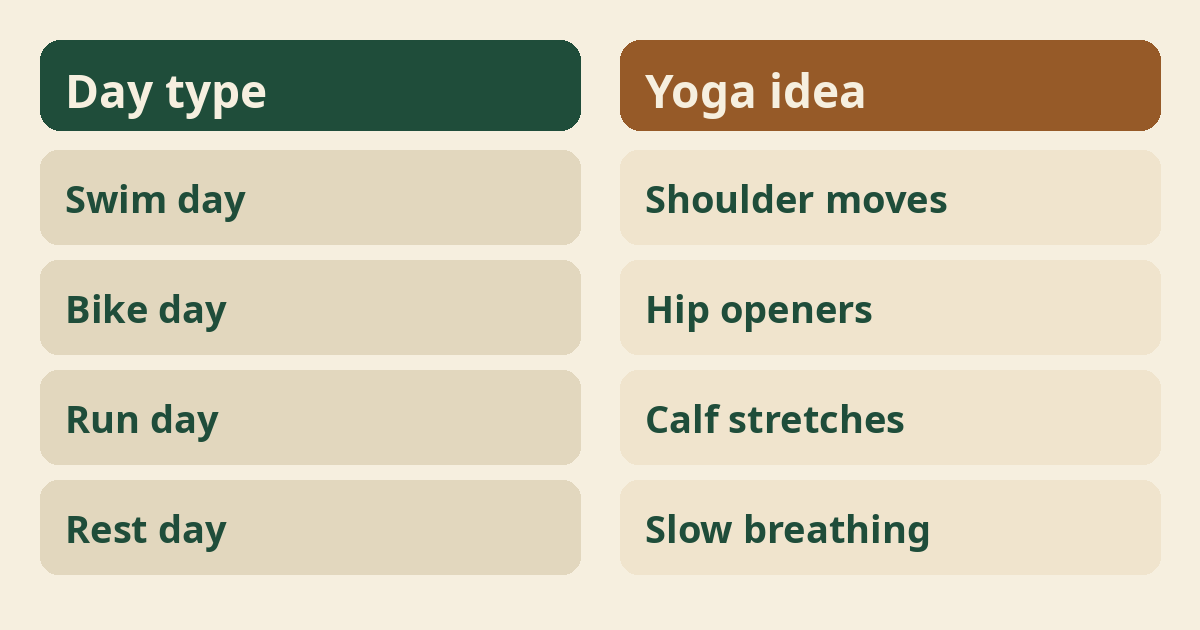
Place it on easy days or after short sessions, and keep it light before key workouts. Write it in your plan like any other session. A small, steady habit beats an occasional long one.
What if I miss a week?
Just start again with a short session, with no guilt. Yoga is a long-term habit, not a streak. A short, kind restart is always better than giving up.
What mindset works best?
A patient, curious mindset works best. View each session as a check-in with your body, not a test. Progress comes quietly, and a relaxed attitude makes the practice more enjoyable.
Where to read next
For a calm, beginner-friendly start, Ranjana Sinha’s Begin Where You Are is written for people who want simple steps. Our guide to starting a home yoga practice adds a gentle routine you can follow at home.
Frequently asked questions
Is yoga good for triathletes?
Many triathletes enjoy it as a gentle way to move, breathe and relax, though results vary.
How often should a beginner triathlete do yoga?
Two to three short sessions a week is a common starting point.
Can I do yoga on the same day as hard training?
Many people do, as long as the yoga is gentle and you feel good.
Do I need special gear for yoga?
No, a mat and a few household items are enough to begin.
Is yoga a substitute for swimming, biking or running?
No, it is a companion to your training and not a replacement.
The bottom line
Start small, breathe slowly, and let yoga become a calm part of your training week.

