
Yoga for pilots for beginners is a short, gentle practice built for people who sit for long flights and work odd hours. It focuses on tight hips, a stiff back, sore shoulders, and tired minds. You do not need any experience, special gear, or much space. A few simple poses in a hotel room or at home after a trip can help your body feel loose and your head feel clear again.
This article is general education, not medical advice. If you have an injury, a health condition, or ongoing pain, check with a doctor before you start.
What Is Yoga for Pilots?
It is a gentle yoga practice shaped around the real demands of flying. Pilots sit in one seat for hours, often at night or across time zones. This style of yoga uses slow poses and calm breathing to undo some of that sitting strain.
Why Do Pilots Try Yoga?
Many pilots try yoga because long flights leave the body stiff and the mind wired. Hours in a cockpit tighten the hips, round the shoulders, and tire the lower back. Yoga offers a simple way to move, breathe, and reset between trips.
Is Yoga Good for People Who Fly a Lot?
Gentle movement and slow breathing suit people who fly often. Frequent flyers deal with cramped seats, jet lag, and broken sleep. A short yoga routine is easy to fit into layovers and quiet days at home.
How Do You Start as a Beginner?
Start small, with ten quiet minutes and a few easy poses. Pick a clear floor space, wear loose clothes, and move slowly. You do not need to be flexible to begin, and you do not need to do every pose.
What Space and Gear Do You Need?
All you need is a small clear floor and something soft to kneel on. A yoga mat helps, but a towel on a hotel carpet works fine. Simple items like pillows and belts can make poses more comfortable, and yoga props for beginners covers easy options you already own.
What Should You Wear?
Wear anything soft and stretchy that lets you breathe and bend. Loose shorts, sweatpants, or a t-shirt all work. Bare feet give the best grip, but socks are fine for gentle floor poses.
Step One: Set Up Your Space
Clear a small area and remove anything you might bump into. A space the size of a yoga mat is enough. Turn off bright lights if you can, and put your phone on silent so the time stays yours.
Step Two: Begin with Breathing
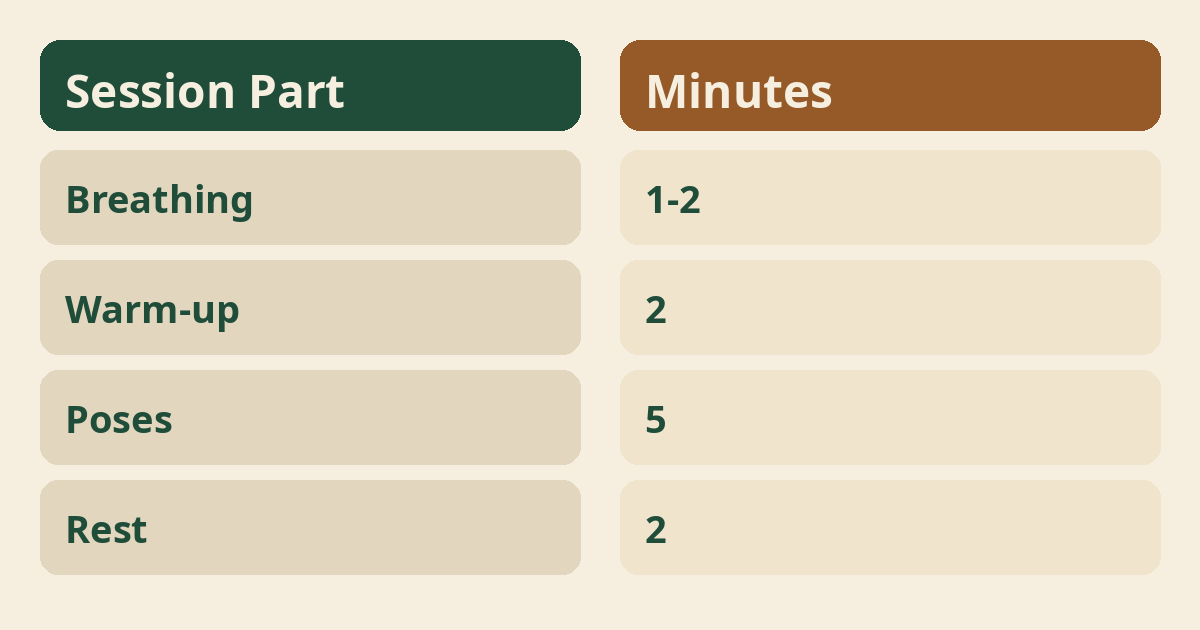
Start every practice with a minute or two of slow breathing. Sit tall, close your eyes, and breathe in through your nose and out slowly. This simple start calms the body before any movement. Belly breathing for beginners is a good first technique to learn.
Step Three: Warm Up Gently
Wake the body up with small, slow movements. Roll your shoulders, turn your head side to side, and circle your ankles. A warm body moves more easily and complains less.
Step Four: Move Through Simple Poses
Pick three to five easy poses and hold each one calmly. Good choices include a seated forward fold, a gentle twist, and a figure-four stretch for the hips. Move in and out of each pose slowly, and never push into pain.
Step Five: End with Rest
Finish every practice lying still for a few quiet minutes. Lie on your back, let your arms rest, and breathe naturally. This short rest lets the body soak in the work and helps you feel settled.
What Is the Easiest Pose for Tight Hips?
A figure-four stretch lying on your back is one of the kindest hip openers. Cross one ankle over the opposite knee and gently draw the legs toward your chest. Hold for slow breaths, then switch sides. For more options, yoga for hips for beginners has gentle ideas.
How Do You Stretch a Stiff Lower Back?
A gentle knees-to-chest pose eases a tired lower back after flying. Lie on your back and hug both knees toward your chest. Rock softly side to side if it feels good, and keep the movement small and easy.
What Helps Sore Shoulders and a Tight Neck?
Slow shoulder rolls and gentle neck stretches bring quick relief. Sit tall and let your arms hang heavy. Drop one ear toward a shoulder, hold, then switch. Yoga for the neck and shoulders goes deeper on this common trouble spot.
What Is a Good Pose for Rounded Posture?
A gentle chest opener on your back helps undo cockpit posture. Lie over a rolled towel placed across your upper back and let your arms rest wide. Breathe slowly and let the front of the chest soften.
Can You Do Yoga in a Hotel Room?
Yes, a hotel room is one of the best places for a short practice. Most routines in this article need only mat-sized floor space. Quiet floor poses also keep things silent for the people in the next room.
Can You Do Yoga at the Airport?
You can do simple seated and standing stretches almost anywhere. A quiet corner of the terminal works for neck rolls, ankle circles, and gentle standing stretches. Yoga at your desk for beginners has small movements that also work in a seat.
How Does Breathing Help Pilots?
Slow breathing is one of the fastest ways to calm a busy mind. Long exhales signal the body to relax. Even two minutes of steady nose breathing before bed or before a flight can make a real difference.
How Long Should a Practice Be?
Ten to twenty minutes is plenty for a beginner. Short and regular beats long and rare. On a busy layover, even five minutes of stretching and breathing is worth doing.
How Often Should You Practice?
Aim for most days, even if some sessions are very short. A little movement after every trip adds up fast. For help finding your rhythm, how often you should do yoga explains simple weekly plans.
What Are the Benefits?
Many pilots find yoga helps them feel looser, calmer, and more rested, though results vary. Gentle stretching may ease everyday stiffness, and slow breathing is widely used to settle stress. The National Center for Complementary and Integrative Health has a clear overview of what research says about yoga for relaxation and back comfort.
Is Yoga a Treatment for Pain or Injury?
No, yoga is not a treatment, and it does not replace medical care. It is a gentle form of movement that many people enjoy and find helpful. If you have real pain or an injury, see a doctor or physiotherapist for proper advice.
Who Should Be Careful or Talk to a Doctor First?
Anyone with an injury, recent surgery, or ongoing pain should check with a doctor first. The same goes for dizziness, heart conditions, or high blood pressure. Tell your instructor about any issues before a class.
What If You Have a Bad Back?
Choose gentle floor poses and skip deep bends and strong twists. Move slowly, keep ranges small, and stop if anything hurts. Can you do yoga with a bad back explains how to practice safely with back trouble.
What Are Common Beginner Mistakes?
The most common mistake is pushing into stretches to force progress. Other mistakes include holding the breath, skipping the warm-up, and comparing yourself to flexible people online. Slow and easy is the right speed.
How Do You Progress Over Time?
Add a minute here and a pose there as the practice feels easier. After a few weeks, you can hold poses a little longer or try a new stretch. Progress in yoga is quiet, so notice how your body feels rather than chasing shapes.
How Do You Build Balance and Body Awareness?
Simple standing poses train the balance and focus that good posture needs. Standing tall with even weight through both feet sounds easy but teaches a lot. Yoga for balance for beginners offers a gentle place to start.
Can Yoga Help with Sleep After a Flight?
A slow evening routine can help the body wind down for sleep. Gentle stretches and long exhales before bed calm the nervous system. Many travelers find this useful when crossing time zones, though everyone responds differently.
Can Yoga Help with Stress?
Slow movement and breathing are a well-known way to take the edge off stress. A calm practice gives your mind one simple thing to focus on. Yoga for stress relief for beginners has a full routine built for this.
Should You Take a Class or Practice Alone?
Both work, and a beginner gains a lot from a few guided classes. A teacher can correct your alignment and suggest easier versions of poses. After that, a short home routine is easy to keep up between trips.
How Do You Find a Good Teacher?
Look for a teacher who welcomes beginners and offers gentle options. Ask if the class suits stiff bodies and first-timers. A good teacher never pushes you into a pose that hurts.
What Mindset Helps a Beginner?
Treat yoga as maintenance for your body, not a performance. You would not skip rest or food before a flight, and the same care applies here. Small, steady practice is the whole game.
Is Yoga Only for Flexible People?
No, yoga is for any body, and stiffness is a fine place to start. Poses have easier versions, and props close the gap. Yoga for flexibility for beginners shows how flexibility grows slowly with practice.
What Is a Simple Ten-Minute Routine?
Try breathing, a warm-up, three poses, and a short rest. Breathe for one minute, roll shoulders and ankles, then do a figure-four stretch, knees to chest, and a gentle twist. Finish lying still for two minutes.
Where to read next
For a calm, beginner-friendly start, Ranjana Sinha’s Begin Where You Are is written for people who want simple steps. Our guide to starting a home yoga practice adds a gentle routine you can follow at home.
Frequently asked questions
Can a complete beginner start yoga?
Yes, this routine uses only gentle poses that need no experience.
How often should a pilot do yoga?
Most days is ideal, even if some sessions are only five or ten minutes.
Do I need a mat or special gear?
No, a towel on a carpeted floor works fine to start.
Will yoga fix back pain from flying?
Yoga is not a treatment, though many people find gentle stretching eases everyday stiffness.
Can I do these poses in a hotel room?
Yes, every pose here fits in a small, quiet floor space.
The bottom line
Start with ten quiet minutes after your next trip, keep it gentle, and let the habit build itself.

