
Yoga for construction workers is a simple set of gentle stretches and breathing exercises that ease the aches of lifting, bending, and standing all day. You do not need to be flexible or fit to start. A few easy moves, done for ten to fifteen minutes, can loosen a stiff back, relax tight shoulders, and calm a busy mind after a long shift. This guide walks you through a safe beginner routine, one step at a time.
This article is for general education only and is not medical advice. If you have an injury, a health condition, or ongoing pain, check with a doctor before starting.
What is yoga for construction workers?
Yoga for construction workers is a gentle stretching practice built around the aches of physical work. It uses simple poses and slow breathing to loosen muscles tightened by lifting, bending, and climbing. You can do it at home or on a break, with no special skill needed. Think of it as basic maintenance for a hard-working body.
Why do construction workers try yoga?
Many workers try yoga because long days of heavy labor leave the body stiff and sore. Backs ache from lifting, shoulders tighten from overhead work, and hips lock up from hours of standing. A short daily practice can help you move more freely. Many also enjoy the calm it brings after a noisy, busy shift.
Can total beginners start?
Yes, a complete beginner can start with a few basic poses and a slow pace. You do not need to touch your toes or balance on one leg. The moves in this guide are gentle and easy to learn. Start with five minutes and build from there.
Is it safe when you are already sore?
Gentle yoga is usually fine on a sore body if you move slowly and stay in a comfortable range. Mild muscle soreness from work often eases with light stretching. Sharp or shooting pain is different, so stop if a move hurts in a bad way. When in doubt, rest or ask a health professional.
How do you start?
The simplest way to start is with ten quiet minutes, a clear floor, and three or four easy poses. Pick a regular time, like right after work or before bed. Follow the steps below in order. Keep every movement slow and steady.
What do you need before your first session?
All you need is a flat space, a mat or folded blanket, and comfortable clothes. A carpet or thick towel works if you have no mat. Wear whatever you can move in, like a t-shirt and loose pants. Keep water nearby and silence your phone.
When is the best time to practice?
The best time is the time you will actually keep, and many workers prefer right after a shift. Evening practice helps unwind a tired body before sleep. Morning practice can wake up stiff joints before work. Try both for a week and see which feels better.
Step one: warm up gently
Begin with a slow warm-up that tells your muscles it is time to move. Stand tall and roll your shoulders back ten times. Sway gently side to side and take five deep breaths. Warming up first makes every stretch safer and easier.
Step two: wake up your spine
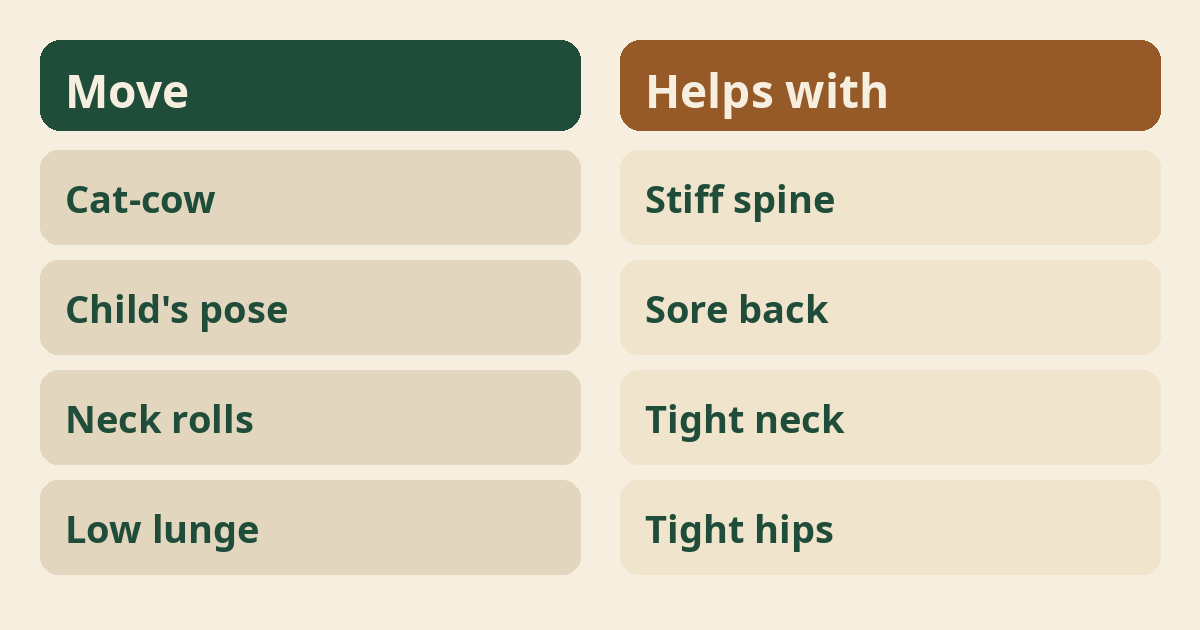
Move your spine slowly through a rounded and arched shape on hands and knees. This is the cat-cow flow, and you can learn it fully in our guide to cat-cow pose for beginners. Move with your breath for one to two minutes. It is one of the kindest moves for a back stiff from lifting.
Step three: rest your back
Sink into child’s pose to stretch your lower back and hips while fully supported. Kneel, sit back toward your heels, and fold forward with your arms stretched out in front. Rest here for five slow breaths. Our full walkthrough of child’s pose for beginners shows every detail.
Step four: release your neck and shoulders
Gentle neck rolls and shoulder stretches ease the tension that builds from overhead and heavy work. Drop your chin toward your chest and roll slowly from side to side. Then draw one arm across your chest and hold it gently. Our guide to yoga for neck and shoulders has more moves like these.
Step five: open tight hips
A low lunge or figure-four stretch targets hips locked up from standing, squatting, and climbing. Step one foot forward, lower your back knee to the floor, and keep your chest tall. Hold for five breaths on each side. You can find more options in yoga for hips for beginners.
Step six: finish with stillness
End every session by lying flat on your back and resting for two to five minutes. Let your arms and legs relax completely and breathe naturally. This quiet rest lets your body absorb the work you just did. Many people say it becomes their favorite part of the practice.
How should you breathe?
Slow, deep belly breaths are the heart of a relaxing yoga practice. Breathe in through your nose and let your belly rise, then breathe out slowly through your nose or mouth. Aim for an exhale a little longer than your inhale. Our guide to belly breathing for beginners explains it step by step.
How long should a session last?
Ten to fifteen minutes is plenty for a beginner session. Short and regular beats long and rare, especially on a tired body. If ten minutes feels good, add a little more over time. Never let session length turn the practice into another chore.
How often should you practice?
Three to five short sessions a week works well for most beginners. Daily practice is fine as long as it stays gentle. Your body will tell you if you are doing too much. For help building a rhythm, read how often should you do yoga.
Can you practice on a lunch break?
Yes, a five-minute stretch break on site can ease midday stiffness. You do not need a mat or privacy for simple standing moves. Roll your shoulders, reach your arms overhead, and take ten slow breaths. Small breaks like this add up over a week.
What props help beginners?
Simple props like a folded blanket, a strap or old belt, and a sturdy chair make poses easier and safer. A blanket under your knees takes pressure off joints on hard floors. A belt extends your reach in seated stretches. See more ideas in our guide to yoga props for beginners.
What mistakes do beginners make?
The biggest beginner mistakes are pushing too hard, holding the breath, and skipping the warm-up. Stretching should feel like gentle tension, never pain. Breathe steadily through every pose. Going slow at first builds a practice that actually lasts.
Should you push through pain?
No, pain is a signal to back off, not a barrier to break through. A mild stretch sensation is normal and fine. Sharp, stabbing, or joint pain means stop right away. Yoga works best when you respect what your body tells you.
Who should check with a doctor first?
Anyone with a recent injury, a back condition, high blood pressure, or other health concerns should talk to a doctor before starting. This matters even more for workers with old site injuries or joint problems. A quick check gives you peace of mind. Your doctor can also point out moves to avoid.
Is yoga a treatment for injuries?
No, yoga is not a treatment, a cure, or a replacement for medical care. It is a gentle way to move, stretch, and relax. Injuries and ongoing pain belong with a doctor or physical therapist. Think of yoga as support for general wellbeing, not a fix.
What benefits do people report?
Many people find that regular gentle yoga leaves them looser, calmer, and less stiff, though results vary from person to person. Some notice easier movement at work and better sleep at night. The National Center for Complementary and Integrative Health National Center for Complementary and Integrative Health describes yoga as generally safe for healthy adults when practiced gently. Give it a few weeks before judging what it does for you.
Can yoga help a cranky back?
Many workers with everyday back stiffness find gentle yoga comfortable, but a bad back needs care and the right moves. Skip deep forward bends and strong twists if your back complains. Stick with slow, supported stretches. Our article on doing yoga with a bad back covers safe choices in detail.
How do you progress over time?
Progress means holding poses a little longer and moving a little more smoothly, not chasing harder shapes. After a few weeks, you might add one new pose or a few extra minutes. Small steps keep the practice safe and enjoyable. There is no finish line to rush toward.
Should you work with a teacher?
A teacher can help you learn safe form faster, especially at the very start. Even one or two classes can correct habits you cannot see in yourself. Beginner classes are common, and videos from qualified teachers also work well. Choose teachers who welcome questions and offer easier options.
What if you feel too tired after work?
On exhausted days, do a tiny version of your practice instead of skipping it. Two minutes of child’s pose and slow breathing still counts. Keeping the habit alive matters more than the length of any single session. Full rest days are also completely fine.
How do you build the right mindset?
Treat yoga as maintenance for your body, not a test of strength or flexibility. You already do hard physical work all day, so this is your time to be gentle with yourself. Some days will feel loose and some will feel stiff. Both are normal parts of the practice.
Is yoga only for flexible people?
No, yoga is for every body, and saying you are too stiff for yoga is like saying you are too dirty for a shower. Flexibility is something practice builds over time, not a ticket you need at the door. Start exactly where you are today. The poses meet you there.
Can yoga help with stress?
Many people find that slow movement and deep breathing help them feel calmer after a stressful day. Job sites are loud, rushed, and demanding, and that tension often follows you home. A few quiet minutes of breathing can lower the volume. Explore more in our guide to yoga for stress relief for beginners.
What does a simple starter routine look like?
A solid starter routine is a warm-up, cat-cow, child’s pose, a hip stretch, neck rolls, and a final rest. That is six moves in about ten minutes. Do them in order and breathe slowly through each one. Repeat the same routine until it feels familiar before adding more.
Do you need special clothing?
No special clothing is needed beyond something you can bend and stretch in. Work pants and a t-shirt are fine for gentle practice. Bare feet grip the floor better than socks. Comfort matters far more than appearance here.
Can you practice with coworkers?
Practicing with a partner or a few coworkers can make the habit easier to keep. A short group stretch before or after a shift is common on some crews. Keep it light and optional for everyone. Shared habits tend to stick longer than solo ones.
How do you stand taller and steadier?
Mountain pose teaches simple, strong standing posture that carries into daily work. Stand with your feet hip-width apart, arms relaxed, and breathe tall for five breaths. It builds awareness of how you carry yourself all day. Learn the full version in mountain pose for beginners.
Where to read next
For a calm, beginner-friendly start, Ranjana Sinha’s Begin Where You Are is written for people who want simple steps. Our guide to starting a home yoga practice adds a gentle routine you can follow at home.
Frequently asked questions
How long until I feel a difference?
Many people notice less stiffness within a few weeks of short, regular practice, though results vary.
Can I do yoga in my work boots?
Bare feet are best for grip and balance, so slip your boots off first.
Is ten minutes really enough?
Yes, ten gentle minutes most days helps far more than one long session now and then.
What if a pose hurts?
Stop right away, ease back to a comfortable range, or skip that pose entirely.
Do I need to be flexible before starting?
No, beginners of any flexibility level can start, and flexibility improves gradually with practice.
The bottom line
Start with ten quiet minutes tonight, keep every move gentle, and let the practice grow at its own pace.

