
Yoga for singers is a gentle way to build the breath control, posture, and body ease that a steady voice needs. You do not need to be flexible or experienced to start. This guide walks you through simple poses, breathing practice, and a short routine you can do before you sing. Everything here is beginner friendly, and you can go at your own pace.
This article is for general education only and is not medical advice. If you have a health condition, an injury, or ongoing pain, check with a doctor before starting any new exercise.
What is yoga for singers?
Yoga for singers is a set of gentle poses and breathing exercises chosen to support the voice. It focuses on the parts of the body that shape sound: the lungs, ribs, throat, jaw, and spine. The goal is not fancy shapes but a relaxed, open body that lets the breath move freely.
Why do singers do yoga?
Many singers use yoga because a calm body and a deep breath make singing easier. Tension in the neck, shoulders, or jaw can tighten the voice. Gentle stretching and slow breathing help release that tension before a rehearsal or performance.
How does breathing affect your voice?
Your breath is the fuel of your voice, so how you breathe shapes how you sound. Shallow chest breathing can make notes feel shaky and short. Deep, low breathing gives you a steadier stream of air, which supports longer phrases and a more even tone.
How do you start yoga as a singer?
Start with ten minutes a day of easy poses and slow breathing. You do not need a class or any gear to begin. Pick three or four poses from this guide, move slowly, and pay attention to how your breath feels in each one.
Step 1: Set up a quiet space
Find a small, quiet spot where you can lie down and stretch without being disturbed. A carpet or rug is fine if you do not have a mat. Wear loose clothing that lets your belly and ribs expand when you breathe.
Step 2: Warm up the spine
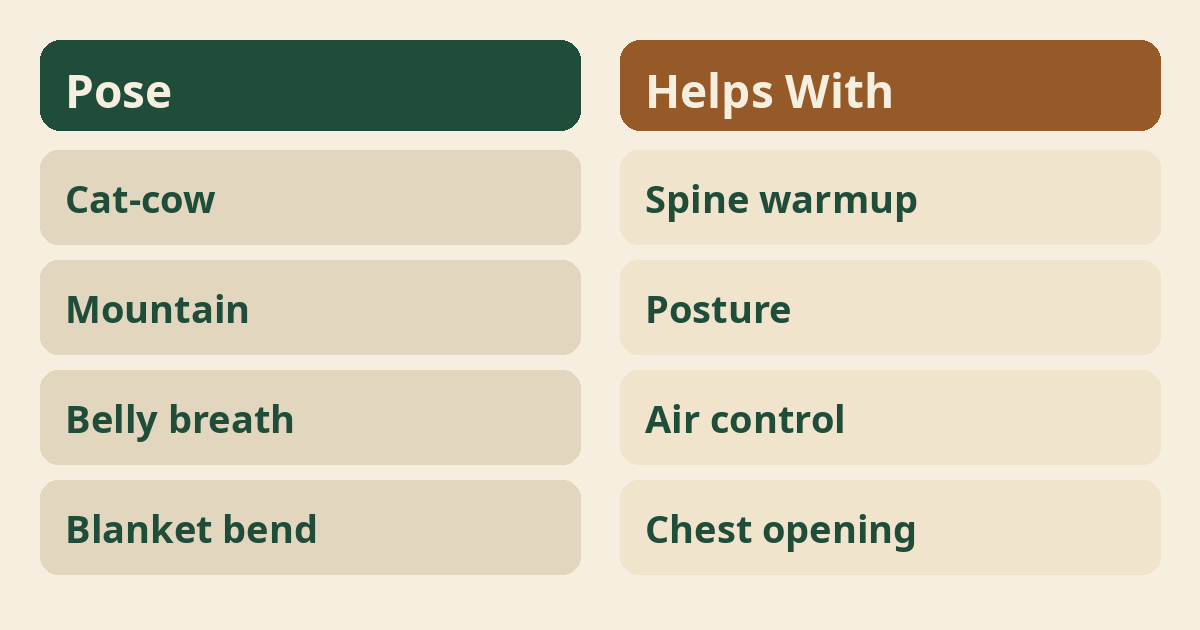
Begin with slow, gentle movements to wake up your back and ribs. Try moving between cat and cow shapes on your hands and knees for a minute or two; the cat-cow pose is a simple way to start. Let your breath lead the movement, inhaling as you arch and exhaling as you round.
Step 3: Open the chest and shoulders
Next, use easy stretches to open the front of the body where singers often hold tension. A gentle backbend over a rolled blanket works well. Keep your jaw soft and your throat relaxed the whole time.
Step 4: Practice deep breathing
Spend a few minutes on slow, low breathing before you sing. Place one hand on your belly and feel it rise as you inhale through the nose; belly breathing is the foundation most voice teachers ask for. Exhale slowly, as if you are fogging a window with your mouth closed.
Step 5: Add gentle sound
Once your breath feels steady, add a soft hum on each exhale. Humming lets you feel vibration in the face and chest without straining. Keep the sound quiet and easy, and stop if your throat feels tight.
Step 6: Cool down and rest
Finish by lying still for two or three minutes so your body can settle. Let your arms rest by your sides with palms up. Notice your natural breath without trying to change it.
What is the best breathing exercise for singers?
Slow belly breathing with a long, controlled exhale is the most useful exercise for most singers. Breathe in for a count of four, then breathe out for a count of six or eight. The longer exhale trains the steady airflow that sustained notes need.
How long should a session be?
Ten to twenty minutes is enough for a beginner session. Short, regular practice beats one long session now and then. You can always add time later as the poses start to feel familiar.
How often should singers do yoga?
Three to five short sessions a week works well for most beginners. Many singers like a brief routine before practice or a show. For more on building a habit, see how often you should do yoga.
Which poses help singers most?
Poses that open the chest, release the neck, and lengthen the spine help singers the most. Standing tall in mountain pose teaches the aligned, relaxed posture that good singing starts from. Gentle twists and side stretches also free the ribs so the breath can expand.
Can yoga help with stage nerves?
Many singers find that slow breathing before a performance helps them feel calmer. A few rounds of long exhales can settle a racing heart. Results vary from person to person, but it costs nothing to try backstage.
What are the benefits for singers?
Many singers report easier breathing, less tension, and better posture after a few weeks of regular practice, though results vary. Some also notice they can hold phrases longer and warm up faster. Research groups like National Center for Complementary and Integrative Health note that yoga is generally safe for healthy people when practiced gently.
Is yoga a treatment for voice problems?
No, yoga is not a treatment and cannot fix a voice disorder or injury. If your voice is hoarse for more than a couple of weeks, or singing hurts, see a doctor or a voice specialist. Yoga can support healthy habits, but it is not a substitute for care.
Who should be careful?
People with back, neck, or joint problems should check with a doctor before starting. If you have a bad back, read doing yoga with a bad back before trying floor poses. Skip any pose that causes pain, dizziness, or numbness.
What common mistakes should you avoid?
The biggest mistake is forcing stretches or holding the breath during poses. A close second is tensing the throat while practicing breathing exercises. Keep everything easy, and back off any position that pinches or strains.
Do you need props?
Props are optional, but a blanket, a strap, and a firm cushion make many poses more comfortable. A folded blanket under the chest can turn a stiff backbend into a relaxing one. See yoga props for beginners for simple, cheap options.
Can you do yoga right before singing?
Yes, a short, gentle routine before singing is a good warm-up for the body. Keep it mild and avoid deep stretches that leave you tired. Five minutes of breathing and a few easy poses is plenty.
What about neck and shoulder tension?
Slow neck rolls and shoulder releases are the most direct way to ease tension near the voice box. Move gently and never force the head backward. The poses in yoga for neck and shoulders pair well with a singing routine.
Can desk work affect your singing?
Yes, hours hunched at a desk can round the shoulders and restrict the breath. Short stretch breaks during the day help undo that posture. Try the moves in yoga at your desk between work sessions.
How do you progress over time?
Progress by holding poses a little longer and adding new ones slowly. After a few weeks, you might extend sessions to thirty minutes or explore gentle hip openers. There is no finish line; the aim is a body that feels easy to sing from.
Should you work with a teacher?
A beginner class or a few sessions with a teacher can help you learn safe alignment. Look for a gentle or beginner class rather than a strong, fast style. Tell the teacher you sing, and they can suggest poses that fit your goals.
What about singing teachers and yoga?
Many voice teachers welcome yoga as long as it stays gentle. Ask your singing teacher if any pose or breathing drill conflicts with your technique work. The two practices usually support each other well.
What mindset helps?
A patient, curious mindset helps more than pushing for fast results. Treat each session as practice, not a test. Notice small changes in how your breath and posture feel from week to week.
Can children or teens who sing do yoga?
Yes, gentle yoga is fine for most young singers with a parent or teacher guiding them. Keep sessions short and playful. Skip deep backbends and long holds for younger bodies.
Can older singers start yoga?
Yes, older beginners can start with chair-supported and floor poses done slowly. Balance and joints may need extra care, so use a wall or chair for support. A doctor check is wise if you have any health conditions.
What if you feel pain?
Stop right away if any pose causes sharp pain, tingling, or dizziness. Mild stretching sensation is normal; pain is not. Rest, and ask a doctor if the pain continues.
How is yoga different from vocal warm-ups?
Yoga warms up the whole body, while vocal warm-ups train the voice itself. The two work best together: yoga first to loosen the body and deepen the breath, then your usual vocal exercises. Think of yoga as the foundation under your vocal routine.
Can yoga improve posture for singing?
Many people find that regular gentle yoga improves posture awareness over time. Standing poses teach you to stack the head over the ribs over the hips, which is the alignment most singing teachers want. Results vary, and the change is gradual.
Is hot yoga or fast yoga good for singers?
Strong, hot, or fast styles are usually not the best fit right before singing. They can leave you dehydrated and tired, which is hard on the voice. Save intense styles for days away from heavy singing, and drink water after any session.
What is a simple daily routine for singers?
A simple daily routine is two minutes of belly breathing, three gentle poses, and a short rest. For example: belly breathing, cat-cow, a chest opener over a blanket, then lie still. Ten minutes, done most days, is enough to notice a difference.
Where to read next
For a calm, beginner-friendly start, Ranjana Sinha’s Begin Where You Are is written for people who want simple steps. Our guide to starting a home yoga practice adds a gentle routine you can follow at home.
Frequently asked questions
Can yoga make me a better singer?
Yoga cannot teach singing, but many singers find that better breath control and less body tension make singing feel easier.
How soon will I notice a difference?
Many people notice easier breathing within a few weeks of regular short sessions, though results vary.
Do I need to be flexible to start?
No, beginner yoga needs no flexibility; you move only as far as is comfortable.
Can yoga fix vocal damage?
No, yoga is not a treatment; see a doctor or voice specialist for hoarseness or pain that lasts.
Should I do yoga before or after singing?
A short gentle session before singing works well as a warm-up; avoid deep, tiring stretches right before a performance.
The bottom line
Start small, breathe deeply, and let a few quiet minutes of yoga become the easiest part of your singing routine.

