
Yoga for warehouse workers is a gentle way to ease the strain that lifting, standing, and repetitive work puts on the body. You do not need to be fit or flexible to start. This guide shows beginners simple poses, easy breathing, and a short routine you can do at home in a small space. Everything here is low impact and designed for people who spend long hours on their feet. Start small, stay consistent, and let your body adjust at its own pace.
This article is general education, not medical advice. If you have a health condition, an injury, or ongoing pain, check with your doctor before starting any new exercise.
What is yoga for warehouse workers?
It is a simple yoga practice shaped around the aches and demands of warehouse work. Warehouse jobs involve lifting, bending, walking, and standing for hours. This style of yoga uses gentle poses and slow breathing to release tight muscles and restore easy movement. No experience or equipment is needed to begin.
Why do warehouse workers try yoga?
Most try it to loosen a stiff back, sore shoulders, or tight hips after long shifts. Repetitive lifting and long hours on hard floors leave the body tense. Many people find that a short daily practice helps them feel looser and calmer. Results vary from person to person, and consistency matters more than intensity.
Is yoga safe for beginners?
Yes, gentle beginner yoga is safe for most healthy adults when done slowly. The key is to move at your own pace and never force a pose. Skip anything that causes sharp pain. If you have an old injury or a health condition, talk with your doctor first.
How do you start as a beginner?
Start with ten to fifteen minutes, a few basic poses, and slow breathing. You do not need a class or a studio to begin. A quiet corner at home and a soft surface are enough. Learn a handful of poses first and add more as your body gets used to the practice.
Step 1: set up a small space
Clear enough floor space to lie down and stretch your arms out. A hallway, a bedroom corner, or a spot beside your bed all work. Good lighting and a non-slip surface help. Keep the area free of clutter so you can move safely.
Step 2: warm up your joints
Begin with slow rolls of the neck, shoulders, wrists, and ankles. Warehouse work stiffens the small joints you use for gripping and lifting. Gentle circles wake them up before deeper stretches. Spend about two minutes on easy joint movements.
Step 3: learn five basic poses
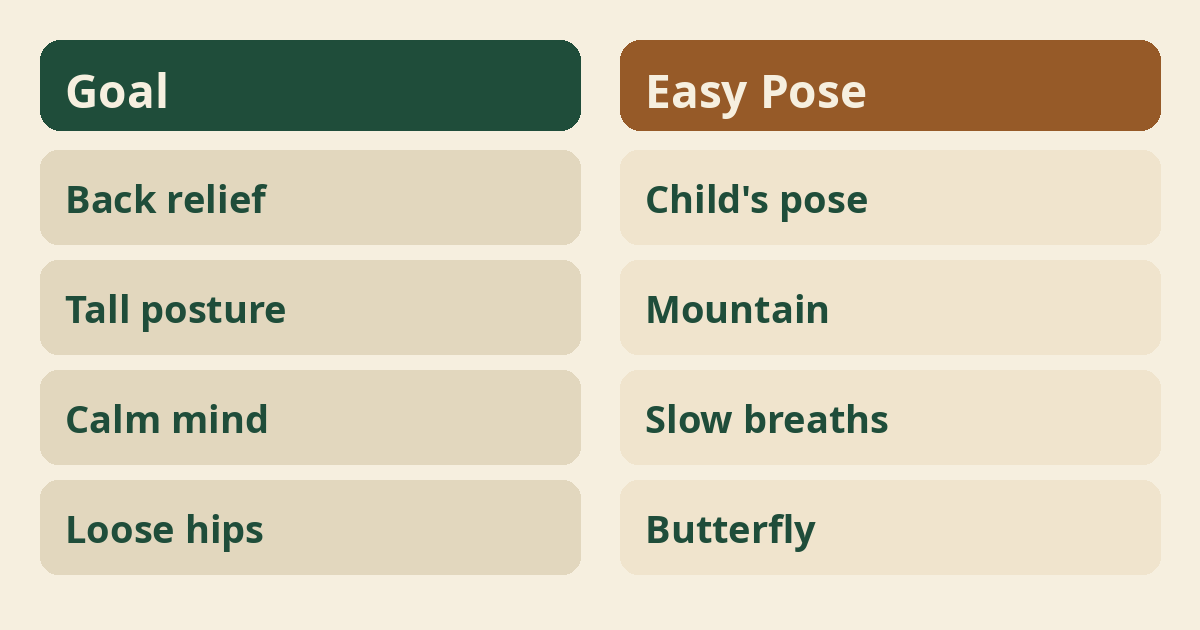
Pick five simple poses and practice them until they feel familiar. Good starter poses include mountain pose, cat-cow, child’s pose, a seated forward bend, and a gentle twist. You can learn mountain pose in a single session. Repeat the same small set for your first few weeks.
Step 4: practice your breathing
Slow, steady breathing is the base of every yoga session. Breathe in through your nose for a count of four, then out for a count of four. Learning belly breathing helps you relax tight muscles faster. Let each pose follow the rhythm of your breath.
Step 5: end with rest
Finish every session lying still on your back for two to five minutes. This resting pose lets your body absorb the work you just did. Close your eyes and breathe normally. Many beginners find this the most calming part of the whole practice.
Mountain pose for better posture
Mountain pose teaches you to stand tall with even weight on both feet. Long shifts often lead to slouching or leaning on one hip. Stand with feet hip-width apart, shoulders relaxed, and spine tall. Hold for five slow breaths and notice where your weight sits.
Cat-cow for a stiff spine
Cat-cow gently moves the whole spine and warms up the lower back. Start on hands and knees, then slowly round and arch your back with your breath. The full steps are in our guide to cat-cow pose. Do eight to ten slow rounds.
Child’s pose for recovery
Child’s pose is a restful stretch for the back, hips, and shoulders. Kneel, sit back on your heels, and fold forward with your arms stretched out. Our page on child’s pose walks you through it step by step. Stay for a minute or longer and breathe slowly.
Stretches for break time
Short stretches during your shift can ease tension before it builds up. Roll your shoulders, stretch your wrists, and gently tilt your neck side to side. Simple moves like the ones in yoga at your desk work in a break room too. Even two minutes helps your body reset.
Breathing basics for hard days
Slow breathing calms the body when work feels stressful or rushed. Try breathing in for four counts and out for six counts. A longer exhale signals the body to relax. Use this on your break or before sleep after a tough shift.
How long should a session be?
Ten to twenty minutes is plenty for a beginner. Short daily sessions beat one long session a week. As the poses get familiar, you can stretch your practice to thirty minutes. Never rush to make a session longer than your body wants.
How often should you practice?
Aim for three to five short sessions each week. Regular practice matters more than long practice, and our guide on how often to do yoga explains why. Even ten minutes most days adds up over time. Rest days are fine when your body asks for them.
What is the best time around shifts?
The best time is whatever time you can keep consistently. Many workers like a short session after a shift to release the day’s tension. Others prefer mornings to wake up stiff joints. Experiment and pick the slot that fits your schedule.
Common mistakes to avoid
The biggest mistake is forcing poses deeper than your body allows. Other common errors include holding your breath, skipping the warm-up, and comparing yourself to flexible people online. Yoga is not a competition. Move slowly and back off from anything that hurts.
Props that make yoga easier
Simple props bring the floor closer and make poses more comfortable. A folded blanket, a firm cushion, or a sturdy chair all work, and our guide to yoga props covers the basics. You do not need to buy anything fancy. Household items are enough for beginners.
Yoga for a sore lower back
Gentle movement often helps a back that feels stiff from lifting. Poses like cat-cow and child’s pose move the spine without strain. If your back pain is severe or constant, see a doctor first, and our page on yoga with a bad back explains the careful approach. Never push through sharp pain.
Yoga for tight hips
Hip openers counter the stiffness that comes from standing and walking all day. Seated poses and gentle lunges slowly loosen the hip area. Tight hips often pull on the lower back, so this work pays off twice. Go slowly, because hips release over weeks, not days.
Yoga for neck and shoulders
Slow neck rolls and shoulder stretches ease the tension of repetitive lifting. Drop your ear toward one shoulder, hold for a few breaths, then switch sides. Let your shoulders fall away from your ears as you breathe out. Small stretches done often work better than one deep stretch.
Balance and stability
Basic standing poses build the balance you need for safe lifting and walking. Practice standing on one foot near a wall or chair for support. Good balance lowers the chance of trips and awkward movements at work. Start with ten seconds per side and build up slowly.
Flexibility over time
Flexibility improves gradually with regular gentle practice. Do not expect big changes in the first week. Most people notice easier movement after a few weeks of steady sessions. Stretch to mild tension, never to pain.
Who should be careful?
Anyone with a back injury, joint problem, or recent surgery should check with a doctor first. The same goes for people with dizziness, high blood pressure, or ongoing pain. A doctor can tell you which movements to skip. Bring a list of the poses you plan to try.
Is yoga a treatment?
No, yoga is not a treatment or a cure for any medical condition. It is a gentle form of exercise and relaxation that many people enjoy. It should never replace care from a doctor or physiotherapist. Think of it as support for your general wellbeing, not medicine.
Benefits many people notice
Many people find yoga leaves them feeling looser, calmer, and more aware of their posture. Some report easier movement at work and better sleep, though results vary from person to person. Groups like National Center for Complementary and Integrative Health share balanced information on what research says about yoga. The only way to know what it does for you is to try it gently and consistently.
Does yoga help with stress?
Many people find that slow movement and steady breathing help them unwind. A demanding job keeps the body in a tense, alert state. Quiet practice gives it a chance to settle down. Even five calm minutes after a shift can change how the evening feels.
How to progress safely
Add one new pose or a few extra minutes at a time. When your starter poses feel easy, explore slightly deeper versions. Progress in yoga is measured in months, not days. Slow progress that you can keep is better than fast progress that leads to strain.
Working with a teacher
A qualified teacher can check your form and keep you safe. Look for beginner or gentle classes, and tell the teacher about any injuries before class starts. Even a few sessions early on can correct habits you cannot see yourself. Online beginner videos are a reasonable starting point if classes are not practical.
The right mindset
Approach yoga as patient maintenance for a hardworking body. Your body already does a tough job every day, so treat practice as care, not a workout to win. Some days will feel stiff, and that is normal. Showing up gently and often is the whole game.
Can you do yoga after a long shift?
Yes, a gentle session after work is a great way to release built-up tension. Keep it short and slow when you are tired, and skip anything demanding. Focus on restful poses and breathing. Save stronger practice for days when you have more energy.
What about sore muscles?
Mild soreness is normal when you start, but sharp pain is not. Gentle movement often eases everyday soreness from work. If soreness is strong or lasts for days, rest and scale back. Ongoing or worsening pain deserves a doctor’s attention.
Do you need special gear?
No, comfortable clothes and a soft surface are all you need. Wear anything you can bend and stretch in freely. A yoga mat helps with grip, but a carpet or folded blanket works too. Fancy clothing and equipment are completely optional.
Where to read next
For a calm, beginner-friendly start, Ranjana Sinha’s Begin Where You Are is written for people who want simple steps. Our guide to starting a home yoga practice adds a gentle routine you can follow at home.
Frequently asked questions
Can a beginner with no flexibility do yoga?
Yes, beginner yoga is designed for stiff bodies and flexibility improves gradually with practice.
How long until I notice a difference?
Many people feel looser within a few weeks of regular short sessions, though results vary.
Should I do yoga before or after my shift?
Either works, so choose the time you can keep consistently, with gentle sessions best after long shifts.
Do I need a yoga mat to start?
No, a carpet, rug, or folded blanket gives enough cushioning for a beginner practice at home.
Can yoga fix my back pain from lifting?
No, yoga is not a treatment, so see a doctor for back pain and use gentle yoga only as general exercise.
The bottom line
Start with ten quiet minutes today, and let small steady sessions take care of the body that takes care of you.

