
You finished dinner hours ago, but your belly still feels tight, full, and uncomfortable, and you are tired of just waiting it out. Yoga for constipation and bloating is a simple, low-impact way many beginners use to get their body moving and their belly more settled. You do not need experience, special gear, or much space. This guide walks you through easy poses, calm breathing, and a short routine you can try at home tonight.
This guide is general education, not medical advice, and it is not a diagnosis or treatment plan. If you have ongoing digestive problems, pain, or any health condition, talk with a doctor before you start.
What is yoga for constipation and bloating?
It is a small set of easy poses and slow breathing aimed at easing a heavy, sluggish belly. The poses use light pressure, soft twists, and relaxed positions around the abdomen. The breathing helps your body shift out of a stressed state. Both parts work together in a calm, unhurried way.
Why do people try it?
People try it because a backed-up, bloated belly can make the whole day feel harder. Tight clothes, low energy, and that full feeling after meals wear on you. Many beginners want something they can do at home without equipment. A short yoga habit fits that need well.
Can movement really help a sluggish gut?
Light, regular movement can support normal digestion for many people. When you sit all day, the muscles around your belly stay still too. Gentle motion, soft twists, and deep breaths give that area some activity. Results vary from person to person, and it is not a fix on its own.
Why does stress matter for your belly?
Stress and digestion are closely linked, so a tense body often means a tense gut. When you are rushed or anxious, your body slows digestion down. Slow breathing and quiet floor time can help you unwind. A calmer state often makes the belly feel calmer too.
Who is this guide for?
This guide is for complete beginners who deal with occasional constipation or bloating. You might sit at a desk all day, travel often, or simply feel slow and heavy after eating. No yoga background is needed. Every pose here has an easier option.
Should you check with a doctor first?
Yes, check with a doctor first if your symptoms are new, strong, or getting worse. Ongoing constipation, sharp pain, blood in the stool, or sudden changes deserve medical care. Also ask first if you are pregnant, healing from surgery, or managing a health condition. Yoga can wait until you get the green light.
Is yoga a treatment for constipation?
No, yoga is not a treatment, cure, or medical fix for constipation or bloating. It is a low-impact habit that many people find supportive alongside normal care. It does not replace medicine, diet changes, or a doctor’s advice. Think of it as one small, kind thing you can do for your body.
What do you need to start?
You need a quiet floor space, comfortable clothes, and about fifteen minutes. A yoga mat helps but a carpet or folded blanket works fine. A cushion or pillow is useful for seated poses. For a closer look at simple gear, see our guide to yoga props for beginners.
How do you set up your space?
Pick a warm, quiet spot where you will not be disturbed. Keep water nearby and silence your phone. Dim light or morning sun both work well. The point is a space where your body can slow down.
What time of day works best?
Morning is a popular choice, but any calm time works. Many people like practicing before breakfast on an emptier stomach. Others prefer a slow session in the evening. Wait a couple of hours after a big meal either way.
How do you warm up?
Start with two minutes of easy breathing and slow movement. Sit or lie down and take a few unhurried breaths. Roll your shoulders and gently rock your knees side to side. A warm body moves more comfortably than a cold one.
Step 1: Begin with belly breathing
Slow belly breathing is the foundation of this whole routine. Lie on your back with one hand on your stomach. Breathe in so your hand rises, and breathe out so it falls. Our guide to belly breathing for beginners walks through it step by step.
Step 2: Move through Cat-Cow
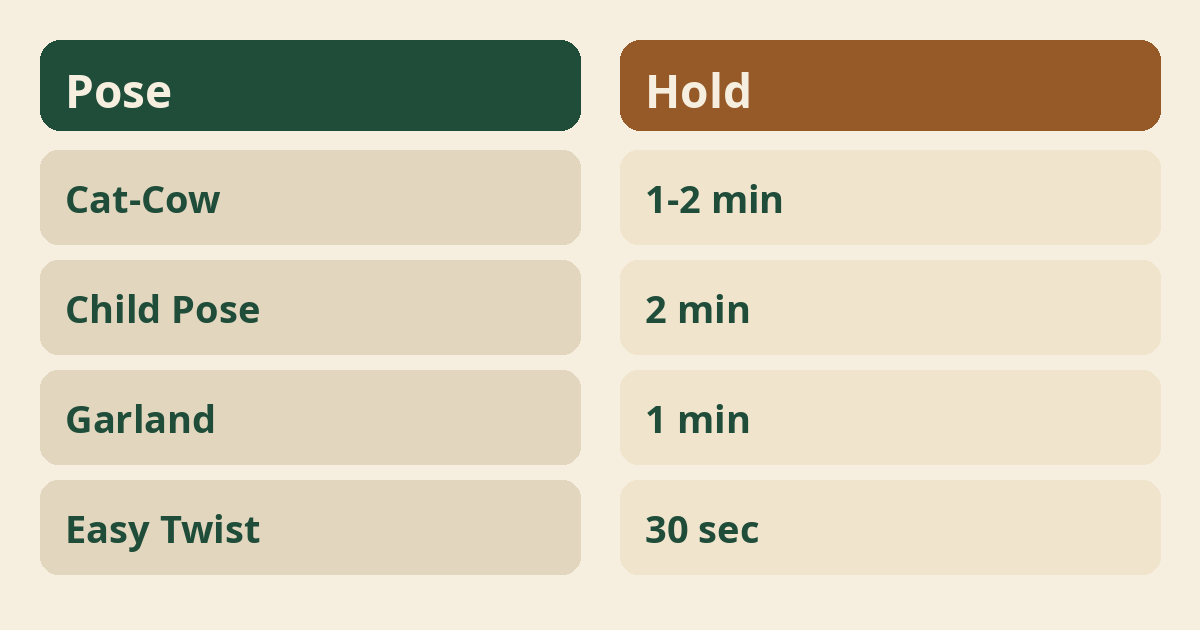
Cat-Cow wakes up the spine and gives the belly a soft internal massage. Come to hands and knees. Arch your back as you breathe in, then round it as you breathe out. Move slowly for a minute or two, as shown in our Cat-Cow pose for beginners guide.
Step 3: Rest in Child’s Pose
Child’s Pose lets the belly relax while the knees lightly press the abdomen. Kneel, fold forward, and rest your forehead on the floor or a cushion. Breathe slowly and let your stomach soften. You can find the full setup in our Child’s Pose for beginners guide.
Step 4: Try Garland Pose
Garland Pose is a deep squat that puts the belly in a position many people find helpful. Stand with feet a little wide, then lower into a squat with your hands together at your chest. Hold a chair or sit on a cushion if balance is hard. Our Garland Pose for beginners guide shows the easy version.
Step 5: Sit in Thunderbolt Pose
Thunderbolt Pose is a simple kneeling seat that many people use after meals. Kneel and sit back on your heels with your spine tall. Rest your hands on your thighs and breathe evenly. Stay for a few minutes and let the pose stay easy.
Step 6: Finish with an easy twist
A soft seated or lying twist rounds out the routine. Lie on your back, hug your knees in, then drop them to one side while you look the other way. Stay for several slow breaths, then switch sides. Keep the twist mild, never forced.
A short 15-minute routine
Two minutes of breathing, ten minutes of poses, and three minutes of rest make a complete session. Start with belly breathing, then Cat-Cow, Child’s Pose, Garland Pose, Thunderbolt, and a twist on each side. End lying on your back with your eyes closed. Short and steady beats long and rare.
How long should a session be?
Ten to fifteen minutes is plenty for a beginner. That is enough time to breathe, move, and rest without wearing out. Longer sessions are fine later if you enjoy them. What matters most is showing up again tomorrow.
How often should you practice?
Most beginners do well with three to five sessions a week. A daily short session is fine if it feels good. Consistency matters more than length or difficulty. Our guide on how often to do yoga can help you find a rhythm that sticks.
How does breathing fit in?
Slow, deep breathing is half of the practice, not a warm-up to skip. Fast shallow breaths keep the body on alert. Long exhales help it settle. Keep your breath quiet and unforced through every pose.
What are common beginner mistakes?
The biggest mistakes are rushing, forcing poses, and holding the breath. Go slower than you think you need to. Back off any position that pinches or strains. A pose done gently and with steady breath does more than a deep one done in pain.
Which poses should you skip at first?
Skip strong twists, deep backbends, and anything that squeezes the belly hard. Intense poses are not needed for this goal and can feel awful on a full, tender stomach. Stay with the easy floor poses in this guide. You can explore more later.
What can you expect in the first weeks?
Most people notice relaxation first, before anything else changes. Some beginners feel lighter or more regular within a few weeks of steady practice, and others notice less. Your experience may be different, and that is normal. Give the habit a fair, patient trial.
What benefits might you notice?
Many people find that regular practice helps them feel more relaxed and comfortable, though results vary. Some report less tightness and an easier time with digestion as part of a broader healthy routine. Research on yoga for digestive comfort is still growing, and the evidence is promising rather than proven. The National Center for Complementary and Integrative Health website has a clear overview of what current research says about yoga.
What daily habits support your practice?
Water, unhurried meals, and regular walking all pair well with this routine. A yoga session works best as part of an overall kind approach to your body. Sip water through the day and give yourself time to eat slowly. Small habits add up together.
Can you do this with a bad back?
Often yes, with extra care and simpler versions of the poses. Skip deep folds and strong twists, and keep movements small. If you have a back condition, clear the routine with your doctor first. Our guide on doing yoga with a bad back covers safer choices.
Can you practice at your desk?
Yes, a few simple moves work right at your desk during the workday. Seated twists, slow breathing, and shoulder rolls all travel well. They are handy on days when a full session will not happen. Our yoga at your desk for beginners guide has more ideas.
How do you progress over time?
Progress means holding poses a little longer and breathing a little slower, not chasing harder shapes. Add a minute here and there as the routine starts to feel easy. When the basics feel natural, explore other beginner poses. Slow progress is still progress.
Should you work with a teacher?
A teacher can help, though this routine is simple enough to start alone. A few beginner classes, in person or online, can tidy up your form and answer questions. Look for someone patient who welcomes slow movers. A good teacher never pushes you into pain.
What mindset helps most?
A patient, low-pressure mindset keeps the habit alive. Some days your belly cooperates and some days it does not. Show up anyway, without judging the day or the body. The practice works quietly over weeks, not in one heroic session.
When should you see a doctor about symptoms?
See a doctor if symptoms last more than a couple of weeks, get worse, or come with warning signs. Warning signs include severe pain, vomiting, unexplained weight loss, or blood in the stool. Occasional bloating after a big meal is common and usually harmless. Trust your judgment and get checked when something feels off.
Where can you go next?
Our pillar guide on yoga for constipation for beginners covers the topic in more depth. It walks through a fuller plan with more poses, more detail, and a longer routine. Start there once this routine feels familiar. Small steps, taken often, are the whole idea.
Where to read next
For a calm, beginner-friendly start, Ranjana Sinha’s Begin Where You Are is written for people who want simple steps. Our guide to starting a home yoga practice adds a gentle routine you can follow at home.
Frequently asked questions
Is morning or evening better for this routine?
Either works, though many people prefer morning on an emptier stomach, so pick the time you will actually stick with.
Can I do these poses right after a meal?
Wait about two hours after a big meal, since twists and belly pressure feel better on a stomach that is not full.
What if I feel more bloated after a session?
Ease off the twists and belly pressure, shorten the session, and check with a doctor if the discomfort keeps happening.
Do I need to be flexible to try these poses?
No, every pose here has an easier version and flexibility is a result of practice, not a requirement to start.
Will this replace fiber, water, or medicine my doctor suggested?
No, think of yoga as a supportive add-on, never a replacement for the basics your doctor recommends.
The bottom line
Start with five quiet minutes today, and let a small steady habit do the rest.

