
A heavy, bloated belly can make the whole day feel off. If you are tired of feeling stuck and sluggish, a few simple yoga poses may help get things moving. This guide walks you through beginner-friendly poses, breathing tips, and a short routine you can do at home. No experience, no equipment, and no pretzel shapes required. Just a mat, a few quiet minutes, and a little patience with your body.
This article shares general education about yoga and digestion, not medical advice. If you have a health condition or ongoing symptoms, check with your doctor before starting.
What are constipation yoga poses?
Constipation yoga poses are simple body positions that may help your digestion get moving. They use slow twists, soft bends, and relaxed holds instead of hard effort. The goal is to wake up the belly area and calm the body at the same time. Anyone stiff or new to exercise can try them at their own pace.
Why do people try yoga for constipation?
Many people try yoga because long sitting hours and daily stress can slow the gut down. A short practice gets the body moving and gives the mind a break. For many, that mix feels like a kind nudge in the right direction. It is also free, quiet, and easy to do at home.
Can movement really help digestion?
Yes, light movement is widely thought to support normal digestion. When you walk, stretch, or twist, the muscles around your belly become active. That activity may help waste move along at its own pace. This is one reason doctors often suggest staying active in general.
How do constipation relief yoga poses work?
The idea behind constipation yoga poses is simple: pair soft pressure on the belly with slow, calm breathing. Twists and forward folds lightly press the abdomen, then release it. Slow breathing settles the nervous system, and a relaxed body tends to digest more smoothly. The poses and the breath work as a team.
How do I start if I am brand new?
Start with five minutes on a mat or a carpeted floor. Pick two or three poses from this guide and nothing more. Move slowly, breathe through your nose, and stop if anything hurts. Small and consistent beats long and rare.
Step one: set up your space
Clear a spot on the floor and wear clothes you can bend in. Keep a glass of water nearby and silence your phone. Practice when your stomach is fairly empty, a couple of hours after a big meal. A calm corner makes the habit easier to keep.
Step two: warm up with Cat-Cow
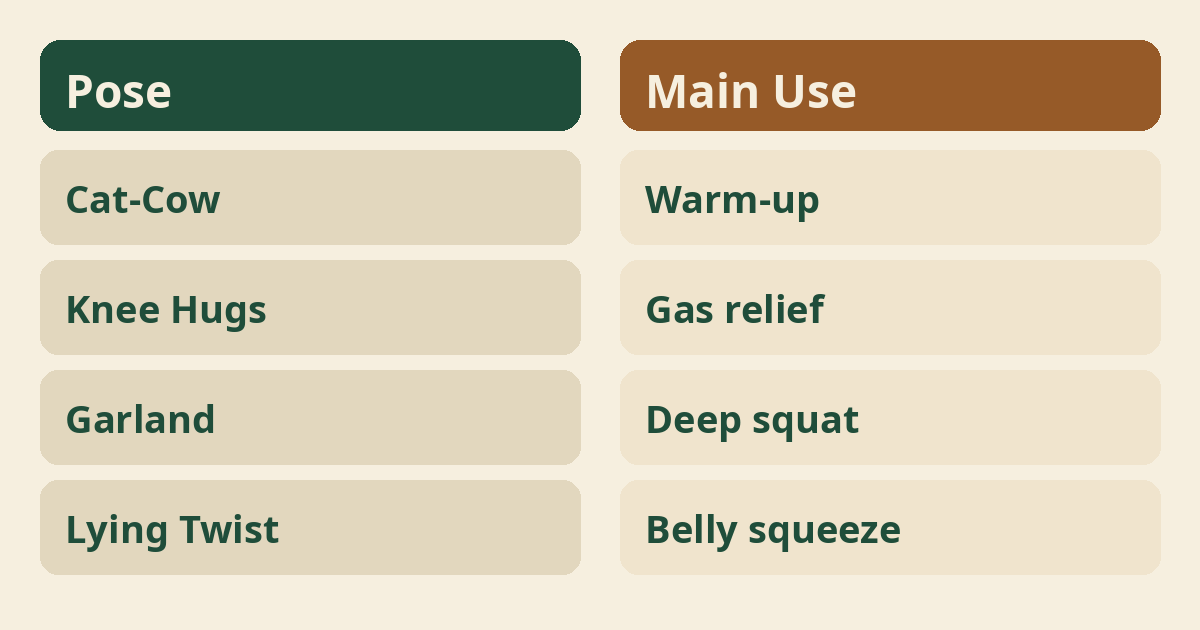
Begin on hands and knees and slowly round and arch your back with your breath. This wakes up the spine and softly massages the belly from the inside. Do eight to ten slow rounds before anything else. Our guide to Cat-Cow Pose for beginners shows the full movement.
Step three: try Wind-Relieving Pose
Lie on your back and hug one knee, then both knees, toward your chest. Hold each side for a few slow breaths without straining. This pose puts light pressure on the lower belly, which is why it is a longtime favorite for gas and sluggish digestion. Rock a little side to side if it feels good.
Step four: squat into Garland Pose
Stand with your feet a bit wide, then sink into a low squat with your palms together. A deep squat puts the body in a natural position for elimination. If your heels lift, slide a folded towel under them. Our Garland Pose guide walks through a beginner-friendly version.
Step five: add a lying twist
Lie down, drop both knees to one side, and turn your head the other way. Twists squeeze and release the belly like a soft sponge. Hold each side for five to eight breaths without forcing the stretch. Keep both shoulders resting on the floor.
Step six: rest in Child’s Pose
Fold forward over your knees and let your forehead rest on the mat. This is a quiet way to finish because it calms the whole body. Stay for a minute or two and breathe into your lower back. The Child’s Pose basics page explains how to pad it for comfort.
How should I breathe during these poses?
Breathe slowly in and out through your nose, letting the belly rise and fall. Deep belly breaths massage the digestive organs from the inside with every cycle. Try to make the exhale a little longer than the inhale. Our belly breathing starter guide breaks the technique down step by step.
How long should a session be?
Ten to fifteen minutes is plenty for a beginner. A short daily practice beats a long one you keep skipping. You can add time later once the poses feel familiar. Even five minutes on a busy day keeps the habit alive.
How often should I practice?
Most beginners do well with three to five sessions a week. Daily practice is fine if your body feels good about it. The page on how often to do yoga can help you find a rhythm that sticks. Rest days are allowed and encouraged.
What time of day works best?
Morning is a popular choice because the body is rested and the belly is empty. A few poses after waking can set a calm tone for the day. That said, any quiet time works. Many people like a slow session before bed instead.
What mistakes do beginners make?
The biggest mistake is pushing too deep, too fast. Rushing, holding your breath, or bouncing in stretches can all backfire. Forcing a squat or twist adds strain where you want ease. Slow and steady wins here, every single time.
Do I need any props?
No fancy gear is required, but a few household items make things easier. A pillow under the hips or a rolled towel under the heels makes poses friendlier on joints. A folded blanket works for knee padding. Our yoga props guide lists cheap stand-ins you already own.
Who should be careful with these poses?
Anyone with recent belly surgery, a hernia, or ongoing abdominal pain should talk to a doctor first. The same goes for pregnancy and long-term digestive conditions. Back or knee problems may call for smaller ranges of motion. A quick check with a professional keeps practice safe.
Is yoga a treatment for constipation?
No, yoga is not a treatment, cure, or fix for constipation. It is a general wellness practice that many people enjoy alongside normal care. If constipation is severe, lasts for weeks, or comes with pain or bleeding, see a doctor. Yoga supports a healthy routine; it never replaces one.
What benefits do people report?
Many people say they feel lighter, less bloated, and more relaxed after regular practice, though results vary from person to person. Research groups like National Center for Complementary and Integrative Health describe yoga as a practice that may support general wellbeing. Some notice easier mornings; others mainly enjoy the calm. Think of these poses as one helpful habit, not a promise.
How do I progress over time?
Add one new pose or a few extra breaths each week. Small steps keep the practice fun instead of overwhelming. When the basics feel easy, hold each pose a little longer. Progress here is measured in comfort, not depth.
Do I need a teacher?
A teacher is helpful but not required for these simple poses. A few beginner classes, online or in person, can polish your form and answer questions. After that, most people practice fine at home. Trust comfort as your guide between classes.
What mindset helps?
Treat practice as a small daily gift, not a chore with a scoreboard. Some days the belly cooperates and some days it does not. Showing up calmly matters more than any single session. Patience with your body is part of the practice.
Does belly breathing alone make a difference?
Many people find that slow belly breathing by itself helps them unwind. A calmer nervous system supports normal digestion. Even two minutes of quiet breathing counts as practice on a hard day. It is the easiest entry point in this whole guide.
Can I do any of this at my desk?
Yes, seated twists and easy side bends work in an office chair. They will not replace floor poses, but they break up long sitting spells that slow the gut. A twist every hour or two keeps things from going stiff. See yoga at your desk for chair-friendly ideas.
What if my back hurts?
Skip deep twists and stick to small movements until your back settles. Knee hugs and slow Cat-Cow are usually the friendliest options for a touchy back. Keep ranges tiny at first. If pain sticks around, get it checked before continuing.
Is this safe during pregnancy?
Pregnant readers should check with their doctor before starting any new exercise. Some poses here, like deep twists and firm belly pressure, are usually skipped during pregnancy. A prenatal class is a better fit for that season. When in doubt, ask first and practice later.
Should I eat before practicing?
It is best to wait two to three hours after a big meal. A full belly makes twists and folds uncomfortable. A small snack an hour ahead is usually fine for most people. Water before and after is always a good idea.
What should I wear?
Wear anything stretchy that lets you bend and breathe freely. You do not need special yoga clothes for home practice. Pajama pants and a loose shirt work just fine. Bare feet or grippy socks help you stay put on the mat.
How will I know it is helping?
Look for small signs like less bloating or an easier morning routine. Changes tend to show up slowly over weeks, not overnight. Some people notice the calm before anything physical. Jotting quick notes can help you spot patterns.
What if I feel dizzy or sore?
Come out of the pose, sit or lie down, and breathe normally. Mild next-day soreness is normal for new movers. Dizziness, sharp pain, or anything that feels wrong means stop and rest. When in doubt, take a day off.
When should I see a doctor?
See a doctor if constipation lasts more than a couple of weeks or comes with pain, blood, or unexplained weight loss. Those signs deserve a professional look, not more stretches. Yoga can wait until you have answers. Your doctor can also say which poses fit your situation.
Can older adults or kids try these poses?
Yes, with small adjustments these poses suit most ages. Kids usually copy a parent and turn it into play. Older adults may want a chair nearby for balance and a slower pace. Comfort is the rule for every age.
Where can I learn more?
This article is part of a larger series on digestion-friendly yoga. For the full picture, read our main guide on yoga for constipation for beginners, which covers the topic step by step. It ties the poses, habits, and routines together in one place. Start there when you are ready to go deeper.
Where to read next
For a calm, beginner-friendly start, Ranjana Sinha’s Begin Where You Are is written for people who want simple steps. Our guide to starting a home yoga practice adds a gentle routine you can follow at home.
Frequently asked questions
Will these poses work the same day I try them?
Some people notice easier digestion quickly, but most changes build slowly over weeks of steady practice.
Do I have to do all six poses every time?
No, two or three poses done calmly are enough for a solid session.
Is it normal to feel gassy during practice?
Yes, movement often shifts trapped gas, which is part of why people try these poses in the first place.
Can I practice right before bed?
Yes, a slow session before bed is fine, and many people find it helps them unwind.
What if I have IBS or another gut condition?
Talk to your doctor first, since some conditions call for changes to how and when you move.
The bottom line
Start small, breathe slowly, and let a few kind minutes on the mat become a habit your belly thanks you for.

