
After a heavy lunch or a stressful week, your belly can feel tight, bloated, or just unsettled. Many people want something calm they can do at home with no gear. That is where yoga for gut health comes in: slow movement, easy twists, and steady breathing that may help your middle feel more at ease. This guide shows you how to begin, step by step, in plain words and at your own pace.
This page is general education and is not medical advice. If you have a digestive condition, are pregnant, or take regular medication, talk with your doctor before you start.
What is yoga for gut health?
It is a set of slow poses and breathing habits chosen because they ask your belly to move and relax. The poses are simple folds, twists, and floor shapes. Nothing here needs strength or a flexible body, and you can do every step on a mat or a soft rug.
Why do people try it?
Most people try it because they want to feel more comfortable in their belly and calmer in their day. Digestion often feels worse when we are rushed or tense. A short practice gives you a quiet pause, and many people find that pause is the part they enjoy most.
How does the gut connect to the mind?
Your belly and your mood are closely linked, so a calm mind often goes with a calmer middle. When you feel stressed, your stomach may tighten or flutter. Slow breathing and easy movement may help you feel less on edge, which can make meals feel less heavy for some people.
How do I start?
Start with five minutes on a quiet floor, a few simple poses, and slow breaths. Pick a spot where you can lie down and stretch your arms. Wear loose clothes. Begin small, because a short practice you repeat beats a long one you skip.
When is the best time to practice?
Choose a time when your stomach is not full, such as first thing in the morning or a few hours after a meal. Folding and twisting on a full belly can feel uncomfortable. Many beginners find a calm morning slot works well. A short wind-down in the evening is also fine if you keep it slow.
Step 1: How do I settle in?
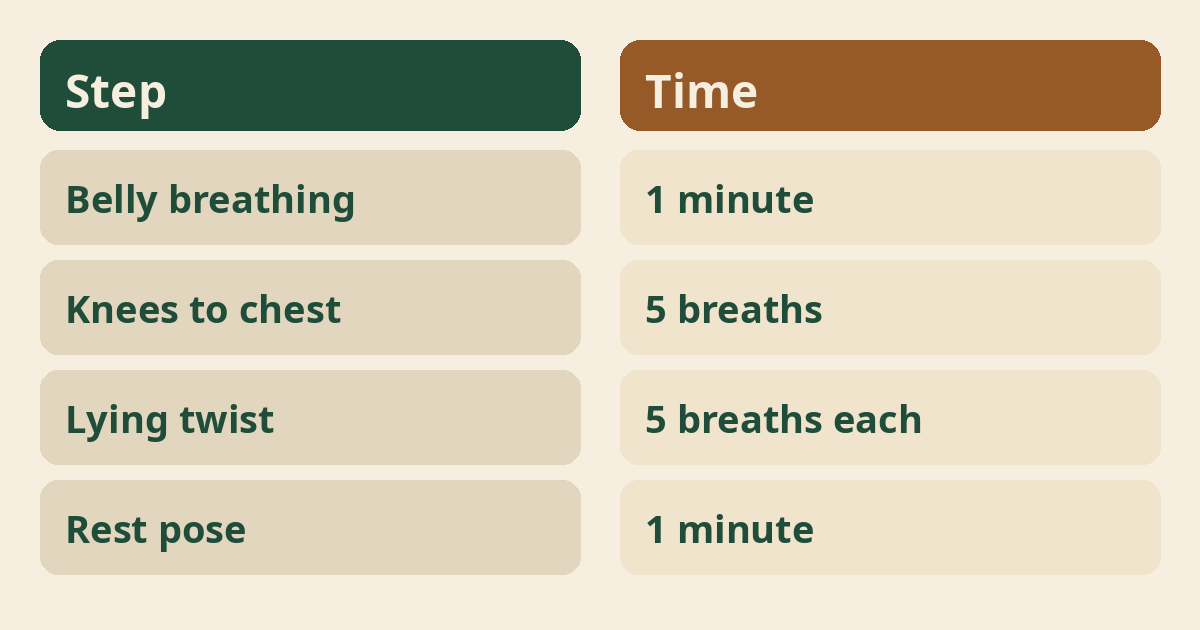
Lie on your back with knees bent and feet flat on the floor. Rest your hands on your belly and close your eyes if that feels right. Spend one minute just noticing how your body feels. No effort is needed at this step.
Step 2: How do I do belly breathing?
Breathe in through your nose and let your belly rise like a soft balloon, then breathe out slowly. Place a hand low on your belly to feel the movement. Try four slow breaths in and five slow breaths out. If you want more detail, read our simple belly breathing guide for a restless stomach.
Step 3: How do I do knees-to-chest?
Hug both knees toward your chest and rock a little from side to side. This easy shape lets your lower belly soften. Hold for five slow breaths. If your knees feel sore, hug just one leg at a time and keep the other foot on the floor.
Step 4: How do I do a lying twist?
Drop both knees to one side while your shoulders stay on the floor. Open your arms wide and turn your head the other way if it feels good. Stay for five breaths, then switch sides. Move only as far as feels easy, with no pulling.
Step 5: How do I use cat and cow?
Come to hands and knees, then round your back and lift it in slow rhythm with your breath. Breathe in as you lift your chest and breathe out as you round. Ten slow rounds are plenty. Our cat-cow walkthrough for first-timers covers hand and knee placement.
Step 6: How do I finish with a rest pose?
Sit your hips back toward your heels and rest your forehead on the floor or a pillow. Let your belly rest on your thighs and breathe slowly for one minute. Our page on child’s pose made easy shows ways to adjust it if your hips feel tight.
Why does breathing matter so much?
Slow breathing is the quiet center of the whole practice. Fast, shallow breaths often go with tension in the belly. When you slow down and let the out-breath run long, many people feel their middle soften and their shoulders drop.
How long should a session last?
Five to fifteen minutes is a good size for a beginner. You can build up as it feels right. A short daily habit often feels better than a long session once a week, and you can stop early any time your body asks you to.
How many days a week is enough?
Two or three days a week is a fine start, and daily is fine if each session stays short. Let your energy guide you. If you want ideas for building a routine, see our note on how often to practice as a beginner.
Can I practice after a meal?
It is better to wait a couple of hours after a meal before folds and twists. A full stomach and deep bending do not mix well for most people. If you need to move sooner, take a slow walk or sit tall and breathe quietly instead.
What about sitting poses?
A simple seated pose with a tall spine gives your belly room to breathe. Sit on a folded blanket so your hips are higher than your knees. Rest your hands on your thighs. A low seat that suits you is worth more than a perfect shape.
How can thunderbolt pose fit in?
Kneeling on your shins is a classic seated option that many people use after eating. Sit back on your heels with a straight spine and breathe slowly. If your knees complain, place a pillow between your calves and thighs. Our thunderbolt pose beginner notes show safe ways to adapt.
Can a squat help?
A supported low squat lets your hips and lower belly open in a natural way. Hold a sturdy surface or rest your heels on a rolled towel. Stay for a few breaths only. The page on garland pose for first-timers explains how to stay steady.
Is a seated forward fold useful?
A soft forward fold can feel calming, but keep it slow and never force it. Bend your knees as much as you like and fold only to a point where breathing stays easy. If your belly feels pressed or tight, sit up and try another shape.
What about hip openers?
Loose hips often make floor poses feel easier, so a few hip shapes are a nice addition. Try a seated shape with the soles of your feet together. Our guide to butterfly pose for stiff hips gives easy ways to start.
What props help most?
A folded blanket, a firm pillow, and a strap or towel cover almost every pose here. Props let your body relax, and relaxing is the goal. A blanket under the hips, a pillow under the knees, and a towel to reach your foot all make poses kinder. See everyday props for new yoga students.
Which common mistakes should I avoid?
The biggest mistakes are going too deep, holding your breath, and practicing on a full stomach. Pushing hard into a twist can leave you tense and sore. Keep the breath smooth, stay inside a comfortable range, and stop if something feels sharp or odd.
Is stress part of the picture?
Many people notice their belly feels worse on busy days, so calming the mind belongs in this practice. A few quiet minutes may help you step out of the rush. Our page on yoga for stress relief adds more calming ideas.
What benefits might I notice?
Many people find they feel calmer, looser through the middle, and more aware of their body, though results vary. Some people also enjoy better sleep or an easier mood after practice. These are possible gains, not promises. For neutral background on yoga and health, see National Center for Complementary and Integrative Health.
Who should be careful?
Talk with your doctor first if you have a digestive condition, a recent surgery, a hernia, or are pregnant. Persistent belly pain, blood in stool, or sudden changes in your habits need a medical check, not a yoga class. A doctor can tell you which movements are safe for you.
Is yoga a treatment for stomach problems?
No, yoga is not a treatment for any digestive condition. It is a calm movement habit that some people use alongside regular care. It does not replace medicine, tests, or advice from a doctor, so keep your appointments and follow your care plan.
What if I feel pain or dizziness?
Stop, rest, and breathe normally if you feel pain, dizziness, or nausea. Yoga should feel easy to moderate, never sharp. If the feeling stays after you rest, contact a health professional before you try again.
How do I progress over time?
Add one new pose or one extra minute every week or two, never both at once. After a few weeks you might add a longer rest, a second twist, or a short seated pose. Slow steps keep the practice kind to your body and easy to stick with.
Should I find a teacher?
A teacher can help, especially if you have health concerns, but you can begin safely at home with simple poses. Look for a teacher who welcomes beginners and asks about your health. Tell them about any digestive concerns so they can offer easier options.
What mindset helps?
See the practice as a quiet visit with your body, not a test you must pass. Skip comparing yourself to photos. Some days your belly will feel easy and some days it will not. Both days count, and showing up is the win.
Can I add a short desk break?
Yes, a few seated stretches during the day can break up long hours of sitting. Sit tall, breathe low into your belly, and turn slowly side to side. Our desk yoga ideas for beginners have more options for work days.
What about food habits?
Calm, unhurried meals pair well with a yoga habit. Sit down to eat, chew slowly, and notice when you feel full. Yoga is only one part of daily life, and a food plan for a health condition should come from your doctor or a dietitian.
How do I build a simple weekly plan?
Pick three set days, keep each session under fifteen minutes, and use the same six steps each time. Repeating the same flow helps you learn it by heart so you can focus on your breath. Write the days on a calendar or set a soft reminder on your phone.
Where do I go from here?
Keep your practice small, steady, and kind, and add variety when you feel ready. If you want a broader view of how movement may support comfortable meals, read our pillar guide on yoga for digestion for beginners. Then explore other easy shapes at your own speed.
Where to read next
For a calm, beginner-friendly start, Ranjana Sinha’s Begin Where You Are is written for people who want simple steps. Our guide to starting a home yoga practice adds a gentle routine you can follow at home.
Frequently asked questions
Is a short daily practice better than a long weekly one?
For most beginners a short regular session feels easier to keep up and kinder to the body.
Do I need a yoga mat to begin?
A mat is helpful, but a soft rug or folded blanket works well too.
What should I do if twisting feels uncomfortable?
Make the twist smaller, use a pillow for support, or skip it and breathe in a resting pose instead.
Will I see changes right away?
Some people feel calmer after one session, while others need weeks, and results differ from person to person.
Is it fine to practice if my belly feels upset today?
Choose only slow breathing and a rest pose, and stop if you feel worse or see a doctor if the upset continues.
The bottom line
Start with one small session this week, keep it slow, and let your body set the pace.

