
A short, easy yoga routine in the morning can help many people get their digestion moving on a more regular schedule. If you often wake up feeling heavy, bloated, or stuck, you are not alone, and you do not need a hard workout to nudge things along. This guide shows you a calm ten-minute routine built for beginners, with simple poses, slow breathing, and clear safety notes. No experience, flexibility, or special gear is required to begin.
This article is general education, not medical advice. If you have a health condition, ongoing gut trouble, or any pain, check with your doctor before starting.
What is morning yoga for bowel movements?
It is a short set of easy poses and breathing done soon after waking to help the body settle into its natural rhythm. The idea is simple. You move the belly, spine, and hips in slow ways that many people find wakes up digestion. It is not a workout and not a fix, just a kind start to the day.
Why do people try yoga for bowel movement support?
Many people try yoga for bowel movement support because stress, long sitting, and rushed mornings can leave the gut sluggish. A calm routine gives the body time to shift out of stress mode. When the nervous system relaxes, digestion often works more smoothly. Results vary from person to person.
How is movement linked to digestion?
Light movement can encourage the natural squeezing action of the intestines. Twists, folds, and squats change the pressure in the belly in a mild way. Many people find this helps things along, though it is not guaranteed. Think of it as an invitation, not a switch.
Does the time of day matter?
Morning works well for many people because the gut tends to be most active after waking. Practicing before breakfast also means an emptier stomach, which feels better in folds and twists. If mornings do not suit you, any consistent time still helps build the habit.
Who is this guide for?
This guide is for beginners who want a simple morning routine and have no major health issues. You do not need experience or special fitness. If you live with a medical condition, read the safety sections below and check with your doctor first.
How do you start a short morning routine?
Start with five to ten minutes of easy poses right after you wake up. Keep it small enough that you will actually do it. A glass of water before you begin can also support the morning urge to go.
Step 1: Set up your space
Clear a spot on the floor and lay out a mat or folded blanket. Keep the room quiet if you can. Wear loose clothing that does not press on your belly. A full setup takes under a minute. Doing this the same way each morning tells the body the routine has begun.
Step 2: Begin with easy breathing
Sit or lie down and take five slow breaths into your belly. Let the belly rise as you breathe in and soften as you breathe out. Slow breathing tells the body it is safe to relax. Our guide to belly breathing for beginners walks through this step by step.
Step 3: Warm up the spine
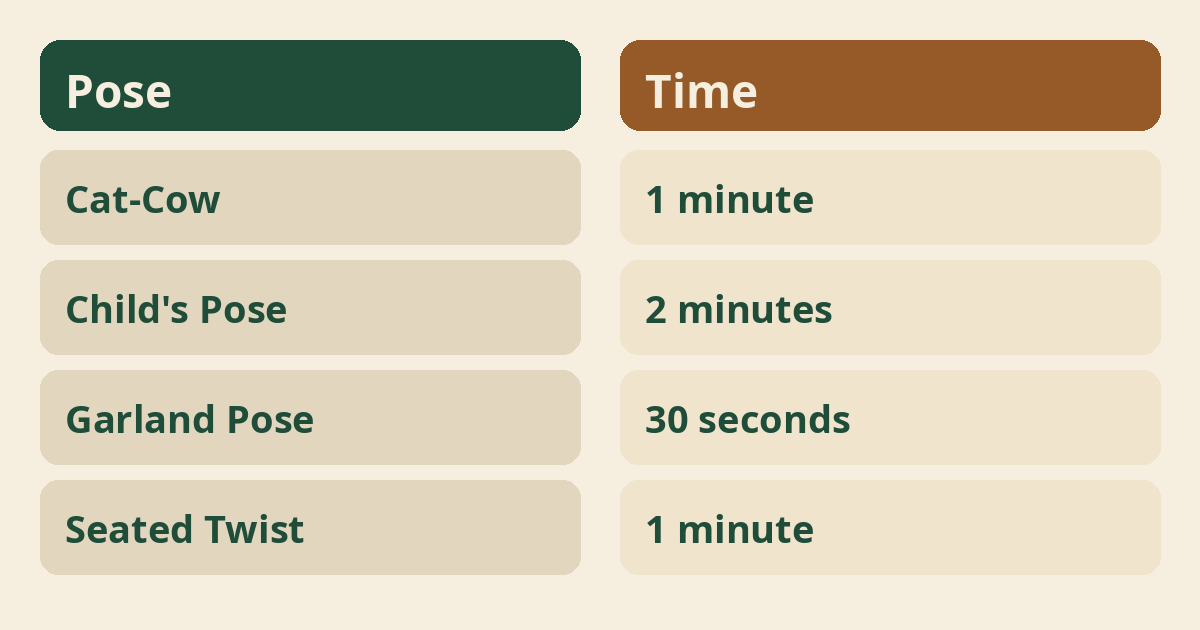
Move the spine slowly with a pose like Cat-Cow before anything deeper. Rounding and arching wakes up the back and strokes the belly in a mild way. If you are new to it, our page on Cat-Cow pose for beginners shows the full form.
Step 4: Add twists and folds
After warming up, move into simple seated twists and forward folds. Twists wring out the middle in a mild way, and folds soften the belly. Keep each one easy, about half your full range. Never force depth in the morning, when the body is stiffer.
Step 5: Finish with rest
End with one to two minutes of stillness, lying on your back. Let the belly stay soft and the breath stay slow. Rest is part of the practice, not a bonus. Many people notice the urge to go shortly after this quiet time.
Which poses help most?
Poses that press, twist, or squat the belly tend to help most. Knees-to-chest, seated twists, and squat shapes are common choices. Restful shapes like Child’s Pose for beginners also settle the gut by settling the mind.
What about squatting poses?
Squatting poses line the body up in a way many people find makes going easier. A low squat opens the hips and relaxes the pelvic floor. If a full squat is hard, our guide to Garland Pose for beginners offers easier versions with support.
Which poses should beginners skip?
Skip deep backbends, strong core work, and long holds at first. Morning bodies are stiff and sleepy, and hard effort can feel discouraging. Save challenging poses for later, once the habit feels settled.
How long should a session be?
Ten to fifteen minutes is plenty for most beginners. A short daily session beats a long session you skip. Add time only when the short version feels easy and automatic.
How often should you practice?
Most people do best with a short session on most mornings of the week. Regular practice builds the body clock that steady digestion likes. Our article on how often to do yoga helps you find a rhythm that fits your life.
How does breathing fit in?
Slow breathing is as important as the poses themselves. Long exhales calm the nervous system, and a calm system digests better. Breathe through the nose when you can, and never hold your breath in a pose. If a pose makes you want to brace or strain, ease out of it.
What props make it easier?
A mat, a folded blanket, and a firm cushion cover almost every need. Blankets lift the hips in seated poses and pad the knees on hard floors. Our overview of yoga props for beginners explains what is worth having at home.
Can you do this with a bad back?
Many people with mild back trouble can still do a modified routine, with a doctor’s okay. Keep folds shallow, bend the knees, and skip anything that hurts. The advice in doing yoga with a bad back applies here too.
What if you are pregnant?
Pregnant readers should switch to a prenatal approach rather than this routine. Deep twists and belly pressure are not right during pregnancy. The differences are explained in prenatal yoga versus regular yoga, and your doctor should guide the choice.
Who should be careful?
Anyone with a recent surgery, a hernia, or ongoing gut disease should talk to a doctor first. The same goes for pain, bleeding, or sudden changes in bowel habits. A quick check with a professional keeps a simple routine simple and safe.
Is morning yoga a treatment for constipation?
No, morning yoga is not a treatment for constipation or any other condition. It is a lifestyle habit that some people find supportive. Ongoing constipation deserves medical care, so see a doctor if the problem lasts, gets worse, or comes with pain or bleeding.
What benefits do people report?
Many people find that a morning routine leaves them feeling lighter and more regular, though results vary. Research on yoga suggests it may ease stress and support general wellbeing, and the National Center for Complementary and Integrative Health offers balanced overviews of the evidence National Center for Complementary and Integrative Health. None of this is a promise, and your experience may differ.
What results can you expect?
Some people notice a difference within days, while others need a few weeks of steady practice. The body responds to rhythm more than intensity. Keep expectations modest and the routine consistent, and let your own experience be the judge.
What are common mistakes?
The most common mistakes are rushing, forcing poses, and practicing only when things go wrong. Other traps are holding the breath and skipping the rest at the end. Slow and steady beats intense and rare every time.
How do you build the habit?
Tie the routine to something you already do, like waking up or making tea. Lay the mat out the night before so the first step is easy. Missed a day? Just begin again the next morning without any fuss.
What about food and water?
A glass of water on waking is a simple partner to the practice. Many people find warm water especially settling for the gut. Keep breakfast unhurried when you can, since rushing meals works against a calm belly.
Can you practice on busy days?
Yes, even two or three poses beside your bed or at your desk count. A short version keeps the streak alive on hectic mornings. The ideas in yoga at your desk adapt well to crowded schedules.
How does the practice progress?
Progress means the routine feels natural, not that the poses get harder. After a few weeks you can add a pose or extend a hold a little. Growing slowly keeps the practice kind on the body.
Should you work with a teacher?
A few sessions with a qualified teacher can help you learn safe form early. A teacher can spot small alignment issues you cannot feel yet. Even one or two classes give your home routine a stronger base.
How should you think about mindset?
Treat the practice as care for yourself, not a chore to complete. Some mornings will feel stiff and flat, and that is normal. Showing up kindly matters more than doing it perfectly.
What about evenings or other times?
An evening session can also settle the gut, though mornings match the body’s natural timing best. If you enjoy both, keep the morning session for movement and the evening one for rest. The best time is the one you will keep.
Does stress really affect the gut?
Yes, stress and digestion are closely linked through the nervous system. When the body stays in alert mode, digestion often slows down. A slow morning practice is one way many people lower that alert level. This is one reason the calming parts of the routine matter as much as the poses.
Where can you learn more about yoga and digestion?
This site has a fuller guide for readers who want to go deeper into this topic. For a complete look at easing constipation with yoga, read our pillar guide on yoga for constipation for beginners. It covers poses, routines, and safety in more depth.
What is the first step today?
Tomorrow morning, drink a glass of water and try five minutes of breathing and Cat-Cow. That is the whole first step. Small and repeatable is how a routine becomes a rhythm, and a rhythm is what the gut likes best.
Where to read next
For a calm, beginner-friendly start, Ranjana Sinha’s Begin Where You Are is written for people who want simple steps. Our guide to starting a home yoga practice adds a gentle routine you can follow at home.
Frequently asked questions
Can I do this routine before breakfast?
Yes, an empty or near-empty stomach usually feels better in folds and twists.
What if I feel dizzy when I first get up?
Move slowly, start seated or lying down, and stop if the dizziness continues.
Do I need a yoga mat for this?
A folded blanket on carpet works fine for this short morning routine.
Will a single session make a difference?
Some people feel lighter after one session, but steady daily practice is what most people notice.
Is it fine to skip weekends?
Yes, missing days is normal and you can simply begin again the next morning.
The bottom line
Start small tomorrow morning, keep it kind, and let the habit grow on its own.

