
Yoga for baristas is a short, gentle practice built around the aches that come with life behind the counter. Long hours on your feet, repeated tamping and pouring, and reaching across the machine all add up. You do not need experience, a studio, or special gear. A few simple poses before or after a shift can help your body feel less stiff and your mind feel calmer. This guide shows you how to start.
This article is general education, not medical advice. If you have an injury, a health condition, or ongoing pain, check with a doctor before starting.
What is yoga for baristas
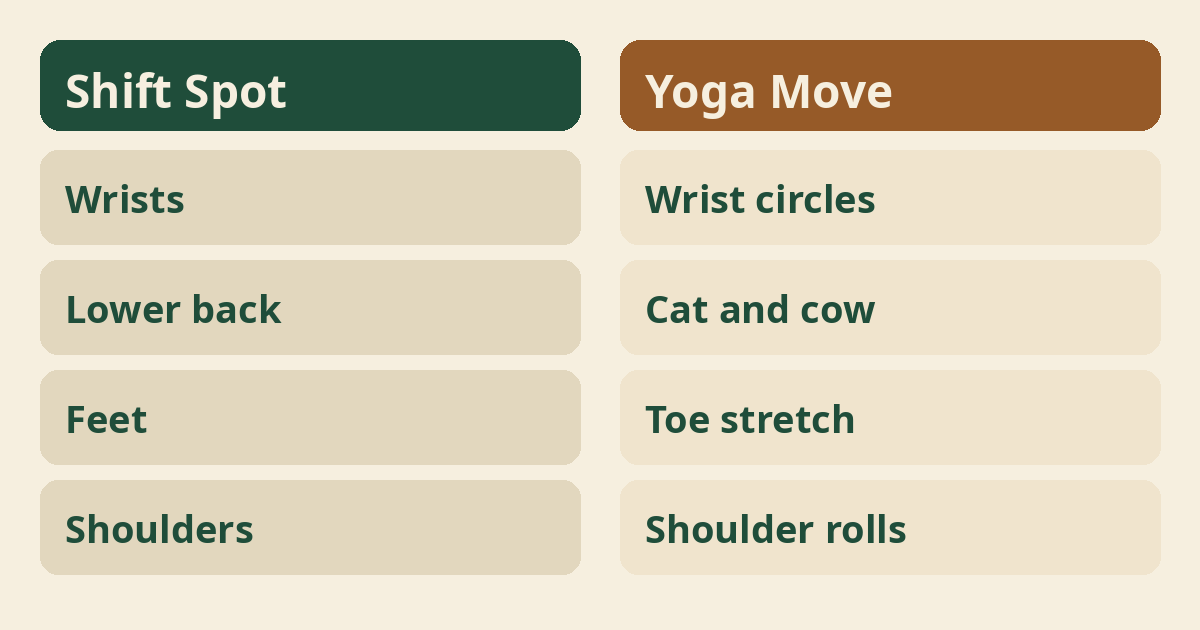
It is a beginner yoga practice shaped around the physical demands of cafe work. Baristas stand for hours and repeat the same hand and arm movements all day. This style of yoga targets the feet, wrists, shoulders, and lower back. The poses are simple and need little space or time.
Why baristas try yoga
Many baristas use yoga to unwind tight muscles and reset after busy shifts. Espresso work loads the wrists, forearms, and neck in small repeated ways. Standing on hard floors tires the feet and lower back. A short practice gives those areas gentle movement and rest.
How do I start as a beginner
Start with five to ten minutes of easy poses on a mat or carpet. Pick a quiet spot at home before or after your shift. Move slowly and stop if anything hurts. Short and regular beats long and rare.
Do I need any experience
No experience is needed for this practice. Every pose here has a simple version. You can bend your knees, use a wall, or sit on a cushion. Yoga meets you where your body is today.
Step one, set up your space
Clear a small patch of floor and gather anything soft you have. A mat is nice but a towel or carpet works. Wear clothes you can move in, like your shift tee and joggers. Silence your phone so the time feels like yours.
Step two, warm up gently
Begin with slow movements to wake up stiff joints. Roll your shoulders, circle your wrists, and sway side to side. Shake out your hands like you are drying them. Two minutes of this prepares you for poses.
Step three, move through a few poses
Pick three to five poses and hold each for several easy breaths. Good first picks are mountain pose, cat and cow, and childs pose. Move between them slowly. There is no prize for depth, only for comfort.
Step four, breathe with attention
Let slow breathing guide every movement you make. Inhale as you open or lengthen, exhale as you soften or fold. If your breath gets strained, back off the pose. Calm breathing is the real practice.
Step five, close with rest
Finish lying on your back for a minute or two. Let your arms and legs go heavy. Notice your feet, wrists, and shoulders without judging them. This rest helps the practice settle into your body.
A wrist release for tamping days
Gentle wrist stretches can ease the load of repeated tamping and steaming. Place your palms together at your chest and lower them slowly until you feel a mild stretch. Then turn your fingers toward the floor and stretch the other way. Keep every stretch light and brief.
Standing tall in mountain pose
Mountain pose teaches balanced standing, which matters when you stand all shift. Stand with feet hip width apart and spread your toes. Let your arms hang and grow tall through the crown of your head. Learn the basics at mountain pose for beginners.
Loosening the spine with cat and cow
Cat and cow gently mobilize a spine stiff from leaning over the machine. Come to hands and knees and alternate rounding and arching your back. Move with your breath, slow and smooth. A full walkthrough is at cat cow pose for beginners.
Resting in childs pose
Childs pose is a restful shape that releases the back, hips, and shoulders. Kneel, sit back toward your heels, and fold forward with arms stretched out. Rest your forehead down and breathe into your lower back. See childs pose for beginners for setup tips.
Easing feet after a long shift
Simple foot stretches can soothe soles tired from hard floors. Sit and gently pull your toes back toward your shin, one foot at a time. Roll each foot over a small ball or a water bottle. Slow ankle circles also help.
Releasing the neck and shoulders
Slow neck and shoulder movements can ease tension from looking down at cups. Drop your right ear toward your right shoulder and breathe, then switch sides. Roll your shoulders back in big slow circles. More ideas are at yoga for neck and shoulders.
Caring for your lower back
Gentle forward folds and twists can give a tired lower back relief. Hinge forward with soft knees and let your head hang. Then sit and twist lightly to each side. If your back often bothers you, read can you do yoga with a bad back before pushing further.
Quick resets at work
Tiny stretches between orders can keep stiffness from building up. Behind the counter, try a shoulder roll, a gentle side bend, or a slow wrist circle. Even thirty seconds helps during a rush. For more ideas see yoga at your desk for beginners.
How should I breathe
Breathe slowly through your nose and let your belly move with each breath. Belly breathing calms the nervous system and steadies the body. Place a hand on your stomach and feel it rise and fall. The basics are covered in belly breathing for beginners.
How long should a session be
Ten to twenty minutes is plenty for a beginner session. A short practice after work is easier to keep than a long one you skip. Add time only when the habit feels natural. Consistency matters more than length.
How often should baristas do yoga
Most beginners do well with three to five short sessions a week. Daily five minute resets plus one longer weekend session is a solid rhythm. Your schedule shifts, so let the practice flex with it. More guidance is at how often should you do yoga.
Common mistakes to avoid
The biggest mistakes are forcing depth and skipping rest days. Do not bounce into stretches or copy advanced shapes from videos. Avoid practicing through sharp pain. Sore is normal, stabbing is a stop sign.
What props help beginners
Props like blocks, straps, and cushions make poses more comfortable. A folded blanket under the knees softens floor poses. A strap helps reach your feet in seated stretches. Learn the basics at yoga props for beginners.
Who should be careful
Anyone with a wrist, back, or joint injury should talk to a doctor first. The same applies if you are pregnant, have dizziness, or live with a chronic condition. A doctor or physiotherapist can say which movements are safe for you. Bring that guidance into your practice.
Is this a treatment for pain
No, yoga for baristas is not a treatment for any condition. It is a gentle movement and relaxation practice. Many people feel better with it, but it does not replace medical care. Persistent pain deserves a professional look.
Benefits people often notice
Many people find regular gentle yoga leaves them feeling looser, calmer, and less achy, though results vary from person to person. Some notice easier sleep after late shifts and less end of week stiffness. Others mainly enjoy ten quiet minutes that belong to them. For an overview of what research says about yoga, see National Center for Complementary and Integrative Health.
Yoga and the stress of the rush
Slow movement and breath can take the edge off a hectic service. The cafe rush keeps your body in go mode for hours. A few minutes of stillness helps it downshift. You can explore this further at yoga for stress relief for beginners.
Working on stiff hips
Standing all day can leave hips tight, and gentle hip openers can help. Butterfly pose and garland pose are friendly starting points. Sit in butterfly with the soles of your feet together and let your knees fall open. Try butterfly pose for beginners or garland pose for beginners.
Building better balance
Balance work steadies ankles and knees that carry you through long shifts. Start by standing on one foot while holding a counter. Lift the other foot to your calf, never the knee. Grow from there with yoga for balance for beginners.
Improving flexibility over time
Flexibility builds slowly with regular gentle practice, not force. Tight hamstrings and shoulders ease open over weeks, not days. Hold stretches at mild intensity and breathe. A good starting point is yoga for flexibility for beginners.
A five minute pre shift routine
A quick morning sequence can wake the body before the first espresso. Try one minute of belly breathing, a few cat and cow rounds, and a gentle standing side bend each way. Finish with ten slow shoulder rolls. Short and done is the goal.
A ten minute post shift routine
A short evening sequence helps your body come down from a long service. Start with childs pose, then a seated forward fold and a light twist each side. Stretch your wrists, then lie on your back with legs up a wall if you like. Rest two minutes to finish.
How do I progress from here
Progress by holding poses a little longer and adding one new pose at a time. When ten minutes feels easy, try fifteen. When a pose feels steady, explore a slightly deeper version. Small steps keep the practice safe and fun.
Do I need a teacher
A teacher is helpful but not required to begin a simple home practice. A few classes, in person or online, can correct habits early. If cost or timing is hard, careful videos from qualified teachers work too. Your own body feedback is the most honest teacher.
The right mindset for this practice
Treat yoga as recovery and care, not another task to win. You already perform all shift. On the mat there is no ticket time and no judging. Showing up tired and doing three poses still counts.
Yoga on days off
Rest days are a great time for a slightly longer, slower practice. Try twenty to thirty unhurried minutes with extra time in rest poses. Let it feel like a treat, not training. Your body does its repair work in rest.
Fitting yoga around shift work
Anchor your practice to a habit you already have, like after your shower. Early openers might practice the night before instead. Late closers might prefer a gentle wind down after work. The best time is the one you will actually keep.
Where to read next
For a calm, beginner-friendly start, Ranjana Sinha’s Begin Where You Are is written for people who want simple steps. Our guide to starting a home yoga practice adds a gentle routine you can follow at home.
Frequently asked questions
Can yoga help with wrist pain from tamping?
Gentle wrist stretches may ease everyday tightness, but ongoing wrist pain should be checked by a doctor.
How often should a barista do yoga?
Three to five short sessions a week works well for most beginners.
Do I need to be flexible to start?
No, you start exactly as you are and flexibility grows gradually with practice.
Can I do yoga right after a long shift?
Yes, a gentle ten minute routine after work is a great way to release the day.
Is yoga a workout or just stretching?
It can be both, but for baristas the gentle recovery style is the best place to begin.
The bottom line
A few quiet minutes of yoga can be the kindest part of a barista’s day, so roll out a mat and give your body the same care you give every cup.

