Staring at the ceiling at 2 a.m., tired but wide awake, is a lonely kind of frustrating. Yoga for insomnia is a simple way to help your body and mind slow down when sleep will not come. This guide shows you easy poses, calm breathing, and a short routine you can do before bed. Everything here is beginner friendly, needs no special skills, and fits in a small space beside your bed.
This article is general education for healthy adults, not medical advice or a sleep treatment. If you have ongoing sleep problems, pain, or any health condition, talk with your doctor before starting.
What is yoga for insomnia?
Yoga for insomnia is a short, slow practice done before bed to help your body relax for sleep. It uses easy poses, steady breathing, and quiet rest instead of effort or sweat. The goal is not a workout. The goal is to signal to your body that the day is over and it is safe to rest.
Why do people try yoga for insomnia?
Many people try yoga for insomnia because lying awake at night is tiring and frustrating. A calm routine gives the evening a clear ending. Over time, some people find that the same poses each night become a cue for sleep. Results vary from person to person.
Can yoga fix insomnia?
Yoga cannot fix insomnia, and it is honest to say that up front. Insomnia has many causes, from stress to health conditions, and a stretch routine cannot address all of them. What yoga may offer is a calmer wind-down, and many people find that helpful even when sleep stays imperfect.
How do you start?
Start small, with ten quiet minutes before bed on most nights. Pick a time you can keep, like right after brushing your teeth. Keep the same simple sequence for the first few weeks so it feels familiar. Familiar is good when the goal is sleep, not skill.
What do you need first?
You need a quiet spot, comfortable clothes, and about ten minutes. A mat or a folded blanket on the floor is enough to begin. Dim the lights and put your phone out of reach so the session stays calm. Keep water nearby if you like, but skip caffeine late in the day.
Step 1: Set up your space
Begin by making your practice spot dark, quiet, and slightly cool. Clear a mat-sized area near your bed so you can move from poses straight into sleep. Low light tells your brain that night has started. If noise is a problem, soft earplugs can help.
Step 2: Settle your breathing
Sit or lie down and spend two minutes breathing slowly before any movement. Let each exhale run a little longer than each inhale. Slow breathing is one of the simplest ways to tell your nervous system it can stand down. Our guide to belly breathing for beginners walks you through the basics if this is new to you.
Step 3: Move through slow poses
Ease into three or four slow poses, holding each one without strain. Move at half your normal speed and skip anything that hurts. The poses later in this guide are chosen for bedtime because they are low to the ground and easy to leave. Keep your eyes soft or closed if that feels good.
Step 4: End in a rest pose
Finish every session lying still in a comfortable rest pose. Stay there for at least two minutes, or longer if you have time. This stillness is not wasted time, and for many people it is the most useful part. When you are ready, get into bed without turning bright lights back on.
Step 5: Protect the calm
After your session, keep screens off and lights low until morning. A bright phone can undo ten calm minutes in seconds. If you like, keep a notebook by the bed to park tomorrow’s worries on paper. Then let the routine be done for the night.
Which poses suit bedtime?
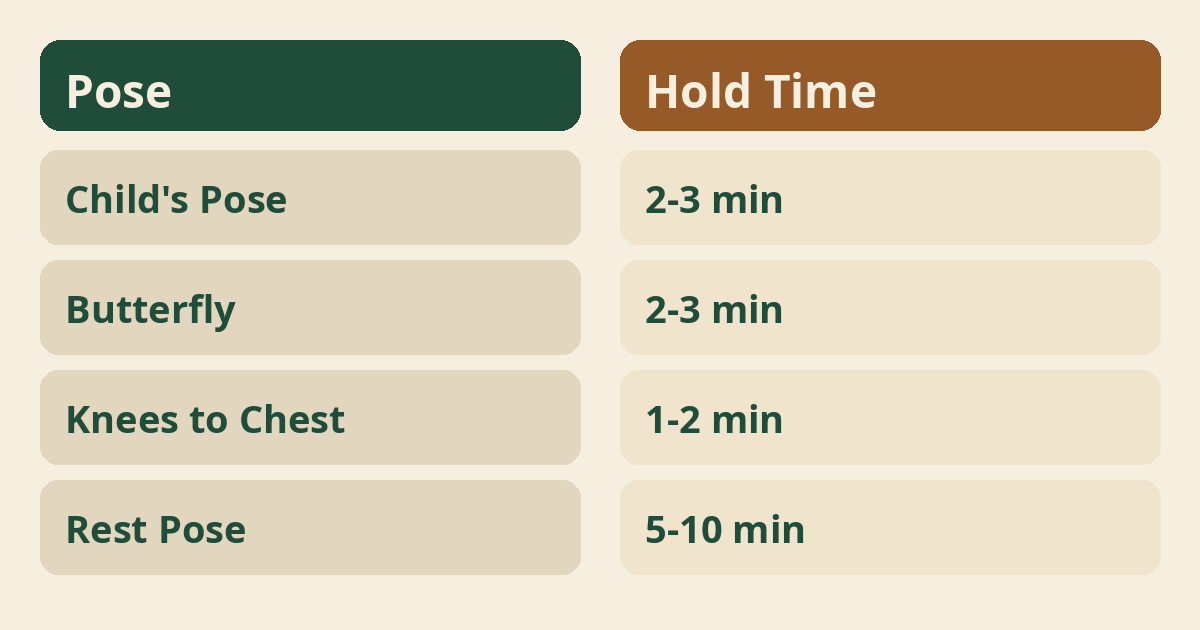
Poses that are low, supported, and easy to breathe in suit bedtime best. Child’s pose, butterfly pose, and a simple rest pose are classic choices because the body can fully let go in them. You can learn the first one in our child’s pose for beginners guide. Skip strong backbends, fast flows, and balance work at night.
What about forward folds?
Easy forward folds can feel quieting because they turn your attention inward. Sit with legs out and fold only as far as comfortable, knees bent as much as you need. Never pull yourself deeper with your hands. A folded blanket under the hips makes this kinder on a stiff back.
Is butterfly pose useful?
Butterfly pose is a reclined or seated hip opener that many people find deeply restful. Soles of the feet together, knees out wide, and cushions under the thighs if they hover. Our butterfly pose for beginners article shows the setup step by step. Hold it for two or three minutes while breathing slowly.
How does breathing help?
Slow breathing gives a busy mind one simple job to do. Counting breaths or lengthening the exhale keeps attention on the body instead of on worries. Many people find this makes the shift from awake to sleepy feel shorter. It costs nothing and works even on nights when poses feel like too much.
How long should a session last?
Ten to twenty minutes is plenty for a bedtime session. Shorter done nightly beats longer done once in a while. If ten minutes feels hard, start with five and build up. The routine should leave you calmer, never wired or worn out.
How often should you practice?
Most nights of the week is a realistic target for a sleep routine. Sleep cues work through repetition, so regularity matters more than length. For a broader look at practice rhythm, see how often you should do yoga. Missing a night is fine; just return the next evening.
When should you practice?
The best time is the last thirty minutes before you plan to sleep. Practicing right after dinner is too early for the calm to carry into bed. Practicing in bed, with lights already low, often works well. Keep the clock out of sight if checking it winds you up.
What mistakes should you avoid?
The biggest mistake is turning bedtime yoga into a workout. Strong effort raises your heart rate and body heat, which works against sleep. Other common slips are checking the phone between poses, pushing into pain, and quitting after one restless night. Keep it slow, and judge the habit over weeks, not one night.
Which props help at night?
A pillow, a folded blanket, and a wall cover almost every bedtime need. Props let the body release instead of hold on, which is exactly what you want before sleep. Our guide to yoga props for beginners explains cheap stand-ins you already own. An eye pillow or a dark room adds the final cue.
Who should check with a doctor first?
Anyone with a health condition, an injury, or pregnancy should talk with a doctor before starting. The same applies if your sleeplessness comes with loud snoring, gasping, or heavy daytime tiredness, which can point to a sleep disorder that needs care. Mild as these poses are, your situation is yours alone. A clinician can tell you what is safe for you.
Is yoga a treatment for insomnia?
No, yoga for insomnia is not a treatment, a cure, or a replacement for medical care. Think of it as a relaxation habit that may sit alongside whatever care you already get. If sleepless nights go on for weeks, or you feel unwell in the day, that is a reason to see a doctor. Mention the yoga habit so they have the full picture.
What benefits do people report?
People who practice before bed often report falling asleep more easily and waking less tense. These are personal reports, not promises, and your results may differ. Groups like National Center for Complementary and Integrative Health note that yoga is generally safe for healthy adults and that research on yoga and sleep is still growing. Hold the claims lightly and watch how your own body responds.
How does stress fit in?
Stress and sleeplessness feed each other, so calming one may quiet the other. A slow evening practice gives the day a clean finish line. If tension is your main blocker, our article on yoga for stress relief for beginners has more ideas built for daytime use. Many people find the two routines pair well.
How do you progress over time?
Progress means the routine feels easier to start, not that the poses get harder. After a few weeks, you can hold poses longer or add one new pose. Keep the pace slow, because bedtime is not the place for goals and grind. If a pose starts feeling like effort, scale it back.
Should you work with a teacher?
A teacher is optional for this routine, but a few classes can help your form. Look for classes described as restorative, yin, or bedtime yoga. Tell the teacher about any injuries before class starts. Online videos work too; just pick slow ones made for beginners.
What mindset helps most?
Treat the routine as care, not a test you can fail. Some nights you will still lie awake, and that is normal and fine. The practice is not wasted when sleep takes its time. Kindness toward yourself keeps the habit going.
What if you wake at night?
If you wake in the small hours, a few minutes of slow breathing beats checking the clock. Stay in bed, soften your shoulders, and lengthen your exhale. If you are wide awake after a while, sit up for a short rest pose in dim light, then lie back down. Keep the phone off, since it is the fastest way to fully wake up.
Can you do poses in bed?
Yes, many bedtime poses work fine on a firm mattress. A reclined butterfly, knees to chest, and a simple twist all adapt well to bed. The pillow and duvet double as props. Just keep a little space so you stay safely away from the edge.
Does daytime practice help?
Moving in the day can support sleep at night, even though the bedtime routine is the core habit. Stiff shoulders and a tight neck from desk work often follow people to bed. Our guide to yoga for neck and shoulders targets exactly that tension. Many people find looser muscles make settling down easier.
What about sleep habits?
Yoga works best alongside simple sleep habits, not instead of them. Keep steady sleep and wake times, limit late caffeine, and keep the bedroom dark and cool. If you want the bigger picture on bedtime practice, our cornerstone guide to yoga for sleep covers it. Small habits stack.
How do you stay consistent?
Attach the routine to something you already do every night. Brushing your teeth, changing into sleep clothes, then ten minutes on the mat is a simple chain. Keep the poses written on a card by the bed so you never have to think. Consistency, not intensity, is the whole game here.
What does a sample week look like?
A sample week is the same short routine most nights, with one longer session. For example, ten minutes on weeknights and twenty slow minutes on a weekend evening. Repeat the same poses until they feel like home. Then swap one at a time if you want variety.
Where does this all lead?
The aim is a reliable wind-down you actually look forward to. Over weeks, the routine can become the line between your day and your night. Some people keep it for years because it simply feels good. That kind of habit matters more than any single night’s sleep.
What is the first step tonight?
Tonight, do two minutes of slow breathing and one easy pose before bed. That is enough to start. Small starts are how lasting habits form, and tonight is a fine night to begin. Your future tired self will thank you.
Where to read next
For a calm, beginner-friendly start, Ranjana Sinha’s Begin Where You Are is written for people who want simple steps. Our guide to starting a home yoga practice adds a gentle routine you can follow at home.
Frequently asked questions
Will yoga make me fall asleep during the routine?
Some people do drift off in the rest pose, and at bedtime that is perfectly fine.
Is it safe to practice every single night?
For most healthy adults a short, easy nightly practice is fine, but check with your doctor if you have any conditions.
What if I have never done yoga before?
This routine is built for first-timers, with simple poses and no experience needed.
How quickly might my sleep change?
Some people notice a difference in days and others need weeks, and results vary widely.
Can I skip the poses and just do the breathing?
Yes, breathing alone on a hard night still gives you a calm wind-down.
The bottom line
Start small tonight, and let the routine grow on its own.