
You are in bed, the lights are off, and your body still feels wired from the day. Yoga poses for sleep give you a slow, quiet way to shift gears before you lie down. A few easy shapes, held with calm breathing, can help many people feel more settled. This guide keeps everything simple and beginner friendly.
This article shares general education about yoga and is not medical advice. If you have a health condition, a sleep concern or an injury, talk with your doctor before you begin.
What are yoga poses for sleep?
They are slow, low-impact shapes you do in the evening to help your body and mind settle. Most are done on the floor or the bed, held for several breaths, and chosen to feel soothing rather than demanding. Think of them as a quiet bridge between your busy day and your pillow.
Why do people try yoga before bed?
Many people use it as a calming evening habit that signals the day is ending. A short routine gives your mind something steady to follow instead of replaying the day. Over time the routine itself can become a cue that it is time to rest.
Do you need experience to start?
No, these poses suit people who have never done yoga. Every shape in this guide can be made smaller, softer or shorter. You are not aiming for a perfect pose, only for a position that feels easy to stay in.
How do you get started tonight?
Pick two or three poses, set a timer for ten minutes and move slowly. Dim the lights, silence your phone and wear something loose. Starting small makes it easier to repeat the habit tomorrow.
Where is the best place to practice?
A quiet corner of your bedroom or living room works well. You need a mat, a rug or a folded blanket and enough room to lie down. Practicing near your bed means you can drift straight into rest when you finish.
What is a good time to practice?
Aim for the last thirty to sixty minutes before you plan to lie down. This gives you time to slow down without rushing. Some people also do a very short version while already in bed.
Step 1: How do you begin with a body check?
Sit or lie down and notice where your body feels tight or busy. Spend a minute scanning from your feet to your head without trying to change anything. This simple pause sets a calm tone for the poses ahead.
Step 2: How do you do Child’s Pose?
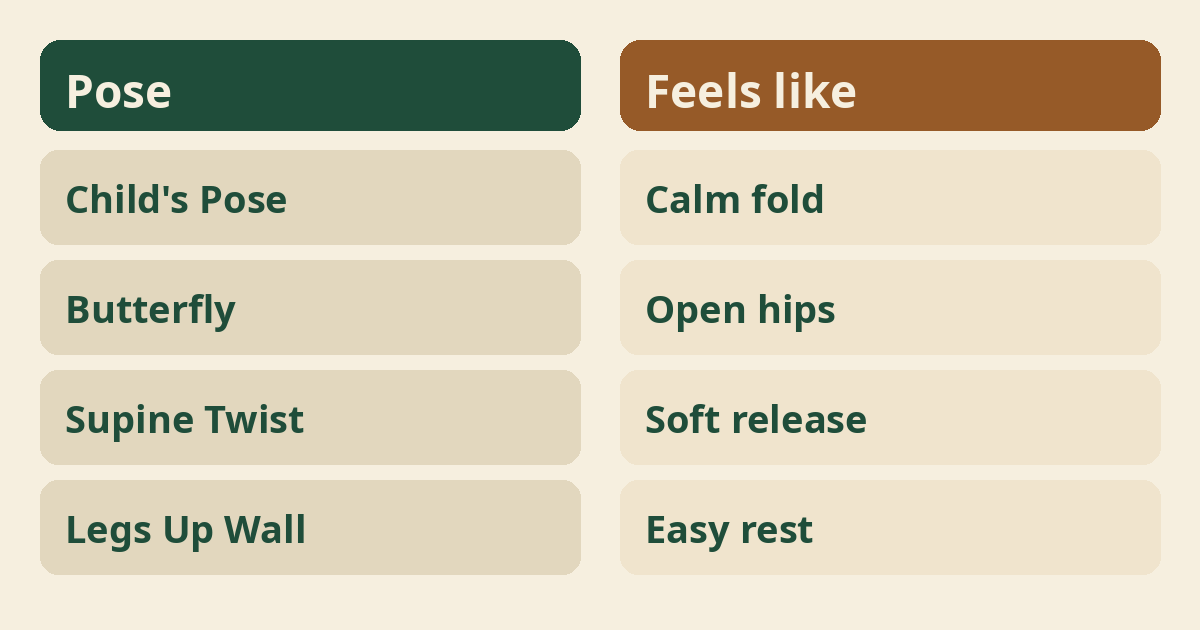
Kneel, sit back toward your heels and rest your forehead on the floor or a pillow. Let your arms rest beside you or stretch forward. Stay for five to eight slow breaths, and see our step-by-step Child’s Pose guide if you want more detail on getting comfortable.
Step 3: How do you do slow Cat-Cow?
Move on hands and knees, rounding and arching your back in time with your breath. Go at the pace of a sleepy stretch, not a workout. Our Cat-Cow walkthrough explains the movement if your wrists or knees need extra care.
Step 4: How do you do Butterfly Pose?
Sit with the soles of your feet together and let your knees fall open. Fold forward a little only if it feels pleasant, or stay upright with a cushion under your hips. The beginner Butterfly Pose guide shows easy ways to adjust it.
Step 5: How do you do Legs Up the Wall?
Lie on your back with your legs resting up against a wall for a few minutes. Scoot your hips close to the wall or a little away, whichever feels best. Many people enjoy this pose because it asks for almost no effort.
Step 6: How do you finish with Supine Twist?
Lie on your back, draw one knee across your body and look the other way. Keep your shoulders soft and breathe slowly for several rounds on each side. If it pinches your back, make the twist smaller or skip it.
How should you breathe in these poses?
Breathe in through your nose and let the exhale be slow and a little longer. Smooth, quiet breathing is the heart of an evening practice. If you are new to it, belly breathing for beginners is a friendly place to begin.
Is there a simple breathing count to follow?
Try breathing in for four counts and out for six. Keep the count easy and never strain for air. If counting feels busy, simply notice the breath moving in and out.
How long should an evening session last?
Five to fifteen minutes is plenty for most beginners. A short, relaxed session is easier to keep up than a long one. Stop whenever you feel restless or uncomfortable, and try again another night.
How often can you practice?
Many beginners enjoy a few evenings a week, then add more as it feels natural. There is no required schedule. For ideas on building a rhythm, read how often you should do yoga and choose what fits your life.
How long should you hold each pose?
Stay for five to ten slow breaths, or about a minute. Longer holds are optional. If a shape starts to feel sharp or tense, come out of it gently and rest.
What props make this easier?
A pillow, a folded blanket and a wall cover almost everything here. Props let your body relax instead of working to hold a shape. See yoga props for beginners for simple household swaps.
Can you practice in bed?
Yes, several poses can be done on top of your covers. Knees to chest, a supine twist and slow breathing all work on a mattress. A softer surface can feel less stable, so move carefully.
What should you wear?
Soft, loose clothes that do not pinch or ride up. Comfortable pajamas are fine. Keep a light blanket close in case you cool down while resting.
How can you set up the room?
Keep the lighting low, the temperature comfortable and the noise down. Put your phone out of reach so it does not pull you back into the day. A calm room helps the poses do their quiet work.
What are common mistakes to avoid?
Pushing too hard, rushing and holding your breath are the usual ones. Evening yoga should feel like unwinding, not exercise. Slow down, soften your jaw and let your breath guide the pace.
Should you do intense stretches before bed?
It is usually better to choose slow, supported shapes. Strong stretches and fast flows can feel energizing for some people. Save those for earlier in the day.
Who should be careful with these poses?
Anyone with a medical condition, injury, pregnancy or ongoing sleep problem should check with a doctor first. People with high or low blood pressure, eye pressure concerns or joint pain may need changes. Ask a qualified professional which poses are suitable for you. If you are pregnant, prenatal yoga versus regular yoga explains why modified practice matters.
Is yoga for sleep a treatment?
No, it is not a treatment for any sleep condition. Yoga is a calming habit, not medical care. If you struggle with sleep often, please talk with a doctor or sleep professional.
What benefits might you notice?
Many people find an evening routine leaves them feeling calmer and more relaxed, though results vary. You might notice softer shoulders, a quieter mind or an easier wind-down. For general background on mind and body practices, see National Center for Complementary and Integrative Health as an authority source.
Will it work the same for everyone?
No, each person responds differently. Some people feel the change quickly and others need several weeks of practice. Be patient and notice what feels good to you.
How can stress fit into your evening?
A short routine can give busy thoughts a place to rest. If your days feel heavy, pair these poses with ideas from beginner yoga for stress relief. Keep it kind and pressure free.
How do you progress over time?
Add one pose or a few extra breaths once your routine feels easy. You might hold shapes a little longer or add a seated pose near the end. Keep the overall pace slow and low-impact.
When should you work with a teacher?
Consider a teacher if you feel unsure, have an injury or want personal guidance. A good teacher can adjust poses to your body and answer questions. Many offer slow, restorative classes in the evening.
What mindset helps most?
Come with curiosity and no goals for how fast you fall asleep. Trying hard to sleep tends to backfire. Treat the practice as a quiet moment for yourself, and let sleep arrive in its own time.
What if your mind keeps racing?
Return to the breath each time you notice a thought. Wandering thoughts are normal and not a sign you are doing it wrong. Count a few breaths, then carry on with the pose.
Where does this fit in a wider routine?
Poses work best alongside steady habits like regular bedtimes and a calm room. Our cornerstone guide, yoga-for-sleep, looks at the bigger picture of winding down with yoga. Use this article as an easy first step toward it.
How do you stay consistent?
Link the routine to something you already do, like brushing your teeth. Keep your mat or blanket visible so it is easy to start. Missing a night is fine, and you can simply begin again.
Where to read next
For a calm, beginner-friendly start, Ranjana Sinha’s Begin Where You Are is written for people who want simple steps. Our guide to starting a home yoga practice adds a gentle routine you can follow at home.
Frequently asked questions
What is the easiest pose to try first?
Child’s Pose with a pillow under your forehead is a simple place to begin.
Is it okay to fall asleep during the last pose?
Yes, many people drift off while resting and that is perfectly fine.
Do I need a yoga mat to start?
No, a rug, towel or the bed itself will do for most of these shapes.
Can I do these poses if I feel stiff?
Yes, make each shape smaller and use pillows, and check with your doctor if stiffness is new or painful.
How soon might I feel something?
Some people notice a calmer feeling after one session, while others need a few weeks, and results vary.
The bottom line
Start tonight with two easy poses and a few slow breaths, and let the routine grow at its own pace.

