
Knee-friendly standing yoga is a gentle way to practice upright poses while keeping extra care around your knees. You use smaller ranges, softer joints and steady support. Most beginners can start with a few simple shapes and a chair or wall nearby. This guide explains the basics, the steps, the common mistakes and when to pause. Go slowly, listen to your body and keep every move comfortable.
This article is general education about yoga and is not medical advice. If you have knee pain, an injury, surgery, or any medical condition, please check with your doctor before you start.
What is knee-friendly standing yoga?
It is a style of standing practice that keeps pressure on the knees low and comfortable. You still stand, balance and stretch, but you bend less and move slowly. Props like a wall or chair add support. The goal is steady, easy movement.
Why do people choose it?
Many people choose it because regular standing poses can feel harsh on sensitive knees. They want to stay active without deep bends or twisting. This version lets them join in at their own level. It also builds confidence.
How do I start?
Start with five to ten minutes of easy standing shapes on a flat, non-slip surface. Wear comfortable clothes and keep a sturdy chair nearby. Move slowly and stop if anything feels sharp. Short and calm is better than long and strained.
Do I need to warm up first?
Yes, a short warm-up helps your legs feel ready and relaxed. Try gentle ankle circles, slow marching in place and small hip sways. Keep each move easy for about a minute. Warm muscles tend to feel kinder to the joints.
Step 1: How do I stand in a knee-friendly mountain pose?
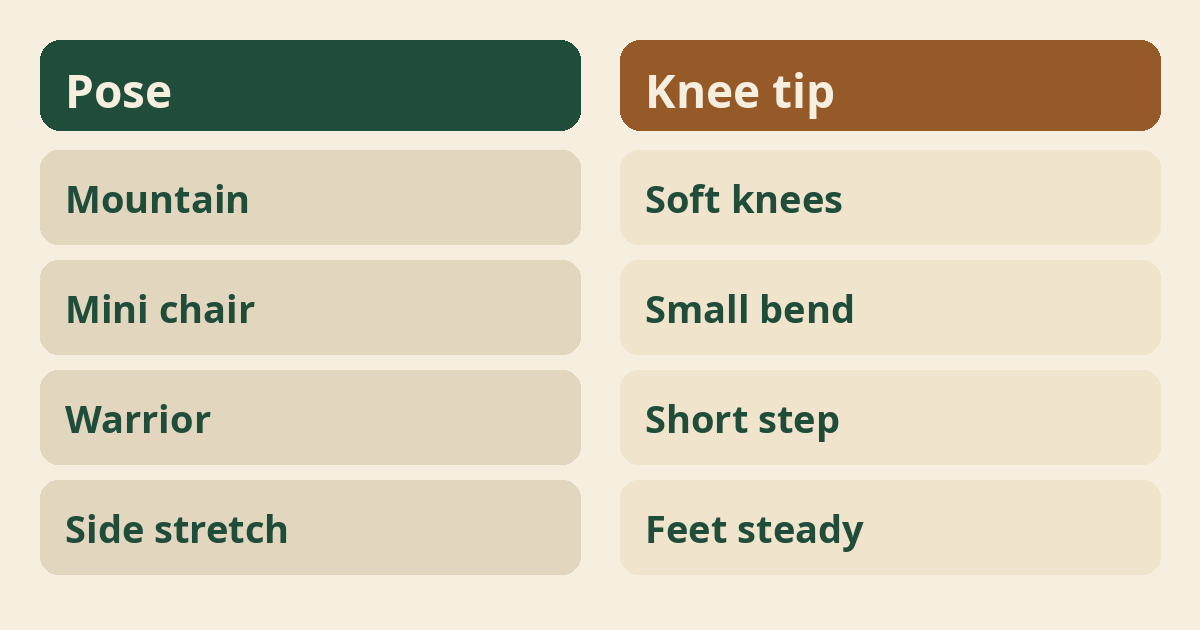
Stand tall with your feet hip-width apart and your knees soft, not locked. Spread your weight evenly across both feet. Let your arms hang loose and relax your shoulders. See mountain pose for beginners for more detail.
Step 2: How do I do a mini chair pose?
Bend your knees only a little, as if you are about to sit, and stop well before it feels strained. Keep your knees in line with your second toes. Rest your hands on your thighs or a wall. Hold for two or three breaths and rise slowly.
Step 3: How do I do a supported warrior stance?
Take a short step back, keep the front knee soft and rest a hand on a chair or wall. Make the stance shorter than you think you need. Your front knee should stay over the ankle, never past the toes. Come out whenever you like.
Step 4: How do I do a gentle side stretch?
Stand with feet apart, lift one arm and lean slowly to the side with both knees soft. Keep your feet firm and your hips steady. Breathe into the stretch and do not push far. Switch sides after a few calm breaths.
Step 5: How do I practice a chair-supported balance?
Hold a chair back, shift weight to one foot and lift the other heel just slightly. Keep the standing knee soft. Lift only as high as feels steady. Many beginners find that a small lift is plenty. See yoga for balance for beginners for more ideas.
Step 6: How do I finish the practice?
End by standing still for a minute and letting your breath slow down. Notice how your legs feel. Shake them out gently and sit if you wish. A calm finish helps you carry the ease into your day.
How should I breathe?
Breathe slowly through your nose and let each exhale be a little longer than the inhale. Smooth breath helps you notice tension before it builds. Do not hold your breath during any pose. Try belly breathing for beginners to practice.
How long should a session be?
Ten to twenty minutes is a good length for most beginners. Start with less if you feel unsure. You can add a few minutes when the poses feel easy. Quality matters more than time.
How often should I practice?
Two to four short sessions a week is a gentle starting rhythm. Give your body rest days so it can adjust. If a session leaves your knees sore, do less next time. See how often should you do yoga for guidance.
What are the most common mistakes?
The most common mistake is locking the knees or bending too deeply too soon. Others include letting the knee fall inward, rushing and ignoring discomfort. Slow down and keep your range small. Small and steady wins here.
Why should I avoid locking my knees?
Locked knees put the joint in a stiff position and reduce your natural cushioning. Keep a tiny bend, so the thigh muscles stay lightly awake. It should feel soft and springy. This one habit changes many poses.
Should my knees point in a certain direction?
Yes, your knees should generally track in the same direction as your toes. If your knee drifts inward or outward, shorten the stance. A mirror can help you check. Small adjustments make a big difference.
Which props help most?
A sturdy chair, a wall and a folded blanket are the most useful props. A yoga block can also bring the floor closer. Props make poses feel safer and more relaxed. See yoga props for beginners to learn more.
How do I use a wall?
Stand near a wall and rest your fingertips or palm on it for balance. This takes worry out of the pose. You can focus on form and breath. Move a little farther from the wall as you feel steadier.
How do I use a chair?
Place the chair so the back is within easy reach and hold it for support. Make sure it will not slide. A chair lets you try standing shapes with less risk of wobbling. Many people keep one nearby for every session.
Which shoes or surface is best?
Practice barefoot on a non-slip mat or in grippy shoes on a firm floor. Avoid slick socks and thick carpet that shifts. A stable base protects your balance. Check that the space is clear.
Who should be careful?
Anyone with knee pain, past injuries, surgery, swelling, or other conditions should check with a doctor first. The same goes for dizziness or balance problems. A doctor or physical therapist can tell you what is right for you. Do not guess.
When should I stop?
Stop right away if you feel sharp pain, pinching, swelling or instability. Mild effort is normal. Pain is a signal to pause. Rest, and speak to a qualified professional before you continue.
Is this a treatment for knee problems?
No, knee-friendly yoga is not a treatment, and it does not replace medical care. It is a gentle form of movement. If you have a knee condition, follow your doctor’s advice. Yoga can sit alongside that care only if your doctor agrees.
What benefits might I notice?
Many people find that gentle standing practice helps them feel steadier, calmer and more at ease in their legs. Results vary from person to person. Some also enjoy better focus and mood. For general background on yoga, see National Center for Complementary and Integrative Health.
Can it build leg strength?
Many people find that slow standing poses help their legs feel more capable over time. Strength comes from holding easy shapes with care. You do not need deep bends. Results vary, so be patient.
Can it help with balance?
Many people find that practicing with support makes balance feel more natural. Lift a heel, shift weight and breathe. Always keep a wall or chair close. More ideas are in yoga for balance for beginners.
What about flexibility?
Gentle stretches may leave your hips and legs feeling looser, though this varies. Never force a stretch near the knee. Let the hips and thighs do the work. See yoga for flexibility for beginners for more.
How do my hips connect to my knees?
Your hips and knees work as a team, so easy hip movement can make standing feel more comfortable. Tight hips can pull the knees out of line. Gentle hip work may help you move better. Try yoga for hips for beginners.
How can I make it easier?
Reduce the range, shorten the stance and hold a chair or wall. You can also practice for fewer breaths. Every change is valid. Easier poses still count as real yoga.
How do I progress safely?
Add one small change at a time, such as a longer hold or a slightly lower chair pose. Wait until the current level feels easy for a few weeks. If your knees complain, go back a step. Slow progress is steady progress.
Should I find a teacher?
A qualified teacher can spot habits you cannot see yourself and suggest changes. Tell them about your knees before class. Ask for gentle or chair-based sessions. A good teacher welcomes questions.
What mindset helps most?
A patient, curious attitude helps most, and comparing yourself with others helps least. Treat each session as a chance to listen. Your body changes daily. Respect that, and enjoy the calm.
What if I feel discouraged?
Feeling unsure is normal, and a smaller practice is still a practice. Shorten the session, use more support and try again tomorrow. Kindness to yourself keeps you coming back.
Can I add a seated pose afterward?
Yes, a calm seated or floor pose can be a nice end if it feels comfortable for your knees. Skip deep folds or crossed legs if they bother you. A simple resting shape works well. See child’s pose for beginners if that suits you.
Can I combine this with other gentle yoga?
Yes, you can mix it with easy spine and breath work when it feels good. Cat-cow on hands and knees may bother some knees, so pad them well or skip it. See cat-cow pose for beginners for options.
Where to read next
For a calm, beginner-friendly start, Ranjana Sinha’s Begin Where You Are is written for people who want simple steps. Our guide to starting a home yoga practice adds a gentle routine you can follow at home.
Frequently asked questions
Can I do standing yoga with sensitive knees?
Many people can with smaller ranges and support, but check with your doctor first.
Should my knees ever hurt during practice?
No, sharp or lasting knee pain means you should stop and seek advice.
Do I need a mat?
A non-slip mat helps, but any stable, non-slip surface works.
How soon will I feel a difference?
It varies, and some people feel calmer after one session while others need weeks.
Can I practice every day?
Short gentle sessions may suit some people, but rest days are wise, so listen to your body.
The bottom line
Start small, stay soft in the knees and let each calm breath guide your pace.

