Yoga for office lunch breaks is a short, gentle practice you do in your work clothes, in a small space, in 10 to 20 minutes. You do not need a mat, a studio, or any experience. A few slow stretches and calm breaths can give your body and mind a pause in a busy day. This guide shows you how to begin, step by step, in plain words.
This article is general education and is not medical advice. If you have a health condition, an injury, or you are pregnant, please check with your doctor before you begin.
What is yoga for office lunch breaks?
It is a short yoga routine made to fit into a workday pause. You use simple stretches, slow breathing, and a few quiet minutes. Everything is done in office clothes, often right beside your chair.
Why do people do yoga at lunch?
Many people want a real break from screens and sitting. A lunch break can pass in a blur of emails and snacks. A short yoga pause gives the body something different to do, and many people find it helps them return to work feeling calmer.
Do I need yoga experience?
No, you can begin with zero experience. Every move in this guide is basic and has an easy option. Go slowly, stop if something feels wrong, and let your body set the pace.
Do I need a mat?
No, a mat is not required for a lunch break routine. You can stand on the floor beside your desk, or sit on a sturdy chair. If you want a little more comfort, a folded jacket or towel works well. See simple yoga props for more ideas.
How do I start?
Start with just ten minutes and three easy moves. Pick a quiet corner, a meeting room, or your seat. Set a timer so you do not watch the clock. Finish eating first, or wait a little after a big meal.
What should I wear?
Wear what you already have on, as long as you can move. Loosen a tight belt or tie if you can. Take off heavy shoes if that is comfortable. Skip any move that feels restricted by your clothes.
Where can I practice at work?
Any small, calm spot will do. Try an empty meeting room, a quiet stairwell landing, a break area, or beside your desk. If you share space, choose seated moves that look like ordinary stretching.
Step 1: How do I begin with a pause?
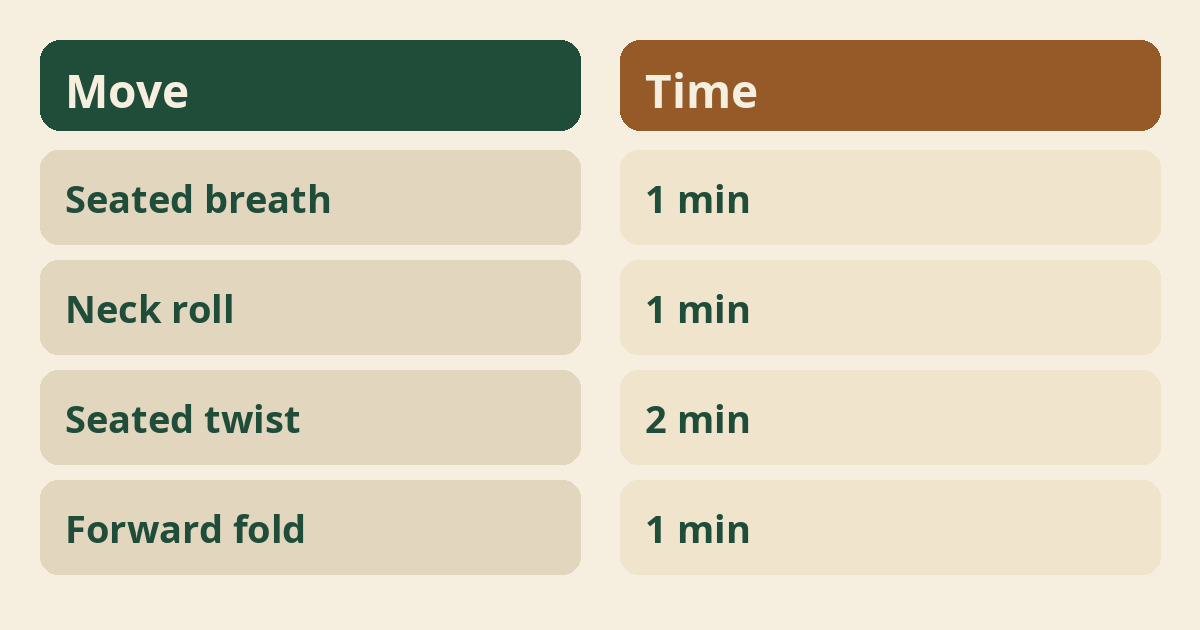
Sit tall and take three slow breaths before anything else. Place both feet on the floor and rest your hands on your thighs. Close your eyes or look softly at the floor. This tells your body that the break has started.
Step 2: How do I stretch my neck and shoulders?
Roll your shoulders back slowly, then tilt your ear toward each shoulder. Move gently and stop before it feels sharp. Hold each side for a few breaths. For more ideas, read yoga for neck and shoulders.
Step 3: How do I do a seated cat-cow?
Place your hands on your knees and gently round, then lift, your chest. Breathe in as you lift and out as you round. Repeat six to eight times at an easy pace. A standing version is covered in cat-cow pose for beginners.
Step 4: How do I do a seated twist?
Turn your chest gently toward one side while sitting tall. Hold the side of the chair or your thigh and keep your hips facing forward. Do not force the turn. Stay for three breaths, then switch sides.
Step 5: How do I stand in mountain pose?
Stand with feet hip width apart and let your arms hang by your sides. Feel your weight spread through both feet. Lengthen the back of your neck and relax your jaw. See mountain pose for beginners for the details.
Step 6: How do I do a gentle forward fold?
Hinge at the hips and let your upper body hang with soft knees. You can rest your hands on the desk or on your thighs instead of the floor. Let your head feel heavy. Come up slowly to avoid feeling dizzy.
How should I breathe?
Breathe in and out through your nose, slowly and without strain. Try counting four in and four out. If that feels hard, just breathe naturally. Never hold your breath during a stretch. A simple method is explained in belly breathing for beginners.
How long should a lunch break session last?
Ten to twenty minutes is plenty for a beginner. If you only have five minutes, do the breathing and one stretch. Short and regular is more useful than long and rare. Do not skip your meal for yoga.
How often should I practice?
Two or three times a week is a friendly place to begin. Some people enjoy doing it daily once it feels natural. Choose what fits your schedule and energy. You can read more in how often should you do yoga.
What is the best time during lunch?
Many people prefer a few minutes before or after eating. Give yourself a gap after a full meal, since twists and folds can feel uncomfortable on a full stomach. A light snack is usually fine. Notice what suits you.
What are common mistakes?
The most common mistake is pushing too hard. Others include rushing, holding the breath, comparing yourself to others, and skipping the pause at the start. Slow and gentle movement is the goal, not a deep stretch.
Should I feel pain?
No, you should not feel sharp or pinching pain. A mild stretch feeling is normal. Pain is a signal to stop. Back off, adjust, or skip the move. If pain keeps coming back, speak with a doctor.
What props can I use?
A chair, a wall, a folded towel, and a strap or scarf can all help. The chair gives support for balance and seated moves. A scarf can stand in for a strap. Props make poses easier, which is a good thing at the start.
Can I do yoga in a skirt, dress, or suit?
Yes, if you choose moves that suit your clothing. Seated and standing stretches work well in most outfits. Avoid deep folds or wide leg positions if your clothes are tight or short. Comfort and modesty both matter.
What about a stiff lower back from sitting?
A few gentle moves may feel good, but care is needed. Seated cat-cow and a slow forward fold with soft knees are common choices. If you have back problems, ask your doctor first, then read can you do yoga with a bad back.
What can help tired hips?
Gentle hip stretches may feel welcome after long sitting. Try a seated figure four, crossing one ankle over the opposite knee. Keep your back long and breathe. See yoga for hips for beginners for more.
Who should be careful?
Talk to your doctor first if you have any health concern. This includes injuries, high or low blood pressure, joint problems, dizziness, recent surgery, and pregnancy. Your doctor can tell you which moves are right for you. Pregnant readers can start with prenatal yoga vs regular yoga.
Is this a treatment?
No, lunch break yoga is not a treatment for any condition. It is a gentle movement and breathing habit. It does not replace medical care or advice. If you are unwell, please see a qualified health professional.
What are the possible benefits?
Many people find that a short yoga break helps them feel calmer and looser. Results vary from person to person. Some notice easier breathing, less tight shoulders, or a clearer head. For general background, see the National Center for Complementary and Integrative Health page on yoga.
Can it help with stress?
Many people find slow breathing and movement feel calming. It will not remove the causes of stress at work. It can give you a small reset between tasks. For a longer routine, try yoga for stress relief.
How do I progress?
Add one new move or one extra minute each week. After a few weeks, you might add a balance pose or a longer hold. Keep the routine simple. Progress means feeling steadier, not getting deeper into stretches.
Can I add balance and flexibility work?
Yes, once the basics feel easy. Standing near a wall makes balance practice safer. Flexibility grows slowly and differs for everyone. Explore yoga for balance and yoga for flexibility later.
Do I need a teacher?
A teacher is helpful but not required to start. A class, either in person or online, can check your form and offer options. Many studios and workplaces offer short sessions. Choose a teacher who encourages going slowly.
What mindset helps most?
Be kind to yourself and keep expectations small. You are not trying to perform. You are giving yourself a few minutes of care. Some days will feel better than others, and that is normal.
How do I make it a habit?
Tie it to something you already do every day. For example, practice right after you collect your lunch or right before you open email. A calendar reminder helps. Tell a coworker so you can practice together.
What if coworkers are watching?
Most people will not mind, and seated moves look ordinary. Start with discreet stretches at your chair. Some coworkers may even join you. A shared lunch stretch can be a nice way to connect.
How do I finish my session?
End with three slow breaths and a quiet moment. Sit tall, rest your hands, and notice how you feel. Then take a slow sip of water. Return to your work at an easy pace.
Where to read next
For a calm, beginner-friendly start, Ranjana Sinha’s Begin Where You Are is written for people who want simple steps. Our guide to starting a home yoga practice adds a gentle routine you can follow at home.
Frequently asked questions
Can I do yoga right after eating?
It is usually more comfortable to wait a little after a full meal, especially for twists and folds.
Is ten minutes enough?
Yes, ten minutes of gentle stretching and slow breathing is a good beginner session.
Do I need special clothes?
No, your normal work clothes are fine if they let you move without pinching.
What if I cannot sit on the floor?
Use a chair for every move, since seated versions are just as welcome.
Should I stop if something hurts?
Yes, stop if you feel sharp pain, dizziness, or anything unusual, and speak with your doctor if it continues.
The bottom line
A few quiet minutes at lunch can become a small, kind habit that is yours to keep.