Most beginner yoga myths are false, and they stop many people from ever trying a class. You do not need to be flexible, young, fit, or calm to begin. Yoga meets you where you are today. This guide walks through the biggest myths, explains what is really true, and gives you simple steps to start gently, at your own pace, with a clear head.
This article is general education only and is not medical advice. If you have a health condition, an injury, or are pregnant, check with your doctor before you start yoga.
What are beginner yoga myths?
Beginner yoga myths are common beliefs about yoga that sound true but are not. Most come from photos of advanced poses or from people who have never tried a class. Knowing the facts makes it much easier to begin without fear.
Why do these myths exist?
The myths exist because yoga is often shown in its most dramatic form. Social media favors deep bends and difficult balances. A quiet breathing practice does not make a striking picture, so many people never see the gentle side.
Myth: do you have to be flexible to start?
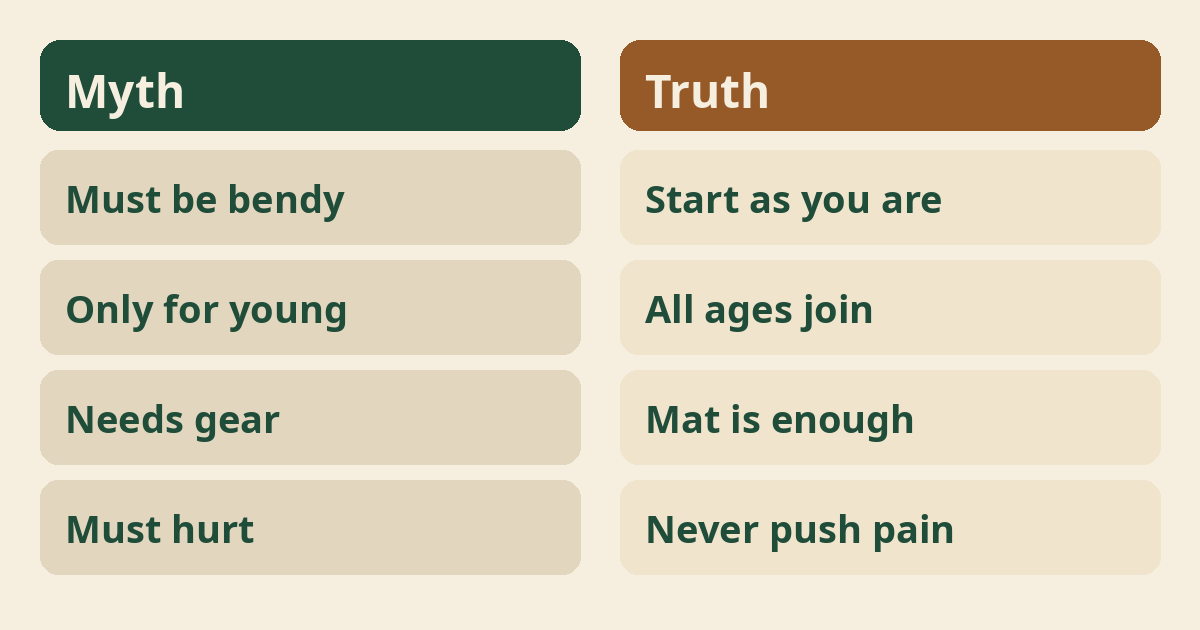
No, you do not need to be flexible to start yoga. Flexibility is something many people build slowly through practice, not a ticket you need at the door. Think of it like going to a gym to get stronger, not because you already are.
Myth: is yoga only for young people?
No, people of many ages practice yoga in ways that suit them. Poses can be done standing, sitting, or in a chair. A good teacher will show easier versions, and you can always choose the one that feels kind to your body.
Myth: is yoga only for women?
No, yoga is for anyone who wants to try it. Yoga began as a practice for people of all kinds, and today men, women, and teens take classes. The mat does not care who you are, only that you show up.
Myth: is yoga just stretching?
No, yoga is more than stretching. Stretching is part of it, but yoga also uses steady breathing, balance, light strength work, and quiet attention. Many people find that the focus on breath is what sets it apart.
Myth: is yoga a religion?
No, the physical practice taught in most classes is an exercise and mindfulness routine. Yoga has a long cultural history, and you can learn about it if you are curious. Joining a class does not ask you to change your beliefs.
Myth: do you have to clear your mind?
No, you do not have to stop all thoughts. Thoughts will come, and that is normal for everyone. The skill is gently noticing them and returning to your breath, which gets easier with time.
Myth: do you need expensive gear?
No, a simple mat and loose clothes are enough to begin. Some people practice on a carpet or a folded blanket at first. If you want a little help later, see our guide to simple yoga props.
Myth: does yoga have to hurt to work?
No, pain is a signal to ease off, not a sign of progress. A gentle stretch or mild effort is fine. Sharp, pinching, or burning feelings mean you should back out of the pose and rest.
Myth: do you need an hour every day?
No, a short practice can still be useful. Even ten minutes of easy movement and slow breathing can fit into a busy day. Small steady habits often last longer than big plans.
Myth: is yoga too easy to count as exercise?
No, yoga can range from very gentle to quite demanding. Holding a pose takes effort, and slow movements can make muscles tired. Many people are surprised at how worked they feel after a basic class.
Myth: can you only do yoga in a studio?
No, you can practice at home, outdoors, or even at work. Home practice saves travel time and feels private. Try a few moves at your chair with yoga at your desk on a busy day.
What is yoga really?
Yoga is a mix of movement, breathing, and focused attention. Different styles stress different parts, from slow and soft to fast and strong. Beginners often do well with a slow, basic class.
Why do people really do yoga?
People do yoga for many personal reasons, such as feeling calmer or moving more comfortably. Some want a break from screens, some want to feel more at ease in their body, and some simply enjoy the quiet. Your reason does not have to be big.
How do you start as a complete beginner?
Start with a short, easy session in a quiet spot. Pick a time when you will not be rushed, wear comfortable clothes, and plan about ten minutes. Keep your first goals small and kind.
Step 1: how do you set up your space?
Clear a small area where you can stretch your arms and legs. Use a mat or a firm carpet, and keep water nearby. Switch your phone to silent so you can focus.
Step 2: how do you begin with breathing?
Sit comfortably and take five slow breaths. Breathe in through your nose, then let the air out gently. If you want a simple method, try belly breathing.
Step 3: how do you warm up?
Warm up with small, slow movements. Roll your shoulders, turn your neck gently, and move your wrists and ankles. A warm body usually feels more comfortable in poses.
Step 4: which easy poses suit a first day?
Choose a few simple poses you can hold without strain. Standing tall in mountain pose and resting in child’s pose are common starting points. Stay only as long as it feels fine.
Step 5: how do you move with your breath?
Match slow movement to slow breathing. A flowing move like cat cow is a friendly way to practice this. Go slowly and stop if anything feels off.
Step 6: how do you finish?
End with a minute or two of quiet rest. Lie on your back or sit still and let your breathing settle. This pause is part of the practice, not a bonus.
How does breathing fit in?
Breathing is the thread that ties the poses together. Smooth, easy breaths help you stay aware of how you feel. If your breath turns tight or ragged, you are likely pushing too hard.
How long should a beginner session last?
Ten to twenty minutes is plenty at the start. You can add time later as it feels right. Quality and comfort matter more than minutes on the clock.
How often should you practice?
Two or three short sessions a week is a fine place to begin. Many beginners like a steady rhythm they can keep up. For more ideas, read how often you should do yoga.
What are common beginner mistakes?
Common mistakes include pushing too far, holding the breath, and comparing yourself to others. Skipping the warm up and copying photos exactly also cause trouble. Go slowly and listen to your body.
Which props can help you?
Blocks, straps, and blankets can make poses easier to reach and hold. You can use a thick book, a belt, or a towel at home. Props are a smart tool, not a sign of weakness.
Who should be careful with yoga?
People with injuries, health conditions, or pregnancy should talk to a doctor first. This also applies to anyone with joint, blood pressure, or balance concerns. Ask which poses to avoid and tell your teacher before class.
Is yoga a treatment for any condition?
No, yoga is not a treatment for any medical condition. It is a gentle practice some people add to their routine alongside regular care. Always follow your doctor’s guidance for health concerns.
What benefits might you notice?
Many people find yoga helps them feel calmer and more relaxed, though results vary. Some also notice easier movement and better body awareness over time. For reliable health information, see the National Center for Complementary and Integrative Health guidance on yoga.
How do you progress safely?
Add small changes slowly, such as longer holds or a new pose each week. Build only when the current routine feels easy. If you want to open up more, look at yoga for flexibility.
How do you find a good teacher?
Look for a teacher who welcomes beginners and offers easy options. Ask about class level and watch whether they invite you to rest. A good teacher never pushes you into pain.
What mindset helps most?
A patient, curious, and kind mindset helps most. Treat each session as practice, not a test. Some days will feel easy and others will not, and both are fine.
What if you feel awkward at first?
Feeling awkward at first is normal and passes with practice. Everyone in the room was once new. Most people are busy with their own mat and are not watching you.
Can you practice if you feel stressed?
Yes, many people turn to yoga when they feel stressed. Slow breathing and gentle moves can offer a pause in a hard day. You can explore yoga for stress relief when you are ready.
Where to read next
For a calm, beginner-friendly start, Ranjana Sinha’s Begin Where You Are is written for people who want simple steps. Our guide to starting a home yoga practice adds a gentle routine you can follow at home.
Frequently asked questions
Do I need to touch my toes to do yoga?
No, you can start exactly where you are and use props or bent knees.
Can I do yoga if I am overweight?
Many people of all body sizes practice yoga, and a teacher can show you modified poses.
Is it okay to feel sore after a first class?
Mild muscle tiredness can happen, but sharp or lasting pain is a reason to rest and ask your doctor.
Should I eat before yoga?
Most people feel better practicing on a light stomach, so try waiting a couple of hours after a big meal.
How long until I feel a difference?
It varies from person to person, and many people notice small changes in how they feel after a few weeks of steady practice.
The bottom line
Drop the myths, take one easy breath, and start with whatever feels comfortable today.