
After a ten-hour shift, your feet throb, your lower back is stiff, and your shoulders feel welded to your ears. Beginner yoga for waiters is built for exactly that kind of tired. It is a short, easy routine you can do in a quiet corner before or after work, with no special kit and no experience. This guide shows you simple moves for feet, back, shoulders, and wrists, plus a calm breathing practice that fits between a double shift and a good night’s sleep.
This article is for general education and is not medical advice. If you have an injury, a health condition, or ongoing pain, talk to your doctor before you begin.
What is beginner yoga for waiters?
Beginner yoga for waiters is a short routine of easy poses and slow breathing made for people who spend long shifts on their feet. It focuses on the parts that work hardest in a restaurant: feet, calves, lower back, shoulders, and wrists. You do it on a mat or a clean floor, before work, after work, or both.
Why do so many waiters try yoga?
Many waiters try yoga because standing, walking, and carrying trays leave the body stiff and sore by closing time. A few slow stretches help tight muscles let go. A minute of calm breathing also helps the mind slow down after a noisy, fast dining room.
Do you need any experience to start?
You need no experience at all, because every move here is made for a total beginner. You go at your own pace and stop if anything hurts. Most people learn the basic shapes in their first week.
Do you need to be fit or bendy first?
No level of fitness or flexibility is needed before your first session. The poses meet you where you are tonight, even after a double shift. Tight hamstrings and stiff shoulders are reasons to start, not reasons to wait.
How do you start your first session?
You start by clearing a small patch of floor and setting aside ten quiet minutes. Wear something you can move in and take off your shoes. Begin with slow breathing, then move through the steps below in order.
When is the best time to practise?
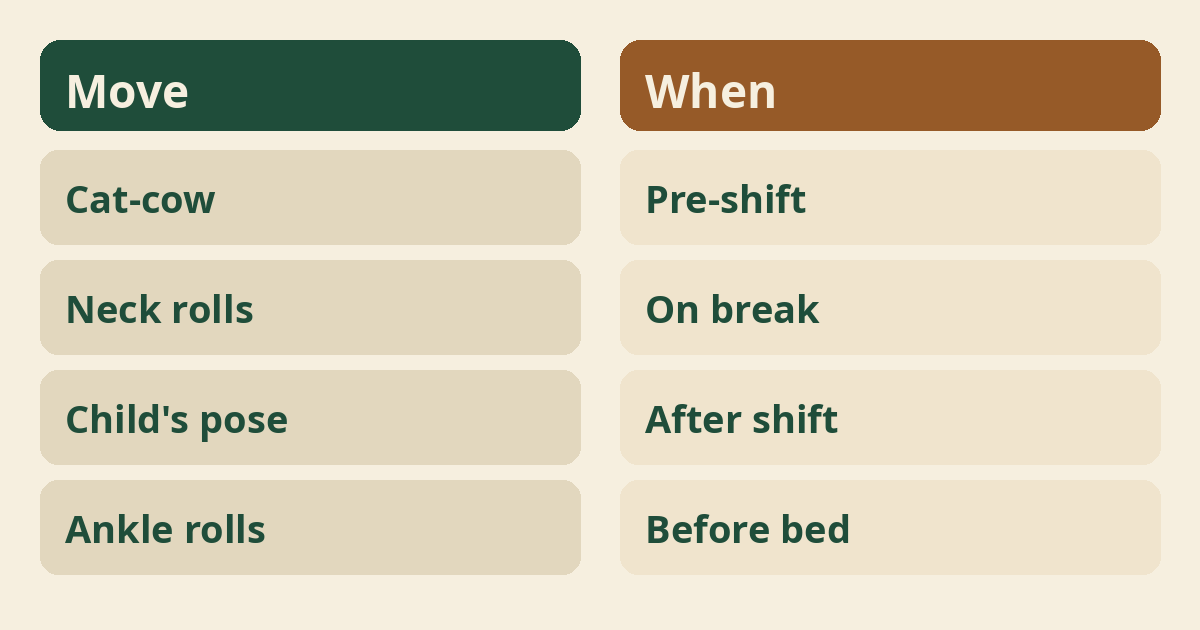
The best time is whichever end of your shift you will actually keep: a few minutes before work or a short wind-down after. Before a shift, use standing moves to wake the body up. After a shift, use floor poses to slow everything down before you head home or sleep.
How long should a session last?
Ten to twenty minutes is plenty for a beginner, and even five minutes on a hard day still counts. A short routine you repeat beats a long one you skip. Add time only when the short version feels easy.
How often should you practise?
Three to five short sessions a week suits most waiters, and a little every day works even better. Daily practice fits shift work better than one long weekly class. For a fuller look at building a rhythm, see how often should you do yoga.
What gear do you need?
All you need is floor space, comfortable clothes, and a mat or folded blanket. A cushion or rolled towel can support knees and wrists. If you later want blocks or a strap, the guide to yoga props for beginners explains what helps and what you can skip.
Step 1: stand tall in mountain pose
Mountain pose is a simple standing pose that resets your posture after hours of rushing between tables. Stand with feet hip-width apart, spread your weight evenly, and let your arms hang. Lift through the crown of your head and breathe slowly for half a minute. The full walkthrough is in mountain pose for beginners.
Step 2: move your spine with cat-cow
Cat-cow is a slow back-and-forth movement that loosens a spine stiff from standing and carrying. On hands and knees, round your back as you breathe out, then let your belly sink as you breathe in. Repeat five to eight times, and follow cat cow pose for beginners if you want more detail.
Step 3: stretch your calves and feet
Calf and foot stretches ease the ache that builds when you walk miles of restaurant floor each night. Stand facing a wall, place your hands on it, and step one foot back with the heel down. Hold for twenty seconds per side, then roll each ankle a few times.
Step 4: release your neck and shoulders
Neck and shoulder rolls undo the tension that comes from holding trays and looking down at order pads. Let your shoulders circle slowly back five times, then tip your ear toward each shoulder for a few breaths. More ideas live in yoga for neck and shoulders.
Step 5: stretch your wrists
Wrist stretches help hands that carry plates, pour drinks, and grip trays all day. Kneel, place your palms on the floor with fingers pointing toward your knees, and lean back slowly until you feel a mild stretch. Hold for three slow breaths, then shake your hands out.
Step 6: rest in child’s pose
Child’s pose is a restful floor pose that gives your back, hips, and feet a break after a long shift. Kneel, sit back toward your heels, and fold forward with your arms stretched out. Stay for five to ten breaths, and use childs pose for beginners for the step-by-step version.
How do you breathe during practice?
Breathe slowly in and out through your nose, letting your belly rise as you inhale and soften as you exhale. Slow breathing tells your nervous system the rush is over. If this feels new, belly breathing for beginners walks you through it.
Can you do yoga between tables?
Yes, small standing moves fit into quiet moments during a shift, and many waiters use them to reset. Roll your shoulders while you wait at the pass, stretch your calves against a wall on a break, or take three slow breaths in the stock room. These mini sessions count.
What helps sore feet after work?
Slow ankle rolls, calf stretches, and putting your feet up for a few minutes all help sore feet recover. A tennis ball under the arch feels good for many people. Soak, stretch, then rest, and your feet will usually thank you by morning.
Why do hips get tight on shift?
Hips tighten because standing and walking in the same small range keeps the hip muscles switched on for hours. A slow butterfly or low lunge at home opens the area up. The routine in yoga for hips for beginners is a good next step.
What if your lower back complains?
Many waiters feel their lower back after long shifts, and easy movement is often more helpful than total rest. Cat-cow and child’s pose are kind starting points. If back pain is a regular problem, read can you do yoga with a bad back and check with your doctor.
What mistakes do beginners make?
The most common mistake is pushing into pain, because yoga works best when stretches stay mild. Other mistakes: holding your breath, bouncing in stretches, and skipping the rest pose. Move slowly and let your body set the pace.
What mistakes happen on busy weeks?
On busy weeks the big mistake is quitting completely because you cannot find thirty minutes. Five minutes still helps. Do two poses and three breaths before bed, and count it as a win rather than a failed session.
Who should check with a doctor first?
Anyone with an injury, joint problem, dizziness, high blood pressure, or pregnancy should check with a doctor before starting. The same goes if you have sharp or lasting pain anywhere. A quick chat with a professional keeps practice safe for your situation.
Is yoga a treatment for pain?
No, yoga is not a treatment, a cure, or a replacement for medical care. It is a calm movement and breathing practice that many people enjoy alongside normal care. Pain that keeps coming back deserves a proper medical look.
What benefits do waiters report?
Many waiters say they feel looser, calmer, and less achy after a few weeks of short daily practice, though results vary from person to person. Some sleep better after late shifts, and some feel steadier on their feet. Research on yoga for stress and wellbeing is growing, and National Center for Complementary and Integrative Health is a reliable place to read what is known so far.
Can yoga help with work stress?
Many people find that slow breathing and easy movement take the edge off a stressful shift, though it is not a fix for a bad rota. A two-minute breathing break can reset your head between the rush and the clean-up. More ideas are in yoga for stress relief for beginners.
Does yoga help with balance?
Yes, simple standing poses build the steadiness that helps when you carry loaded trays across a crowded floor. Start by holding mountain pose with focus, then try standing on one foot near a wall. Yoga for balance for beginners has more to try.
Can yoga help you sleep after late shifts?
Many waiters find a short wind-down routine helps the body switch off after a late finish, though sleep habits differ for everyone. Keep it slow: child’s pose, easy stretches, and long exhales. Bright screens straight after practice can undo the calm, so keep the lights low too.
How do you progress over time?
You progress by holding poses a little longer, adding a pose or two, and practising more days each week. There is no rush and no exam. When the starter routine feels easy, a beginner class or a longer home routine is a natural next step.
Do you need a teacher?
A teacher is helpful but not required, because beginner poses are safe to learn slowly at home. If a local class fits your shifts, try one to check your form. Online beginner videos made for total newcomers also work well.
What mindset makes yoga stick?
The mindset that works is a little, often, kindly: short sessions, no competition, and no judgement on stiff days. Your body after a double shift is not your body on a day off. Treat both with the same patience.
Can you do yoga with no budget?
Yes, yoga costs nothing to start: a towel works as a mat, and your body is the only equipment. Skip special clothes and apps if money is tight. A quiet corner and ten minutes are the whole setup.
Is ten minutes really enough?
Ten minutes is enough to loosen tight muscles and calm your mind, especially when you do it most days. Short and regular beats long and rare. If you have more time on a day off, enjoy a longer session then.
How do you make it a habit?
You make yoga a habit by tying it to something you already do, like stretching right after you take your work shoes off. Keep the mat where you can see it. Missed a day? Start again the next day without making it a big deal.
Where to read next
For a calm, beginner-friendly start, Ranjana Sinha’s Begin Where You Are is written for people who want simple steps. Our guide to starting a home yoga practice adds a gentle routine you can follow at home.
Frequently asked questions
Can I do yoga in my work clothes?
Yes, loose work clothes are fine for standing stretches, and you can change later if you want floor poses.
What if my feet hurt too much to stand on a mat?
Start with seated poses, ankle rolls, and breathing, and skip anything that puts weight on sore spots.
Will yoga give me more energy for double shifts?
Many people feel less drained when they stretch and breathe regularly, though results vary and rest still matters most.
Do I have to join a class or can I start at home?
Home is a fine place to start, and a class is simply a bonus if it ever fits your rota.
Is yoga safe if my back already hurts?
Mild aches often tolerate easy movement well, but check with a doctor first if the pain is sharp, new, or keeps returning.
The bottom line
Start tonight with ten quiet minutes, and let your body feel the difference one shift at a time.

