
Yoga for dentists is a gentle way to undo the neck, back, and wrist strain that builds up from leaning over patients all day. You do not need experience, flexibility, or special gear to start. This guide shows you why dental work is so hard on the body, which beginner poses help most, and how to fit short sessions into a busy clinic schedule.
This article is general education, not medical advice. If you have pain, an injury, or any health condition, check with your doctor before starting yoga.
What is yoga for dentists?
It is beginner yoga adapted for the postures and strains of dental work. Dentists spend hours bent forward with arms raised, and that position loads the neck, shoulders, and lower back. Yoga for dentists uses simple stretches and strength poses that open the chest, release the neck, and wake up the core. You practice off the clock so your body handles the clock better.
Why do dentists try yoga?
Most dentists start yoga because their neck or back hurts after long clinical days. Studies of dental workers often report high rates of muscle and joint discomfort, especially in the neck, shoulders, and wrists. Many people find that a short, regular yoga habit makes long days feel easier on the body. Results vary from person to person, but the habit is low cost and low risk.
How do you start as a beginner?
Start with ten minutes a day of slow, easy poses at home. Pick a quiet spot and a simple routine of four or five poses. Move slowly and breathe through your nose. A few basic props like a mat and a strap can make early sessions far more comfortable.
Step 1: set up your space
Clear a small patch of floor and lay down a mat or towel. You need about the space of a beach towel. Keep water nearby and silence your phone so the session stays calm. A consistent spot helps the habit stick.
Step 2: warm up the spine
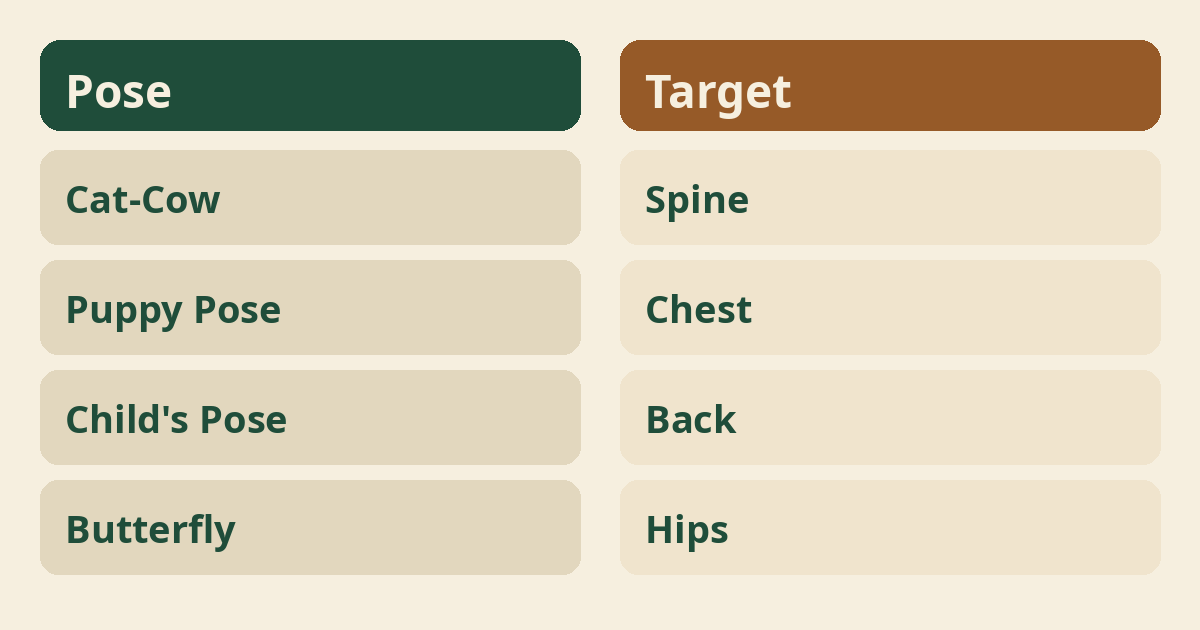
Begin with slow cat-cow movements to wake up the back. On hands and knees, arch your back on the exhale and lift your chest on the inhale. Move for about one minute without forcing anything. Cat-cow for beginners is a gentle way to loosen a spine stiff from chair-side work.
Step 3: open the chest and shoulders
Add a puppy pose stretch to counter the hunched dental posture. From hands and knees, walk your hands forward and melt your chest toward the floor. Hold for five slow breaths. Puppy pose directly stretches the muscles that round forward over patients.
Step 4: release the neck
Gently tilt and turn your head to ease neck tension. Sit tall and drop your right ear toward your right shoulder, hold, then switch sides. Never yank or pull on the head. Neck and shoulder yoga is especially useful for people who look down all day.
Step 5: rest in a resting pose
Finish with child’s pose to let the whole back relax. Kneel, sit back on your heels, and fold forward with arms stretched out. Stay for one to two minutes and breathe slowly. Child’s pose is the classic reset after any practice.
How should you breathe during yoga?
Breathe slowly through your nose and let your belly rise and fall. Steady breathing calms the nervous system and helps tight muscles let go. If a pose makes you hold your breath, ease out of it a little. Belly breathing is a good skill to practice on its own.
How long should a session be?
Ten to twenty minutes is enough for a beginner session. Short and regular beats long and rare. A ten-minute routine after work does more than a weekly hour you keep skipping. Add time only when the habit feels easy.
How often should dentists do yoga?
Aim for most days of the week, even if sessions are short. Consistency is what changes how your body feels at the chair. Three to six short sessions a week is a realistic target. How often to practice depends on your schedule and recovery.
Can you do yoga during the workday?
Yes, small stretches between patients count as practice too. A standing side bend or a gentle chest opener takes under a minute. These micro-breaks stop stiffness from stacking up across the day. Desk yoga adapts poses for small clinic spaces.
Which poses help the lower back most?
Gentle poses like cat-cow and child’s pose ease most lower back stiffness. Dentists often lean to one side, which loads the back unevenly. Slow symmetrical stretches help both sides recover. If you already have back trouble, read yoga with a bad back and talk to your doctor first.
Which poses help the wrists?
Gentle wrist circles and light stretches help wrists tired from gripping instruments. Roll your wrists slowly in both directions, then stretch the palms up and down. Keep any weight-bearing pose brief at first. Stop if you feel tingling or sharp pain.
Is standing posture part of the practice?
Yes, mountain pose teaches the tall, stacked posture that protects you at work. Stand with feet hip-width, shoulders soft, and chin level. Feel your weight spread evenly through both feet. Mountain pose builds the body awareness you carry back to the operatory.
What about hips and legs?
Seated and squatting poses release hips that stiffen from sitting on a stool. A gentle butterfly pose opens the inner thighs and groin. A low squat stretches the hips and lower back together. Hip-focused yoga pairs well with the back work above.
Is butterfly pose useful for dentists?
Yes, butterfly pose gently opens tight hips after long seated hours. Sit tall, bring the soles of your feet together, and let your knees fall outward. Hinge forward slightly only if it feels good. Butterfly pose should never be forced at the knees.
Is garland pose safe for beginners?
Garland pose is a deep squat, so approach it slowly with support. Hold a door frame or rest your heels on a folded towel while you learn it. Keep your chest lifted and knees tracking over toes. Garland pose rewards patience, so skip depth for now.
What about thunderbolt pose?
Thunderbolt is a simple kneeling seat that rests the spine and aids relaxation. Kneel and sit back on your heels with a tall spine. It is an easy position for breathing practice after a shift. Thunderbolt pose suits beginners because it asks little of the back.
Do you need flexibility to start?
No, yoga builds flexibility gradually, so stiffness is a reason to start, not a barrier. Begin where your body is today and never push into pain. Over weeks, most people notice easier movement. Flexibility-focused yoga grows range of motion at a safe pace.
Does yoga help with balance?
Yes, slow standing poses train steady balance and core control. Good balance supports stable posture during precise clinical work. Start with both feet down before trying single-leg poses. Balance practice also sharpens focus.
What are the benefits?
Many dentists find yoga eases stiffness, improves posture, and lowers daily tension, though results vary. Gentle, regular movement is widely linked with better comfort and mood, and agencies like the National Center for Complementary and Integrative Health share balanced information on yoga for musculoskeletal comfort. Benefits build slowly over weeks, not days. Yoga works best as one part of healthy habits like breaks, good stool height, and varied positions.
Is yoga a treatment for pain?
No, yoga is not a treatment and does not replace medical care. It is a general wellness practice that many people use alongside professional care. If you have ongoing or worsening pain, see a doctor or physiotherapist. Think of yoga as support, not a fix.
Who should be careful or ask a doctor first?
Anyone with an injury, recent surgery, pregnancy, or ongoing pain should check with a doctor first. Wrist problems, disc issues, and joint conditions change which poses are safe for you. Pregnant dentists can read prenatal versus regular yoga to understand the differences. When in doubt, ask a professional.
What are common beginner mistakes?
The biggest mistakes are forcing depth, holding the breath, and skipping rest days. Compare nothing to pictures online; your range is your own. Sharp pain is a stop signal, not a challenge. Sore for two days means you did too much, so scale back.
Do you need props?
Props are optional, but a mat, strap, and folded blanket make practice kinder on stiff joints. A strap extends your reach without rounding your back. A blanket under the knees pads a sensitive kneecap. Household items work fine, so nothing needs buying on day one.
How do you progress over time?
Add a minute, a pose, or a slightly deeper variation only when the current routine feels easy. Progress in yoga is measured in months. Keep one simple routine for several weeks before changing it. Small, steady steps protect you from strain.
Do you need a teacher?
A teacher is not required, but a few beginner classes can speed up safe learning. A good teacher spots alignment issues you cannot feel yourself. Online beginner videos also work if you choose slow, clear instruction. For any existing pain, in-person guidance is worth it.
What is the right mindset?
Treat yoga as maintenance for your working body, not a performance. Some days will feel stiff, and that is normal for anyone who treats patients all day. Showing up for ten minutes matters more than any single pose. Let go of goals and keep the habit.
Can yoga help with work stress?
Many people find slow movement and breathing help them unwind after demanding days, though experiences differ. Dental work asks for constant focus and precision, which is mentally draining. A short evening practice marks a clear line between work and rest. Stress-relief yoga leans on breathing more than stretch.
What is a simple daily routine?
Cat-cow, puppy pose, a neck release, a standing side bend, and child’s pose cover the main trouble spots. Do each for about one to two minutes with slow breathing. The whole routine fits in ten to fifteen minutes. Repeat it most days before adjusting anything.
When is the best time to practice?
The best time is the time you will actually keep. Many dentists like evenings because it unwinds the day’s posture, while others prefer mornings before the first patient. Try both for a week and keep whichever survives your schedule. Consistency beats clock time.
What if your clinic days are unpredictable?
Anchor practice to a daily event, like after your last patient or before dinner. Habit anchors work better than fixed clock times when schedules shift. Even three poses count on chaotic days. A skipped day is fine; just restart the next one.
How soon might you feel a difference?
Many people notice easier movement within a few weeks of regular practice, though it varies. The first changes are usually small, like less end-of-day tightness. Bigger changes in posture and comfort take longer. Track how you feel weekly rather than daily.
Where to read next
For a calm, beginner-friendly start, Ranjana Sinha’s Begin Where You Are is written for people who want simple steps. Our guide to starting a home yoga practice adds a gentle routine you can follow at home.
Frequently asked questions
Can yoga fix back pain from dental work?
Yoga is not a treatment, but many people find gentle regular practice eases everyday stiffness, so see a doctor for ongoing pain.
How much time do I need each day?
Ten to fifteen minutes most days is enough for a beginner.
Do I need to be flexible first?
No, beginners start exactly as they are and flexibility builds over time.
Can I do yoga between patients?
Yes, one-minute standing stretches and breathing breaks fit easily between appointments.
What gear do I need to begin?
Just comfortable clothing, and a mat or towel if you have one.
The bottom line
Start small, stay gentle, and let a short daily habit protect the body your career depends on.

