
Yoga for archers is a short set of gentle poses and breathing habits that can support the things archery asks of you: a steady stance, calm focus and comfortable shoulders. You do not need to be flexible or own special gear. A few minutes before or after practice is enough to start. This guide explains what to do, how long to do it, and which mistakes to skip.
This article is general education and not medical advice. If you have an injury, pain, a health condition, or you are pregnant, check with your doctor before you begin.
What is yoga for archers?
It is a simple routine of poses and breathing chosen to match what archers do at the line. Instead of fancy shapes, you practice standing tall, opening the chest and staying calm. Think of it as light cross training for the body and mind.
Why do archers try yoga?
Many archers like yoga because the sport asks for stillness, balance and focus. Holding a draw again and again can leave the upper body tired. Yoga gives you a calm way to move the same areas in other directions.
Do you need to be flexible?
No, you can start with any level of flexibility. Yoga is about moving within your own range. Stiff muscles are a normal starting point, and many people find they loosen up slowly with regular practice.
How do you start?
Start with five minutes on a flat floor in clothes you can move in. Pick three or four easy poses and hold each for a few breaths. Add more only when this feels simple and comfortable.
What gear do you need?
You need very little, just a mat or a towel and some space. A folded blanket or a strap can help, and you can read more in this guide to beginner yoga props. Bare feet or flat shoes work well.
Step 1: Find your stance with mountain pose
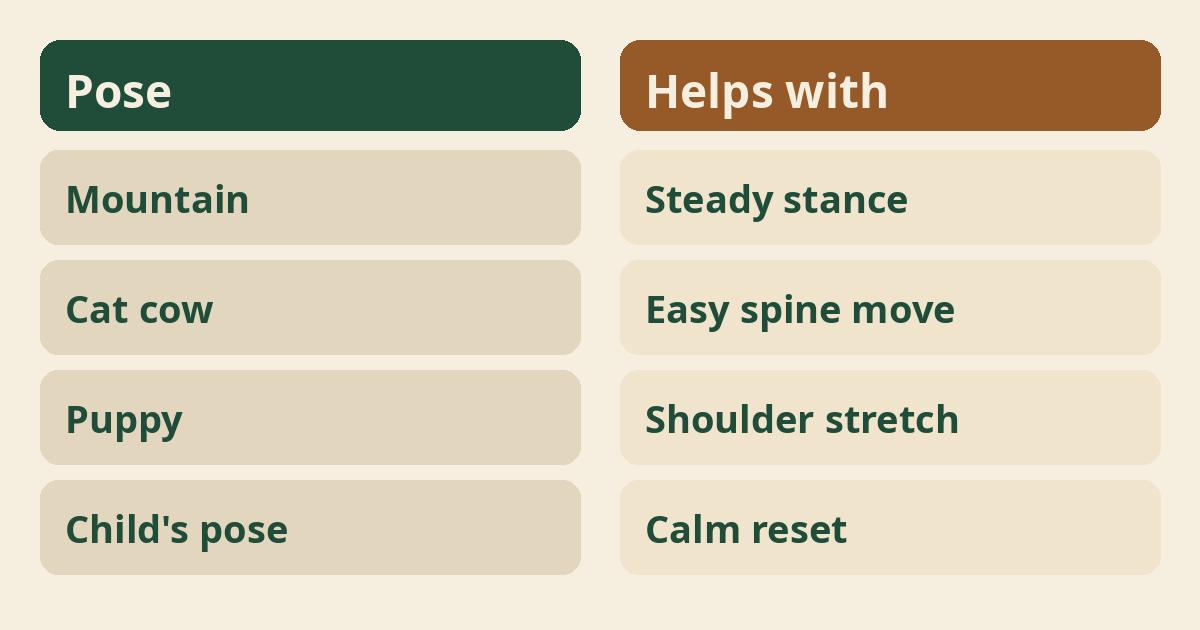
Mountain pose is the base for an archer’s stance. Stand with feet hip width apart, weight even on both feet, and the crown of your head reaching up. See mountain pose for beginners for a closer look.
Step 2: Wake up the spine with cat cow
Cat cow gently moves the spine and warms up the back before you shoot. On hands and knees, round your back as you exhale and lift your chest as you inhale. Go slowly and stay within a comfortable range, and try cat cow pose for beginners if you want detail.
Step 3: Open the shoulders with puppy pose
Puppy pose stretches the shoulders and upper back in a calm, supported way. Walk your hands forward from hands and knees and let your chest drop toward the floor. Keep your hips over your knees and breathe, and see puppy pose for beginners.
Step 4: Ease the neck and shoulders
A few slow neck and shoulder rolls can release the tension that builds while aiming. Sit tall, roll the shoulders back and down, then tilt your ear toward each shoulder. For more ideas, read yoga for neck and shoulders.
Step 5: Rest in child’s pose
Child’s pose is a quiet reset between other poses. Sit back on your heels, fold forward and rest your forehead on the floor or a pillow. Stay for a few slow breaths, and learn more in child’s pose for beginners.
Step 6: Finish with a standing balance
A simple balance pose trains the steady feet and quiet mind that archery needs. Shift your weight to one foot and rest the other foot lightly against your lower leg. Keep a wall or chair within reach, and try more options in yoga for balance for beginners.
How should you breathe?
Breathe slowly through your nose and let the belly rise and fall. Smooth breathing is a big part of both yoga and archery. Try belly breathing for beginners before you step to the line.
Can breathing help you stay calm at the line?
Many archers find a slow exhale helps them settle before a shot. Take a full breath in, then let a long breath out as you set up. This is a habit to practice, and results vary from person to person.
How long should a session last?
Five to fifteen minutes is plenty for a beginner. A short session you repeat beats a long one you skip. You can build up to twenty minutes if you enjoy it.
How often should you practice?
Two to four times a week is a friendly place to begin. Choose days that fit your week, and be kind to yourself if you miss one. The guide on how often you should do yoga has more thoughts.
Should you do yoga before or after shooting?
Both can work, and it depends on how you feel. Before shooting, keep it gentle and short to warm up. After shooting, slower stretches can feel nice when the muscles are tired.
What time of day is best?
The best time is whichever one you will actually keep. Some archers like a quiet morning session, others prefer to wind down in the evening. Pick a spot in your routine and stay with it.
What does a simple warm up look like?
A warm up can be two minutes of easy movement before any stretch. March in place, circle your arms and roll your shoulders. Warm muscles tend to feel better when you move into deeper poses.
Which poses help the hips and legs?
Hip and leg poses support a steady base under your upper body. Garland pose and butterfly pose are two easy options, see garland pose for beginners and butterfly pose for beginners. Use support under the hips if the floor feels hard.
Can you add a short flexibility routine?
Yes, a few gentle stretches can fit in at the end of a session. Slow stretching is a pleasant way to cool down. For ideas, see yoga for flexibility for beginners.
What about the lower back?
Move gently and stop if your back feels sore or sharp. Archers stand tall for long stretches and some feel it in the lower back. If you have back concerns, read can you do yoga with a bad back and ask your doctor first.
What are common mistakes?
The most common mistake is pushing too hard, too fast. Others include holding your breath, skipping the warm up and comparing yourself to someone else. Slow and steady works better here.
Why should you never force a stretch?
Forcing a stretch can strain muscles and joints. A good stretch feels mild and steady, not sharp. Back off a little whenever you feel pinching or pain.
Is it okay to feel sore?
Mild muscle tiredness can happen when you try something new. Sharp or lasting pain is different and is a sign to stop. If it continues, speak with a doctor or physical therapist.
Which props can help?
A mat, a folded blanket, a strap and a chair are all you need. Props make poses easier to reach and more comfortable to hold. Using them is smart, not a sign of weakness.
Who should be careful?
Anyone with an injury, joint trouble, high blood pressure, or pregnancy should talk to a doctor first. Those with shoulder, neck or back pain should also get advice before starting. If you are expecting, see prenatal yoga vs regular yoga.
Is yoga a treatment for archery injuries?
No, yoga is not a treatment for any injury or condition. It is a general wellness habit. If you are hurt, see a doctor or qualified professional first.
What might yoga do for you?
Many people find yoga helps them feel calmer, more balanced and more aware of their bodies. Results vary, and yoga is not a guaranteed fix for anything. For a balanced overview of what is known, visit National Center for Complementary and Integrative Health.
Can yoga support mental focus?
Many archers say slow breathing and quiet poses help their mind settle. Focus is a skill that grows with practice. Yoga gives you a calm place to practice it away from the range.
How can you handle stress before a match?
A few slow breaths and a gentle stretch may help you feel more at ease. Sit quietly for a minute and notice your breathing. See yoga for stress relief for beginners for simple ideas.
How do you make progress?
Progress comes from small changes every week. Hold poses a little longer, add one new pose, or practice one more day. Keep each step small and comfortable.
Do you need a teacher?
A teacher is not required, but one can help you stay safe. A beginner class or a video can show you good form. Look for someone who welcomes questions and offers easy options.
What mindset helps most?
Patience and curiosity work better than pushing for results. Treat each session as practice, not a test. Notice how you feel and let that guide you.
How can you fit yoga into a busy day?
Short breaks add up, even at a desk or between rounds. Stand, stretch and breathe for one minute. The tips in yoga at your desk for beginners can help.
What should you do next?
Pick two poses today and try them for a week. Write down how you feel afterward. Then add one more pose when you are ready.
Where to read next
For a calm, beginner-friendly start, Ranjana Sinha’s Begin Where You Are is written for people who want simple steps. Our guide to starting a home yoga practice adds a gentle routine you can follow at home.
Frequently asked questions
Is yoga good for archers?
Many archers enjoy yoga as a gentle way to build balance, focus and shoulder comfort, though results vary.
How often should an archer do yoga?
Two to four short sessions a week is a friendly starting point for most beginners.
Do I need to be flexible to start?
No, you can begin at any level and move only as far as feels comfortable.
Can yoga fix my form?
Yoga is not a fix, but better body awareness may help you notice your habits, and a coach is the best guide for form.
When should I see a doctor first?
Check with a doctor before starting if you have pain, an injury, a health condition or are pregnant.
The bottom line
Start small, breathe slowly, and let your yoga and your archery grow together at a pace that feels good.

