A yoga phone break is a one to three minute pause where you put the phone down and move your body gently. It helps you stand tall, breathe slowly and rest your eyes. You do not need a mat or special clothes. This guide shows beginners how to start, what to do, and how to keep it light and easy.
This article is general education and not medical advice. If you have a health condition, pain, or any worry about moving, please check with your doctor first.
What is a yoga phone break?
It is a short pause from your screen to stretch and breathe. You stop scrolling, set the phone down, and do a few gentle moves. The whole thing can take two minutes. Think of it as a small reset for body and mind.
Why do people take phone breaks with yoga?
Many people feel stiff and tired after long phone time. Looking down, hunching and holding a phone can leave the neck and hands feeling tight. A short yoga pause gives the body a different shape to rest in. It also gives your mind a quiet moment.
How do I start a yoga phone break?
Start by picking one moment in your day to pause. Choose something you already do, like finishing a call or a video. When it ends, put the phone down and do one move. Small and regular beats long and rare.
Do I need a mat or special clothes?
No, you can do these breaks in everyday clothes. A chair, a wall or a bit of floor space is enough. Wear what you have on. Take off shoes if you like, for better grip and balance.
Step 1: How do I set up before I move?
First, put the phone down and sit or stand with your feet flat. Place the phone face down on a table, out of reach of your hands. Let your arms rest. Take one slow breath in and out before you begin.
Step 2: How do I do a gentle neck release?
Slowly drop your right ear toward your right shoulder and stop where it feels easy. Keep your shoulders low and soft. Stay for three slow breaths, then switch sides. Never pull or push the head with your hands. For more ideas, see yoga for neck and shoulders.
Step 3: How do I roll my shoulders?
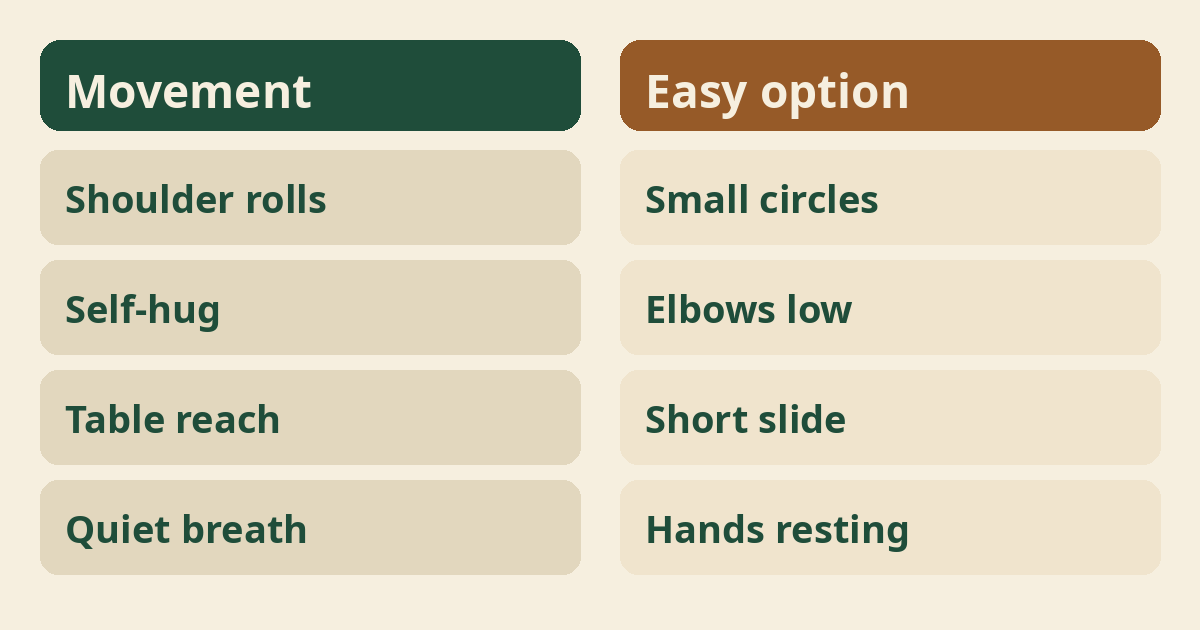
Lift your shoulders toward your ears, then roll them back and down. Do this five times slowly, then five times the other way. Let your arms hang loose. Many people find this feels like letting go of a heavy bag.
Step 4: How do I stretch my wrists and fingers?
Hold one arm in front of you and gently bend the wrist up, then down. Use your other hand to guide it only a little. Then open and close your fingers a few times. Stop if you feel any sharp feeling or tingling.
Step 5: How do I open my chest?
Clasp your hands behind your back and lift your chest a little. If clasping is hard, just pull your elbows back. Keep your chin level and your ribs relaxed. Hold for three breaths and then release.
Step 6: How do I move my spine while seated?
Place your hands on your knees and move between arching and rounding your back. This is a seated cousin of cat cow pose. Breathe in as the chest lifts and breathe out as you round. Go slowly, five to eight rounds.
How should I breathe during a phone break?
Breathe in and out through your nose, slowly and without force. Let the belly rise a little as you breathe in and fall as you breathe out. Try belly breathing for a simple pattern. If you feel dizzy, go back to normal breathing.
How long should a phone break last?
One to three minutes is plenty for a beginner. A short break is easier to repeat than a long one. You can stretch it to five minutes when you feel ready. There is no prize for going longer.
How often should I take a yoga phone break?
A break every hour or two is a friendly starting point. If that sounds like too much, try three breaks a day. Link them to your day, such as after lunch. See how often should you do yoga for more on rhythm.
Can I do a quick standing break?
Yes, standing breaks work well when you have been sitting a lot. Stand tall with feet hip width apart and feel the floor under you. Reach your arms overhead and breathe. This is close to mountain pose.
What can I do for my eyes?
Look away from the screen and let your eyes rest on something far. Blink slowly a few times. Then rub your palms together to warm them and rest them gently over closed eyes. Do not press on the eyeballs.
Is child’s pose good for a longer break?
Yes, many people enjoy it when they have a few spare minutes. Kneel, sit back toward your heels and rest your forehead down. Place a pillow under your head or hips if it helps. Read more in child’s pose for beginners.
What if I only have a desk?
A desk is enough for most of these moves. Sit near the front of the chair with feet flat. Do neck, shoulder, wrist and spine moves right where you are. Our page on yoga at your desk has more ideas.
What props can help?
A chair, a cushion and a folded blanket cover almost everything. A cushion can lift your hips when sitting on the floor. A wall can steady your balance. See yoga props for beginners for simple options.
Can I do this in bed or on the sofa?
You can, but a firm seat gives you better support. Soft surfaces make it harder to sit tall. If you do stretch in bed, keep moves gentle. A chair or the floor is usually the better choice.
Is a phone break good for flexibility?
It may help you feel looser over time, and results vary. Short, regular stretches add up for many people. Do not force your body into shapes. For more, read yoga for flexibility.
Will it help my balance?
Some people notice steadier balance with regular practice. Try standing on both feet and slowly shifting weight to one side. Keep a hand near a wall. Our guide to yoga for balance goes deeper.
What about my hips after sitting?
A gentle hip stretch can feel good after long sitting. Sit tall and cross one ankle over the opposite knee if comfortable. Keep your back long and breathe. See yoga for hips for options.
What are the benefits of phone break yoga?
Many people find they feel calmer and less stiff. Some also notice better posture awareness and an easier breath. Results vary, and this is not a promise of any outcome. You can read general information on yoga from National Center for Complementary and Integrative Health.
Is this a treatment for anything?
No, a phone break is not a treatment for any condition. It is a gentle habit, not medicine. It does not replace care from a doctor or therapist. Use it as a small wellness routine only.
Who should be careful?
Check with your doctor first if you have pain, injury, or a health condition. This includes neck or back problems, wrist pain, dizziness, high or low blood pressure, or pregnancy. Your doctor can tell you which moves suit you. See yoga with a bad back for general reading.
What are common mistakes?
The most common mistake is pushing too far, too fast. Others are holding the breath, shrugging the shoulders and keeping the phone in hand. Move slowly and keep every stretch mild. If something hurts, stop.
How do I keep the habit going?
Attach the break to something you already do. After every message session or video, do one move. Set a soft reminder if you like. Small wins keep you going.
What is a good mindset?
Be kind to yourself and treat it as a rest, not a task. You are not trying to be perfect. A missed break is fine. Just try again at the next pause.
How do I progress over time?
Add one move or one extra breath each week. When two minutes feels easy, try three. Then try longer holds or a new move. Slow steps are safer than big jumps.
Should I find a teacher?
A teacher can help you move safely and feel more sure. A good teacher watches your form and offers choices. Ranjana teaches gentle classes for beginners, and many students start there. Ask questions freely.
Can I use a timer or app?
Yes, a simple timer is a useful helper. Set it for two minutes and put the phone out of sight. Let the timer end the break, not your thumb. Then return to the screen with softer shoulders.
What if I feel nothing at first?
That is normal, and it can take a few weeks to notice change. Keep the moves small and steady. Many people notice their breath first. Be patient with yourself.
Can children or older adults join in?
Yes, with gentle moves and a doctor’s okay when needed. Keep it simple and fun. Skip deep stretches and long holds. Someone nearby can help with balance.
What is a simple two minute routine?
Try neck release, shoulder rolls, wrist stretch and three belly breaths. Do each for about 20 seconds. Finish by standing tall and looking at something far away. Then pick the phone back up.
Where to read next
For a calm, beginner-friendly start, Ranjana Sinha’s Begin Where You Are is written for people who want simple steps. Our guide to starting a home yoga practice adds a gentle routine you can follow at home.
Frequently asked questions
The bottom line
Put the phone down, take one slow breath, and give your body two kind minutes.