
A yoga strap is a long, strong band that helps you reach, hold, and stay steady in a pose without forcing your body. Beginners use it to bring the floor closer to their hands or feet. It is simple, cheap, and easy to carry. This guide explains how to choose one, how to use it with care, and how to build a calm, patient practice around it.
This article is general education and is not medical advice. If you have an injury, pain, or a health condition, check with your doctor before you start using props or doing new movements.
What is a yoga strap?
A yoga strap is a long band, usually made of cotton or a similar fabric, with a buckle or ring. You loop it around a foot, a thigh, or your hands. It works like an extra arm that lets you stay in a pose with less strain.
Why do people use yoga straps?
People use straps to make poses feel more reachable and more steady. A strap lets you keep your back long and your shoulders easy when your hands cannot touch your feet yet. Many people find this makes practice calmer and more enjoyable.
Do beginners really need a strap?
You do not need a strap to start yoga, but many beginners enjoy having one. It is a small tool that removes a lot of guesswork. If your hamstrings or shoulders feel tight, a strap can keep you comfortable while you learn.
Is using a strap a sign of weakness?
No, using a strap is a smart choice, not a sign of weakness. Experienced students use straps too. A prop helps you keep good shape, and good shape matters more than how far you reach.
What are yoga straps made of?
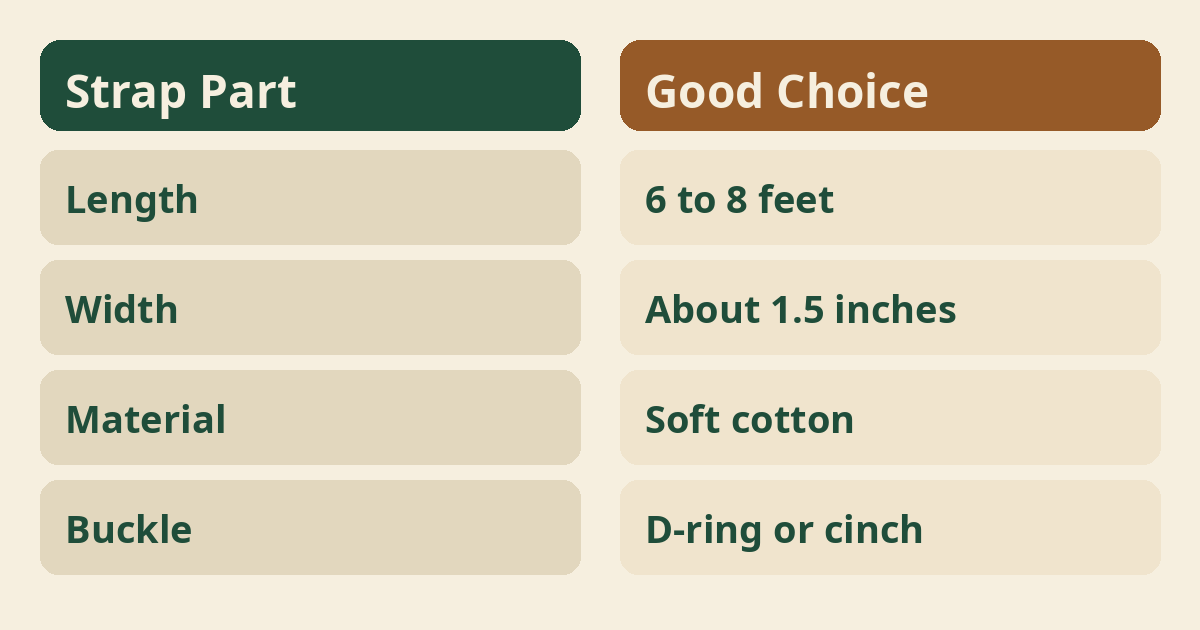
Most straps are made of cotton, a cotton blend, or a soft synthetic fabric. Cotton feels soft and grips well. Synthetic bands can feel slicker but dry fast. Pick whatever feels good in your hands.
How long should a yoga strap be?
A length of about six to eight feet suits most beginners. A longer band, near ten feet, gives taller people or those with tighter bodies more room. If you are unsure, choose the longer one, since you can always hold it closer.
Which buckle is best?
A D-ring buckle or a cinch buckle both work well. The D-ring is simple and tightens as you pull. The cinch buckle slides and locks flat. Try each if you can and keep the one that stays put without pinching.
How wide should the strap be?
A width of about one and a half inches is a good starting point. It is wide enough to feel secure and narrow enough to grip. Very thin bands can dig into the skin, so avoid them early on.
Can I use a belt or towel instead?
Yes, a belt, scarf, or long towel can work while you decide if you like straps. These are not as strong or as easy to adjust, but they are fine for a first try. If you enjoy the practice, a real strap is a small, useful upgrade. See also yoga props for beginners.
How do I start using a strap?
Start with a simple pose on the floor where you feel safe and supported. Lie on a mat in a quiet space. Keep the strap within reach and move slowly. Let your first session be short and gentle, with no pressure to stretch far.
How do I hold a strap?
Hold the strap with a relaxed, firm grip and keep your arms soft. Wrap it around your hands once if it feels slippery. Do not clench your fingers. Your shoulders should stay low and away from your ears.
Step one: how do I set up my body?
Begin lying on your back with both legs long and your spine comfortable. Rest your head on the mat or a thin folded blanket. Let your arms rest. Take a few slow breaths before you pick up the strap.
Step two: how do I place the strap around my foot?
Bend one knee toward your chest and loop the strap across the ball of that foot. Hold one end in each hand. The strap should sit across the arch, not on your toes. Keep the other leg resting on the mat or bent, whichever feels better.
Step three: how do I lift the leg?
Press gently into the strap and lift the leg only as far as feels easy. Keep your hips flat on the mat. Your knee can stay bent if the back of your leg feels tight. The goal is a steady, pleasant stretch, never sharp pain.
Step four: how do I hold the pose?
Stay in the pose for a few calm breaths while the strap does the work. Let the arms do the holding so your leg can relax. If your shoulders rise, lower the foot a little. Release slowly when you are ready.
Step five: how do I come out of the pose?
Bend the knee, lower the foot to the mat, and rest for a moment. Release the strap and let both legs lie still. Notice how each side feels. Then repeat on the other leg with the same slow care.
Step six: what is a good seated option?
Sit with legs long, loop the strap around both feet, and sit tall. Keep a slight bend in the knees if you need it. Lengthen the spine before you lean at all. This is a gentle way to practice reaching without rounding the back too much. Try it after cat cow pose to warm up the spine.
How should I breathe with a strap?
Breathe slowly through your nose and let the breath stay smooth. If you hold your breath, you are likely pushing too far. Ease off until the breath is easy again. A calm breath is a good guide. Learn more in belly breathing for beginners.
How long should I hold each pose?
Hold each pose for about five to ten slow breaths at first. Shorter holds are fine on days when you feel tired. You can stay a little longer as you get comfortable. Always let comfort lead, not a clock.
How often should I practice with a strap?
Two to four short sessions a week is a friendly rhythm for most beginners. Short and regular is often easier to keep than long and rare. Find a time that suits your day. For more ideas, read how often should you do yoga.
Which poses work well with a strap?
Reclining leg stretches, seated forward folds, and gentle shoulder openers all pair well. These poses are simple and easy to learn. The strap adds support so you can focus on posture and breath. Try yoga for flexibility for a slow sequence.
Can a strap help my shoulders?
A strap can help you explore shoulder movement without forcing it. Hold it wide in front of you and move it slowly overhead if that feels okay. Keep the hands as far apart as you need. Move within a pain-free range. See yoga for neck and shoulders.
Can a strap help my hips?
A strap can give you support in hip stretches like reclining figure four. It lets you hold your leg without gripping hard. Your hips can then relax and open at their own pace. A gentle approach is also described in yoga for hips.
What are the benefits of using a strap?
Many people find a strap makes poses feel safer, steadier, and more relaxing. Some people notice they feel more at ease and more aware of their bodies. Results vary from person to person. For general information about yoga, see National Center for Complementary and Integrative Health.
Is a yoga strap a treatment for any condition?
No, a strap is not a treatment for any condition. It is a simple prop that supports your practice. It does not replace care from your doctor or another health professional. Think of it as a helper for comfort and form.
Who should be careful with a strap?
Check with your doctor first if you have an injury, pain, or a health condition. This includes back, hip, shoulder, or knee concerns, pregnancy, and recent surgery. Your doctor can tell you what is suitable for you. A qualified teacher can then help you adjust. See can you do yoga with a bad back.
What are common mistakes with a strap?
The most common mistake is pulling too hard to go deeper. Others include holding the breath, lifting the shoulders, and locking the knees. Go slowly and keep your face relaxed. If something feels sharp, stop and rest.
Should the strap feel tight?
The strap should feel firm but never harsh on your hands or feet. If the band digs in, loosen it or fold a thin cloth under it. A good setup is snug and steady. Comfort is the best signal to follow.
How do I know if I am pushing too far?
If you feel sharp, hot, or pinching sensations, you have gone too far. A mild stretch is normal. Pain is a signal to back off. Soften your effort and try a smaller version instead.
How do I clean and care for a strap?
Wipe a cotton strap with a damp cloth, or wash it gently by hand. Let it air dry before rolling it up. Keep it away from strong heat. A cared-for strap can last a long time.
How do I progress over time?
Progress by taking a little more time in each pose, not by pulling harder. Over weeks, you may choose to hold the strap a bit closer to the foot. Move in small steps and keep your breathing smooth. Some days you will go less far, and that is fine.
Should I work with a teacher?
A teacher can show you how to place the strap and keep a safe shape. Even one class can make a big difference to your confidence. Ask questions and tell them about any health concerns. Good teachers welcome beginners.
What mindset helps most?
A patient, kind mindset helps more than any amount of stretching. See each session as time to listen to your body. There is no race and no ideal shape. Slow, steady practice is a good way to begin.
Can I use a strap on a busy day?
Yes, even five minutes with a strap can be a calm reset. Try a short reclining stretch before bed or after sitting for a while. Keep it easy and quiet. See yoga at your desk for other short ideas.
Where to read next
For a calm, beginner-friendly start, Ranjana Sinha’s Begin Where You Are is written for people who want simple steps. Our guide to starting a home yoga practice adds a gentle routine you can follow at home.
Frequently asked questions
Which strap should I buy first?
A cotton strap about eight feet long with a D-ring buckle is a simple, friendly first choice.
Can I use a strap every day?
Many people do, as long as the practice stays gentle and feels comfortable.
Will a strap make me more flexible?
Some people notice they feel more at ease over time, but results vary.
Do I need a mat as well?
A mat helps with grip and comfort, but a firm, non-slip surface also works.
Is a strap safe if I am pregnant?
Please ask your doctor first, since needs change during pregnancy, and see our guide on prenatal yoga.
The bottom line
Pick up your strap, move slowly, breathe easily, and let your practice grow at its own pace.

