Lion’s breath is a yoga breathing practice where you inhale through the nose, then open your mouth wide, stick out your tongue, and exhale with a loud “haa” sound. It looks playful, and it is easy to learn. This guide explains what Simhasana pranayama is, how to do it in a few steps, how long to practice, and what to watch for as a beginner.
This article is general education about a yoga breathing practice and is not medical advice. If you have a health condition, are pregnant, or feel unsure, check with your doctor before you begin.
What is lion’s breath?
Lion’s breath is a yoga breathing exercise, also called Simhasana pranayama, where you exhale forcefully through an open mouth. The name comes from the lion pose, “Simha” being the Sanskrit word for lion. You breathe in quietly through the nose and breathe out with a roar-like sound. It takes less than a minute to learn the shape.
Why is it called lion’s breath?
It is named after the lion because the face and the sound copy a roaring lion. The wide mouth, open eyes, and stretched tongue are the lion’s face. The long, noisy exhale is the roar. Many teachers use the image to help beginners feel brave and silly at the same time.
Is lion’s breath the same as lion pose?
They are closely linked, and many yoga classes use the two names for the same practice. Some teachers call the seated posture Simhasana and the breath part Simhasana pranayama. In this guide, we focus on the breath. The posture is simply a comfortable way to sit while you do it.
Why do people practice it?
People practice lion’s breath because it feels like a quick, active way to let go of tension in the face and chest. Many people find it a fun break during a tense day. Others like it before singing or speaking. Results vary, and it is fine to treat it as a short, playful pause.
What do you need to start?
You need nothing except a quiet spot and a few minutes. No mat or special clothes are required. A folded blanket under the hips can make sitting easier. If you want ideas for helpful supports, see yoga props for beginners.
How do you get ready?
Sit down, relax your shoulders, and take a few normal breaths before you start. Let your jaw hang loose and soften your eyes. Place your hands on your knees. Spend a moment noticing your natural breath so the practice begins from calm, not rush.
Which sitting position works best?
A simple cross-legged seat or a kneeling seat both work well. Choose the one that lets your back stay tall without strain. If your knees complain, sit on a cushion or on a chair. A kneeling seat is described in thunderbolt pose for beginners.
Step 1: How do you set your posture?
Sit tall with your spine long and your head level. Press your hands lightly onto your knees and spread your fingers wide like claws if you like. Keep your chin level, not tilted up. Your neck should feel long and free.
Step 2: How do you inhale?
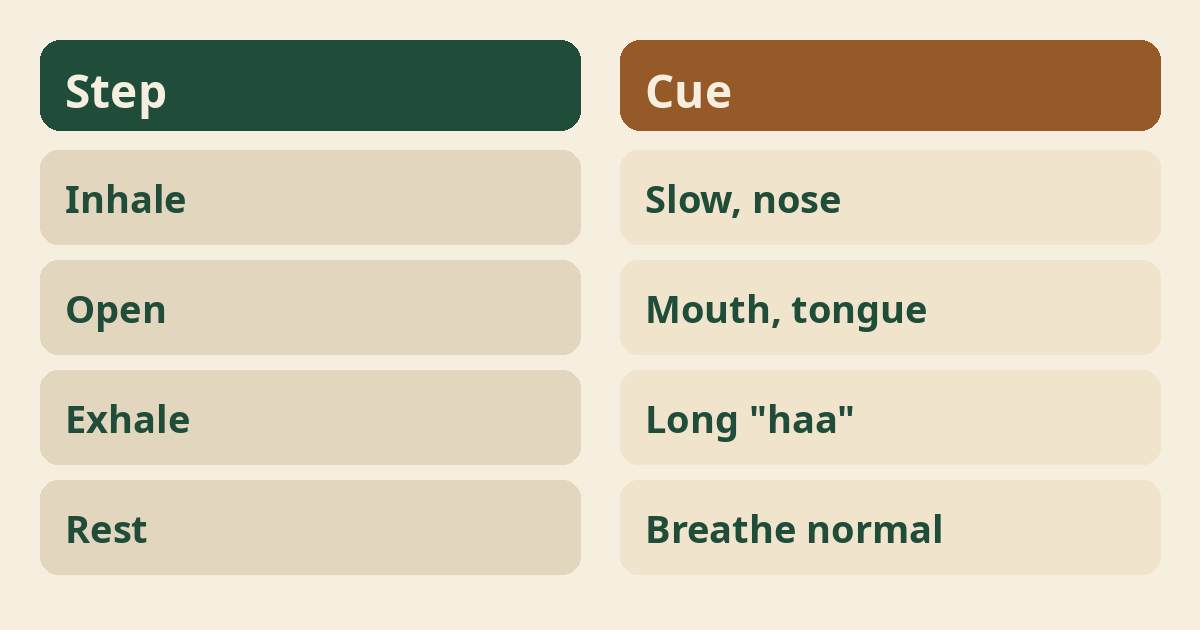
Breathe in slowly through your nose until your lungs feel comfortably full. Keep your mouth closed and your face soft. Do not gulp the air. A calm inhale of about three or four seconds is plenty for a beginner.
Step 3: How do you open your face?
At the top of the inhale, open your mouth wide and stretch your tongue out and down toward your chin. Open your eyes wide too, and look toward the space between your eyebrows or the tip of your nose. Stay gentle. You want a wide shape, not a strained one.
Step 4: How do you exhale?
Breathe out through the open mouth with a long “haa” sound from the belly. Let the sound come from deep in the throat, like fogging a mirror but louder. Empty the lungs without pushing hard. The exhale can be as long as feels easy.
Step 5: How do you finish one round?
Close your mouth, relax your face, and breathe in through the nose again. Pause for one or two natural breaths before the next round. This rest keeps the practice smooth and stops you from feeling dizzy. One full cycle is one round.
Step 6: How do you end the practice?
End by sitting quietly and breathing normally for about a minute. Notice your face, jaw, and chest. Some people feel warm or lighter, others feel nothing special, and both are normal. Then open your eyes and move on with your day.
How should you breathe during lion’s breath?
Breathe in through the nose and out through the mouth, and keep both parts smooth. The belly can expand on the inhale and soften on the exhale. If belly breathing is new to you, try belly breathing for beginners first.
How long should one session last?
A beginner session can be as short as one to two minutes. That is roughly three to five rounds. Stop earlier if you feel dizzy or tired. You can build up slowly over several weeks if it feels comfortable.
How many rounds are enough?
Three to five rounds are a good start. Fewer rounds done with care beat many rounds done in a hurry. After a few days you may add a round or two. There is no prize for doing more.
How often can you practice?
Many beginners practice once a day or a few times a week. Pick a rhythm you can keep up without stress. Short and regular tends to feel better than long and rare. For more on planning, read how often should you do yoga.
What is the best time of day?
Any time works, as long as you are not too full from a meal. Mornings suit people who want an alert start. Afternoons suit a tense work break. Wait a couple of hours after a heavy meal so your belly is comfortable.
Where should you practice?
Practice in a quiet place where you will not mind making noise. A loud exhale can surprise family or neighbours. Tell them what you are doing, or practice in a room with a door. A private spot lets you relax and take the sound fully.
What can you do if you feel silly?
Feeling silly is normal, and a little laughter is part of the fun. Start with a softer version: smaller mouth, quieter sound. Over time, the practice may feel more natural. Treat it as play, not performance.
What are common mistakes?
The most common mistakes are straining the face, forcing the breath, and holding the shoulders tight. Beginners also tend to rush the rounds or skip the rest in between. Keep the shape wide but easy. If your throat feels sore, soften the sound and try fewer rounds.
Why does my throat feel dry or sore?
A dry throat usually means the sound is too forceful or the rounds are too many. Sip water before you start. Make the “haa” softer and shorten the practice. If soreness stays, pause the practice and speak with a doctor or teacher.
Why do I feel dizzy?
Dizziness can happen when you breathe out too hard or too fast. Stop, sit quietly, and breathe normally. Next time, slow down and rest longer between rounds. If dizziness returns, check with your doctor before trying again.
Who should be careful?
Check with your doctor first if you have breathing, heart, blood pressure, eye, or throat concerns. The same applies if you are pregnant, recovering from surgery, or have jaw pain. A doctor can tell you what is safe for your body. Always stop if anything feels wrong. For pregnancy context, see prenatal yoga vs regular yoga.
Is lion’s breath a treatment for any condition?
No, lion’s breath is not a treatment for any medical condition. It is a simple yoga practice for general wellbeing and a moment of calm. It does not replace care from a doctor. If you have symptoms, please see a health professional.
What benefits do people report?
Many people find lion’s breath relaxing for the face and a lively way to release tension, though results vary. Some feel their jaw and tongue loosen. Others enjoy the mood lift from the sound and laughter. For general, balanced information on breathing practices, see National Center for Complementary and Integrative Health.
Can it help with stress?
Many people find it a helpful pause during a stressful day, though it is not a fix for anything. The loud exhale gives a clear break from worry. Pair it with slower practices for a fuller routine. You can explore more in yoga for stress relief for beginners.
Can it ease a tight jaw and face?
Some people find that the wide mouth and stretched tongue feel like a good stretch for the face. The jaw often holds tension without us noticing. Opening wide and relaxing again may make the area feel looser. Keep it gentle and stop if the jaw clicks painfully.
Can you do it at work?
Yes, a quiet version works at your desk if you have a private moment. Sit tall in your chair, keep the sound soft, and do two or three rounds. If you sit a lot, also try yoga at your desk for beginners. Shoulders and neck can enjoy a break too.
How does it fit with a short routine?
Lion’s breath works well at the start or end of a short practice. At the start, it wakes you up. At the end, it can clear the mind before rest. Calm poses such as child’s pose pair nicely with it afterward.
What gentle poses go well with it?
Easy floor poses, such as cat-cow and mountain pose, pair well with lion’s breath. Moving the spine gently warms you up for sitting. You can try cat-cow pose before, then sit for the breath. Standing posture is covered in mountain pose for beginners.
How can you progress?
Progress by adding a round or two, softening your jaw, and making the exhale smoother, not louder. Over weeks, you can learn to sit longer and stay calm during each round. Some teachers add hand shapes or a gaze point. Add only one change at a time.
Should you learn it from a teacher?
A teacher can help you check your posture, sound, and comfort, which is useful for any breathing practice. Online classes also work, but a live teacher can watch your face and breath. If you have health concerns, tell the teacher before class. A good teacher will let you go at your own pace.
What mindset helps most?
A relaxed, curious, and playful mindset helps most. Lion’s breath is not about being loud or perfect. It is about letting go for a short time. Smile if you can, and keep it kind to yourself.
Where to read next
For a calm, beginner-friendly start, Ranjana Sinha’s Begin Where You Are is written for people who want simple steps. Our guide to starting a home yoga practice adds a gentle routine you can follow at home.
Frequently asked questions
Is lion’s breath safe for beginners?
It is generally gentle when done softly for a few rounds, but check with your doctor first if you have health concerns.
Do I have to stick my tongue out?
No, you can keep the tongue inside and just open your mouth if the stretch feels uncomfortable.
Can I do lion’s breath on an empty stomach?
Yes, many people prefer it that way, and it is best not to practice right after a large meal.
How many times a day can I practice?
Beginners often do one short session a day, and there is no need to do more.
Is it the same as breath of fire?
No, breath of fire is a rapid nose breath, while lion’s breath is one slow inhale followed by a long open-mouth exhale.
The bottom line
Lion’s breath is a short, playful practice, so start with a few soft rounds and let it feel easy.