Yoga for standing all day can offer a gentle way to change position and unwind after hours on your feet. Start with a chair, easy ankle movements, and a few comfortable stretches rather than a demanding workout. The aim is to explore movement, not push through pain or make tired legs work harder. This guide explains a short practice you can adapt around your shift, with options for small spaces and days when sitting down feels like the best first step.
This guide offers general education and is not medical advice. Check with your doctor before starting if you have pain, swelling, dizziness, an injury, a medical condition, or concerns about exercising safely.
What is yoga for standing all day?
It is a gentle practice adapted for people who spend much of their day on their feet. Instead of adding more demanding standing poses, this approach mixes seated movement, supported stretches, and rest. Your practice can change each day according to your energy, comfort, and available space.
Why do people try it?
People often try yoga to enjoy a change of pace after a physically repetitive day. A shift spent at a counter, in a classroom, or beside a workbench may leave little room for varied movement. A quiet practice gives you time to notice how you feel without chasing a performance goal.
What benefits are realistic?
Many people find gentle yoga useful for relaxation and exploring comfortable movement, but results vary. It may become a welcome transition between work and home rather than a fix for tired legs. Keep expectations modest, and use National Center for Complementary and Integrative Health for broader information about yoga’s possible benefits and safety considerations.
Is this a treatment?
No, this routine is not a treatment for leg pain, foot problems, swelling, or any medical condition. Those symptoms can have different causes and may need an assessment. Do not use a stretch to test whether a problem is serious, or delay getting medical advice because you have started yoga.
Who should speak to a doctor first?
Speak to your doctor first if standing causes ongoing pain or you have a condition that affects safe exercise. Mention circulation concerns, balance difficulties, recent surgery, and any symptoms that are new for you. Ask which movements and positions fit your situation rather than assuming that a gentle-looking pose is suitable.
When should you skip practice?
Skip practice and seek medical advice when symptoms are unusual, severe, or getting worse. Sudden swelling, warmth, redness, or pain in one leg needs prompt assessment rather than stretching. Chest pain, sudden breathlessness, or fainting calls for urgent medical help; do not continue a routine while deciding whether these symptoms matter.
How do you start?
Start by sitting in a stable chair and checking whether easy movement feels comfortable. Choose a clear space and put your phone within reach if you are alone. If fatigue makes you unsteady or you feel unwell, resting is a better choice than trying to complete a planned sequence.
Which props do you need?
A stable chair and a wall are enough for the basic routine. Use a chair without wheels and check that it cannot slide on the floor. A folded blanket can make sitting more comfortable; explore beginner yoga props if you want help choosing simple supports without buying unnecessary equipment.
Step one: settle in a chair
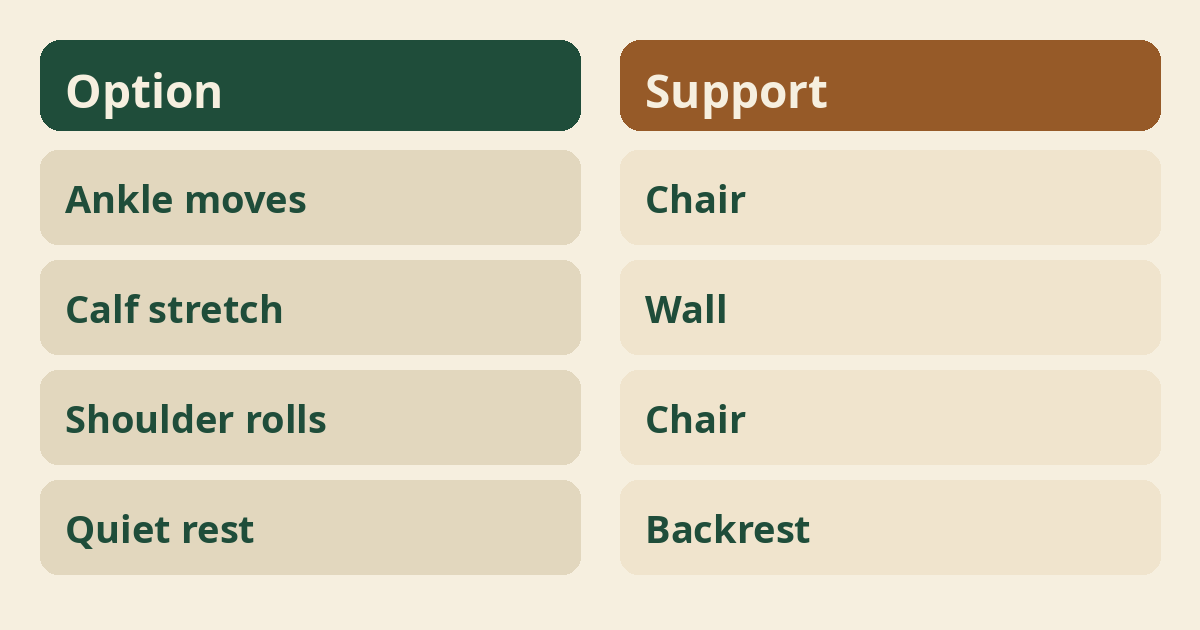
Begin with both feet supported and your hands resting loosely on your thighs. Sit far enough forward that your feet reach the floor, while using the backrest if that feels better. Let your shoulders soften and notice your breathing before deciding how much movement you want to try today.
Step two: move your ankles
Make small ankle movements while seated, keeping the effort light. Slide one foot slightly forward, with the heel resting on the floor, and gently point and draw back the toes. Switch feet after a few comfortable repetitions; stop if the movement causes pain or an unfamiliar pulling sensation.
Step three: explore a calf stretch
Try a mild wall-supported calf stretch only if standing still feels comfortable. Place your hands on the wall, step one foot back, and keep both feet facing forward. Bend the front knee slightly without forcing the back heel down, then change sides; use a short stance and skip the stretch if it hurts.
Step four: release your shoulders
Use a few slow shoulder movements to change the shape you have held at work. While seated, lift your shoulders gently and let them settle, then make small circles if comfortable. Keep your neck easy rather than tipping your head back; yoga for neck and shoulders offers another topic to explore.
Step five: try seated cat-cow
A small seated cat-cow movement offers a floor-free way to explore your back. Rest your hands on your thighs and gently lift your chest, then return through neutral and allow a slight rounding. Keep the movement modest rather than throwing your head or shoulders around; see cat-cow basics for the wider pose.
Step six: finish with rest
End by sitting quietly instead of adding a final challenge. Lean into the chair back if it supports you comfortably, and let your hands rest. Notice whether you feel settled, unchanged, or more tired; all of these observations are useful when deciding how to adapt your next practice.
How should you breathe?
Let your breathing stay easy and natural throughout the routine. You do not need deep breaths, breath holds, or a strict counting pattern to make this practice worthwhile. If paying attention to breathing feels pleasant, explore gentle belly breathing without forcing your abdomen to move or trying to fill your lungs completely.
How long should you practise?
A few comfortable minutes are enough for a first session. Try one seated movement, one optional stretch, and a quiet pause rather than attempting every idea in this guide. Finish while the practice still feels manageable; extra time does not automatically make a tired-day routine more helpful or more suitable.
How often can you do it?
Choose a frequency that leaves you feeling comfortable rather than obliged to exercise. Some people enjoy a brief practice after work, while others prefer occasional sessions on less tiring days. Read how often to do yoga for general planning ideas, and adjust whenever work demands or your health change.
Before work or after work?
Either can fit, provided the routine suits your energy and does not leave you rushed. Before work, keep movements easy and avoid tiring your legs before a long shift. Afterwards, begin seated and decide whether a standing stretch still appeals; there is no requirement to follow the same sequence at both times.
Can you practise during a break?
A seated movement break can work if your workplace allows it and the space is safe. Choose ankle movements or quiet shoulder releases instead of floor poses in a busy area. Follow workplace safety rules, keep walkways clear, and explore yoga at your desk for ideas that need little room.
What about your feet?
Give your feet a comfortable resting position rather than forcing a strong toe stretch. Let the soles settle on the floor while seated, or move the toes lightly if that feels easy. Avoid pressing into painful areas or using a hard object for intense pressure simply because your feet feel tired after work.
Should you stretch your hamstrings?
A hamstring stretch is optional, not an essential step after standing. If you try one, stay seated, slide a heel forward, and lean slightly from your hips while keeping your back comfortable. Avoid reaching for your toes or pulling with a strap; skip it if you feel tingling, pain, or strain.
Can mountain pose help you notice posture?
Supported mountain pose can be a brief posture check rather than another long standing task. Stand near a wall or chair and allow a comfortable stance without locking your knees. Notice your feet and shoulders, then sit down; mountain pose for beginners explains the pose without making perfect alignment the goal.
Do you need balance poses?
No, balance poses are unnecessary when your legs are tired or you feel unsteady. Tree pose and one-legged challenges can wait for a different session. If you later explore yoga for balance, use suitable support and choose a time when you feel alert rather than adding difficulty at the end of a draining shift.
What if your lower back feels uncomfortable?
Pause the routine if your back hurts, and ask for medical advice if discomfort persists or concerns you. Avoid deep folds or strong backbends as a quick response to soreness. The topic yoga with a bad back can help frame questions, but it cannot tell you the cause of your symptoms.
Can you put your legs up?
A supported resting position is optional and should feel comfortable from the start. You can simply sit with your feet supported instead of lying down or lifting your legs. Ask your doctor about suitable positions if you have relevant health concerns; do not assume that legs-up-the-wall is right for every tired or swollen leg.
Which mistakes are common?
The main mistake is turning a recovery-minded practice into another task to endure. Avoid forcing stretches, holding your breath, or staying upright when you would rather sit. Comparing your range with a teacher’s demonstration can also distract from the more useful question: does this particular movement feel comfortable for you today?
How strong should a stretch feel?
Aim for a mild, comfortable sensation rather than the strongest stretch you can tolerate. Move slowly enough that you can stop without losing balance or needing to brace. Sharp pain, burning, tingling, or numbness is a reason to stop, not a sign to breathe harder and remain in the position longer.
What about shoes and the floor?
Choose footwear and a surface that let you move without slipping or stumbling. You do not have to remove work shoes during a short seated break. For a home session, check the floor and any mat edges before standing; socks on a smooth surface may feel less secure than you expect when you are tired.
Does yoga replace workplace changes?
Yoga does not replace suitable footwear, rest breaks, or changes to a demanding work setup. If standing is regularly uncomfortable, discuss practical options with the appropriate person at work and a health professional. Your routine should fit alongside support for your working day rather than making you responsible for stretching away an unsuitable setup.
How do you make progress?
Progress can mean choosing a more suitable routine, not reaching a deeper pose. First notice which movements you enjoy and which leave you wanting to stop. Add only one small change at a time, such as another comfortable repetition; leave longer holds and harder variations out unless there is a clear reason to include them.
When is a teacher useful?
A qualified teacher can help adapt a general routine to your experience and available space. Tell the teacher about your workday, fatigue, and any movement limits before the session begins. A teacher should welcome props and simpler options, and should not promise to diagnose symptoms or replace advice from your doctor or physiotherapist.
How should pregnancy change the plan?
During pregnancy, check with your maternity care team before adopting this general routine. Standing demands, balance, and comfortable resting positions may change, so avoid following a standard sequence automatically. Read prenatal and regular yoga for general differences, then seek guidance from someone trained to teach prenatal yoga within your care team’s advice.
What if you miss a day?
Missing a session does not create a debt you need to repay with extra practice. Work, sleep, and family demands vary, and a routine should make room for that reality. Return with the easiest useful movement rather than doubling the next session; consistency can be flexible without becoming another source of pressure.
What mindset works best?
Treat the routine as a chance to listen rather than a test of discipline. You might choose two movements, sit quietly, or decide that you need food, sleep, or medical advice instead. A useful practice respects that choice and leaves space for your real needs, even when they do not involve a yoga pose.
Where to read next
For a calm, beginner-friendly start, Ranjana Sinha’s Begin Where You Are is written for people who want simple steps. Our guide to starting a home yoga practice adds a gentle routine you can follow at home.
Frequently asked questions
Can beginners do this after a long shift?
Beginners can try the seated options if they feel well and comfortable, keeping the practice short and stopping if symptoms arise.
Must I stretch every time I stand all day?
No, stretching is optional, and ordinary rest may be a better choice when you are exhausted.
Can I practise without a yoga mat?
Yes, the seated options need a stable chair and a safe floor rather than a mat.
Should I practise through foot pain?
No, stop painful movements and seek medical advice about persistent, new, or concerning foot pain.
Is a longer routine better?
No, a short routine that suits your comfort and energy is preferable to a longer session you have to endure.
The bottom line
Start with one easy movement, keep support close, and let your comfort guide whether you continue or rest.