Yoga for tired legs can be a gentle way to move and rest after an ordinary day of sitting or standing, provided there are no warning signs. Start with a stable chair, small ankle movements, and comfortable breathing rather than deep stretches. The aim is to explore what feels easy, not to force heavy legs into a workout. New, unexplained, painful, or persistent leg tiredness needs a doctor’s advice before you try a routine, because stretching cannot tell you what is causing it.
This article offers general education and is not medical advice or a personal exercise plan. Check with your doctor before starting if you have symptoms, an injury, a health condition, a recent operation, or are pregnant.
What is yoga for tired legs?
Yoga for tired legs is a gentle practice built around comfortable movement and rest. It might include seated ankle movements, a small calf stretch, and a quiet pause. It is not a test of flexibility, and it does not explain why your legs feel heavy or worn out.
Why do people try it?
People often try gentle yoga to unwind after a day spent in one position. Changing position may feel welcome after desk work, household tasks, or long periods on your feet. That preference is different from a medical benefit, and you do not need to stretch if resting feels better.
Check symptoms before starting
New or unexplained leg symptoms belong with a doctor before they belong in a yoga routine. Sudden swelling, warmth, redness, or pain, especially in one leg, needs urgent medical assessment rather than stretching or massage. Seek emergency help for chest pain or breathlessness, particularly when these occur alongside leg symptoms.
How should a beginner start?
Begin with a brief check of how you feel while sitting comfortably. Notice whether both feet feel normal and whether ordinary movement is painless. If you feel unwell, dizzy, unusually weak, or unsure about a symptom, skip the session and get medical advice rather than using yoga to investigate.
Step one: Sit with support
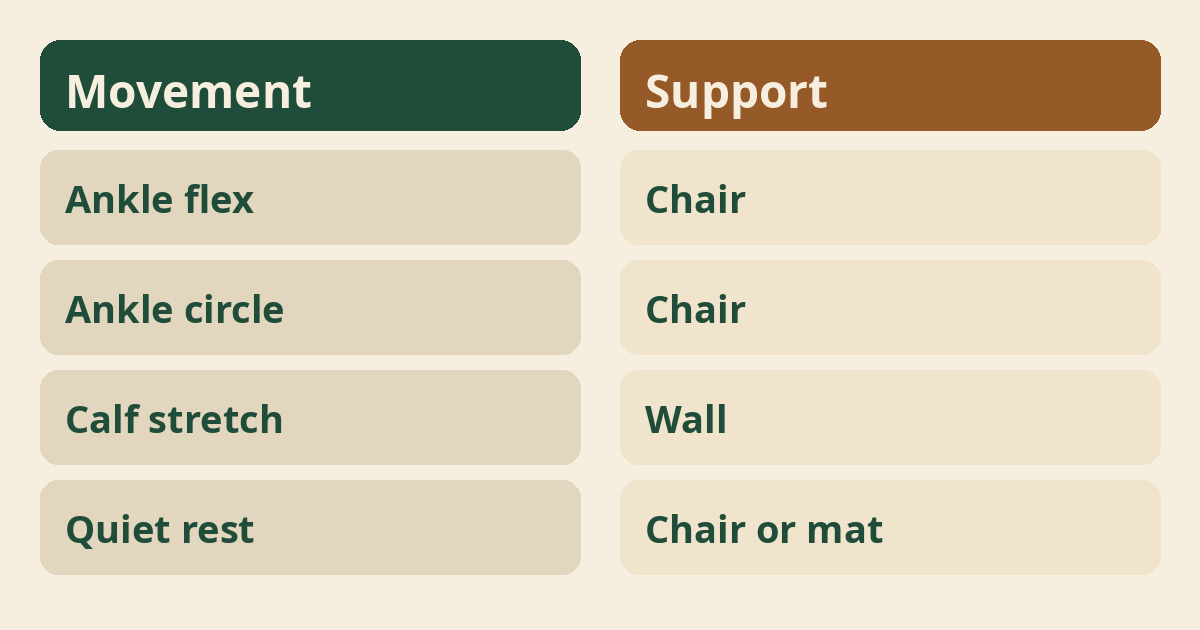
Sit on a firm chair with your feet supported and your shoulders relaxed. Choose a chair that will not slide, swivel, or tip as you move. If your feet do not reach the floor, use a firm low support, and leave enough room around you to move without catching a foot.
Step two: Move the ankles
Slowly point and draw back one foot within an easy range, then change sides. Keep the movement small and let your heel stay supported if lifting the foot feels tiring. Try a few unhurried repetitions, stopping for pain, cramping, numbness, or any sensation that feels different from ordinary gentle effort.
Step three: Explore ankle circles
Make a few small ankle circles only if straight ankle movements feel comfortable. Move one foot at a time without twisting your knee or gripping your toes. Reverse direction once, then put the foot down and pause; circles are optional, and there is no need to make them large.
Step four: Try a mild calf stretch
A supported standing calf stretch is optional when standing feels steady and painless. Face a wall with your hands resting on it, place one foot slightly behind you, and bend the front knee a little. Keep the back heel comfortable on the floor, avoid bouncing, and return upright before changing sides.
Step five: Finish with quiet rest
End by sitting or lying in a position that feels comfortable for your legs and back. Let your breathing settle without adding another stretch to fill the time. If getting onto the floor is difficult, remain in the chair; a short seated pause is a complete finish, not a lesser version of practice.
How should you breathe?
Breathe normally and avoid holding your breath during any movement. Let the breath remain quiet enough that you could speak without strain. If you want a separate breathing practice, explore belly breathing for beginners gently, without forcing deep breaths or trying to match a rigid count.
How long should a session last?
A first session can last only a few minutes, including the pauses. Stop while the movements still feel easy rather than aiming for a long routine. There is no required duration, and a shorter session is the better choice whenever more time would mean pushing through fatigue or losing comfortable form.
How often can you practise?
Repeat a gentle routine only when it feels comfortable during practice and afterward. You do not need a daily streak, and any symptoms that keep returning deserve medical advice. For general planning rather than a personal prescription, read how often you should do yoga and adapt the idea to your circumstances.
What benefits are realistic?
Many people find gentle yoga offers a pleasant pause and a chance to notice tension, but results vary. Some enjoy the movement itself or the quiet finish more than the stretches. General information about yoga is available at National Center for Complementary and Integrative Health, but it cannot establish the cause of tired legs or promise a result for you.
Is this a treatment?
No, this routine is not a treatment for tired legs or any underlying condition. Heavy or tired legs can have different causes, and similar sensations do not always mean the same thing. Do not replace prescribed care, change medicines, or delay an appointment because a movement briefly feels soothing.
Who should be especially careful?
Ask your doctor first if you have a history of blood clots, circulation problems, reduced sensation, or recent surgery. The same caution applies to unexplained swelling, significant joint problems, or an injury that has not been assessed. A general article cannot decide which movements are suitable for your particular condition or stage of recovery.
What if you are pregnant?
Pregnancy calls for advice from your maternity team before starting a new routine for leg discomfort. New or one-sided swelling or pain should not be dismissed as a normal part of pregnancy. A prenatal teacher can adapt an approved practice, and prenatal yoga versus regular yoga explains why the approach may differ.
Which props are useful?
A stable chair, a wall, and a folded blanket are enough for this simple practice. Use support to make a position easier rather than to pull yourself into a stronger stretch. The guide to yoga props for beginners offers more context, but you do not need special equipment to begin comfortably.
Can you practise at a desk?
A brief seated movement break can fit beside a desk when the chair and surrounding space are safe. Move away from wheels, loose cables, and anything that might block your feet. For a broader approach to position changes, see yoga at your desk, keeping the same rule of easy, painless movement.
What if you have been standing?
Sit down and assess how you feel before choosing a stretch after prolonged standing. You may prefer supported rest to another activity on your feet. If symptoms are unusual, persist, or keep returning after work, discuss them with a doctor rather than assuming that standing alone explains what is happening.
What if you have been sitting?
Change position gently rather than springing straight from a chair into a deep stretch. Stand only if you feel steady, and use a nearby support when needed. If your legs feel normal, a comfortable walk may be another option; yoga does not need to become the only way you take a movement break.
Should you raise your legs?
Raising your legs is optional, and it is not automatically suitable for everyone. If you choose supported rest, keep the position modest and comfortable rather than forcing the legs upright against a wall. Ask your doctor first if you have swelling, circulation concerns, or any condition that affects which resting positions are appropriate.
Are deep forward folds needed?
Deep forward folds are unnecessary for a beginner routine for tired legs. Pulling hard toward your toes can turn a quiet practice into a demanding stretch. Keep the focus on ease, especially if your back is sensitive, and consult yoga with a bad back only as general information alongside individual advice.
What mistakes should you avoid?
Avoid bouncing, forcing range, and treating discomfort as proof that the routine is working. Another common mistake is adding many poses because a short session seems too simple. Choose fewer movements when tired, and leave out anything that requires you to grip your breath, brace hard, or rush to keep your balance.
What should a stretch feel like?
A stretch should feel mild and controllable, never sharp, burning, or electric. More intensity is not a better result, and you should be able to ease out whenever you choose. Stop for pain, numbness, or tingling, and seek advice if symptoms persist or return rather than repeatedly stretching the same area.
What if a cramp starts?
Stop the movement and settle into a comfortable position if a cramp begins. Do not force the foot or leg farther to finish the sequence. Repeated, severe, or unexplained cramps deserve a doctor’s assessment, particularly when they occur with other symptoms or interfere with your usual activities or sleep.
Can you practise before bed?
A quiet, comfortable routine may suit your evening, but it does not need to happen at bedtime. Choose movements that leave you settled rather than chasing a stronger stretch because the day is ending. Persistent nighttime discomfort or an urge to move your legs that disrupts sleep warrants a medical conversation.
What about after exercise?
Let your breathing settle after exercise before deciding whether any gentle movement feels welcome. Yoga is not a way to override unusual soreness, an injury, or exhaustion. Skip strong stretches when the muscles feel overworked, and seek medical advice for severe pain, marked weakness, or symptoms that do not fit your usual experience.
Should both sides feel equal?
Your legs may move differently, so use a comfortable range on each side rather than forcing symmetry. A smaller circle or shorter stretch on one side does not need correction during this session. A new difference in strength, sensation, pain, or swelling is a reason for assessment, not a reason to work that side harder.
How can you build up gradually?
Progress by becoming more comfortable and consistent before adding extra movements. When the basic routine remains easy, you might add a little time or another gentle movement, not both at once. Leave demanding balances, deep stretches, and long holds for another context rather than making tired legs earn their rest.
When might a teacher help?
A qualified teacher can help adapt a medically appropriate practice to your movement needs. Tell them about symptoms, relevant conditions, and any advice you have received from your doctor. Look for someone who welcomes smaller movements and chair options, and who does not claim to diagnose your symptoms or promise a medical outcome.
What mindset is helpful?
Treat this practice as an invitation to notice your body, not a task you must complete. You can skip a movement, take a longer pause, or finish after one step without failing. A gentle routine works best as a flexible choice, especially on days when rest matters more to you than another activity.
How can you check the response?
Notice how you feel during the routine, shortly afterward, and later in your ordinary day. A simple note about comfort can help you recognise whether a movement seems suitable. Do not use a temporary improvement as proof that nothing is wrong, and stop repeating movements that leave you more uncomfortable afterward.
When should you seek further advice?
Book a medical assessment when leg tiredness is persistent, unexplained, worsening, or limiting normal activity. Mention when it started, whether one or both legs are affected, and any swelling or changes in sensation. Sudden warning signs need urgent help rather than waiting for a routine appointment or testing another yoga sequence.
What does a useful routine look like?
A useful routine leaves room for support, gentle movement, and stopping whenever you need. Start in the chair, explore a few ankle movements, and add the mild calf stretch only if it feels suitable. Finish with comfortable rest, remembering that the purpose is an easy practice rather than a promise of lighter legs.
Where to read next
For a calm, beginner-friendly start, Ranjana Sinha’s Begin Where You Are is written for people who want simple steps. Our guide to starting a home yoga practice adds a gentle routine you can follow at home.
Frequently asked questions
Can beginners do yoga for tired legs?
Beginners can try small, painless movements when medically appropriate, but new or unexplained symptoms need a doctor’s advice first.
Do I need to get onto the floor?
No, the seated movements and final rest can all be done in a stable chair.
Is a stronger stretch more useful?
No, keep any stretch mild and stop if it creates pain, tingling, numbness, or other unusual sensations.
Can I skip the standing step?
Yes, leave out the calf stretch if standing feels tiring, unsteady, painful, or unsuitable for you.
What if my legs still feel tired?
Rest as needed and ask a doctor about persistent or recurring tiredness rather than adding more stretches.
The bottom line
Keep yoga for tired legs gentle, let comfort guide the session, and choose medical advice whenever symptoms need an explanation.