Yoga for teens is a simple practice of slow movement, steady breathing and quiet rest that a young person can start at home with no special skill. You only need a little floor space and ten minutes. This guide explains what it is, how to begin, which mistakes to skip and how to keep it fun, in plain words.
This article is general education only and is not medical advice. If you have a health condition, an injury or any worry, check with a doctor before you start.
What is yoga for teens?
It is a gentle practice of poses, breathing and rest made to fit a teenage body and a busy school life. Nothing about it is a contest. You move slowly, notice how you feel and stop when something does not feel right.
Why do teens try yoga?
Many teens try yoga to feel calmer, move more and take a short break from screens. Others join because a friend does it or a sport coach suggests it. Whatever the reason, the practice stays the same: a few quiet minutes for yourself.
Is yoga only for flexible people?
No, you do not need to be flexible to begin, and you do not need to touch your toes. Flexibility is something many people build slowly over time. Start where your body is today and let that be enough.
How do I start yoga as a teen?
Start with ten minutes, a quiet corner and three or four easy poses. Wear clothes you can move in and keep your phone away. If you can, tell a parent or guardian so they know what you are trying.
Where should I practice?
Pick a flat, quiet spot where you will not be disturbed. A bedroom floor works well. Use a mat or a folded blanket so your hands and knees feel comfortable.
What do I need to begin?
You need very little: a mat or blanket, loose clothes and a bit of water nearby. Bare feet help you grip the floor. Anything else is a bonus, not a rule.
Step 1: How do I warm up?
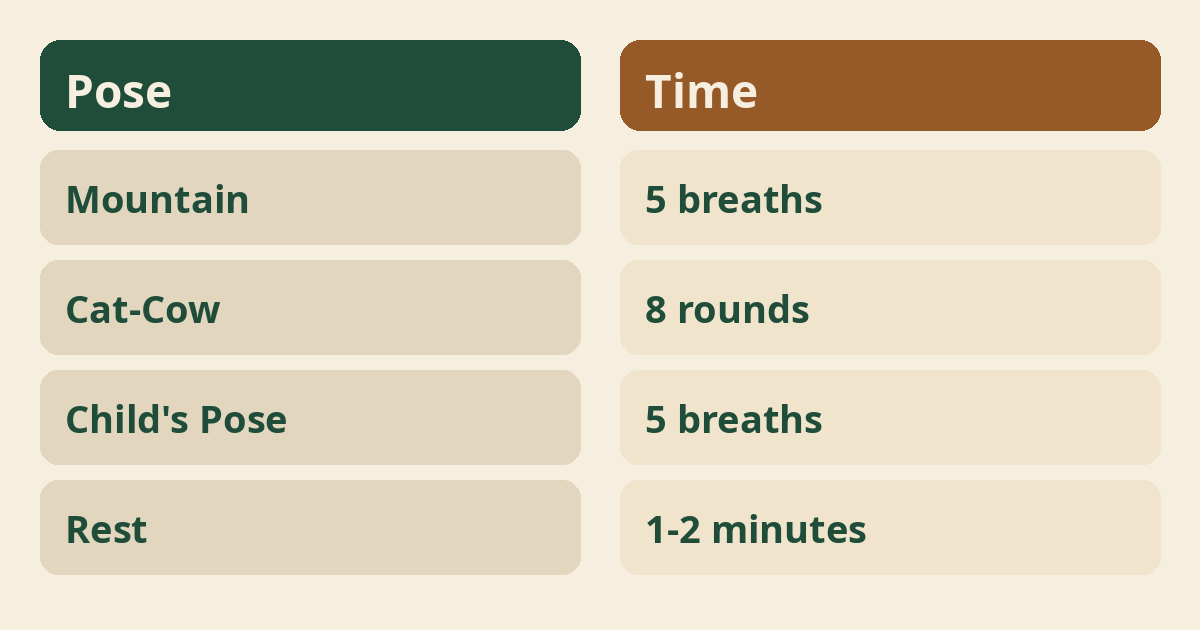
Begin with slow neck and shoulder rolls to wake the body up. Roll each shoulder back five times, then turn your head gently side to side. Keep every move small and easy.
Step 2: How do I stand in Mountain Pose?
Stand tall with your feet hip-width apart and let your arms hang by your sides. Spread your toes, relax your shoulders and breathe. This is a good way to feel steady before any other pose. See Mountain Pose for beginners for more detail.
Step 3: How do I try Cat-Cow?
Come onto your hands and knees and move your back slowly up and down with your breath. Breathe in as your belly drops and breathe out as you round your back. It is a kind way to wake up a back that has sat at a desk all day. Learn more in Cat-Cow pose for beginners.
Step 4: How do I rest in Child’s Pose?
Kneel, sit back on your heels and fold forward to rest your forehead on the floor. Stay for five slow breaths. If your hips feel tight, place a pillow between your heels and seat. See Child’s Pose for beginners.
Step 5: How do I finish with a short rest?
Lie on your back for one to two minutes and let your body go quiet. Close your eyes if you like. Let your breath return to normal and notice how you feel before you get up slowly.
How does breathing fit in?
Slow breathing through the nose is the heart of yoga, and it is easy to try anywhere. Breathe in for a count of four and out for a count of four. If you feel dizzy, go back to normal breathing. A full guide is in belly breathing for beginners.
How long should a teen session last?
Ten to twenty minutes is plenty for a beginner. A short, regular session often feels better than one long one. You can add a few minutes later if you enjoy it.
How often should I practice?
Two or three times a week is a friendly starting point. Pick days that suit your school and sports schedule. For more ideas, read how often should you do yoga.
When is the best time of day?
Any time works, so choose the time you can keep up. Some teens like a short stretch in the morning. Others prefer a few quiet minutes after homework. Avoid practice right after a big meal.
What are common mistakes?
The most common mistakes are going too fast, pushing too far and comparing yourself to others. Pain is a signal to stop. A pose should feel like a gentle stretch or steady work, never sharp or pinching.
Why should I not compare myself to others?
Every body is built differently, so your pose will not look like anyone else’s. Photos online often show people with years of practice. Your only goal is to feel a little better than when you started.
Which props can help?
A folded blanket, a cushion or a strap can make poses easier and more comfortable. You can use a belt or a long scarf in place of a strap. Learn more in yoga props for beginners.
Can yoga go with sports?
Yes, many teens use a few yoga moves alongside sports as a gentle way to stretch and cool down. Hips, hamstrings and shoulders often feel tight after training. Try yoga for hips after a run or a game.
What about sitting for long hours?
A few easy poses between study sessions can give your body a break. Stand up, roll your shoulders and stretch your arms overhead. A short routine is shown in yoga at your desk.
Can yoga help with school stress?
Many people find that slow breathing and quiet movement help them feel calmer, though results vary. Try a few breaths before a test or after a long day. For a simple routine, see yoga for stress relief.
What about neck and shoulder tightness?
Gentle stretches can feel good if you carry a heavy bag or look down at a phone a lot. Keep the moves slow and small. Read yoga for neck and shoulders for easy ideas.
Who should be careful and see a doctor first?
Anyone with an injury, a long-term health condition, a back problem or a recent illness should speak with a doctor before starting. Teens who are tired, unwell or recovering from surgery should also ask first. A doctor can tell you which moves are fine for you. If your back is a worry, see can you do yoga with a bad back.
Is yoga a treatment for any condition?
No, yoga is not a treatment and it does not replace medical care. It is a gentle activity that some people enjoy. If you have a health concern, talk to a doctor or another qualified professional.
What are the possible benefits?
Many people find yoga helps them feel calmer, steadier and a little more at ease in their body, though results vary. It may also make daily movement feel easier over time. For balanced, plain information on yoga and health, visit National Center for Complementary and Integrative Health.
Can yoga help with balance?
Slow standing poses may help some people feel steadier on their feet. Stand near a wall at first so you can reach out if you wobble. See yoga for balance for simple steps.
Can yoga help with flexibility?
Regular, gentle practice often leads to a bit more ease in movement over weeks and months. Never force a stretch. Easy poses such as the one in Butterfly Pose are a nice place to begin. A fuller plan is in yoga for flexibility.
How do I move forward over time?
Add one new pose or one extra minute every week or two. Keep what feels good and leave out what does not. Slow progress is still progress, and there is no finish line.
Should I find a teacher?
A good teacher can show you safe form and answer your questions. Look for a calm, patient teacher who works with young people. Ask a parent or guardian to check the class with you.
Are online videos okay?
Online videos can be a helpful start if you choose a gentle one made for beginners. Pick a short video, follow it at your own speed and pause whenever you need to. Skip any video that rushes or pushes you.
What mindset helps most?
Be kind to yourself and see practice as time to feel, not time to perform. Some days will feel easy and some will not. Both are fine. Showing up for a few minutes is what counts.
What if I feel bored or restless?
Restlessness is normal, so shorten your session or move a little faster through easy poses. Try music that is soft and without words. You can also practice with a friend or sibling to make it more fun.
Can I do yoga with friends or family?
Yes, practicing with a friend or family member can make it more fun and easier to stick with. Keep it light and kind, and never push anyone. Each person moves at their own pace.
How can I keep a habit going?
Link your practice to something you already do, like after brushing your teeth or before bed. A small reminder helps. Keep your mat where you can see it so it is easy to unroll.
Where to read next
For a calm, beginner-friendly start, Ranjana Sinha’s Begin Where You Are is written for people who want simple steps. Our guide to starting a home yoga practice adds a gentle routine you can follow at home.
Frequently asked questions
Is yoga safe for teenagers?
Gentle yoga is generally fine for many teens, but check with a doctor first if you have any health condition or injury.
How long does it take to see a difference?
It varies from person to person, and many people notice a calmer feeling after a few weeks of regular practice.
Do I need a yoga mat?
No, a folded blanket or a carpeted floor works for most beginner poses.
Can I do yoga every day?
Many people do short daily sessions, but two or three times a week is a fine start.
What should I wear?
Wear loose, comfortable clothes that let you bend and stretch without feeling tight.
The bottom line
Start small, breathe slowly and enjoy the quiet, because a few easy minutes of yoga is a good beginning.